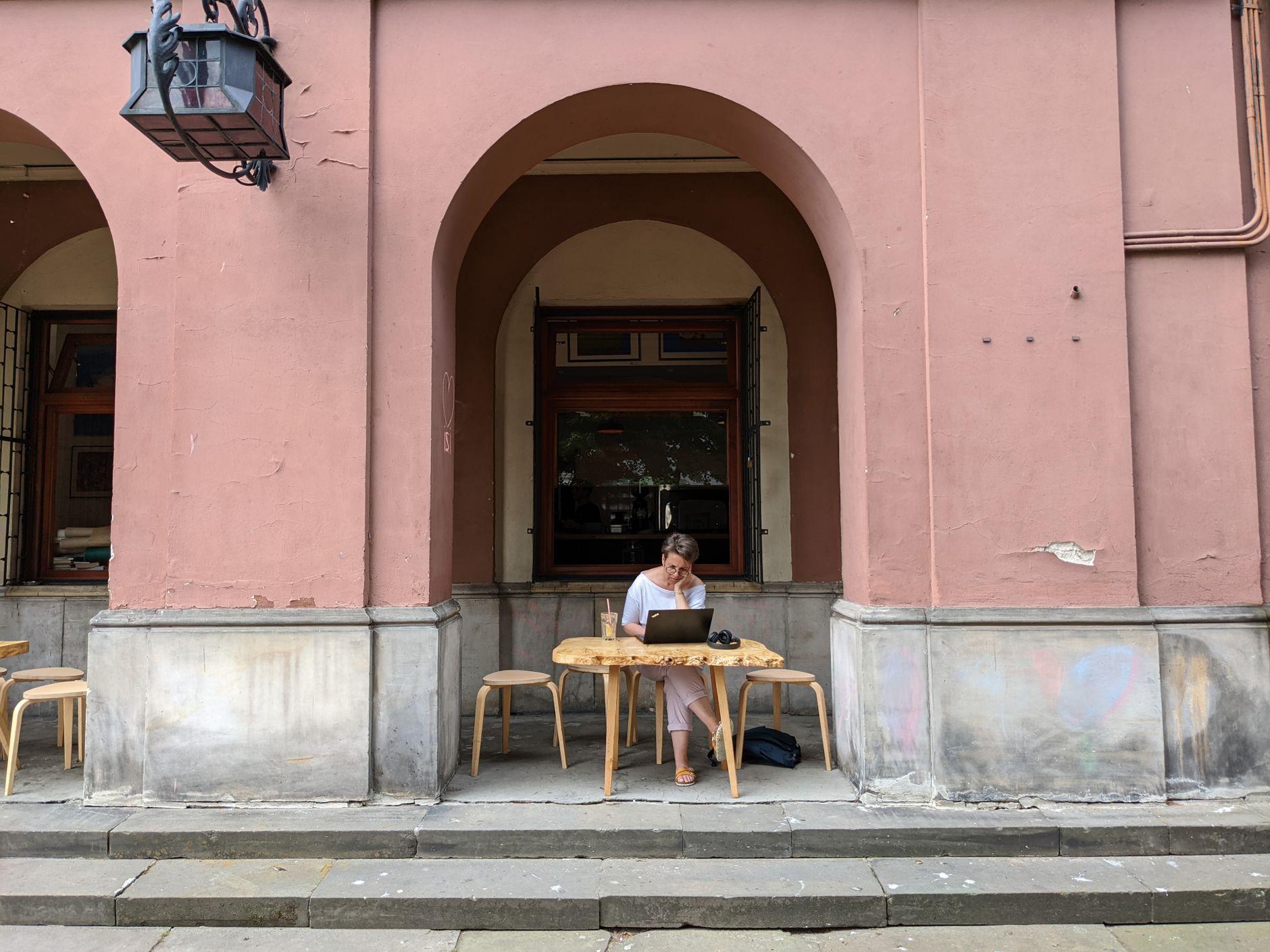
You're sitting at a mamak counter in Kuala Lumpur when your laptop dies. The repair bill is 800 Ringgit, due today, and your emergency fund is locked in a USD account back home. By the time a wire clears, you've lost the freelance contract. A digital nomad splitting time between Kuala Lumpur, Phnom Penh, and Sao Paulo needs an emergency fund built in layers, not one lump sum sitting thousands of miles away. The right structure is roughly 50-60% in a stable home currency account (USD, EUR, or GBP) that you can access instantly, 25-30% split across the local currencies of the countries where you actually spend time, and the remainder in a flexible top-up wallet that can convert on the spot when plans change. Your rent in Kuala Lumpur is quoted in Ringgit, your guesthouse deposit in Phnom Penh is often quoted in US dollars even though you pay in Riel, and your emergency root canal in Sao Paulo will be billed in Real. An emergency fund denominated entirely in your home currency forces you to eat a conversion spread at the worst possible moment: mid-emergency.
About the author: Moreta operates a multi-currency wallet used by travelers and long-term expats across Malaysia, Cambodia, Brazil, and eleven other markets in Asia and Latin America. The company sees firsthand how funding rails, local QR networks, and currency conversion actually behave for people living out of a backpack rather than a corporate relocation package.
What makes an emergency fund different for a digital nomad?
A standard emergency fund answer, three to six months of expenses in a savings account, assumes you have one cost of living in one currency. A nomad's emergency fund has to survive currency risk, transfer friction, and country-specific banking rules simultaneously. If your baseline expenses are in USD but you are paying rent in Malaysian Ringgit and hospital bills in Brazilian Real, a fixed dollar amount can lose or gain 5-10% of local purchasing power between the day you set the fund and the day you need it. Most financial guidance recommends keeping a home-country bank relationship as an anchor while layering in local currency exposure rather than converting everything at once [chase.com]. Your home bank account is the one your home bank, insurer, or landlord back home will actually recognize, and it is usually the fastest to access in a true crisis like a canceled flight or a lost card.
Split the fund: home currency, local currency, and liquid buffer
Some nomad-focused guidance suggests splitting emergency savings roughly 60% into stable home currencies (USD/EUR), 25% into local currency, and 15% into alternative stores of value like cryptocurrency or gold [budgeyapp.com]. The 15% allocation to volatile assets like cryptocurrency is not appropriate for money you might need within 48 hours, since those assets can swing sharply in exactly the kind of global event (currency crisis, market shock) that also triggers your emergency. A more conservative version for someone actually living in Malaysia, Cambodia, or Brazil right now:
- 50-60% home currency in a bank or brokerage account you already trust, for true catastrophes (medical evacuation, flight home).
- 25-30% local currency split across your current and next destination, held in a multi-currency wallet or account so you are not caught converting at a bad rate during a crisis.
- 10-15% liquid buffer in a flexible top-up wallet that can convert instantly at the point of payment, covering the gap between "I need cash now" and "my transfer clears in three days."
What do Malaysia, Cambodia, and Brazil actually allow for non-resident accounts?
Malaysia caps non-resident domestic Ringgit transfers at RM10,000 per transaction but places no limit on how much foreign currency you retain, which means a nomad's practical strategy is to hold foreign currency reserves freely and only convert to Ringgit in smaller, deliberate chunks. Cambodia is more permissive on paper: non-residents can freely hold multi-currency accounts, with authorized banks only required to report transfers exceeding $10,000, which is one reason Cambodia functions as a de facto dual-currency economy (US dollars and Cambodian Riel circulate side by side). Brazil modernized access for non-residents through its Marco Cambial (foreign exchange framework) reforms that took effect at the end of 2022, which allow CDE (Conta de Domiciliado no Exterior) accounts and dedicated foreign currency accounts without strict caps, but any transfer over BRL 100,000 requires source-of-funds documentation if you are moving a large emergency reserve into the country ahead of a long stay.
Are e-wallet and digital account balances actually insured in these countries?
Most nomads skip this question until something goes wrong. In Malaysia, PIDM insures deposits up to RM250,000 for licensed digital banks, but e-wallet balances are not directly insured and instead rely on the provider safeguarding funds in trust accounts. Cambodia currently has no national deposit insurance scheme at all, for traditional banks or digital ones. Brazil's FGC insures up to BRL 250,000 for eligible digital bank investment products, but standard digital wallet payment balances sit outside FGC coverage and are instead required to be backed by government bonds or held at the Central Bank. Don't treat a wallet balance in any of these three countries as equivalent to an insured home bank deposit, and don't park your entire emergency fund in one wallet in one country. Spread the local-currency layer across a real bank account where one is accessible to you, and a wallet for the amount you need for near-term spending.
How do local QR payment rails change the calculus?
Malaysia, Cambodia, and Brazil have each standardized around a single dominant QR payment rail, and understanding that rail changes how you think about "local currency" as a concept. Malaysia's DuitNow QR has pushed the country to a 66.1% QR payment adoption rate, the second-highest globally. Cambodia's KHQR standard, built on the Bakong platform, processed over 1 billion transactions in the first half of 2026 across more than 38 million user accounts. Brazil's Pix is now used by 174 million people, 82% of the population, processing close to 80 billion transactions in 2025. Merchants, landlords, and even hospitals increasingly expect QR-based payment, not cash or card. A multi-currency wallet that can scan a DuitNow, KHQR, or Pix code directly and settle in local currency removes an entire layer of ATM withdrawal fees and card foreign transaction fees from your emergency spending, which is exactly when you can least afford to lose a percentage point to a bad exchange rate.
Currency exchange costs: test before you need the money
Run a real currency exchange comparison before an emergency, not during one. International money transfer fees and spreads vary enormously between a home bank wire, a peer-to-peer transfer app, and a dedicated multi-currency wallet, and the difference compounds every time you move money between Malaysia, Cambodia, and Brazil. Every conversion has two costs, a visible fee and an invisible spread baked into the exchange rate itself, and providers that advertise no-fee transfers recoup the difference through the spread. Before you need your emergency fund, test each provider you're considering with a small transfer and check the exact rate you receive against the mid-market rate published by a source like XE or the country's central bank. That single test tells you more about real cost than any marketing page.
What should your pre-departure emergency fund checklist look like?
- Open or verify a local-currency-capable account or wallet before you need it, not after a crisis starts.
- Set your split (roughly 50-60% home currency, 25-30% local currency, 10-15% flexible wallet buffer) and rebalance it every quarter based on where you actually are.
- Contact each provider directly to confirm how wallet balances are insured, since Malaysia, Cambodia, and Brazil each treat wallet insurance differently, and don't assume the same protections as your home country.
Moreta is a Delaware-incorporated, FinCEN-registered Money Services Business, backed by Y Combinator. The wallet lets you top up from a home bank, card, or supported funding rail, see the exact exchange rate before you confirm a payment, and spend directly in local currency at the point of sale. You move between local QR payment networks like DuitNow, KHQR, and Pix without carrying cash or absorbing repeated ATM fees. When you manage an emergency fund across three currencies at once, you see the exact exchange rate at the moment you need to spend, which is the detail that protects your reserve. Learn more at Moreta.
Frequently Asked Questions
How much should a digital nomad actually keep in an emergency fund?
Most guidance starts with covering your bare minimum living costs and expanding from there [hlb.com.my][cimb.com.my]. For nomads, size the fund around your actual fixed costs (rent, insurance, one emergency flight home) rather than a generic multiple of income.
Home currency or local currency for your emergency fund?
Keep the majority anchored in a stable home currency you can access from anywhere, and hold a smaller local-currency portion for immediate needs in your current country [budgeyapp.com][borderlessbudget.com]. This hybrid approach balances access with currency risk.
Can non-residents open bank accounts in Malaysia, Cambodia, and Brazil?
Yes, though rules differ. Malaysia allows foreign currency retention without limit but caps domestic Ringgit transfers at RM10,000. Cambodia allows non-residents to freely hold multi-currency accounts. Brazil permits CDE (Conta de Domiciliado no Exterior) and foreign currency accounts for non-residents, with documentation required above BRL 100,000.
Is my e-wallet balance insured the same way a bank deposit is?
Generally no. Malaysia and Brazil insure certain licensed bank products but not standard e-wallet balances directly; Cambodia has no deposit insurance scheme at all currently.
What's the cheapest way to move money between these three countries?
Compare the total cost, fee plus spread, of each option (bank wire, transfer app, multi-currency wallet) using a small test transfer against the mid-market rate before committing your emergency fund to any single provider.
Do QR payment apps like DuitNow, KHQR, or Pix require a local bank account?
Typically yes for full local access, which is the exact wall foreign travelers hit; wallets built for travelers solve this by letting you scan the same local QR code while your funds stay in your own currency until the moment of payment.
How often should I rebalance a multi-currency emergency fund?
Quarterly, or any time your home base changes, since holding local currency in a country you've already left just adds unnecessary conversion risk.
References
- Emergency Fund Building for Digital Nomads: Currency & Location Challenges | Budgey Blog | Budgey (budgeyapp.com)
- Managing Money as a Digital Nomad | Chase (chase.com)
- How to Start an Emergency Fund: Step by Step Guide - HLB Blog (hlb.com.my)
- The Complete Guide to Multi-Currency Budgeting | Borderless Budget (borderlessbudget.com)
- How to Build Your Emergency Funds: A Step-By-Step Guide | Money Tips | CIMB (cimb.com.my)