
The board says 0% COMMISSION in red letters, and the clerk is already reaching for your dollars. That line tells you almost nothing. A currency exchange counter makes its money in the gap between the rate it gives you and the mid-market exchange rate. The only reliable test is simple: divide the local cash you receive by the money you hand over, then compare that number to a live rate on your phone.
A commission is a fee the counter lists separately. The spread is the difference between the counter's rate and the mid-market rate, which is the midpoint between buying and selling prices on the global foreign exchange market. A counter can drop the commission and widen the spread, and you pay the same amount or more.
Think of a restaurant that removes its service charge and raises every menu price. You still pay for the service. It just no longer shows up as a separate line on the bill. The counter works the same way. It buys your dollars below the market price and sells you ringgit or won above it, and the difference is its income.
How do I calculate the real exchange rate I'm getting?
The rate you are actually charged is the only number that captures both the commission and the spread. Here is how to find it in under a minute:
- Open a currency converter app before you walk up, and note the mid-market rate.
- Ask for the final amount, not the rate: "How much will I get for exactly 200 dollars?"
- Divide the local amount you would receive by the dollars you would hand over. That is your effective rate.
- Measure the gap. If the mid-market rate is 100 and you are offered 95, you are paying 5%, whatever the board says about commission.
- Repeat at the next counter. Two quotes give you a real exchange rate comparison.
The board also gives its margin away. The distance between the "We Buy" and "We Sell" columns for the same currency is the counter's own markup. Read the "We Buy" column when you are selling dollars. Tourists often look at the wrong one.
What scam tactics should I watch for at the counter?
Once you are checking the effective rate, most counter scams become visible, because each one changes the final amount without changing the board. Watch for these:
- Board rate vs. window rate. The posted rate is attractive, but the receipt shows a worse one. Confirm the final amount before you hand anything over.
- Rigged calculators. The clerk's calculator shows a wrong total. Do the sum on your own phone.
- Folded notes. A note folded in half during a quick count gets counted twice. Recount note by note at the window, while the clerk waits.
- Counterfeit bills. Fake notes slipped into the stack are most common with street changers.
Dynamic currency conversion (DCC) is the same trick moved to a card machine. The ATM or terminal offers to charge you in your home currency at a rate it sets itself. Decline it every time, and choose to be charged in local currency.
How do airport currency exchange rates compare with city counters?
Airport currency exchange rates usually come with wider spreads than counters in the city. The airport counter prices for travelers who have no alternative at that moment. If you need cash on arrival, change only enough for the first taxi or train. Then run the five-step check at a city counter.
Where do travelers most often get caught in Asia and Latin America?
The same rate test works everywhere. What changes from city to city is where people exchange money and what tends to go wrong.
| City | Where travelers change money | What to check |
|---|---|---|
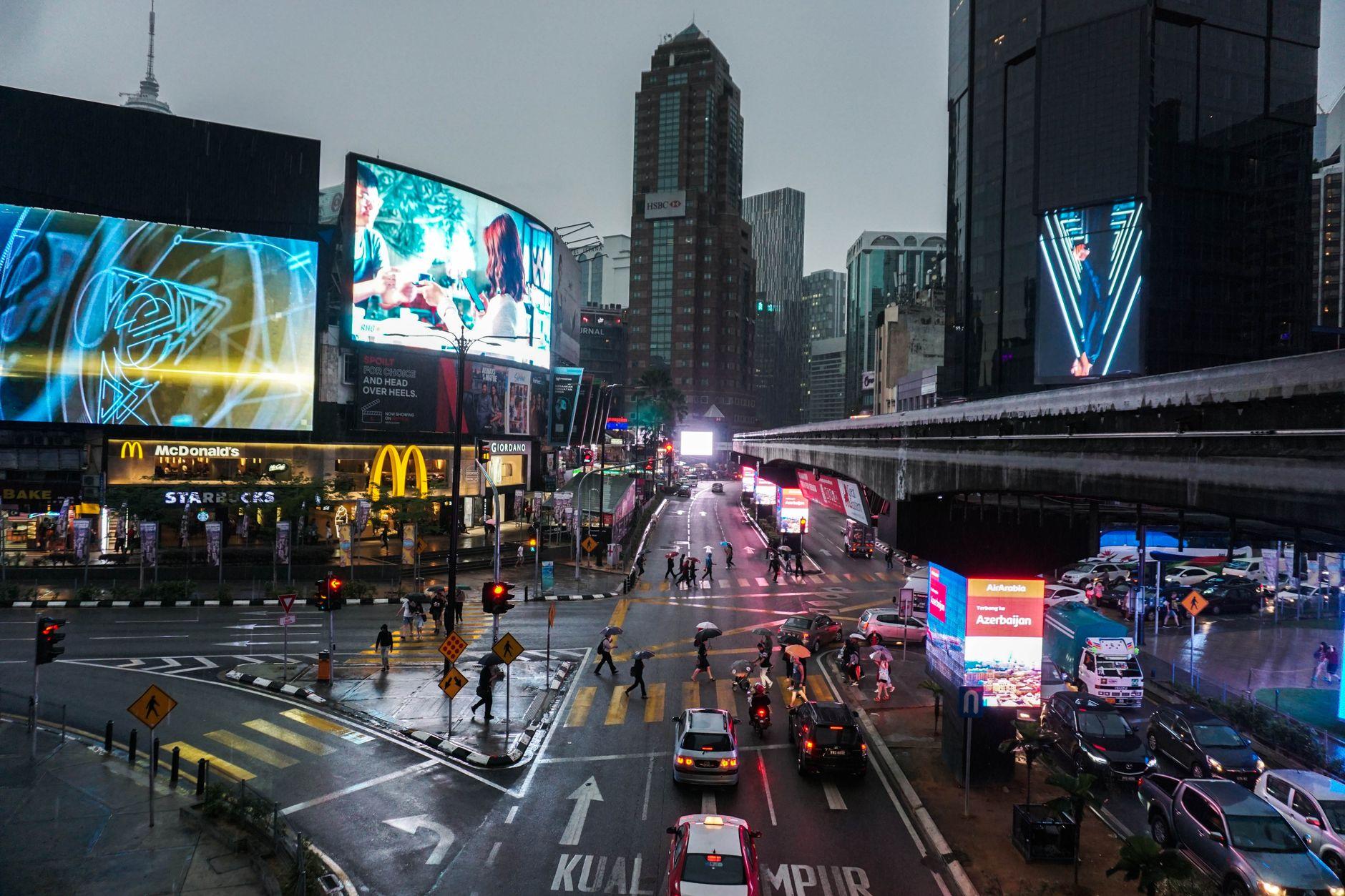
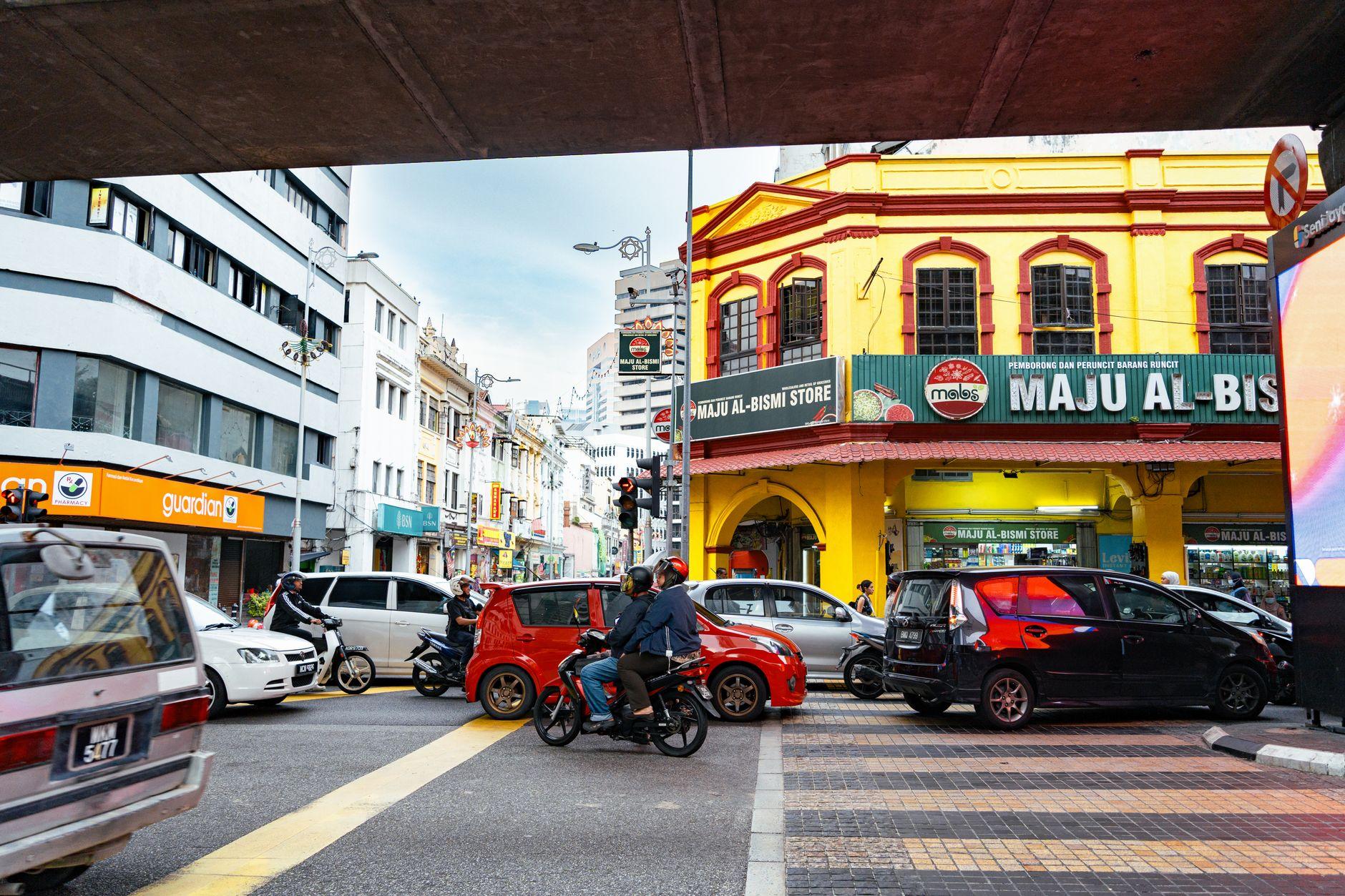
| Kuala Lumpur | Mall kiosks; any money changer should display its licence | Compare the buy/sell gap across neighbouring kiosks |
| Hanoi | Banks and gold shops around Hà Trung Street | For money exchange, recount carefully, since the blue 20,000 and 500,000 VND notes look alike |
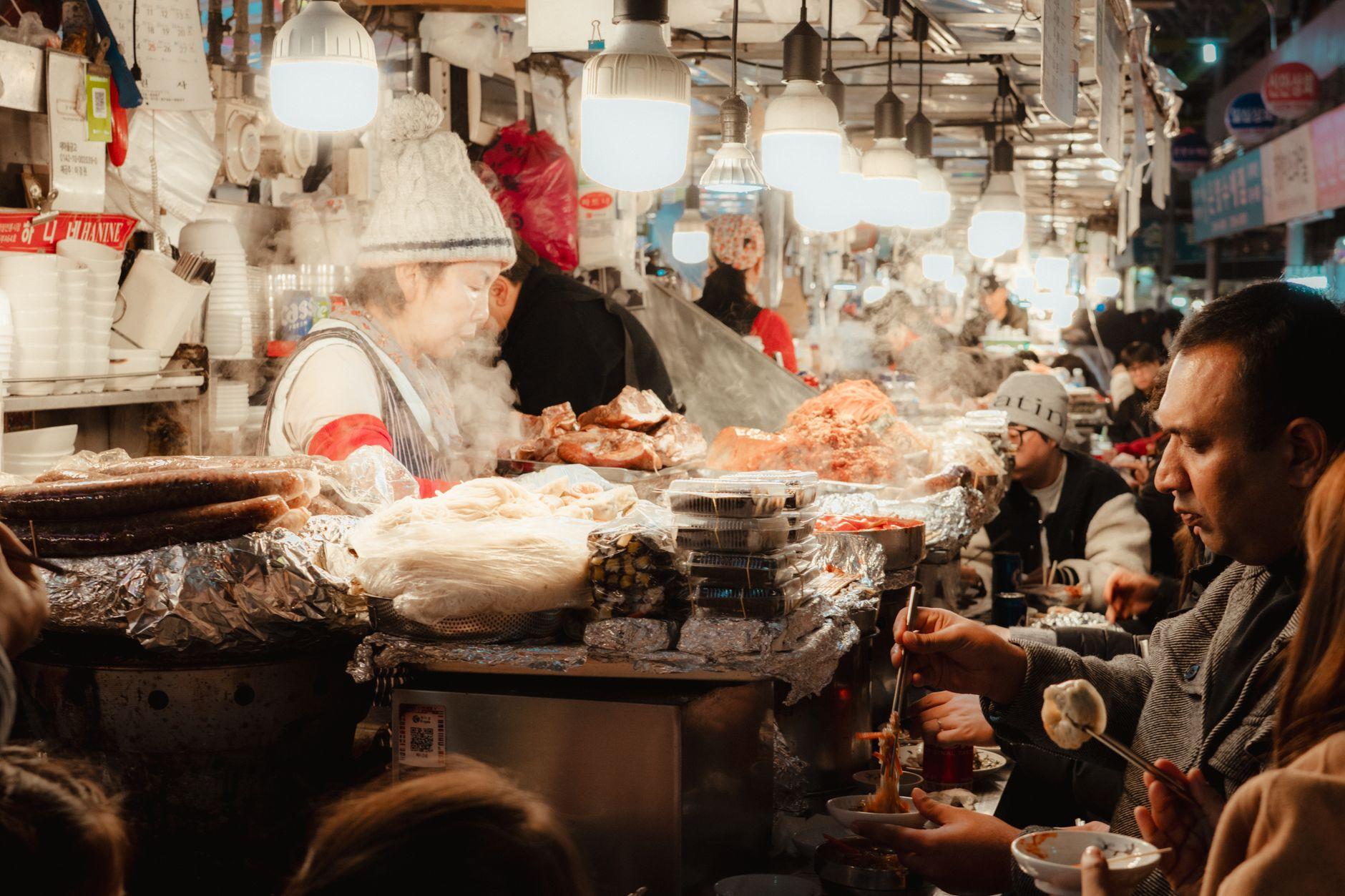
| Seoul | Private changers in Myeongdong | Currency exchange quotes differ by shop, so compare two on the same street |
| Buenos Aires | Cuevas and arbolitos calling "cambio" on Calle Florida | The blue dollar rate gap against the official rate has shifted over time, so check today's spread and watch for counterfeits |
Cambodia adds a two-currency quirk. Dollars and riel change hands in the same transaction, so check the rate used for your change.
Is there a way to skip the exchange counter entirely?
The cleanest way to win the rate game is to convert less cash in the first place. In much of Asia and Latin America, locals pay by scanning national QR codes: DuitNow QR in Malaysia, Pix in Brazil, WeChat Pay in China and Seoul Pay in South Korea. Visitors are usually locked out because these wallets need a local bank account or phone number.
Top up from your home bank or card in your own currency. Scan the same QR code locals use. Check the merchant name, the amount and the exact FX rate before you confirm. The merchant is paid instantly in local currency.
This is what Moreta Pay does. Cash is still essential for street snacks, temple donations and rural taxis. Keep enough small notes for a day's worth of spending.
Frequently Asked Questions
What is the mid-market exchange rate?
It is the midpoint between buying and selling prices on the global currency market. It is also called the interbank rate.
Is a "no commission" money changer a scam?
Not necessarily. Many honest counters charge nothing beyond the spread. The test is the effective rate, not the commission line.
Which currency converter app should I use?
Use any app that shows the live mid-market rate. Check it right before you exchange, not that morning.
Should I exchange money before I travel?
Usually only a small amount. Rates at home and at airports tend to be less competitive than city counters at your destination.
How do I avoid counterfeit notes?
Use counters with a fixed location, recount at the window, and avoid street changers.
Why do I keep getting asked "pay in USD or local currency"?
That question is dynamic currency conversion. Always choose local currency.
Before you board
Install a currency converter app, set up a QR wallet for your destination, and set aside a small cash reserve in local notes.
About Moreta
Moreta Global Inc. is a Delaware corporation, a FinCEN-registered Money Services Business, and a Y Combinator company from the Summer 2024 batch. Its Moreta Pay app lets travelers pay local QR codes in countries including Malaysia, Brazil, China, South Korea, the Philippines, Peru and Argentina, with no local bank account needed. Every payment shows the fee and the live rate before you confirm, and customer funds are held with licensed partner banks. That gives travelers one transparent rate in place of a stack of counter quotes.
To see how your next trip's spending compares with exchange counters and ATMs, visit Moreta.