
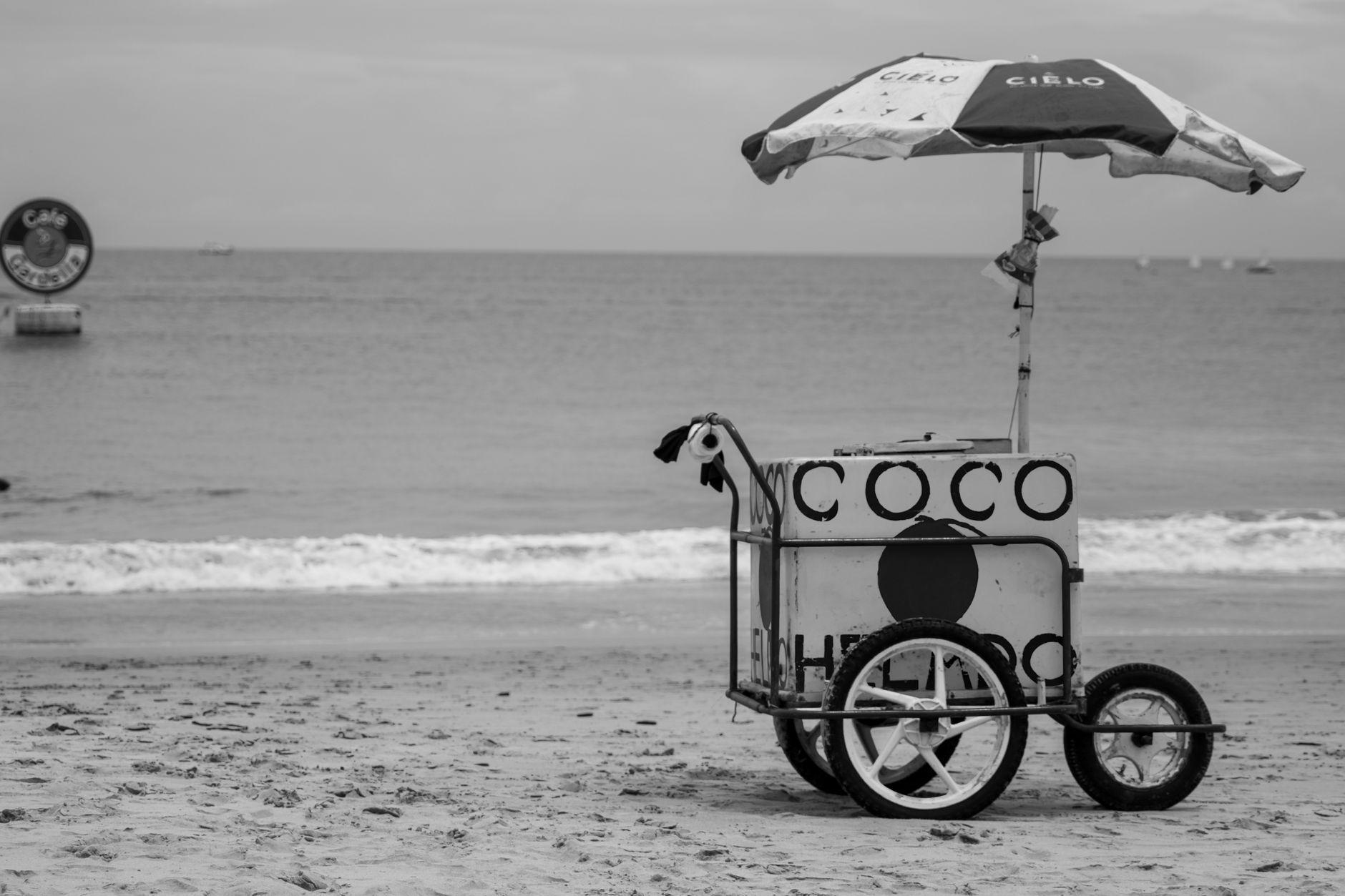
The coconut costs almost nothing. You hand the vendor on Copacabana a fifty real note anyway, because it's what the ATM gave you, and he looks at it like you've handed him a small logistical problem. "Troco?" he asks, half to himself, patting his pockets. Change. He doesn't really carry it anymore. Then he taps the laminated square zip-tied to his umbrella pole, a QR code bleached slightly by the sun, and says the one word that runs modern Brazil: "Pix?"
You don't have Pix. He sighs, digs out a fistful of crumpled notes, and you both feel vaguely like you've done something wrong. Welcome to daily life in Brazil in 2026, where the cheapest, fastest way to pay is the one visitors can't sign up for.
Pix Didn't Just Beat Cash, It Replaced It
If you're arriving as an expat or a long-stay nomad, understand this first: Pix is not a niche app or a startup product. It's Brazil's instant payment system, built into essentially every Brazilian bank account, and it has become the default way money moves between people. The beach vendor takes Pix. The lady selling pastel at the Sunday feira takes Pix. Your landlord wants the deposit by Pix. Uber drivers, hairdressers, the guy who fixes your air conditioner, the churrascaria splitting a bill twelve ways, all Pix.
What makes it different from card payments is that it's instant, it's account to account, and for the person on the other side it's often free or close to it. That's why so many small merchants quietly prefer it over cards. Some will nudge you toward it. A few, especially informal sellers, only take Pix or cash. When a payment method is beloved by both the coconut vendor and the person buying the coconut, it wins, and Pix has won so thoroughly that carrying a wad of reais now marks you as either a tourist or someone with something to hide.
The Locked Door
Here's the frustration. Pix isn't an app you download from the App Store the way you'd grab a ride-hailing app. It lives inside Brazilian bank accounts, and opening one as a foreigner generally means Brazilian tax registration, local documents, and patience. If you're on a tourist entry or just arrived on a longer visa and haven't finished the paperwork gauntlet, you're standing outside the single payment rail the whole country runs on.
So the question every new expat in Brazil eventually types into a search bar is some version of: how do I pay in Brazil without a Brazilian bank account, ideally without hauling cash around?
The Usual Workarounds, Ranked Honestly
Cash from ATMs. It works, but it's the worst of both worlds. You pay to get the cash out (and Brazilian ATMs love offering you a "convenient" conversion that isn't; we've written before about why the two withdrawal amounts a São Paulo ATM shows you don't cost the same), and then you spend your days generating the troco problem at every stall. Vendors increasingly don't want your big notes.
Your home credit card. Brazil is actually decent card territory in cities. The little maquininha card machines are everywhere formal commerce exists. But you'll hit three walls: foreign transaction fees and opaque conversion on many home cards, merchants who accept cards but visibly prefer Pix, and the whole informal economy (feiras, street food, small services, person-to-person anything) where a card is useless.
Borrowing a Brazilian. The classic move: a friend Pixes the vendor, you hand the friend cash or owe them a beer. Charming for a week. Unsustainable for a life. And it doesn't help you at 7am when you're alone at the bakery and the padeiro is pointing at the QR code taped to the counter.
Scanning the Same Code the Locals Scan
This is where the picture has changed. With Moreta Pay, you scan the merchant's actual Pix QR code, the same laminated square the vendor shows everyone else, with your own phone. You top up the wallet from home in your own currency, via a US bank connection through Plaid or ACH, SEPA in Europe, UK Faster Payments, or Canadian e-Transfer, or from an international card. When you scan, you see the amount in reais, the merchant's name, and the exact FX rate before you confirm. Tap confirm, the merchant is paid instantly in reais, and to them it's just another Pix.
No Brazilian bank account. No tax-number scavenger hunt on your first week in the country. No mystery percentage skimmed off in the background, because the rate is on the screen before your thumb moves. If you've been comparing options, our honest travel wallet comparison walks through how the different apps handle exactly this kind of route.
What a Pix-Shaped Week Actually Looks Like
Some real texture, because this is where Brazil differs from card-friendly countries:
The feira. Sunday street markets are the soul of Brazilian grocery shopping and almost entirely Pix-or-cash. Mangoes, cheese, flowers, a caldo de cana while you browse. Every stall has its QR code clipped to the awning. Scan, confirm, done, and nobody has to hunt for change.
Rides and deliveries. Plenty of drivers and delivery folks prefer being paid directly by Pix rather than through an app's card flow, especially for informal mototáxi rides or that extra stop they did you a favor on.
Rent, utilities, and the recurring stuff. Landlords quote in Pix by default. Many everyday bills in Brazil can be settled by QR too, which matters enormously once you stop being a visitor and start being a resident with a water bill.
Online checkouts. Brazilian e-commerce leans hard on QR-based payment at checkout. Moreta Pay handles those QR payments too, on platforms like Shopee and on travel bookings through sites like Trip.com, so the "pay by QR" button stops being the option you have to skip.
Three Habits Worth Copying From Locals
Ask "Pix ou cartão?" before ordering. At tiny places, knowing the answer up front avoids the awkward shuffle. Increasingly the answer is a shrug that means "Pix, obviously."
Read the confirmation screen. Locals glance at the recipient name before confirming any Pix. Do the same. Moreta Pay shows you the merchant name along with the amount and rate, so a mistyped or swapped code gets caught before money moves.
Keep a little cash anyway. A few small notes for the rare cash-only holdout or a beach chair rental in a dead zone. Small notes. Nobody wants your fifty.
Brazil made instant, free-flowing payment the national habit, then locked the door behind a local bank account. You don't have to wait months of paperwork to walk through it. Set up Moreta Pay before your flight and the next time a vendor asks "Pix?", the answer is yes.