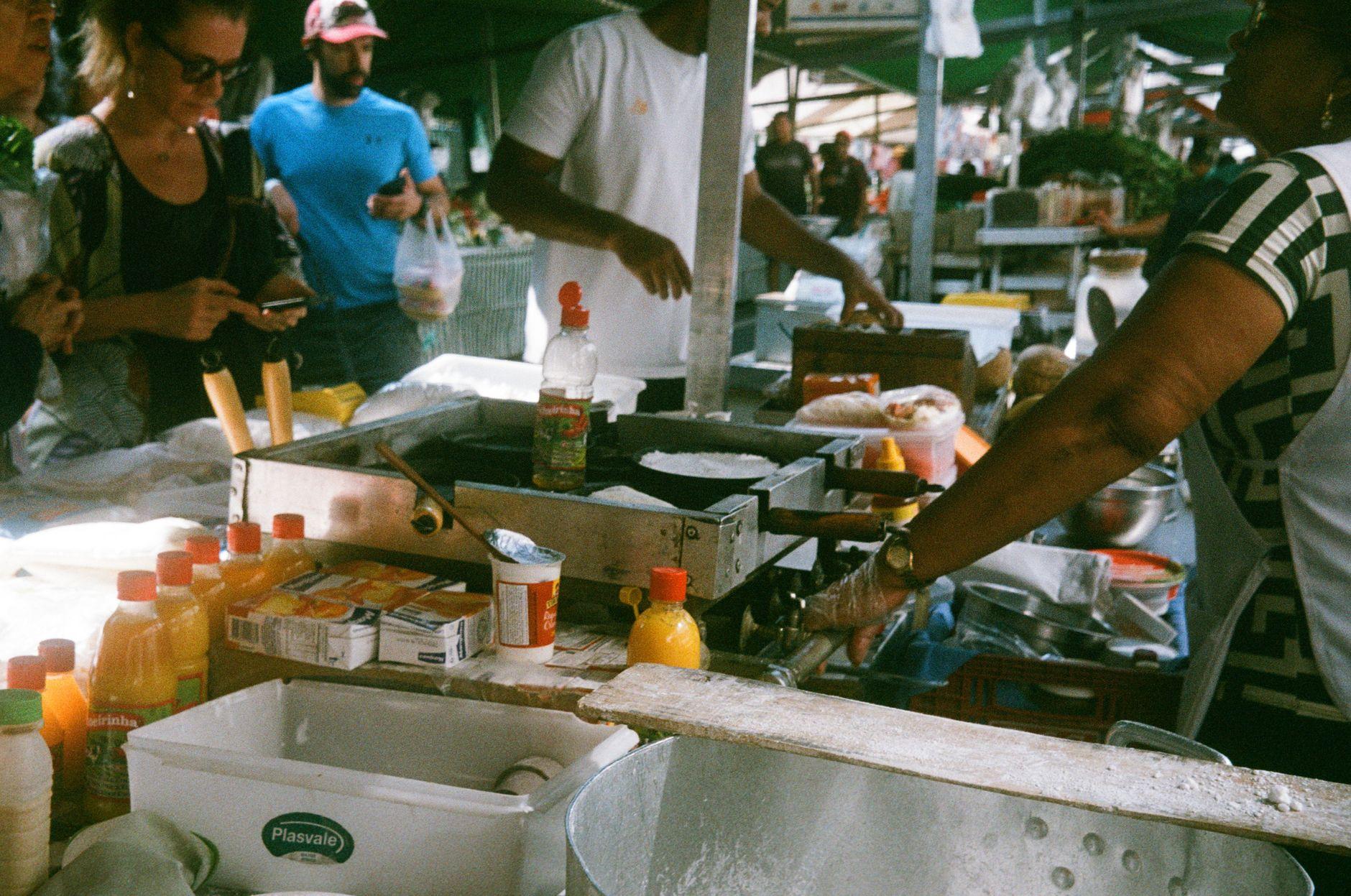

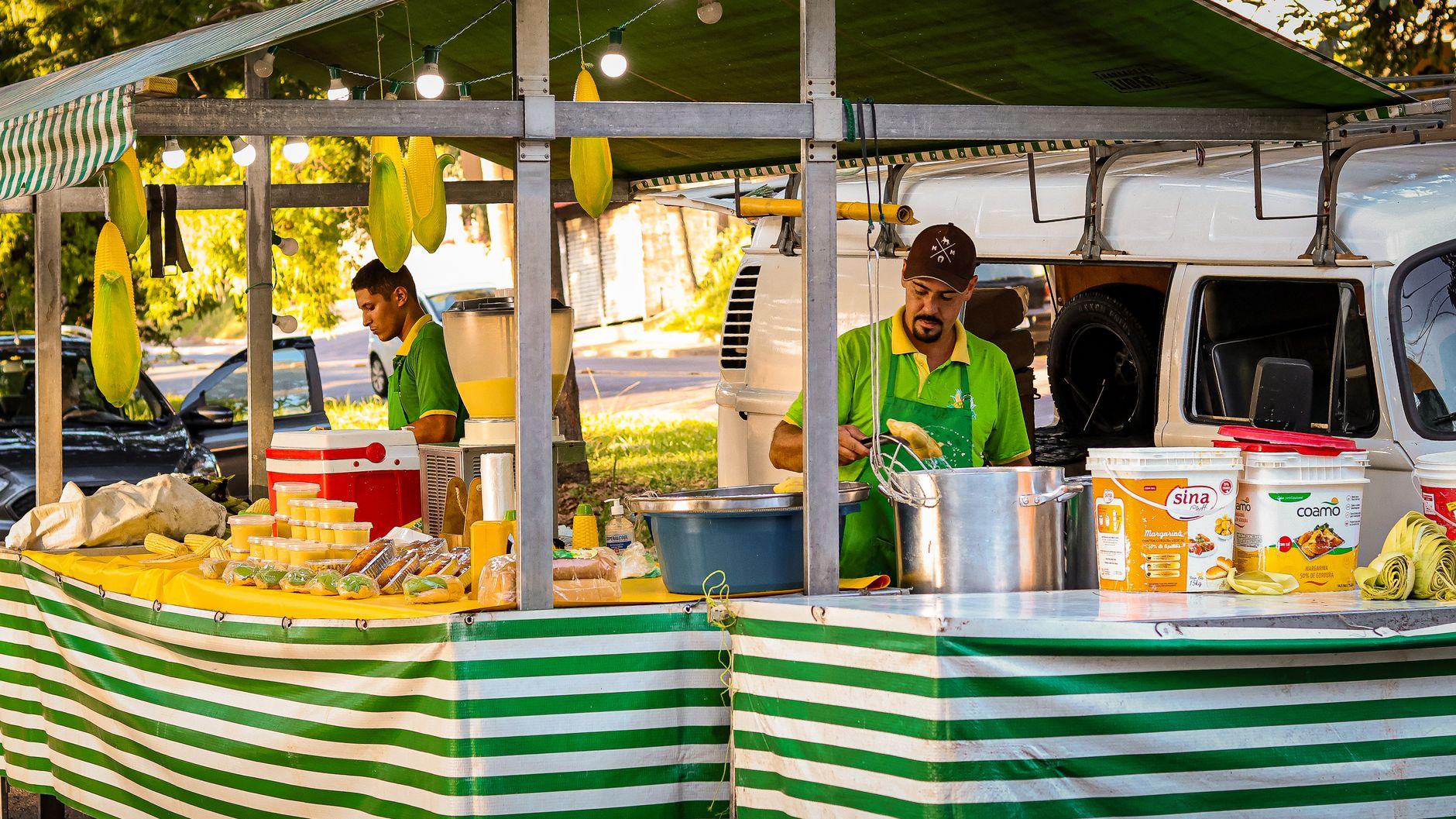
Walk through any feira livre in São Paulo, any beach promenade in Rio, any pastel stand in Belo Horizonte, and you will see the same small sign again and again: Aceitamos Pix. Brazil's instant payment system is not a fintech novelty here. It is how the woman selling tapioca pays her supplier, how the caldo de cana guy gets paid by regulars, and how most Brazilians would rather pay for anything under fifty reais. Travelers arrive with cards and cash and quickly discover they are the only people at the market fumbling with either. These are the questions travelers actually ask about paying at Brazilian street stalls and markets, answered straight.
Do street food vendors in Brazil really accept Pix?
Almost universally, yes. Pix is used by virtually everyone, from beach vendors selling água de coco to churrasquinho carts outside football stadiums to Uber drivers settling a toll. Many small merchants actively prefer Pix over cards, because the money lands instantly and they do not need to rent or feed a maquininha (the little card terminal). At a feira, the QR code is often laminated and taped to the cart, or the vendor simply holds up their phone with the code on screen. If a stall takes any form of payment beyond cash, it takes Pix first.
Can I use Pix as a tourist without a Brazilian bank account?
Not directly through the traditional route. Pix normally requires a Brazilian bank account and a CPF (the local tax ID), which most short-term visitors do not have. This is the gap that leaves tourists paying with cash or cards while everyone around them scans. The workaround is a wallet built for exactly this situation. Moreta Pay lets you scan the same standard Pix QR codes locals use, funded from your home bank or an international card, so you join the Pix ecosystem without opening anything in Brazil.
What does actually paying at a stall look like?
Order your pastel de feira. The vendor points at the QR code taped to the cart or shows one on their phone. You scan it, check the merchant name and the amount, confirm, and they hear the notification chime on their phone within seconds. That chime is the receipt. No signature, no waiting for a terminal to connect, no counting change while a queue forms behind you. With Moreta Pay the flow adds one useful step: you see the exchange rate and the exact cost in your own currency before you confirm, so a fifteen-real acarajé is never a mystery number on next month's statement.
Should I still carry Brazilian reais in cash?
Carry some, but think of it as a backup rather than your main plan. Cash still works everywhere, and a few older vendors at smaller feiras genuinely prefer it. The problem is the classic street market friction: nobody wants to break a hundred-real note for a six-real coxinha, ATMs for foreign cards can be inconsistent, and carrying a wad of notes on a crowded beach is exactly what locals avoid. Brazilians themselves increasingly carry very little cash precisely because Pix covers the small stuff. Match the local habit: a modest amount of small notes for edge cases, QR payments for everything else.
Can't I just tap my foreign card instead?
Sometimes, and it is worth knowing when. Established stalls inside covered markets like the Mercadão in São Paulo often have card machines and will take an international contactless card. But at open-air feiras, beach carts, and one-person operations, the maquininha is far less common, and where it exists the vendor may quietly prefer Pix because card acquiring costs them money. You will also occasionally hit the awkward moment where the machine takes local cards but rejects yours. Pix via a wallet sidesteps all of that, and it is the option the vendor is happiest to receive.
Is it safe to scan a QR code at a random street stall?
The system itself is solid, but do the same basic check locals do: before confirming, look at the recipient name that appears on screen and make sure it plausibly matches the person or stall in front of you. Pix payments are instant and effectively final, so that three-second glance is your protection. A payment app that clearly displays the merchant name and the amount before you hit confirm makes this easy. Avoid scanning codes handed to you by anyone who is not obviously the person selling you food, and you are fine.
What if the QR code doesn't include the price?
Very common at street stalls. Many vendors use a static Pix QR code, which identifies them but not the amount, so you enter the price yourself. Just confirm the number out loud first ('doze reais?') and type it in. Bigger or busier stalls sometimes generate a fresh code with the amount already embedded, in which case you scan, glance, and confirm. Either way the vendor sees the money arrive before your pastel hits the fryer basket.
Which markets is this actually relevant for?
All of them, honestly, but a few favorites where travelers hit this exact situation: the weekend feiras in São Paulo neighborhoods like Vila Madalena, the Feira de São Cristóvão in Rio for northeastern food and forró, Ver-o-Peso in Belém if you make it to the Amazon, and every single umbrella-and-cooler operation along Copacabana and Ipanema. The pattern is identical everywhere: small vendor, small amounts, Pix strongly preferred. If you are staying longer than a holiday, the same logic extends to groceries, laundry, and rent-adjacent life admin, which we covered in our guide to a month in Brazil without a Brazilian bank account.
Does Pix help with anything beyond the market?
Yes, and this catches travelers by surprise in a good way. Pix QR codes show up at checkout on Brazilian e-commerce and booking platforms too, so the same scan-and-confirm habit covers an online order or a bus ticket bought from your hostel bed. It is also how you settle with the moto-taxi driver, the surfboard rental guy, and the person selling canga beach towels who has never owned a card machine in her life.
So what should I set up before I land?
Two things. First, get a small amount of reais in low denominations for the rare cash-only holdout. Second, set up a wallet that speaks Pix before you are standing hungry in front of a pastel stand with no signal patience. Top up Moreta Pay from your home bank while you are still on hotel wifi, and by the time you reach the feira you can pay exactly the way the person ahead of you in line does: one scan, one chime, and a hot pastel in your hand.