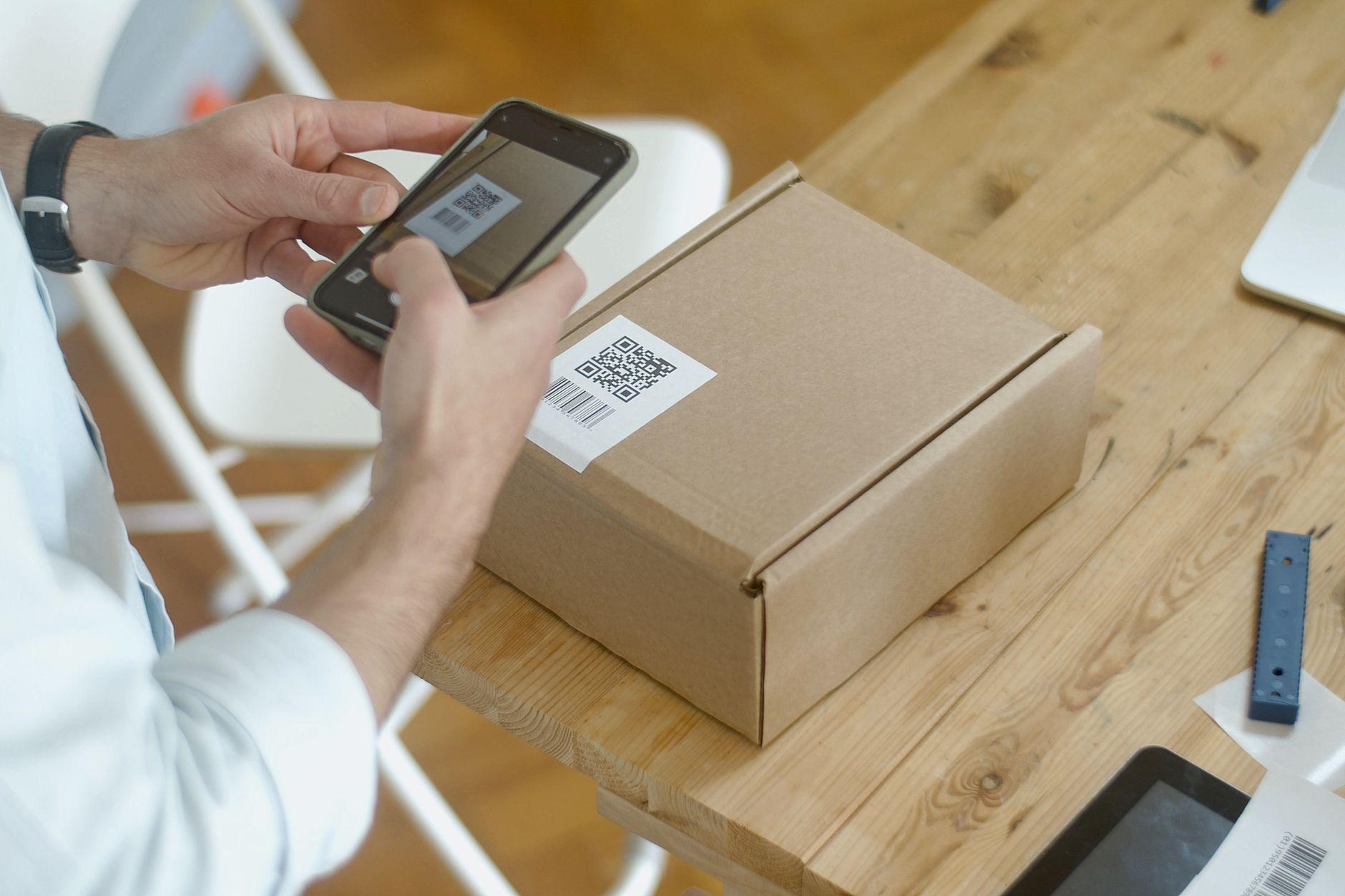


Month three in Kuala Lumpur. The uncle at a mamak counter in Bangsar slides over your teh tarik and roti canai, taps the DuitNow QR sticker on the drinks fridge, and waits. That small moment raises the question this guide answers. For most long-term travelers, a per-payment fee costs less than a monthly plan. A plan is a fixed cost, and it only pays off when your spending through that one product clears a break-even point every month, including the quiet ones. That break-even spend is the plan's monthly price divided by the fee rate it removes. Moreta sits on one side of this choice. Moreta reports a 1.5% fee on every Moreta Pay payment at the live rate, with no monthly plan. Moreta has a stake in the math, so this guide also shows where the math favors a plan.
About the Author: Moreta Global Inc. is a Y Combinator-backed (Summer 2024) Delaware corporation registered with FinCEN as a money services business. It builds Moreta Pay, an app long-term travelers use to pay local QR codes across Asia and Latin America from their home currency.
What is the difference between a per-payment fee and a monthly plan?
The whole cost question comes down to when you pay for access: before you spend, or each time you spend.
- Per-payment fee: a charge attached to each transaction, either a percentage or a flat amount. If you spend nothing, you pay nothing.
- Monthly plan: a recurring subscription that lowers or removes certain fees. You pay a fixed price whether you spend or not.
| Per-payment fee | Monthly plan | |
|---|---|---|
| Cost in a low-spending month | Low | Full plan price |
| Cost in a high-spending month | Rises with each payment | Plan price plus any fees still charged |
| What to check | Fee rate and the exchange rate used | Which charges the plan actually removes |
A monthly plan works like a gym membership compared with drop-in classes. The membership spreads a fixed cost across your visits, so each visit gets cheaper the more often you go. Skip two weeks and you paid full price for nothing. Drop-in pricing costs more per visit, but it never charges you for the weeks on the couch. Long-term travel has plenty of couch weeks: the fortnight at a friend's flat, or the month home for a wedding.
How do you calculate whether a monthly plan pays for itself?
The honest test is arithmetic you can do before you subscribe.
- Write down the plan's monthly price.
- Find the fee rate it removes on the payments you actually make.
- Divide the price by that rate. The result is your break-even monthly spend.
- Compare that figure with your lowest expected month.
Here is a worked example using Moreta's own figure. Spending 1,500 USD a month through Moreta Pay costs 22.50 USD in payment fees at 1.5%. A subscription beats that if its monthly price, plus whatever fees it still charges on the same 1,500 USD, comes to less than 22.50 USD. If you run most of your living costs through one card and spend heavily every month, a plan can clear that bar. In that case, take the plan.
Most long stays are lumpier than that. You might have one month with a rental deposit, then three slow ones. A plan has to earn its price in the slow months too.
Is Wise vs Revolut a per-payment versus subscription choice?
A related question is where the two names on most "best travel card 2026" shortlists fall in this framework. They sit on opposite sides.
- Wise charges per transaction and has no monthly subscription for personal accounts. Wise card fees vary by currency route, so the cost of a payment depends on which currencies you convert between.
- Revolut uses tiered monthly subscriptions, from a free standard plan up to paid premium tiers. It also charges per-transaction fees for out-of-network ATM withdrawals and weekend currency exchanges.
Any Revolut plans comparison should put the per-transaction charges for your chosen tier next to its monthly price. Framed this way, Wise vs Revolut is mostly a question of your spending pattern. Steady, heavy spending suits a subscription. Uneven or modest spending suits per-transaction pricing.
Which travel fees cost more than the pricing model itself?
A separate set of charges can outweigh the pricing model entirely.
- Foreign transaction fees: a 2026 WalletHub Credit Card Landscape Report found the average foreign transaction fee on a credit card is 1.59 percent. Traditional banks also typically apply exchange rate markups.
- International ATM fees: banks typically charge a flat fee for each out-of-network withdrawal. Because the fee is flat, it takes a bigger share of a small withdrawal than a large one.
- Dynamic currency conversion: a card terminal or ATM offers to charge you in your home currency instead of the local one. The conversion then uses a rate set by the terminal's operator, not by your card. Decline it, and always choose to be charged in local currency.
- Currency conversion fees: some of the cost sits inside the exchange rate rather than on a separate line. To compare providers fairly, compare the total amount of local currency you receive for the same deposit.
How does paying local QR codes change the cost math?
Building on those fees, the cheapest payment is often one that never touches a card terminal or an ATM. Locals across Asia and Latin America pay through national QR networks. Malaysia uses DuitNow QR, Brazil uses Pix (run by Banco Central do Brasil), and China uses WeChat Pay. At a feira in São Paulo, the pastel vendor props up a printed Pix code. The money moves straight between accounts, so there is no terminal and no DCC prompt.
The obstacle for visitors is access. Pix, for example, requires a Brazilian bank account and a CPF tax number. Moreta Pay removes that requirement:
- Top up from your home account in your own currency. Your balance stays in that currency until you pay.
- Scan the merchant's QR code. In China, the app instead opens on your payment code for the cashier to scan.
- Check the merchant name, amount, live rate and fee before confirming.
- Slide to pay. The merchant is paid in local currency.
Funding costs are part of the math too. Moreta reports these top-up fees:
| Top-up method | Fee |
|---|---|
| US bank account (ACH) | 1 USD, free over 250 USD (1-3 business days) |
| SEPA (EUR) | 1.50 USD, free over 225 EUR |
| UK Faster Payments | 1.50 USD, free over 200 GBP |
| Interac e-Transfer (CAD) | 1.5% + 1 USD |
| Card, Apple Pay, Google Pay | 2.5% |
A card top-up adds 2.5% on top of the 1.5% payment fee. Funding with fewer, larger ACH, SEPA or Faster Payments transfers above each free threshold keeps your total cost at the payment fee alone. Availability depends on your country, the payment method and the app version.
Cash still matters in some places. Keep a few 10 MYR notes for a pasar malam stall with no QR sticker and a handful of 20 BRL notes for a beach vendor in Bahia. In China, Moreta Pay pays WeChat Pay codes, not Alipay's.
Before you board
Bringing the cost argument together, the setup that saves the most money happens before you board:
- Estimate your slowest month's spending and run the break-even test on any plan you're considering.
- Link a bank account for top-ups rather than relying on a card, and plan transfers above the free threshold.
- Get an eSIM before you land, because scanning a QR code needs a data connection.
Frequently Asked Questions
Is a monthly travel card plan worth it for a six-month trip?
Only if your spending in the slowest month exceeds the plan's break-even figure. If your months vary widely, per-payment pricing usually costs less.
What is the best travel debit card for long-term travel?
There is no single best travel debit card. Steady heavy spenders benefit from subscriptions, while uneven spenders benefit from per-transaction pricing.
How do I avoid foreign transaction fees?
Use a product without them, or pay through local QR networks that don't route through card terminals.
Should I accept dynamic currency conversion?
No. Always choose to be charged in local currency.
Does Moreta Pay have a monthly fee?
No. The app is free, and Moreta reports a 1.5% fee per payment with no monthly plan. Bill payments, online payments and remittances carry the same fee.
Is Moreta Pay a multi currency wallet?
It holds your balance in your own currency, from a choice of USD, GBP, EUR and CAD, and converts it at the moment you pay.
About Moreta
Moreta Global Inc. builds Moreta Pay, an app for paying local QR codes in markets including Malaysia, Brazil, China, Vietnam, the Philippines, Peru and Colombia. The company is a Delaware corporation backed by Y Combinator and registered with FinCEN as a money services business. Customer funds are held with licensed partner banks, and every account is identity-checked. Moreta prices per payment and shows the fee and live rate before each payment, which matches the cost logic in this guide.
To see how Moreta Pay's per-payment pricing fits your next long stay, visit moretapay.com.