
South Korea might be the most cashless country you will ever live in. Convenience store clerks look mildly surprised when you hand over bills. Cafes run on self-order kiosks that do not even have a cash slot. Some Seoul buses stopped accepting cash entirely.
Here is the twist nobody warns you about: the two apps everyone actually pays with, KakaoPay and Naver Pay, are effectively closed to you as a newcomer. You can download them in thirty seconds. Using them is another story.
Why you can't just get KakaoPay like everyone tells you to
Both KakaoPay and Naver Pay hinge on Korean identity verification. In practice that means a Korean mobile number registered in your name, which usually means a residence card (ARC), which for many expats takes weeks or months to arrive. Full wallet features generally want a Korean bank account on top of that, and opening one as a foreigner comes with its own paperwork and waiting periods.
So during exactly the stretch when you most need a way to pay (your first weeks, apartment hunting, furnishing a place, eating out constantly), the local apps are a locked door. Long-term expats eventually get in. New arrivals, students on short programs, and nomads on 90-day stays often never do.
Your foreign card gets you surprisingly far, then stops cold
Good news first. Korea has excellent card infrastructure, and foreign Visa and Mastercard work at most places you would expect: department stores, chain cafes, franchise restaurants, convenience stores, supermarkets, and taxis. Contactless acceptance has improved a lot, though some older terminals still want a physical insert or swipe.
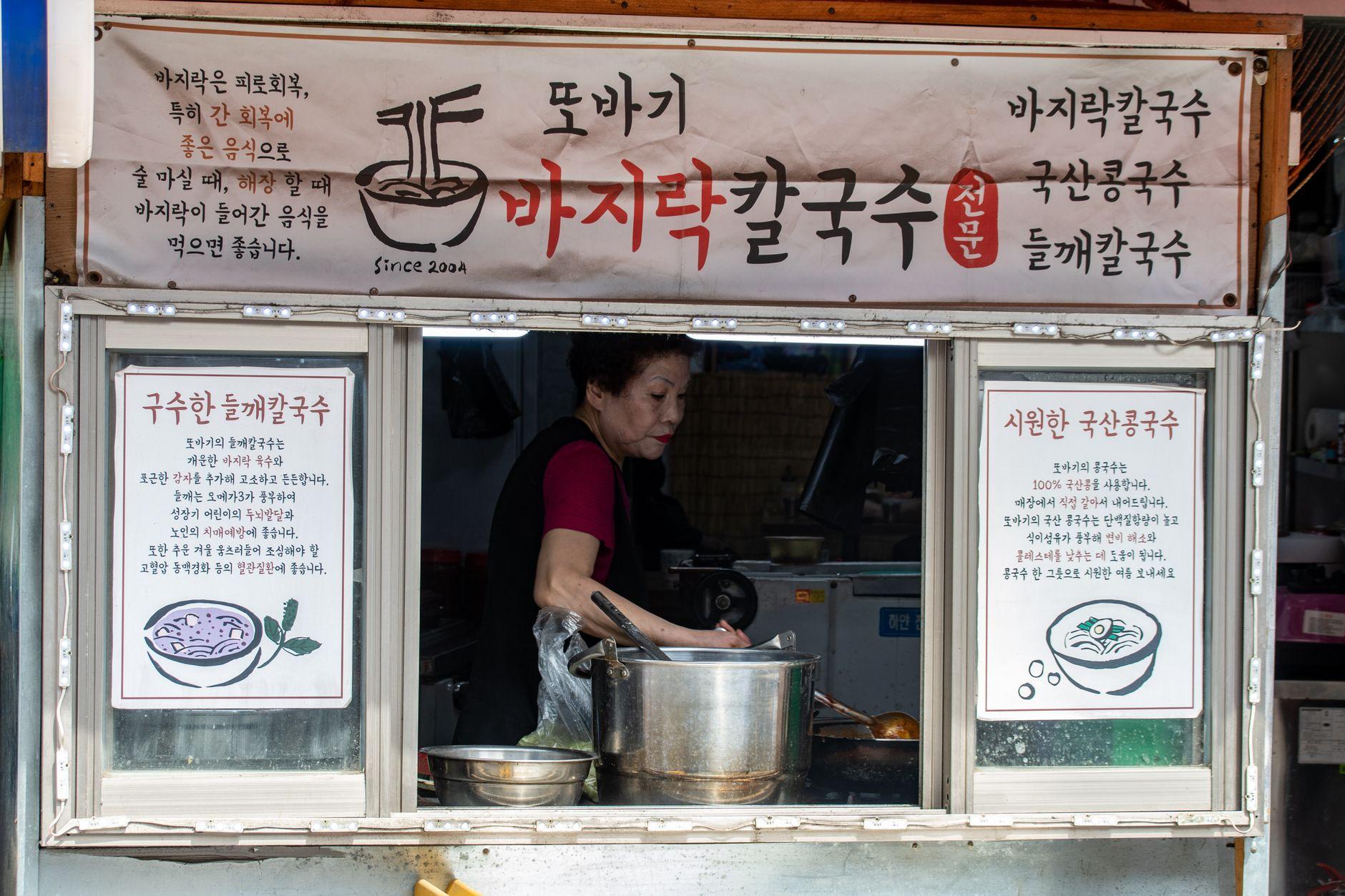
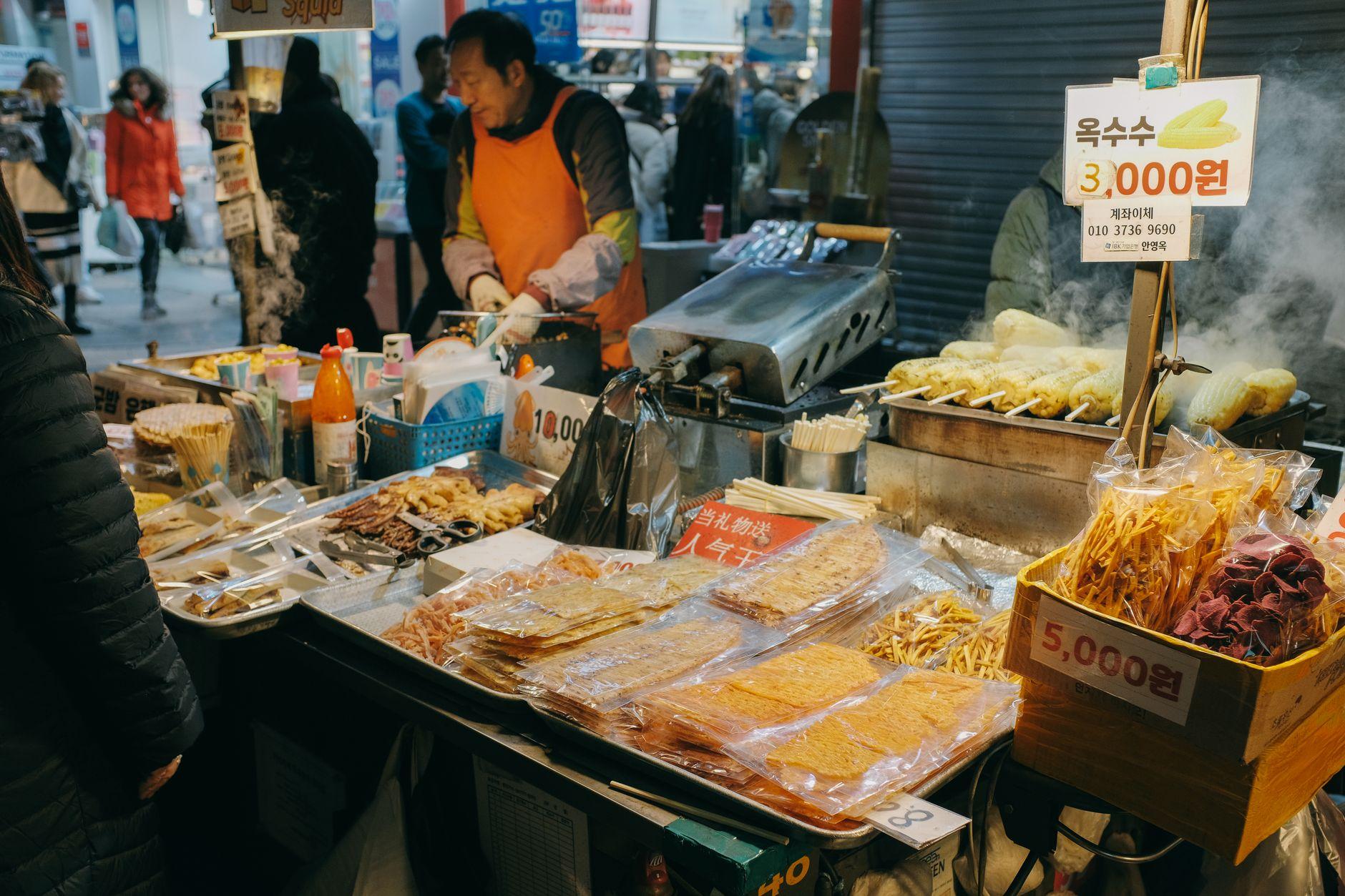
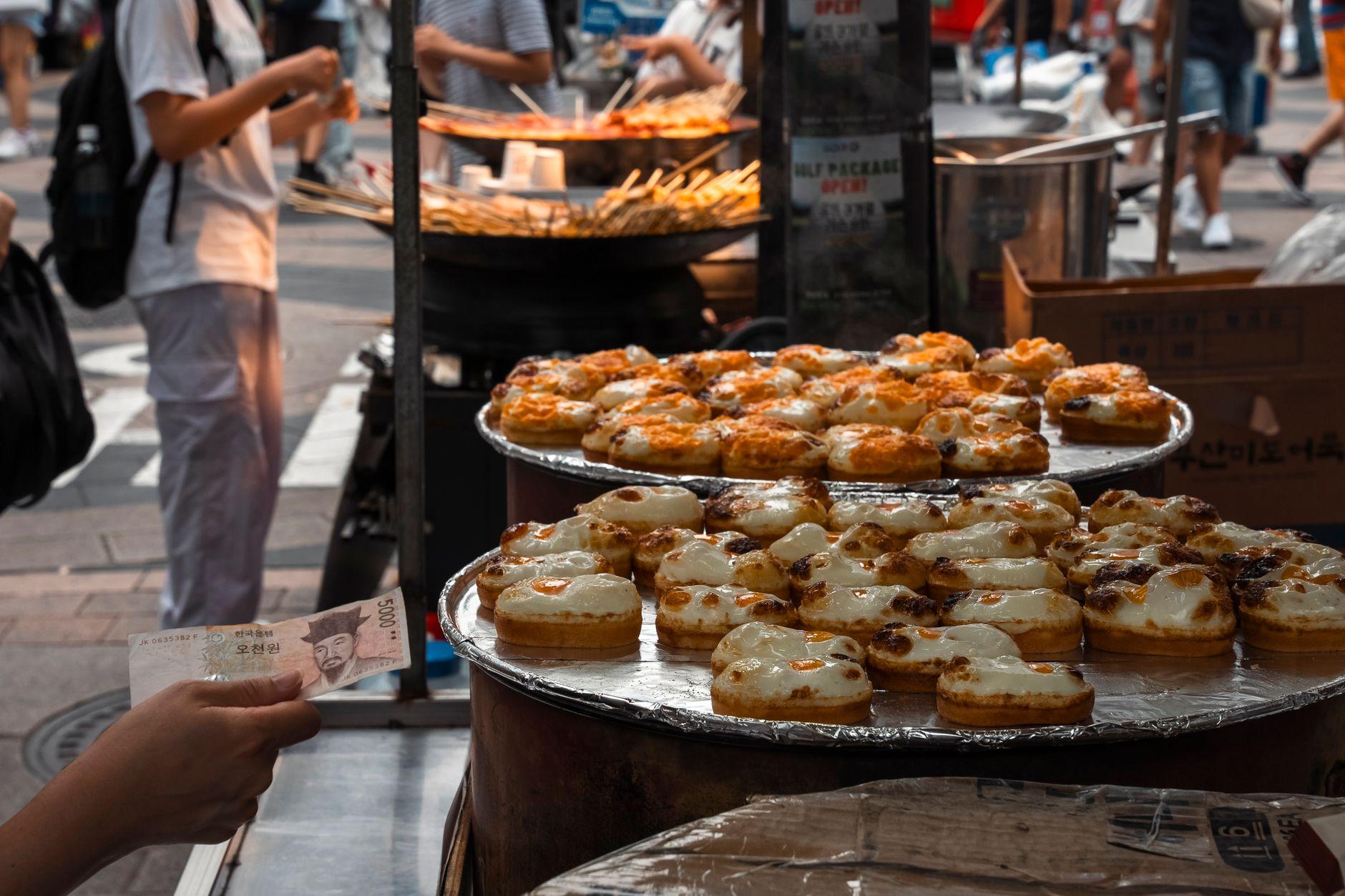
Now the gaps. Small eateries, the kind with six tables and one ajumma running the kitchen, often route everything through local payment apps or domestic-only cards. Traditional markets like Gwangjang or Mangwon are full of stalls where the payment options are a local QR code sticker, a Korean bank transfer, or cash they would rather not handle. Some self-order kiosks reject foreign cards outright with an unhelpful error in Korean. Online, plenty of Korean shopping and delivery platforms want a locally issued card or a verified Korean wallet.
And every foreign card swipe can carry a cost your bank does not show you at the terminal. If your card charges a markup on international purchases, it adds up fast in a country where you tap for everything. We broke down why that matters in our piece on the 3% foreign transaction fee.
The QR codes on Korean counters, and how to actually use them
Walk through a traditional market or a neighborhood of small shops and you will spot QR code stickers at the register, often the ones tied to Korea's merchant QR schemes that locals scan with their banking and wallet apps. For years these were locals-only, same as the apps.
This is where Moreta Pay changes the math for expats. You load the wallet from your home bank (US bank connection, ACH, SEPA, UK Faster Payments, Canadian e-Transfer) or an international card, in your own currency. No Korean phone verification, no ARC, no Korean bank account. At the counter, you scan the merchant's own QR code, the same one locals use, check the amount, the FX rate, and the merchant name on screen, and confirm. The stall owner gets paid in won, instantly, and you saw the exact conversion before you committed.
That last part matters more in Korea than you might think. When you cannot read the receipt and the vendor's English is limited, seeing the merchant name and the converted amount before you approve is your sanity check.
A realistic first-month setup
Here is the stack that actually works for a new expat in Seoul, Busan, or anywhere else in the country:
1. Transit: get a T-money card on day one. Buy it at any convenience store, load it with cash or card, and tap for subways, buses, and even some taxis and convenience store purchases. It sidesteps the app problem entirely for transport.
2. Big purchases: foreign card. Supermarkets, chains, electronics stores, pharmacies. Use whichever of your home cards has the lowest international markup.
3. Small eateries, markets, and QR-only counters: Moreta Pay. This covers the layer of Korean daily life that foreign cards and T-money cannot reach, which happens to be the best layer: the gimbap place near your office, the fruit stall, the tteokbokki cart.
4. A small cash reserve, maybe 50,000 won. Not because you will use it often, but because the rare cash-only situation (a temple donation box, an old-school jjimjilbang locker deposit) is annoying to hit unprepared. If you do need to withdraw, look for ATMs marked "Global," since standard Korean ATMs often reject foreign cards.
Notice this is deliberately more than one tool. Korea punishes single points of failure, and we have written before about why keeping all your travel money in one app is a bad idea anywhere. In Korea, where the dominant apps exclude you by design, redundancy is not optional.
Situations that trip up new arrivals, solved
The kiosk that hates your card. Cafe and fast food kiosks sometimes fail foreign cards at the final step. Skip the queue frustration: order at the counter instead if there is a human, or check whether the shop has a QR code you can scan.
The restaurant that says "card machine broken." Sometimes it is. Sometimes it means "we prefer transfers or local apps." A QR sticker on the counter is your opening. Scan it, show the confirmation screen, done.
Splitting bills with Korean friends. Locals will Kakao each other their shares in seconds. You cannot join that thread yet, so the smooth move is to be the one who pays the merchant directly for your part, or cover the table by card and let them transfer the host.
Online bookings. Platforms like Trip.com and Agoda that support QR-based checkout let you pay from your wallet the same way you would at a market stall, which is handy when a foreign card gets flagged mid-booking.
The verdict after living it
Can you live in South Korea without a Korean bank account? Yes, and more comfortably than in almost any other country, precisely because the infrastructure is so good. The catch is that the best parts of that infrastructure were built for people with Korean phone numbers and Korean banks. Your foreign card handles the big, corporate half of daily life. The small, delicious, neighborhood half runs on QR codes and local rails.
You do not need to wait for an ARC to join that half. Set up Moreta Pay before you land and the QR sticker at the market stall works for you the same day it works for the person in line behind you.