
I'll be honest. When I first landed in Phnom Penh, I thought I had it all figured out. I'd traveled through Thailand and Vietnam. I knew the drill. Grab some cash from an ATM at the airport, keep a stash of US dollars in my pocket, and wing it.
That plan lasted about two hours.
Cambodia runs on two currencies (sort of)
Here's the thing that catches most first-time visitors off guard — Cambodia operates on a dual-currency system. The US dollar is widely accepted across the country, but change is almost always given in Cambodian riel. So you hand a vendor a five-dollar bill for a two-dollar coconut, and you get back 12,000 riel. Suddenly you're doing mental math you didn't sign up for.
The official exchange rate hovers around 4,100 riel to one US dollar, but vendors round however they want. Sometimes in your favor. Usually not. And those crisp, perfect-condition dollars that ATMs in the US spit out? Those are fine. But try to use a slightly worn or older bill, and plenty of shops will refuse it entirely. It's one of those unwritten rules nobody tells you about until it's too late.
This dual-currency headache is honestly one of the biggest reasons I started looking for a better way to pay.
The ATM situation isn't great either
Cambodia has about 5,600 ATMs across the entire country. For perspective, that's fewer ATMs than most mid-sized American cities. In Phnom Penh and Siem Reap, you'll find them easily enough. But wander off the tourist trail — say, down to Kampot or out to the islands near Sihanoukville — and ATMs start to thin out fast.
When you do find one, the fees hit hard. Most Cambodian ATMs charge between $4 and $6 per withdrawal, and your home bank will likely tack on another $3 to $5 plus a currency conversion markup. Pull out cash three or four times during a week-long trip and you've burned through $30 to $40 in fees alone. That's a couple of nice dinners in Phnom Penh.
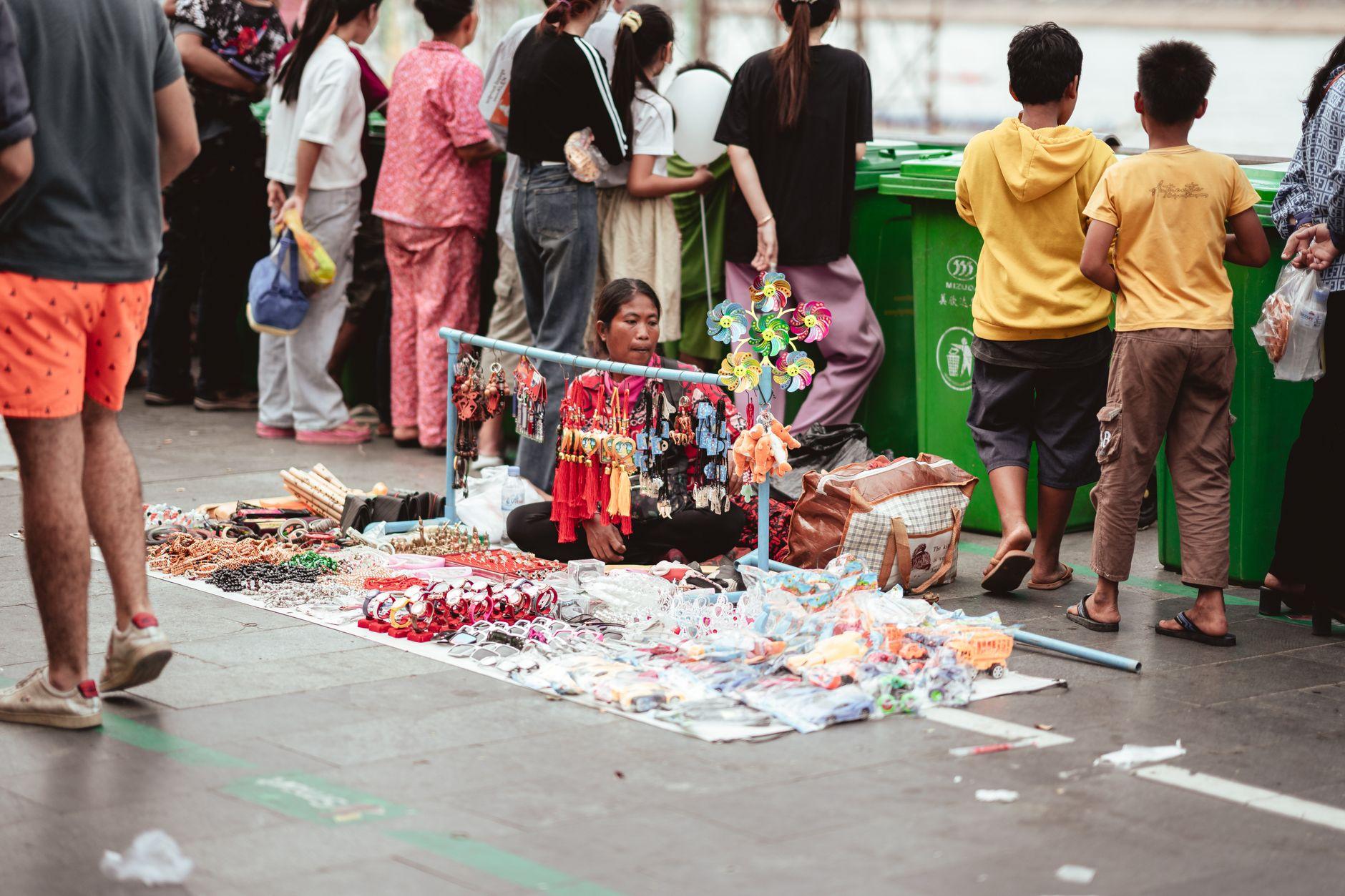
Credit cards aren't much better. Only around 52,000 card-swiping machines exist in the whole country, and most of them sit inside hotels, malls, and upscale restaurants. Your average tuk-tuk driver, street food vendor, or market stall? Cash or QR code. That's it.
KHQR changed everything
Cambodia quietly built one of the most impressive digital payment systems in Southeast Asia, and most Western tourists have no idea it exists.
It's called KHQR — the Khmer QR code standard — and it launched in 2022 as part of the country's Bakong payment platform. The idea was simple: instead of every bank and wallet app having its own QR codes, create one unified standard that works everywhere.
It worked. Today, there are over 3.3 million KHQR acceptance points across Cambodia. That's not a typo. Three-point-three million. From the night markets in Siem Reap to the coffee shops along the Phnom Penh riverside to the little guesthouses in Battambang, those black-and-white QR codes are basically everywhere.
For locals, KHQR connects through banks like ABA, ACLEDA, and Wing. For tourists, the experience used to be a lot more complicated. You either needed a local bank account or had to fumble around with the government's Bakong Tourist app, which — depending on who you ask — works great or crashes at the worst possible moment.
How Moreta fits into all of this
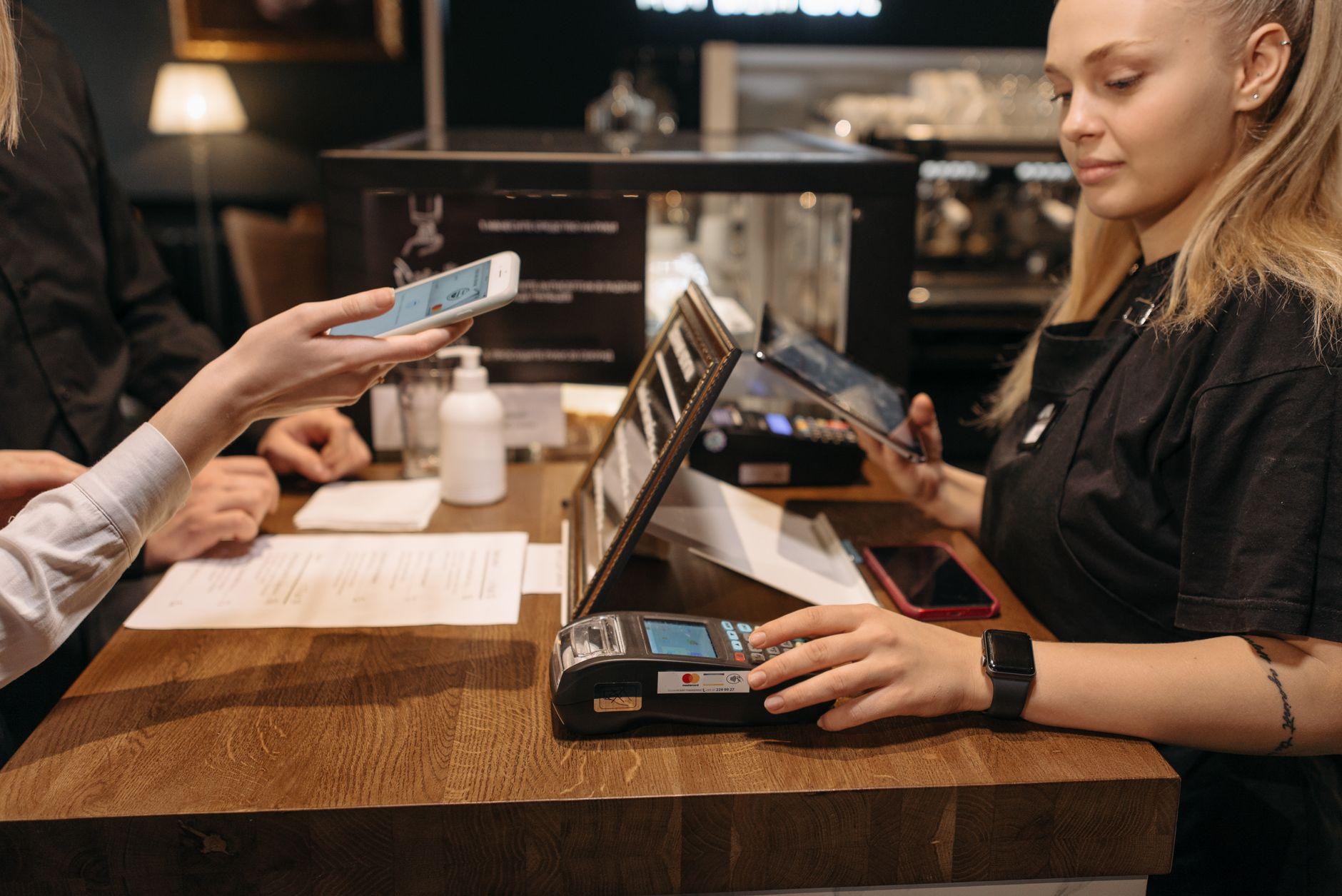
This is where things got a lot easier for me. Moreta connects directly to Cambodia's KHQR network, which means you can scan the same QR codes that locals use — at the same merchants, for the same prices — without needing a Cambodian bank account or a separate tourist app.
The setup takes a few minutes before you fly out. Download the app, verify your identity, connect your payment method, and load your wallet. When you land, you just open the app, scan the merchant's KHQR code, confirm the amount, and the payment goes through instantly. The merchant gets paid in riel or dollars on their end. You see the charge in your home currency with a clear exchange rate and no hidden markups.
I used it for everything. Morning iced coffee at a café in BKK1. Lunch at Central Market. A tuk-tuk ride from the Royal Palace to the Russian Market. Even the guy selling grilled corn on the street outside my guesthouse had a QR code taped to his cart.
The part that honestly sold me was the transparency. Every transaction shows you the exact exchange rate before you confirm. No guessing. No doing riel-to-dollar math in your head while a vendor waits. You see what you're paying, you tap confirm, and it's done.
Where QR payments work (and where they don't)
Let's be realistic though. Cambodia hasn't gone fully cashless, and I don't think it will anytime soon.
In Phnom Penh and Siem Reap, QR adoption is massive. Cafés, restaurants, convenience stores, markets, ride-hailing apps — you can genuinely go days without touching cash. I did a three-day stretch in Phnom Penh where I paid for everything by scanning codes, and the only time I needed cash was for a donation at Wat Phnom.
Outside those two cities, it's more mixed. Kampot and Kep are catching up quickly, and Sihanoukville's casino-heavy economy has pushed digital adoption forward. But if you're heading to smaller towns or truly rural areas, carry some cash as backup. The vendors at a floating village on Tonle Sap probably aren't set up for QR payments yet.
My rule of thumb: keep about $30 to $50 USD in small bills for emergencies, and do everything else digitally. That split covered me perfectly for two weeks across the country.
A few things I wish I'd known sooner
The dollar condition thing is real. Even when paying digitally, if you ever need to break a large bill or get cash back, Cambodians are strict about dollar bill quality. Anything with a tear, heavy crease, or pre-2006 print date might get rejected. This isn't a scam — it's just how things work here.
Riel coins don't really exist in practice. Everything rounds to the nearest 100 riel. Don't stress about exact change. Digital payments solve this entirely.
WiFi is your friend. QR payments need a data connection, and Cambodia's mobile data is cheap and fast. Grab a local SIM at the airport for a few dollars (Cellcard and Smart are the two big providers), or use an eSIM. I wrote about staying connected across Southeast Asia in more detail here.
Tipping is appreciated but not expected. In sit-down restaurants, 10% is generous. For tuk-tuk drivers and guides, a dollar or two goes a long way. You can tip digitally at restaurants that accept QR, but for drivers and guides, a cash tip still feels more personal.
What's coming next
Cambodia's payment infrastructure is moving fast. The National Bank of Cambodia has already connected KHQR with payment networks in Thailand, Laos, Vietnam, and Malaysia, with India's UPI system reportedly joining in 2026. The country is actively positioning itself as a hub for cross-border QR payments in the region.
For travelers, this means paying in Cambodia is only going to get easier. And if you're island-hopping across Southeast Asia, the fact that one app can handle QR payments in Cambodia today and Thailand or Vietnam tomorrow makes the logistics a lot less stressful.
I spent three weeks bouncing between Phnom Penh, Siem Reap, and Kampot last year. Between the temples, the food, and the people, Cambodia was one of my favorite stops in the region. And honestly, not having to think about cash and currency math the entire time made the experience that much better.