
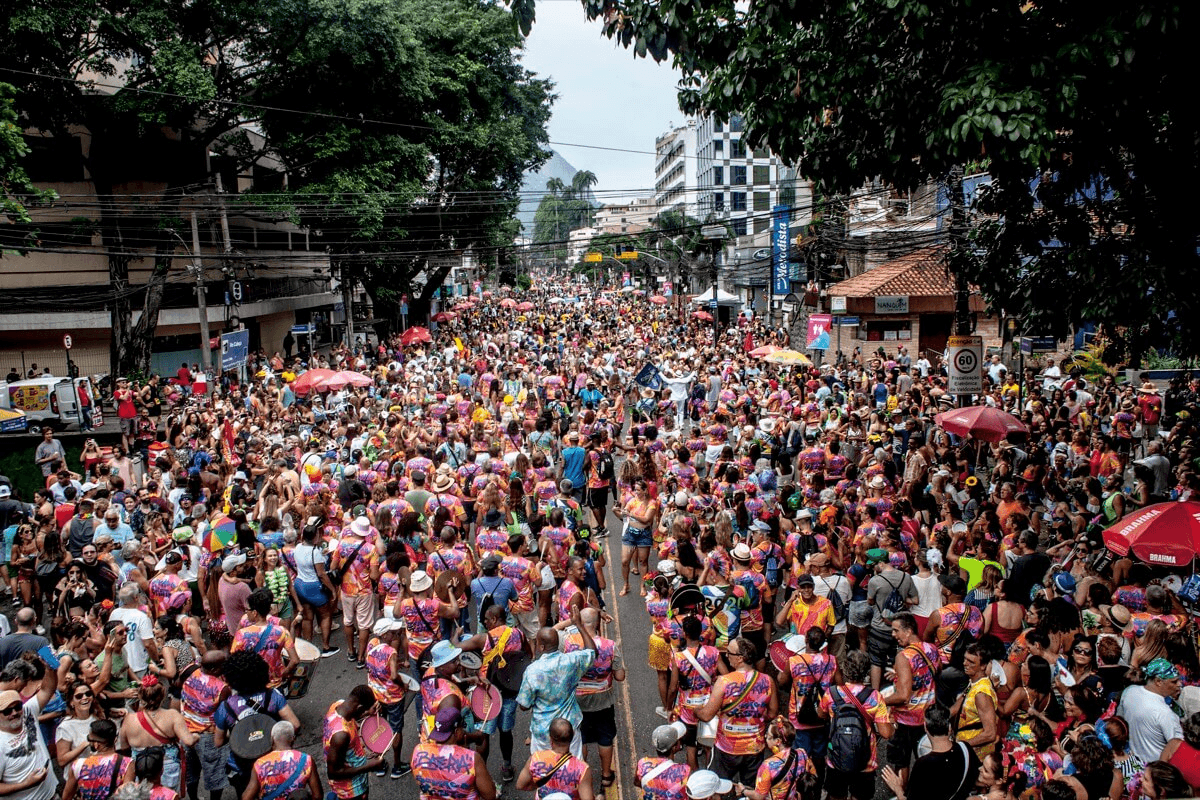
Rio has two moments every year when the city collectively loses its mind, in the best way. Réveillon, when two million people in white pack Copacabana beach for New Year's Eve fireworks. And Carnival, when the entire city becomes a five-day street party (February 5–9 in 2027, if you're planning ahead).
Both are absolutely worth the trip. Both will also quietly drain your wallet if you show up unprepared, because Rio during peak season runs on a payment system most tourists can't access and prices that double when the crowds arrive.
Here's how the money side actually works, so you can spend your energy on the blocos instead of hunting for an ATM.
First, Understand How Rio Pays
Brazil runs on Pix. Not "increasingly uses Pix" — runs on it. The instant payment system built by the Central Bank of Brazil handles everything from beach caipirinhas to taxi rides, and during Carnival it's how the vast majority of street transactions happen. Vendors wading through a bloco crowd with a cooler of Antarctica cans aren't carrying card machines. They're carrying a laminated QR code on a lanyard.
The catch: Pix was designed for people with Brazilian bank accounts, which means a CPF, which means paperwork no two-week visitor is doing. We covered the workaround in detail in our guide to using Pix in Brazil without a CPF, but the short version is that Moreta plugs directly into the Pix QR network. You scan the vendor's code, confirm in reais, and the money lands in their account like a local payment — no Brazilian bank, no CPF, no rejected foreign card.
During Carnival, that's not a convenience. It's the difference between buying water in a crowd of 100,000 people and going thirsty.
What Réveillon Actually Costs
New Year's Eve in Rio is deceptively cheap or wildly expensive depending on how you do it. The fireworks themselves are free — you stand on Copacabana with everyone else, dressed in white, and watch fifteen minutes of the best pyrotechnics on the planet.
The spending around it is where budgets go sideways:
- Beach kiosk dinner and drinks: R$150–300 per person on the night itself, roughly double normal prices
- Hotel parties and rooftop events: R$500–2,500+ per ticket for the big ones along Avenida Atlântica
- Beer or água de coco from a walking vendor: R$10–20, Pix or cash only
- Getting home: rideshares surge hard after midnight; expect 3–4x pricing or a very long walk
One thing veterans know: the metro runs extended hours on Réveillon and is by far the sanest way in and out of Copacabana. Load a transit card in advance, because the station queues after the fireworks are brutal.
What Carnival Actually Costs
Carnival splits into two very different price categories.
The street Carnival is nearly free. The blocos — roving street parties, hundreds of them across the city — cost nothing to join. Your spending is drinks, food and costumes, almost all of it from informal vendors. Budget R$100–200 a day if you're doing blocos, and expect nearly every transaction to be Pix or small cash.
The Sambadrome is the splurge. Tickets for the main parade nights run from around R$350 for upper grandstand seats to several thousand reais for front boxes, and prices climb as the date approaches. Buy from the official channels early — the resale market around the stadium on parade night is a scam minefield.
A realistic mid-range budget for five days of Carnival, including one Sambadrome night, decent food and a lot of street beer: R$2,500–4,000 per person, not counting accommodation. Speaking of which — book that now. Seriously. Rio accommodation for Carnival 2027 and Réveillon 2026/27 sells out months ahead and triples in price.
Why Cash Is a Bad Plan for Both
The traditional tourist approach — pull a stack of reais from an ATM and carry it around — fails in Rio's peak season for three specific reasons.
ATMs run dry. During Carnival week, machines in Copacabana, Ipanema and Lapa get emptied faster than they're refilled. Finding a working ATM on the Saturday of Carnival is a genuine quest.
The fees are ugly. Between the local bank's withdrawal fee (often R$25–30 per pull), your home bank's international fee and the conversion markup, you're losing 5–7% before you've bought a single beer.
Crowds and cash don't mix. Rio is safer than its reputation, but pickpocketing in dense bloco crowds is real. Locals go out with a phone in a waterproof pouch and R$50 in a shoe. The less physical money you carry, the less you can lose. This is exactly why Brazilians themselves switched to QR payments for street events — a phone you're already holding is the safest wallet in a crowd.
The Setup That Works
Here's the pre-trip checklist that takes fifteen minutes and saves you the entire headache:
- Download Moreta from the App Store or Google Play and verify with your passport before you fly.
- Top up in your home currency while you're still on home WiFi. Airport connections and crowd-jammed networks are not where you want to be doing bank transfers.
- Load enough for the big days. Réveillon night and the peak Carnival weekend are when you'll be scanning constantly — water, beer, food, more water.
- Keep R$100–150 in small notes as backup for the rare vendor who hasn't caught up, and for tipping.
- Check the recipient name after every scan. Pix shows you who you're paying before you confirm. Locals glance at it every time, especially in busy crowds. Do the same.
The rate you see in the app before confirming is the rate you pay — a flat 1.5% on QR transactions, no dynamic currency conversion games, no surprise on your statement in January.
A Few Crowd-Tested Tips
Buy your bloco drinks from the vendors with coolers, not the bars. They're cheaper, faster, and they all take Pix. The guy selling ice-cold cans out of a styrofoam box is the true infrastructure of Carnival.
Phone battery is money. If your phone dies, so does your wallet. A small power bank is the single most valuable thing you'll carry during a twelve-hour bloco day.
Screenshot your accommodation address and keep a little cash for a taxi in case your phone does die at 4am in Lapa. Redundancy is not paranoia during Carnival.
Agree on prices before handing anything over. Costume pieces, chair rentals on the beach, "helpful" parking guys — peak season brings peak creativity in pricing. A friendly "quanto custa?" first solves most of it.
One Wallet, Whole Trip
Plenty of travelers pair Rio with the rest of the continent — Buenos Aires after Carnival, or Peru before it. The same Moreta wallet that scans Pix codes in Rio handles MODO in Argentina and Yape in Peru, and if your travels swing the other direction, PromptPay in Thailand and beyond. One balance, one app, every QR code on the route.
Réveillon and Carnival are two of the best parties on Earth, and the people throwing them stopped carrying cash years ago. Set yourself up before you fly, and you can stop thinking about money roughly thirty seconds after you land.
If anything gets weird mid-bloco, the Help Center has you covered — and yes, someone actually answers.