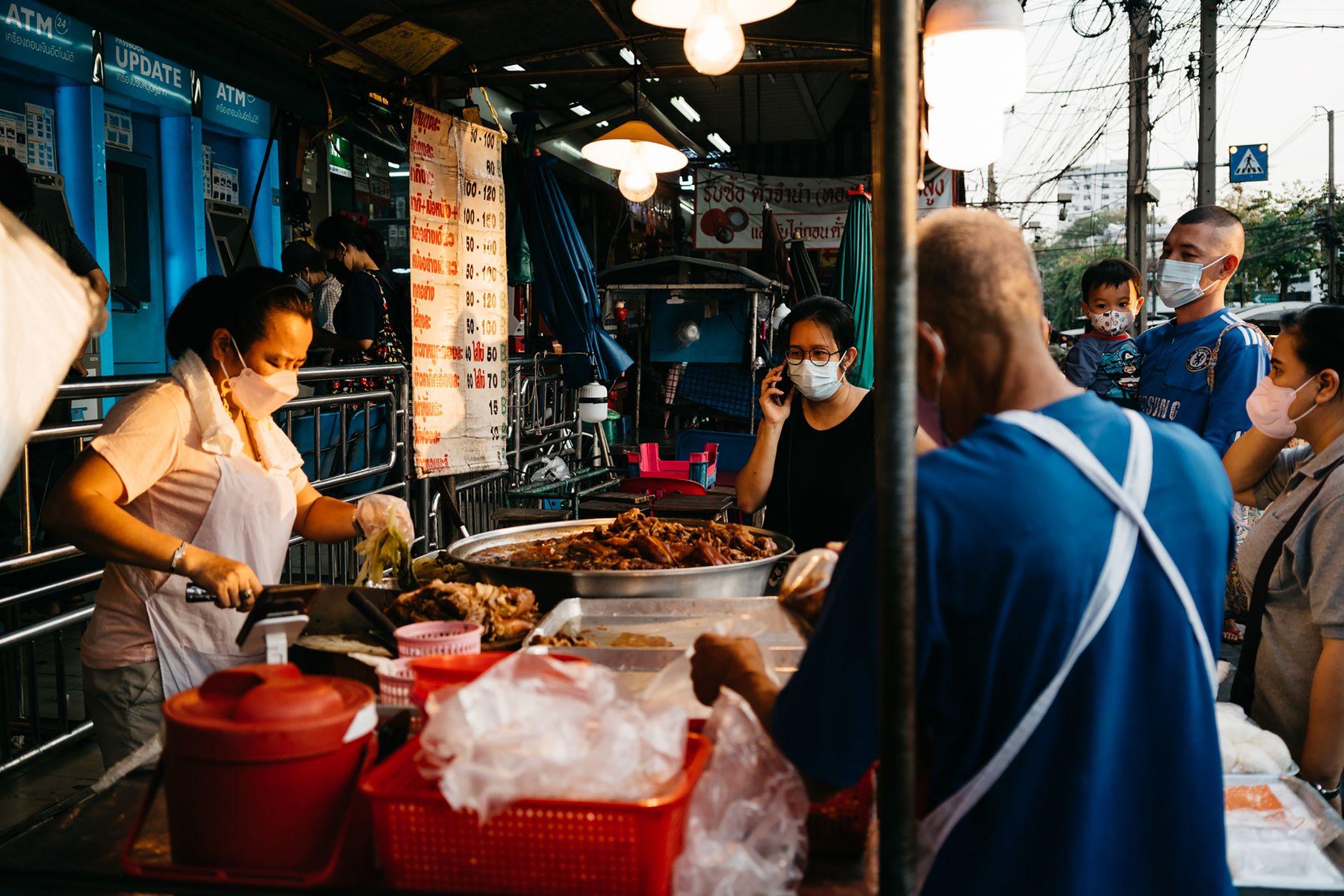


South Korea is one of the most cashless societies on earth, and it shows within an hour of landing. The person ahead of you at the GS25 taps their phone. The cafe in Seongsu-dong has a tablet at the counter and no visible cash drawer. Your Kakao T driver ends the ride without ever discussing payment because it was handled in the app. And yet, the moment you sit down at a tiny kimbap shop in a back alley of Mangwon or try to buy hotteok at Gwangjang Market, you discover that “cashless” in Korea does not automatically mean “foreigner friendly.”
So how should a visitor actually pay in South Korea? There are four real options: cash, your foreign card, the local wallets (KakaoPay and Naver Pay), and a travel wallet like Moreta Pay that plugs you into local QR payments. Each one works in some situations and fails in others. Here is the honest comparison.
Option 1: Cash (won in your pocket)
Cash still works almost everywhere in Korea in the sense that nobody will refuse it. Traditional markets like Gwangjang and Namdaemun, older restaurants run by one halmeoni and a griddle, and street food carts in Myeongdong are all comfortable with won. Cash is also the classic way to load a T-money transit card at a convenience store.
The problems are practical. To get won you need ATM runs, and not every Korean ATM accepts foreign cards, so you end up hunting for the “Global ATM” machines in convenience stores and metro stations. Your home bank may charge withdrawal and foreign transaction fees on top of whatever the ATM charges. And carrying a thick stack of 50,000 won notes for a two week trip feels increasingly out of step with a country where locals barely touch cash at all. Verdict: keep a modest cash reserve for markets and emergencies, but building your whole trip around it is the expensive, inconvenient path.
Option 2: Your foreign credit or debit card
Here is the good news: foreign cards genuinely work in a lot of Korea. Department stores, chain cafes, convenience stores, hotels, and most sit-down restaurants in Seoul and Busan will take an international Visa or Mastercard without drama. If your trip is mostly Starbucks, Shilla Duty Free, and hotel restaurants, a card alone might carry you.
The cracks appear exactly where the most interesting food and shopping live. Small eateries, market stalls, hole-in-the-wall bars in Euljiro, and some family-run guesthouses are set up for local payment methods and cash, not international card networks. Online is worse: many Korean shopping and booking sites are built around Korean-issued cards and identity verification, and foreign cards get rejected at checkout with no explanation. Add foreign transaction fees and dynamic currency conversion prompts (always choose to pay in won, never your home currency, if a terminal asks), and your card becomes a good backup rather than a complete answer.
Option 3: KakaoPay and Naver Pay, the local giants
This is how Korea actually pays. KakaoPay lives inside KakaoTalk, the messaging app installed on essentially every Korean phone. Naver Pay is woven through Naver, the search and shopping platform Koreans use instead of Google. Between them they cover offline QR and barcode payments, online checkout, bills, and transfers between friends. Small merchants that shrug at your Visa will happily take a KakaoPay scan, and both wallets work with ZeroPay, the QR network that many small shops and market vendors joined precisely because it is cheap for them to accept.
The catch is brutal for visitors: signing up realistically requires a Korean phone number and Korean identity verification, and full functionality leans on a Korean bank account. A tourist SIM with a local number sometimes gets you partway, but most travelers hit a verification wall and give up. Unless you are an expat with an Alien Registration Card and a Korean bank account, the local wallets are effectively closed to you. Which is frustrating, because they are clearly the best way to pay here.
Option 4: Moreta Pay, joining the QR ecosystem without the Korean paperwork
This is where a travel-focused wallet changes the math. Moreta Pay lets you scan the same standard local QR codes that merchants already display for their Korean customers, using your own phone and your own money from home. You top up the wallet in your own currency, from a US bank via Plaid or ACH, European SEPA, UK Faster Payments, Canadian e-Transfer, or an international credit or debit card. At the counter you scan the merchant’s QR code, see the amount, the merchant name, and the exact FX rate before you confirm, and the merchant gets paid instantly in won. No Korean phone verification, no local bank account, and no hidden foreign transaction fees.
The pros are obvious: you get access to the local-payment-only tier of Korean commerce, the small eateries and market stalls where cards fail, without opening anything in Korea. The transparent FX shown before every payment also solves the quiet problem with cards, where you only learn what a purchase really cost when your statement arrives. The honest cons: it is a QR wallet, so it helps where merchants display a QR code, and you will still want a card or some cash for the places that only take tap-to-pay terminals or bills. Like any comparison, no single tool covers one hundred percent of Korea.
Real situations, real answers
Street food at Gwangjang Market: cash always works, and vendors on QR networks can take a scan from your phone. Foreign card? Usually not.
A third-wave cafe in Yeonnam-dong: foreign card almost certainly fine, QR often available too.
Transit: get a T-money card and top it up, this is one place cash still earns its keep.
Late night convenience store run: anything works, this is the easiest payment environment in the country.
A tiny lunch spot with a handwritten menu: this is exactly where locals scan and tourists fumble. Having a QR wallet like Moreta Pay on your phone is the difference between paying like a local and sheepishly asking if they take Visa.
So what should you actually carry?
The conclusion writes itself once you line the options up. Carry a small amount of cash for markets and transit top-ups. Bring your foreign card for hotels, chains, and anywhere with a proper terminal. Skip the fight with KakaoPay verification unless you are moving to Korea long term. And fill the gap that cards and cash leave, the QR-first world where everyday Korea actually pays, with a wallet built for exactly this situation.
Moreta Pay was made for travelers, nomads, and expats who want to scan the same codes locals scan, fund it from their home bank or card, and see the real exchange rate before every single payment. Set it up before you land in Seoul and the whole trip gets simpler. Get started at moretapay.com.