
There is a specific moment most travelers in Thailand know well. You are standing at an ATM in Bangkok or Chiang Mai, you have tapped through the menus, and the screen announces a 220 THB fee for using a foreign card. Then it offers to convert the withdrawal into your home currency at a rate that looks suspiciously generous to the machine. You sigh, you accept, because you need cash for the taxi waiting outside.
Multiply that moment by a two week trip, or by a few months of nomad life in Thailand, and it adds up to real money spent on nothing. The good news is that in 2026 there are several ways to pay in Thailand, and the ATM is arguably the worst of them. Here is an honest look at each option, with the tradeoffs laid out, so you can decide what belongs in your pocket.
The ATM run: familiar, reliable, and quietly expensive
Cash still works everywhere in Thailand. That is its whole argument. The song thaew driver, the som tam lady, the guy renting scooters on a Koh Lanta side street: all of them take baht notes without a second thought.
The problem is how you get those notes. Thai ATMs charge foreign cards a flat fee per withdrawal, commonly 220 THB, and that is before your home bank adds its own foreign transaction charges. Then there is the dynamic currency conversion trap, where the machine offers to charge you in dollars or euros at a rate it chooses. Decline that offer every single time and let your bank convert instead.
Cash also carries practical friction. You need to guess how much you will spend, carry the surplus around, break large notes at 7-Eleven, and deal with whatever is left at the end of the trip. If you underestimate, you are back at the ATM paying the fee again.
Verdict: keep a modest cash reserve for markets, tips, and edge cases. Do not make the ATM your primary funding strategy.
Your foreign card: great at the mall, useless at the noodle stall
Visa and Mastercard work fine in a specific slice of Thailand: hotels, department stores like Central, chain restaurants, and anywhere built for international visitors. Tap to pay at those places and life is easy.
Step outside that slice and the picture changes fast. Street food vendors, most taxis, small guesthouses, laundry shops, and a surprising number of ordinary restaurants either do not have a card terminal or politely refuse foreign cards. Some smaller merchants that do take cards add a surcharge, and again you may face the dynamic currency conversion question at checkout.
Even where cards work, your home bank may be quietly adding a foreign transaction fee to every purchase, which you only notice when the statement arrives.
Verdict: useful as a backup and for big-ticket bookings, but you cannot eat, ride, or shop like a local on a foreign card alone.
PromptPay: how Thailand actually pays
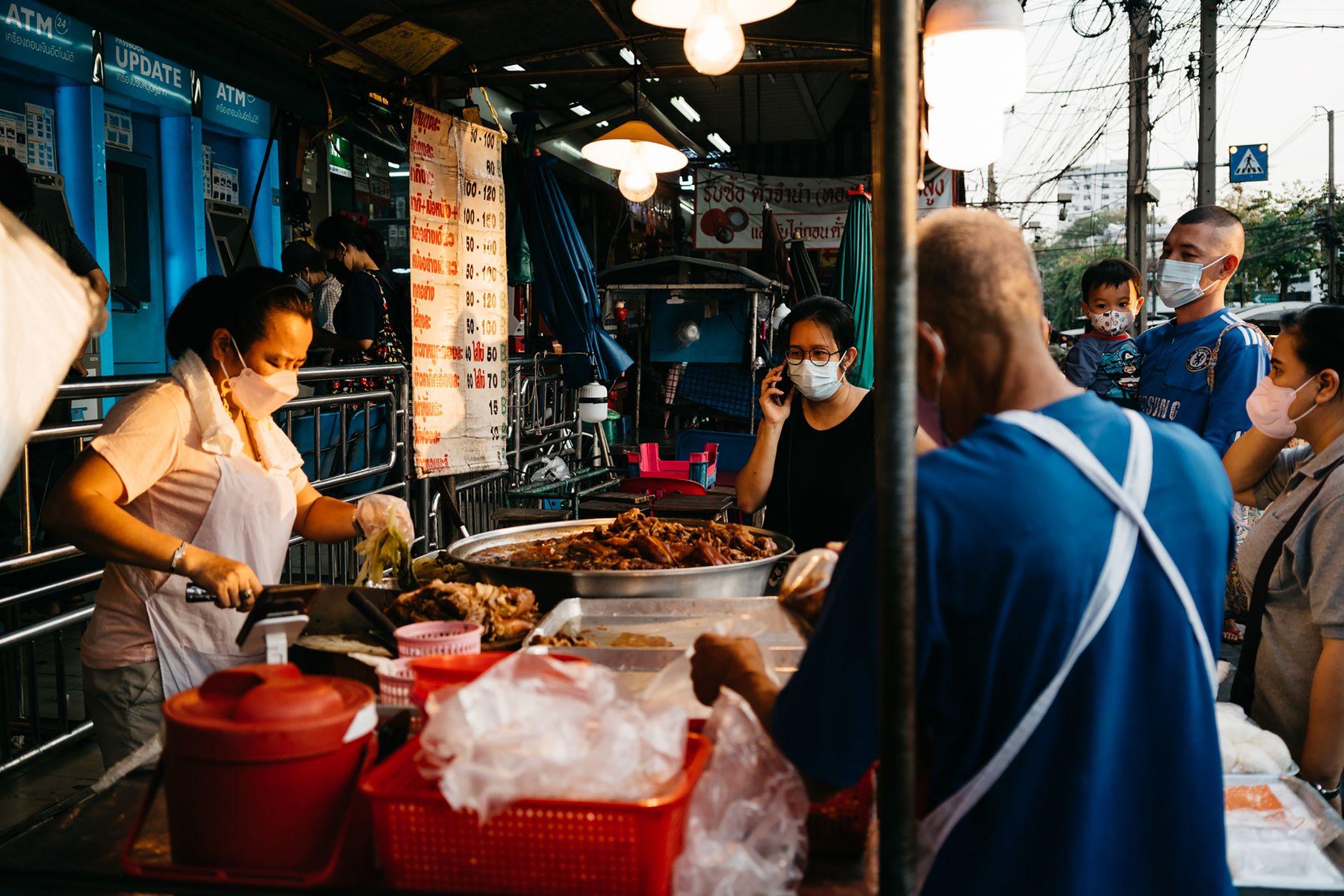
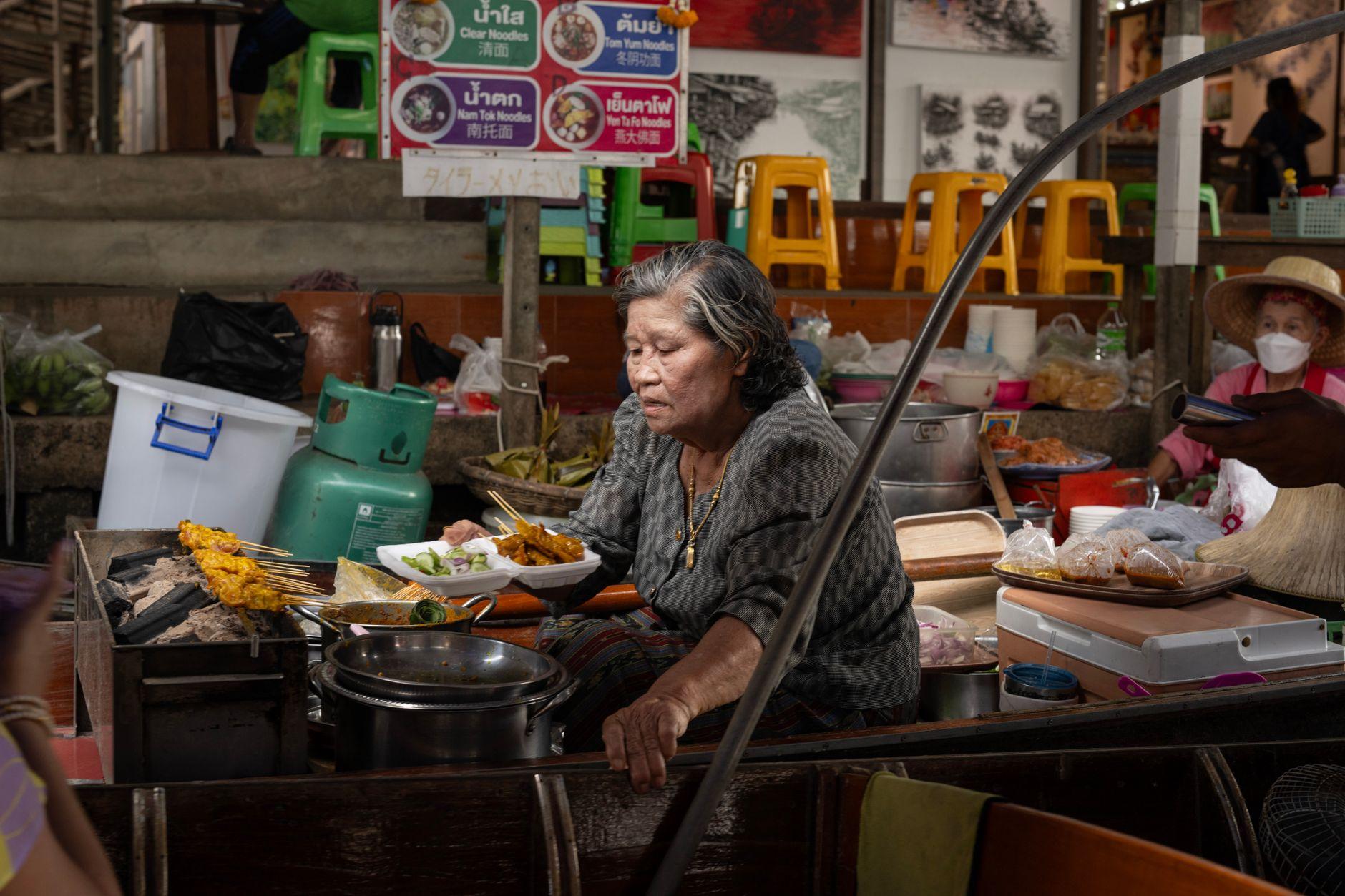
Spend one day in Thailand and you will notice the laminated QR codes taped to every counter. That is PromptPay, the national QR payment system, and it is genuinely everywhere: the 7-Eleven till, the boat noodle stall, the massage shop, the taxi dashboard. Many drivers now operate on a strict cash-or-QR basis and will wave off a card entirely. Locals scan, confirm, and walk away, and the merchant sees the money instantly.
Here is the catch for visitors. PromptPay runs through Thai bank apps, and opening a Thai bank account typically requires long-stay paperwork that a tourist or a fresh arrival simply does not have. So the best payment rail in the country sits right in front of you, on every counter, and your phone cannot use it. We wrote about this exact frustration across Asia in The QR Codes You Can’t Scan, and Thailand is one of the clearest examples.
Verdict: the best way to pay in Thailand, if you can get access to it. For most travelers and new expats, the local route is closed.
A wallet that speaks PromptPay: the workaround that changed the math
This is where Moreta Pay fits. It is a wallet you fund from home, using a US bank connection, ACH, SEPA, UK Faster Payments, Canadian e-Transfer, or an international card, in your own currency. In Thailand, you point it at the same PromptPay QR code the locals scan. Before you confirm anything, you see the amount, the merchant name, and the exact exchange rate on screen. Tap confirm, the wallet converts to baht, and the vendor is paid instantly, same as if a Thai customer had scanned.
Compared to the alternatives, the tradeoffs look like this. There is no 220 THB toll every time you need spending money, because you are not withdrawing anything. There is no dynamic currency conversion ambush, because the rate is shown before you pay, not decided by a machine after the fact. There are no hidden foreign transaction fees. It also covers QR-based online checkouts on platforms Thais actually use, like Lazada, Shopee, Agoda, and Trip.com, which matters when a Thai booking site quietly assumes you can pay by local QR.
The honest limitations: you need a smartphone with signal, and you need the merchant to have a QR code. In Thailand that second condition is nearly universal, far more so than in most countries. If you have traveled elsewhere in the region, the setup will feel familiar; it is the same story as DuitNow in Malaysia, just with PromptPay on the sticker.
How the options stack up on an ordinary Thai day
Morning coffee and a bowl of khao soi: cash works, card almost certainly does not, PromptPay QR is taped to the counter. Scan with Moreta Pay or hand over notes.
Grab or a street-hailed taxi: often cash or QR only. A foreign card gets you a shrug.
7-Eleven run: everything works here, but the QR line moves fastest and there is no minimum-spend awkwardness.
Night market dinner: cash or QR territory, full stop. This is where card-only travelers end up hungry or hunting for an ATM at 9pm.
Hotel and flights: your regular card is fine, though watch for foreign transaction fees from your home bank.
Booking a ferry or hotel on a Thai platform: local QR checkout is common, and a QR-capable wallet saves you from a failed foreign card at the payment step.
What actually belongs in your pocket in Thailand
The conclusion writes itself once you lay it out. Carry some cash, maybe one careful ATM withdrawal’s worth, for the rare cash-only edge case. Keep your foreign card for hotels and emergencies. Then do the bulk of your daily spending the way Thailand itself does, by scanning PromptPay QR codes, with the rate visible before every tap.
The same maths applies across Southeast Asia. In Vietnam, Cambodia, the Philippines and Malaysia the ATM stacks the same fees and the same dynamic currency conversion trap, so the advice carries over: decline the machine's conversion, withdraw once rather than often, and do your everyday spending on the local QR network with a wallet like Moreta Pay. See the guides for Vietnam, Cambodia, the Philippines and Malaysia.
If you want to land at Suvarnabhumi already able to pay the taxi queue, the noodle stall, and the 7-Eleven without touching an ATM, set up Moreta Pay before your flight and let that 220 baht fee become someone else’s problem.