

Nobody warns you properly about paying in China. Guidebooks still talk about crisp yuan notes and hotel currency desks, then you land in Shanghai and watch a grandmother buy vegetables by scanning a laminated square of dots. Here are the questions travelers actually type into search bars at midnight, answered without the fluff.
Is it true that shops in China refuse cash?
Often enough that you should plan around it. Yuan is still legal tender, and larger businesses will technically accept it, but China moved to QR payments so completely that many smaller vendors simply stopped keeping change. Hand a 100 yuan note to a noodle stall owner in Chengdu and you may get a sigh, a shake of the head, or a five minute wait while someone runs next door to break it. Street vendors, market stalls, small cafes, and plenty of taxi drivers operate entirely through WeChat Pay and Alipay. Cash is not banned. It is just an inconvenience that everyone around you abandoned years ago.
Will my Visa or Mastercard work in China?
At an international hotel chain, probably. Almost anywhere else, no. Foreign card acceptance in China is minimal outside of businesses built for tourists. The domestic system runs on QR codes tied to local apps and local bank accounts, and the card terminal you are used to tapping simply is not part of daily commerce. Even where a card is accepted, you can still lose money to conversion tricks, which is why a card marketed as fee free abroad is not the safety net it sounds like. The honest answer is that a foreign card is your backup for hotels and airports, not your plan for the trip.
How do people actually pay for things in China?
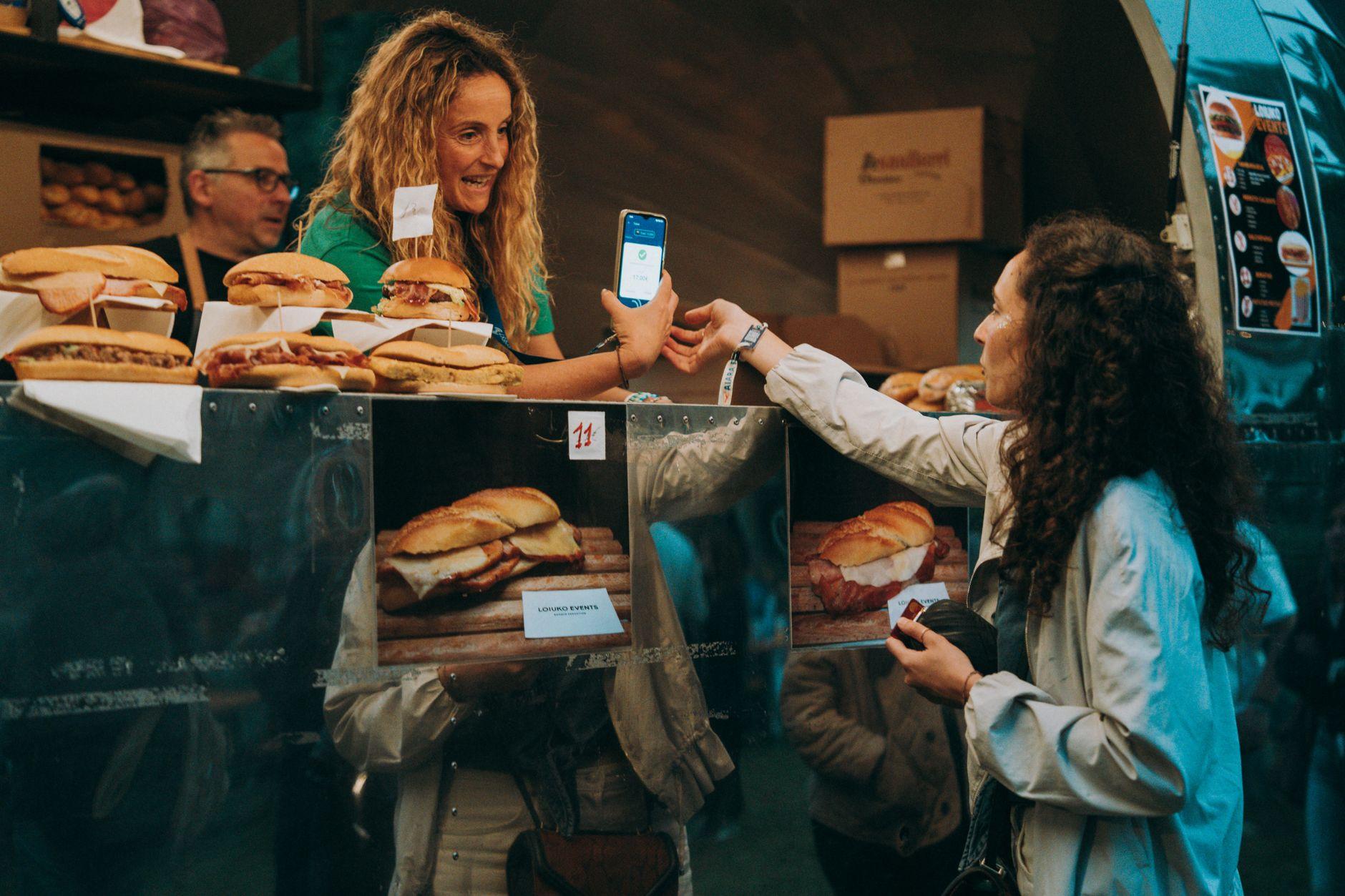
Two ways, both by phone. Either the customer scans a QR code the merchant displays, or the merchant scans a barcode on the customer's screen. That is it. Restaurants, taxis, convenience stores, temple entrance fees, bicycle rentals, vending machines, even buskers, all settled by QR in seconds. Many restaurants have gone a step further: the QR code taped to your table is also the menu and the ordering system. You scan, order, and pay without a server ever taking your card, because there is no card.
Can foreigners set up WeChat Pay or Alipay?
It has gotten easier than it used to be, but travelers still hit walls: identity verification steps designed around Chinese documents, linking a foreign card that gets rejected, verification codes that never arrive, or an account that works on day one and locks on day four. Some visitors get through the setup smoothly. Many do not, and they usually discover this at a moment when they need to pay someone who is standing there waiting. If you go this route, do it before you travel, not at the airport, and read up on how to vet any payment app before trusting it with your money.
What happens if I genuinely cannot pay?
This is the scenario that fills travel forums. A tourist finishes dinner in Xi'an, the restaurant does not take cards, the cash drawer has no change for a large note, and the WeChat Pay setup fails on the spot. The usual outcomes: a kind stranger pays and accepts your cash, a manager reluctantly digs up change, or you stand there for twenty awkward minutes. Taxis are worse, because the driver wants to move on to the next fare. None of this ruins a trip on its own, but it happens over and over, at breakfast, at the museum, at the tea shop, and the accumulated friction is exhausting. The mistake is not carrying too little money. It is carrying money in a form the country stopped using.
So how do I pay by QR in China without a Chinese bank account?
This is exactly the gap Moreta Pay was built for. You top up a wallet in your own currency from your home bank (US bank connection, ACH, SEPA, UK Faster Payments, Canadian e-Transfer) or an international card, before you ever board the plane. In China, you point your phone at the same merchant QR code every local scans, including WeChat Pay codes, review the amount, the exchange rate, and the merchant name on your screen, then confirm. The wallet converts to yuan and the merchant is paid instantly. No Chinese bank account, no local SIM verification maze, no hoping your foreign card survives the linking process. You see the FX rate before you approve anything, so there is no mystery markup discovered on a statement three weeks later.
Should I still carry any cash in China?
A small amount, yes. Keep a modest stash of yuan in small notes for the rare vendor with a dead phone battery, a rural stop where connectivity drops, or a temple donation box. Think of cash in China the way you think of a paper map: worth having, unlikely to be your main tool. What you should not do is arrive with a thick envelope of exchanged currency and expect to spend it down. You will spend the trip hunting for places willing to take it.
What about trains, hotels, and shopping apps?
Booking platforms popular with travelers in Asia, like Trip.com and Agoda, sit inside the same QR payment world at checkout, and Moreta Pay handles QR based online payments there too. For domestic Chinese apps and in person train ticket counters, having a working QR payment method matters just as much as it does at a street stall. The pattern repeats everywhere: the whole country assumes you can scan.
What should I do before my flight lands?
Three things. First, set up your QR payment method while you still have reliable home internet and your bank can verify you easily. Second, load enough to cover your first day or two, so a delayed top up never leaves you stranded at a taxi rank. Third, get a small amount of yuan in small denominations as your fallback layer, and then stop worrying about cash entirely. Travelers who sort this out before departure describe China as one of the easiest places on earth to pay for things. Travelers who wing it describe standing in a dumpling shop doing charades. Set up Moreta Pay before you fly and land on the right side of that divide.