
I didn't plan to spend forty minutes haggling over a kilo of mangosteen.
But there I was, deep inside Chợ Bình Tây in Saigon's Chinatown, sweating through my shirt while a woman in her seventies counted out my change and laughed at my Vietnamese. I'd pointed at her QR code, scanned it with Moreta, paid ₫60,000, and somehow ended up with twice the fruit I asked for plus a free handful of rambutan "for the face," she said, gesturing at my sunburn. That's the thing about Vietnamese markets. You go in for one thing and leave with a story.
Everyone talks about Vietnam's night markets — and fair enough, they're great. But the daytime markets are where the country actually shops. These are the working markets, the ones that have been feeding neighborhoods for a hundred years, where the produce is freshest before noon and the fish is still flapping. After a few months crisscrossing the country, here are the ones I'd send anyone to, and how I paid for everything without ever hunting down an ATM.
Bến Thành Market, Ho Chi Minh City
Let's get the obvious one out of the way. Bến Thành is the market every guidebook puts on the cover, which means half of travel Twitter will tell you to skip it. Don't. Yes, it's touristy. Yes, the souvenir vendors will quote you triple. But the food court at the back is genuinely excellent, the central produce and spice aisles are beautiful, and the building itself — that French-colonial clock tower out front — is a piece of Saigon history.
Go early. The market opens around 6 AM and the morning hours, before the tour buses arrive, are when you'll see locals doing their actual shopping. Prices on souvenirs are negotiable (start at half), but food and produce are mostly fixed. I grabbed a bowl of bún mắm and a sugarcane juice for around ₫70,000 and paid by scanning the stall's code. Almost every vendor inside has one taped to the counter now.
Chợ Bình Tây, Cholon
If Bến Thành is the postcard, Bình Tây is the real thing. This is the beating heart of Saigon's Chinatown — a sprawling wholesale market where the city's shopkeepers come to stock up. The architecture alone is worth the trip out to District 6: a gorgeous courtyard layout with a clock tower and a little garden in the middle.
You're not really here to buy one of anything. You're here to wander, to watch commerce happen at a scale that's almost overwhelming, and to eat at the food stalls ringing the building. Dried goods, fabric, kitchenware, mountains of candy and tea — it's a sensory overload in the best way. Bring a little cash for the smallest vendors, but most of the established stalls take QR without blinking.
Chợ Đồng Xuân, Hanoi
Up north, Đồng Xuân is the largest covered market in Hanoi and has been since it opened in 1889. It sits at the top of the Old Quarter, and like Bình Tây, it leans wholesale — three floors of clothing, fabric, accessories, and household goods, with a wet market and food section that locals swear by.
The ground floor is chaos. Embrace it. The upper floors are calmer and good for browsing fabric if you're getting something tailored (Vietnam is fantastic for this). On weekend evenings the streets around the market close to traffic and turn into a walking street, but during the day it's all business. I paid for a custom-stitched bag here entirely through Moreta Pay — the vendor actually preferred it, since it saved her digging for change on a ₫500,000 note.
Chợ Đông Ba, Hue
Central Vietnam doesn't get enough market love. Đông Ba, sitting on the bank of the Perfume River in Hue, is the oldest and largest market in the region. It's the place to find Hue's specialty foods — the city has its own distinct cuisine thanks to its imperial past — and the local conical hats (nón lá) that the area is known for.
Come hungry. Hue food is some of the most underrated in the country: bún bò Huế (a spicy beef noodle soup that puts most phở to shame, sorry), bánh khoái, and a dozen kinds of little rice cakes you'll struggle to name but won't stop eating. A full lunch crawl ran me about ₫120,000. Coverage for QR payments here is slightly thinner than in the big cities, but the food vendors are well set up for it.
Chợ Hàn and Chợ Cồn, Da Nang
Da Nang has two markets worth your time, and they serve different purposes. Chợ Hàn (Han Market) is the central, more tourist-friendly option near the river — good for dried seafood, coffee, cashews, and souvenirs you can actually fit in a bag. Chợ Cồn is bigger, older, and far more local, with a food section that's a destination in itself.
I'd do both in one morning. Start at Cồn for breakfast — the mì Quảng and bánh bèo here are excellent and cost almost nothing — then walk to Hàn to pick up coffee beans and dried mango to take home. Da Nang's QR coverage is among the best in the country; I scanned for nearly everything, from a ₫15,000 coffee to a ₫400,000 haul of gifts.
Chợ Đà Lạt, Central Highlands
Dalat is a different Vietnam altogether — cool, misty, pine-covered hills where the country grows most of its temperate produce. The central market reflects that. Instead of tropical fruit and seafood, you get strawberries, artichokes, avocados, flowers, and jars of every kind of jam and dried fruit imaginable.
The market is busiest in the evening when the surrounding square fills with food stalls (the avocado ice cream is non-negotiable), but the daytime produce floor is the real draw. It's also one of the most photogenic markets in the country, all neat pyramids of fruit and bundles of flowers. I loaded up on dried strawberries and artichoke tea and paid the whole lot in two quick scans.
Cái Răng Floating Market, Can Tho
Save the best for the most unusual. Cái Răng, on the Mekong Delta near Can Tho, is a floating market — commerce that happens entirely on boats. Wholesalers tie a sample of what they're selling to a tall pole above their vessel so buyers can spot them from a distance: a pineapple on a pole means pineapples for sale.
You'll need to be on the water by around 6 AM to catch it at full swing, which means an early start and a hired boat from the Can Tho waterfront. Buy a bowl of noodle soup or a coconut from a passing vendor — they'll pull right up alongside your boat. Cash is still more common out here than anywhere else on this list, given the floating-vendor setup, but more boats are taping up QR codes every year. It's worth seeing before it changes entirely.
How to Actually Pay at Vietnamese Markets
Here's the honest breakdown, because it'll shape your trip.
Vietnam runs on QR. The national VietQR system, backed by NAPAS, is everywhere — and over the last couple of years it's gone from "common in cities" to "basically universal." If you've read about why QR codes took over Vietnam, you already know this isn't a tourist gimmick. It's how the entire country pays for everything.
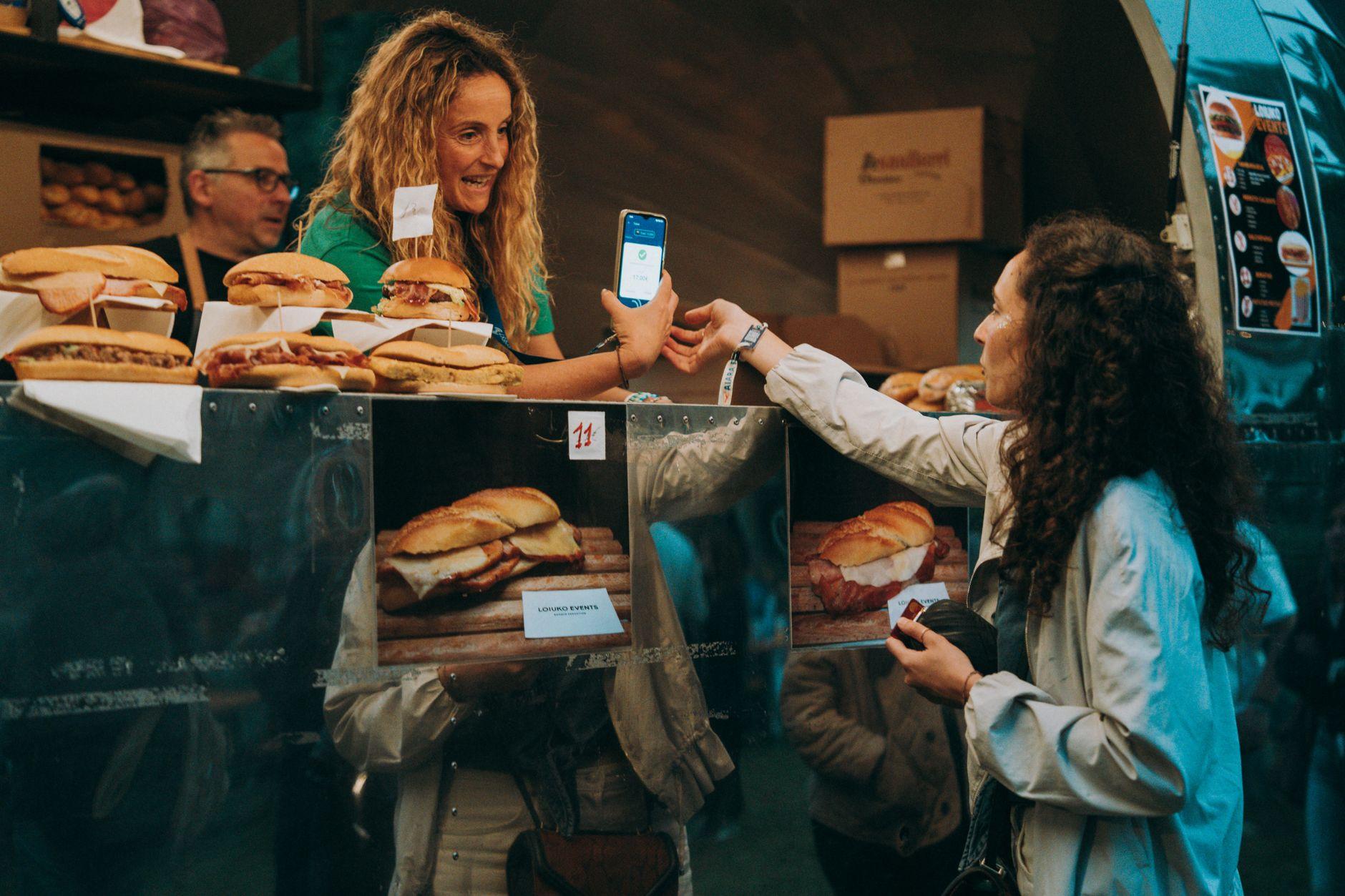
The catch: VietQR is built for people with a Vietnamese bank account. As a foreigner, you'd normally be shut out, stuck pulling cash from Vietnam's famously unreliable ATMs and eating withdrawal fees every time. That's exactly the gap Moreta fills — it plugs you into the VietQR network without a local account or phone number. You top up your wallet, scan the vendor's code, confirm the amount in your own currency, and you're done. No math, no haggling over change, no wondering if you got shortchanged on a big note.
Rough coverage from what I saw, market by market:
Big-city markets (Saigon, Hanoi, Da Nang): 90%+ of established stalls take QR.
Regional and tourist-town markets (Hue, Dalat, Hội An): roughly 80%, with food vendors leading the way.
Floating and rural markets (Cái Răng, smaller delta markets): more like 50–60%, so keep cash handy.
My actual strategy: keep ₫200,000 to ₫300,000 (about $8–$12) in cash for the smallest vendors and floating boats, and scan for everything else. That's basically how I ditched cash in Vietnam without ever feeling stuck.
A Few Market Rules Worth Knowing
Go in the morning. Markets are freshest, coolest, and least crowded before 10 AM, and the vendors are in a better mood before the heat sets in.
Haggle on goods, not on food. Souvenirs, fabric, and trinkets are fair game — start around half the quoted price and meet in the middle. A bowl of soup costs what it costs.
Follow the locals. The stall with no English sign and a line of Vietnamese aunties is always better than the one with a laminated tourist menu.
And learn three words: cảm ơn (thank you), bao nhiêu (how much), and ngon (delicious). Vendors light up when you try, and it almost always gets you a better price — or a free handful of rambutan for your sunburned face.
The Bottom Line
Vietnam's street markets are the country at its most alive — louder, friendlier, and more delicious than any mall or restaurant strip. From Bến Thành's clock tower to the boats of Cái Răng, they're the single best way to understand how Vietnam actually lives and eats.
And the fact that you can now do almost all of it cashless makes the whole thing easier. Download Moreta before you fly, load up your wallet, keep a little cash for the floating markets, and just start scanning. For more on eating your way around the country, the must-try foods of Southeast Asia guide is a good place to start.
Now go buy too much fruit. Trust me on this one.