
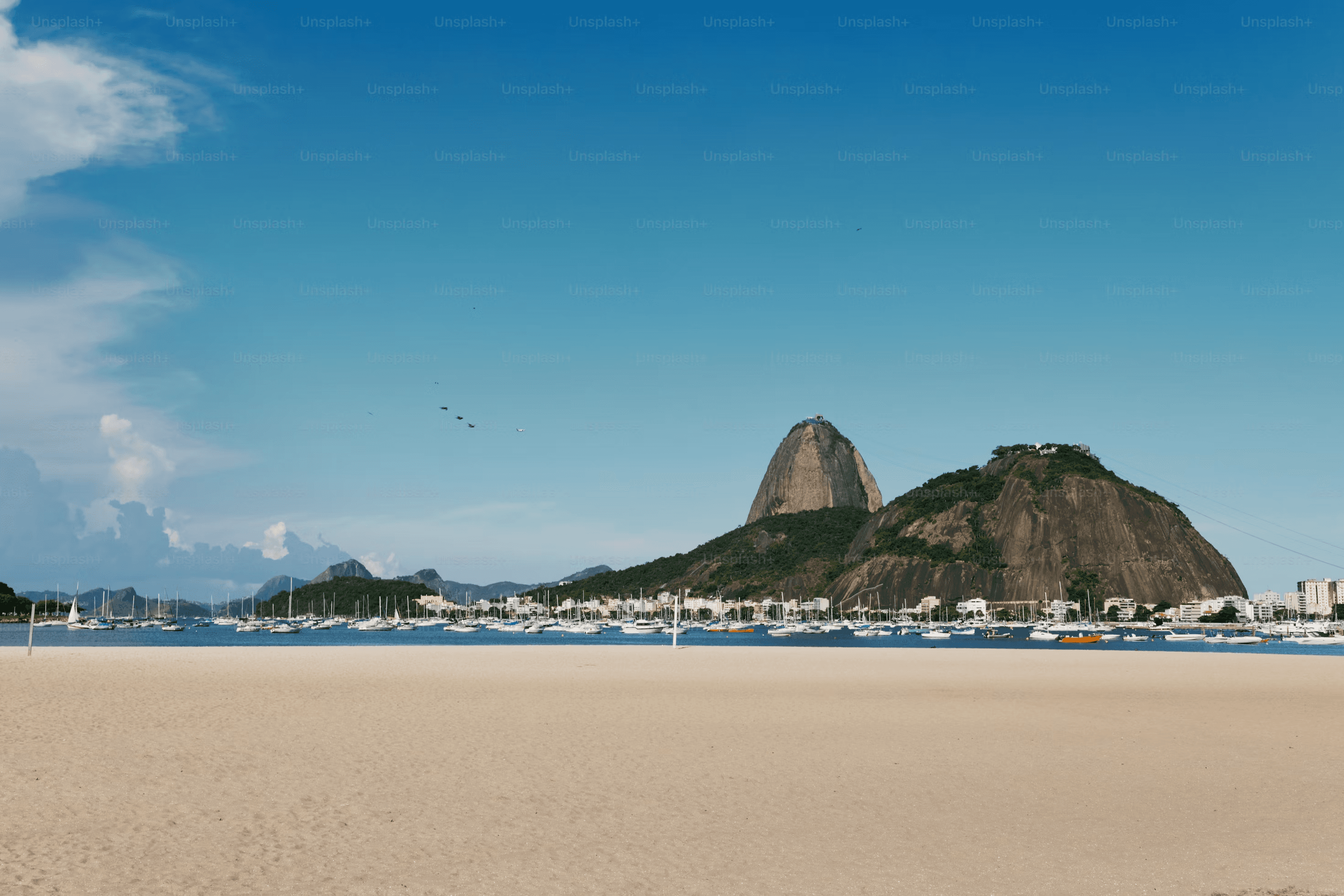
There’s a man who works the stretch of sand near Posto 10 in Ipanema selling mate gelado out of two steel barrels strapped to his shoulders. No till, no card machine, no pockets to speak of — he’s wearing swim shorts. What he does have is a laminated QR code zip-tied to one of the barrels, swinging as he walks.
That QR code is Pix, and it’s the reason he can sell you a R$10 cup of iced mate without either of you touching a single banknote. Multiply him by every coconut cart, canga seller, quiosque, and grilled-cheese guy from Copacabana to Florianópolis, and you start to see it: Brazil’s entire beach economy now runs on a payment system that most tourists can’t use out of the box.
Here’s how it happened, and how to plug yourself in before your first beach day.
The Beach Was Always a Cash Problem
For decades, a day at a Brazilian beach meant a soggy wad of small notes tucked into a shoe or a waterproof pouch. Vendors couldn’t carry card machines through sand and salt spray, so everything was cash — which meant tourists were either carrying too much (hello, petty theft) or too little (goodbye, second caipirinha).
Then Pix arrived in late 2020, built by the Central Bank of Brazil, and it solved the vendor’s side of the problem almost overnight. A printed QR code costs nothing, survives sunscreen and sea mist, and settles money into their account in seconds with essentially no fees. For someone selling R$8 globo biscuits on thin margins, that’s not a convenience. That’s the whole business model changing.
Today it’s genuinely hard to find a beach vendor anywhere in Brazil who doesn’t take Pix. Many prefer it. Some barely carry change anymore.
What You’ll Actually Buy on the Sand
If you’ve never done a proper Brazilian beach day, here’s roughly where your money goes — and every single one of these now happens by QR code:
- Chairs and an umbrella from the barraca that claims your patch of sand, usually R$20–40 for the day. The attendant will point at the code taped to the pole.
- Coconuts, straight off the machete, R$10–15 depending how touristy your posto is.
- Food that comes to you — queijo coalho grilled on a tiny charcoal brazier, camarão skewers, açaí bowls, empadas, the famous Biscoito Globo. R$8–25 a round.
- Drinks all afternoon — cans of Antarctica, caipirinhas mixed in front of you, mate gelado with lime. The caipirinha guys are almost always Pix-first now.
- Cangas, bikinis, sunglasses, hats from the roving sellers. Even the guy with forty pairs of Havaianas on a wooden rack has a code.
A relaxed beach day for two lands somewhere around R$150–250, spread across maybe ten tiny transactions. That’s exactly the pattern cards were never built for and Pix is perfect for. We ran the fuller daily numbers in How Much Cash Do I Need in Brazil? if you’re budgeting a whole trip.
The Part Nobody Tells You at Check-In
So you land in Rio, see QR codes everywhere, and try to sign up for Pix. That’s where the trip hits a wall: Pix registration requires a Brazilian bank account, and a Brazilian bank account requires a CPF — the local tax ID. There’s a workaround process, but it involves paperwork no one wants to do between the airport and the beach. The full saga is in Pix in Brazil Without a CPF.
The practical fix is simpler: Moreta Pay works on the Pix QR network without any of that. You scan the exact same code the carioca next to you scans, the vendor gets paid in reais the same way, and your side draws from a balance you topped up in your own currency.
Getting set up takes less time than the taxi from GIG:
- Download the app from the App Store or Google Play and verify with your passport.
- Top up before you fly, while you’re still on hotel-grade WiFi rather than beach 4G.
- Scan, check the name and the live BRL rate, confirm. The vendor hears the ping on their phone before your coconut hits the table.
If a payment ever hangs mid-scan — beach signal is beach signal — the Help Center covers what to do.
A Few Bits of Beach Pix Etiquette
Locals have quietly developed a whole set of norms around this, and knowing them makes you look a lot less like a tourist:
Confirm out loud. After you pay, show the confirmation screen or just say “foi“ (“it went through”). Vendors deal with fake-payment scams, so the screen flash is standard courtesy.
Check the recipient name. The confirmation screen shows who you’re paying. If the name looks nothing like the business, ask before you confirm — a fair rule anywhere in Brazil, honestly.
Small tips are welcome by QR too. Rounding R$27 up to R$30 for the guy who walked chairs across hot sand for you is normal and appreciated.
Keep a little cash anyway. A R$50 note in small bills covers the last holdouts — an elderly canga seller, a beach bathroom attendant, the rare dead-phone-battery day. Everything else, scan it.
Same Wallet, Next Country
The nicest part: this isn’t a Brazil-only setup. The same Moreta balance that pays a coconut guy in Ipanema pays a Yape merchant in Peru, a MODO code in Argentina, and a PromptPay stall in Thailand whenever your route loops back to Asia. One top-up, every QR network on the supported countries list.
Brazil figured out how to make an entire beachfront economy cashless without a single card machine touching the sand. All you have to do is show up with the right app and enough sunscreen. The mate gelado guy will handle the rest.