
I Ditched Cash in Vietnam
I landed in Hanoi with a dare I'd made to myself somewhere over the Pacific: no ATMs. No crumpled dong stuffed into my pocket. No standing in line at a currency exchange booth while a man behind bulletproof glass slides me an unfavorable rate. I was going to survive entirely on QR code payments for two full weeks across Vietnam.
Why? Partly because I'd spent my last trip to Thailand bleeding money through ATM fees. Partly because Vietnam's QR payment adoption has been exploding — VietQR transactions surged over 85% in value last year alone. And partly because I just wanted to know: can a foreigner actually pull this off?
Here's what happened.
Day 1: Hanoi's Old Quarter Put Me to the Test Immediately
I walked out of Noi Bai Airport with nothing but my phone and a fully loaded Moreta Pay account. My first challenge arrived within thirty minutes.
The Grab from the airport to the Old Quarter went fine — paid through the app, no cash needed. My hostel check-in was smooth too, since they took card. So far, so good. Then I got hungry.
Hanoi's Old Quarter is a labyrinth of street food vendors, most of them operating from plastic stools on the sidewalk. The kind of places that serve the best phở you'll ever eat out of a bowl that costs less than a dollar. These are not establishments with POS terminals.
But here's what surprised me. The bánh mì lady on Hàng Buồm had a VietQR code laminated and taped to her cart. I pulled up Moreta, scanned it, typed in ₫30,000, and swiped to confirm. She glanced at her phone, nodded, and handed me the sandwich. No fumbling with bills. No awkward pause while I tried to figure out which note was which.
That moment right there sold me on the entire experiment.
Day 3: The Coffee Shop Revelation
Vietnam runs on cà phê. By day three I'd settled into a rhythm — wake up, find a café, and work for a few hours before exploring. What I didn't expect was how universally these places accepted QR payments.
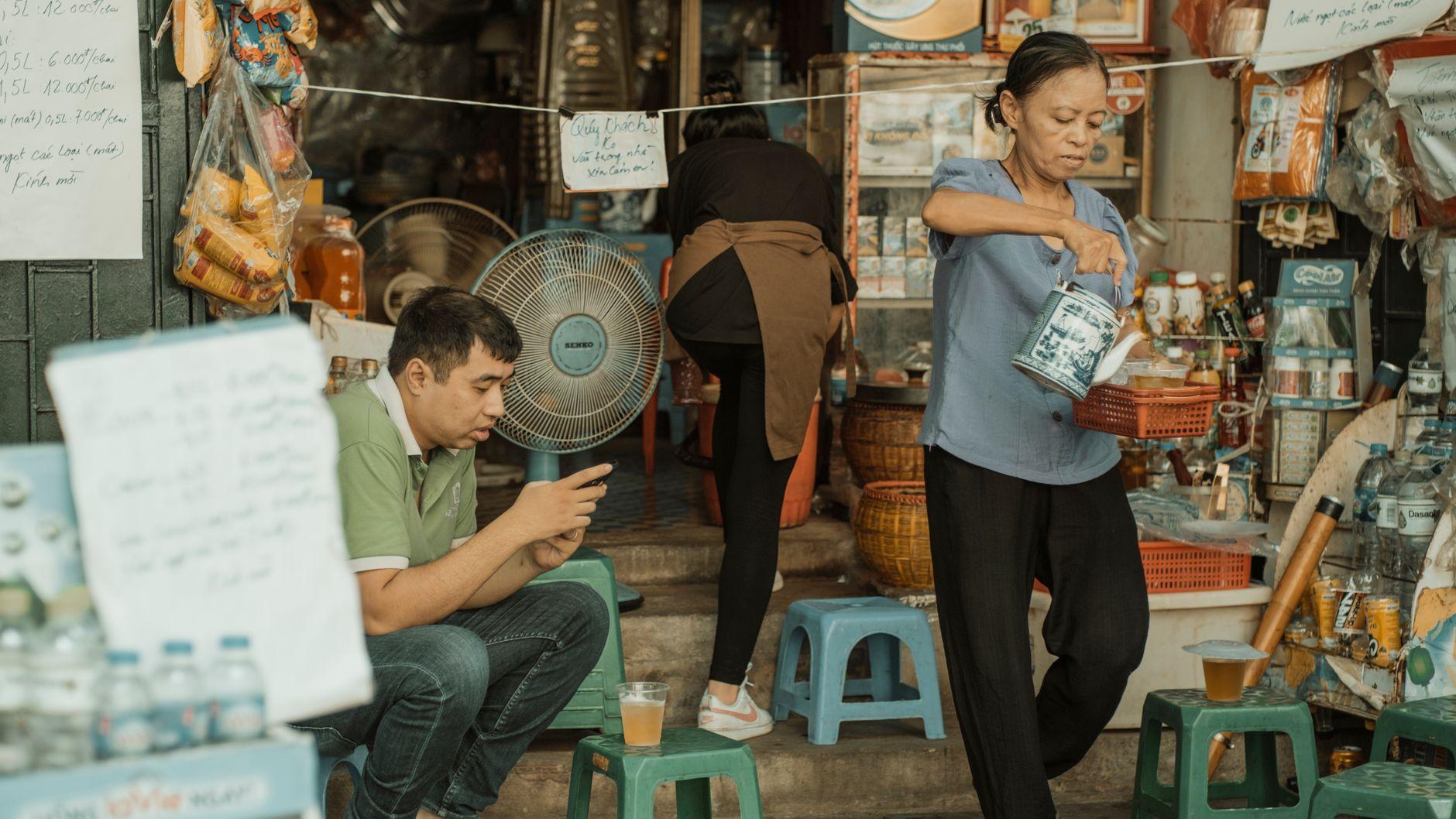
I'm not talking about the trendy third-wave coffee shops in the expat districts (those obviously take everything). I mean the tiny family-run spots with metal drip filters and condensed milk. The kind of place where an elderly woman brews your coffee on a plastic table outside her house. Even she had a printed QR code stuck to her menu board.
Vietnam's VietQR infrastructure has reached a depth that honestly caught me off guard. The system is standardized by NAPAS (the national payment corporation), which means a single QR code works across dozens of banking apps and payment platforms. As a foreigner, this is a massive deal. You're not locked into one specific Vietnamese wallet that requires a local bank account. You just need an app that can read VietQR codes — which is exactly what Moreta does.
Three days in and I still hadn't touched an ATM.
Day 5: The Wet Market: Where I Almost Broke
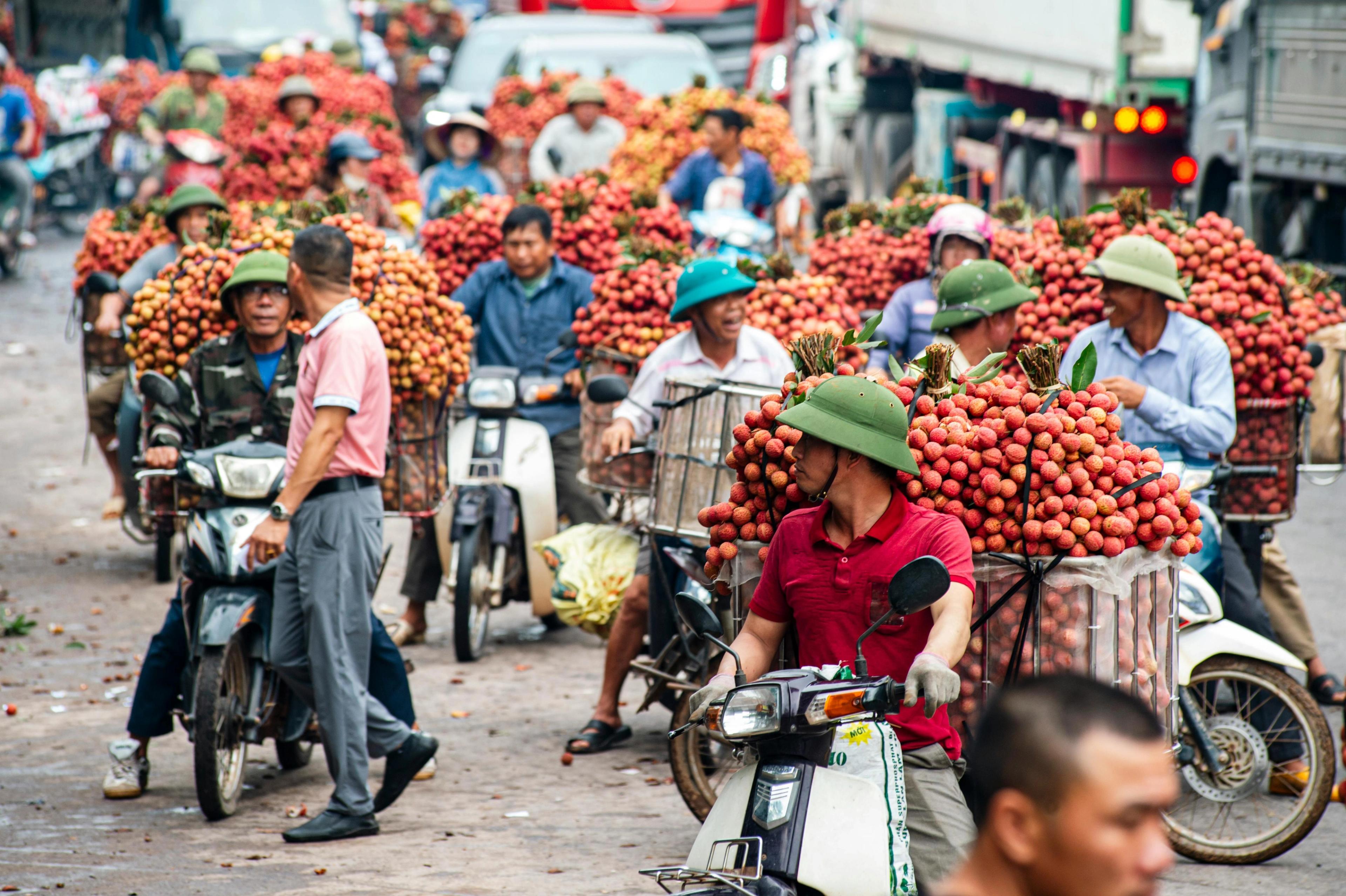
If there's one place in Vietnam where you'd expect the cashless experiment to fall apart, it's a wet market at six in the morning. I was in Hanoi's Đồng Xuân Market, surrounded by vendors selling live fish, herbs, and every tropical fruit I could name (and a few I couldn't).
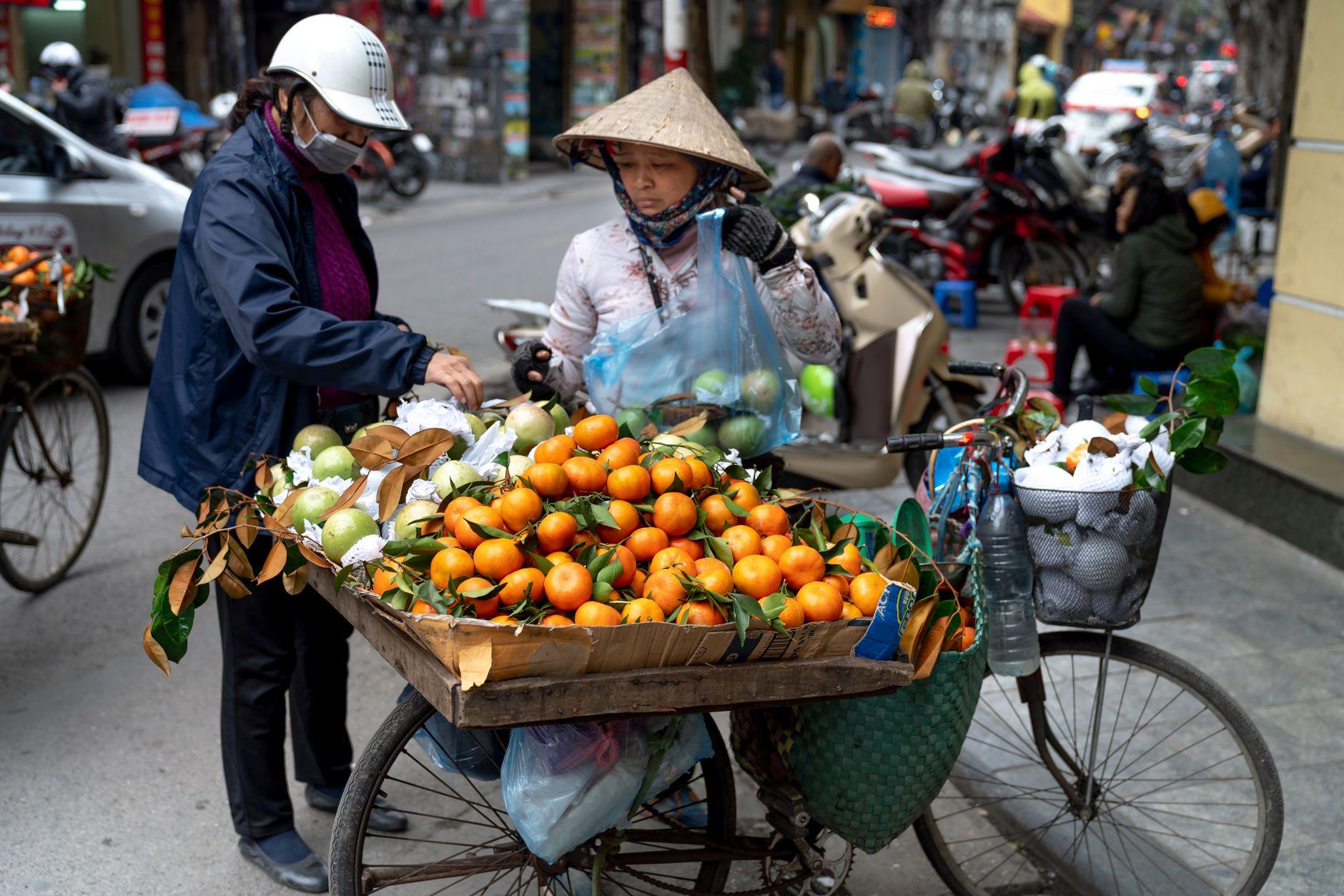
Most of the stalls here had QR codes. I bought a bag of rambutans, some dragonfruit, and a kilo of mangosteen — all scanned and paid through my phone. The vendors barely looked up. This was routine for them.
But then I found a woman selling handmade nón lá hats from a blanket on the floor, just outside the market's main building. No QR code. No sign. Just hats and a money pouch. She wanted ₫80,000. I wanted the hat.
I almost caved. Instead, I pointed at my phone, made a scanning gesture, and raised my eyebrows in the universal language of "is there any chance?" She shook her head and laughed. Fair enough. I walked away hatless.
Lesson learned: roughly 90% of vendors I encountered had QR codes. The remaining 10% — mostly the informal, truly on-the-street sellers — were cash-only. For a normal traveler carrying a little backup cash, this wouldn't be an issue at all. For me, stubbornly committed to this experiment, it meant occasionally walking away from things I wanted to buy.
Day 8: Ho Chi Minh City Changed the Game
I took the overnight train from Hanoi to Da Nang, then flew to Ho Chi Minh City (Saigon) a few days later. If Hanoi's QR coverage impressed me, Saigon blew it wide open.
This city is further along the cashless curve than anywhere else in Vietnam. Coffee shops, restaurants, convenience stores, pharmacies, clothing stores, supermarkets, even the guy selling coconuts from a cart on Bùi Viện — QR codes everywhere. I went an entire day in District 1 without a single vendor not having one.
The speed of it was addictive too. Walk in, order, scan, swipe, done. No counting bills. No waiting for change. No conversion math in my head. Moreta showed me the exchange rate and the total in USD before I confirmed each payment, so I always knew exactly what I was spending. That transparency alone is worth the switch from cash, where you're constantly doing mental currency math and hoping you're not getting shortchanged.
I also discovered that paying utility bills through QR codes is a thing here. A friend who's been living in Saigon for a year pays his rent, electricity, and water all through QR-generated codes. For digital nomads and longer-term expats, this eliminates one of the most annoying parts of living abroad — figuring out how to pay local providers when you don't have a local bank account.
Day 11: The Mekong Delta Reality Check
I took a day trip to the Mekong Delta, partly for the floating markets and partly to see if the cashless streak could survive outside the metro areas. The answer? Mostly yes, with caveats.
The tour company accepted card payment for the booking. The restaurant at lunch had a QR code. The riverside café where I had an afternoon coconut coffee — QR code on the table.
But the smaller floating market vendors? Cash. The woman selling pineapple from her boat wasn't scanning anything. The souvenir stalls along the riverbank were a mix — some had codes, some didn't.
Rural and semi-rural Vietnam is still transitioning. The QR infrastructure is spreading fast (you can feel the momentum), but it hasn't fully reached every corner yet. If you're venturing into the countryside, carrying some backup cash is still the smart move. ₫200,000 to ₫500,000 (roughly $8 to $20 USD) tucked away would handle anything that falls outside the QR net.
Day 14: The Verdict
Two weeks. Hundreds of transactions. Zero ATM withdrawals.
Could I have done it with cash? Obviously. Vietnam is still very much a cash-friendly country. But the question was whether I could do it without cash, and the answer turned out to be: almost entirely, yes.
Here's a rough breakdown of my two weeks:
Transactions where QR worked perfectly: Hotels, hostels, restaurants (all sizes), coffee shops, convenience stores (Circle K, Ministop, Vinmart+), pharmacies, ride-hailing (Grab), grocery stores, and a surprising number of street food vendors. I'd estimate this covered about 85-90% of my total spending.
Transactions where I hit walls: Some street vendors without codes, a few older taxis, small informal sellers at markets, and one very stubborn parking attendant who just wanted his ₫10,000 in cash. Maybe 10-15% of situations.
What I saved: This is the part that actually shocked me. I tracked my fees and exchange rates meticulously. Using Moreta, I paid zero ATM fees (because I never used one), got mid-market exchange rates on every transaction, and avoided the 3-5% foreign transaction fees my credit card would have charged. Over two weeks of steady spending, that added up to roughly $40-60 USD in savings compared to what the trip would have cost me using ATMs and credit cards. That's almost two extra nights in a Saigon guesthouse.
Would I Do It Again?
Absolutely — but I wouldn't be so stubborn about it. The ideal approach isn't "zero cash" or "all cash." It's having QR payments as your primary method and keeping a small cash buffer for the 10% of situations where digital doesn't reach yet.
Vietnam in 2026 is genuinely one of the easiest countries in Southeast Asia to navigate without an ATM. The VietQR system is standardized, adoption is massive, and apps like Moreta Pay make it accessible to foreigners without needing a Vietnamese bank account or phone number.
If you're headed to Vietnam — or anywhere in the region, honestly — do yourself a favor. Download Moreta before you leave, fund your account, and see how far you can get without standing in line at a single ATM. You might surprise yourself.
I still want that hat, though.