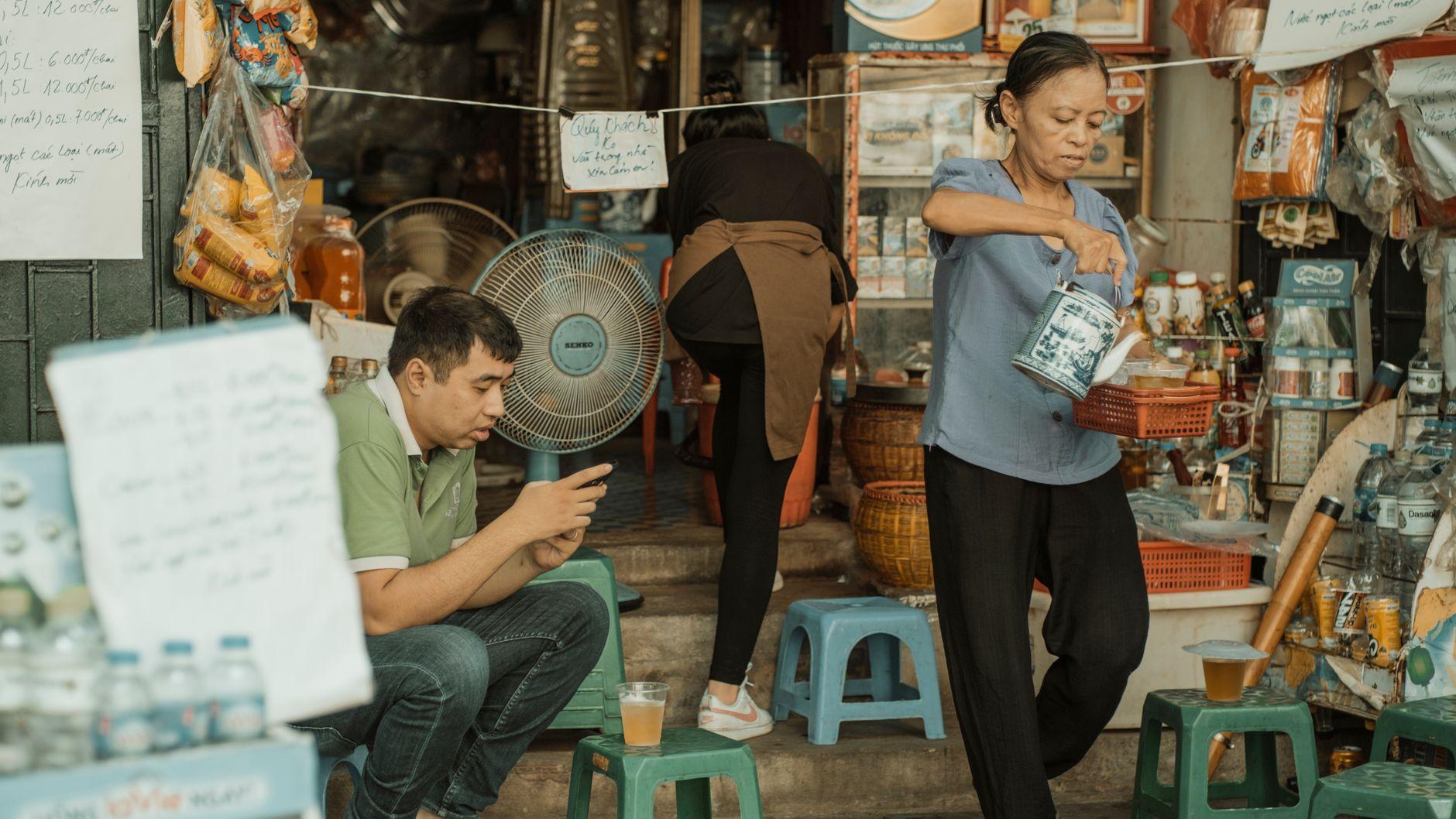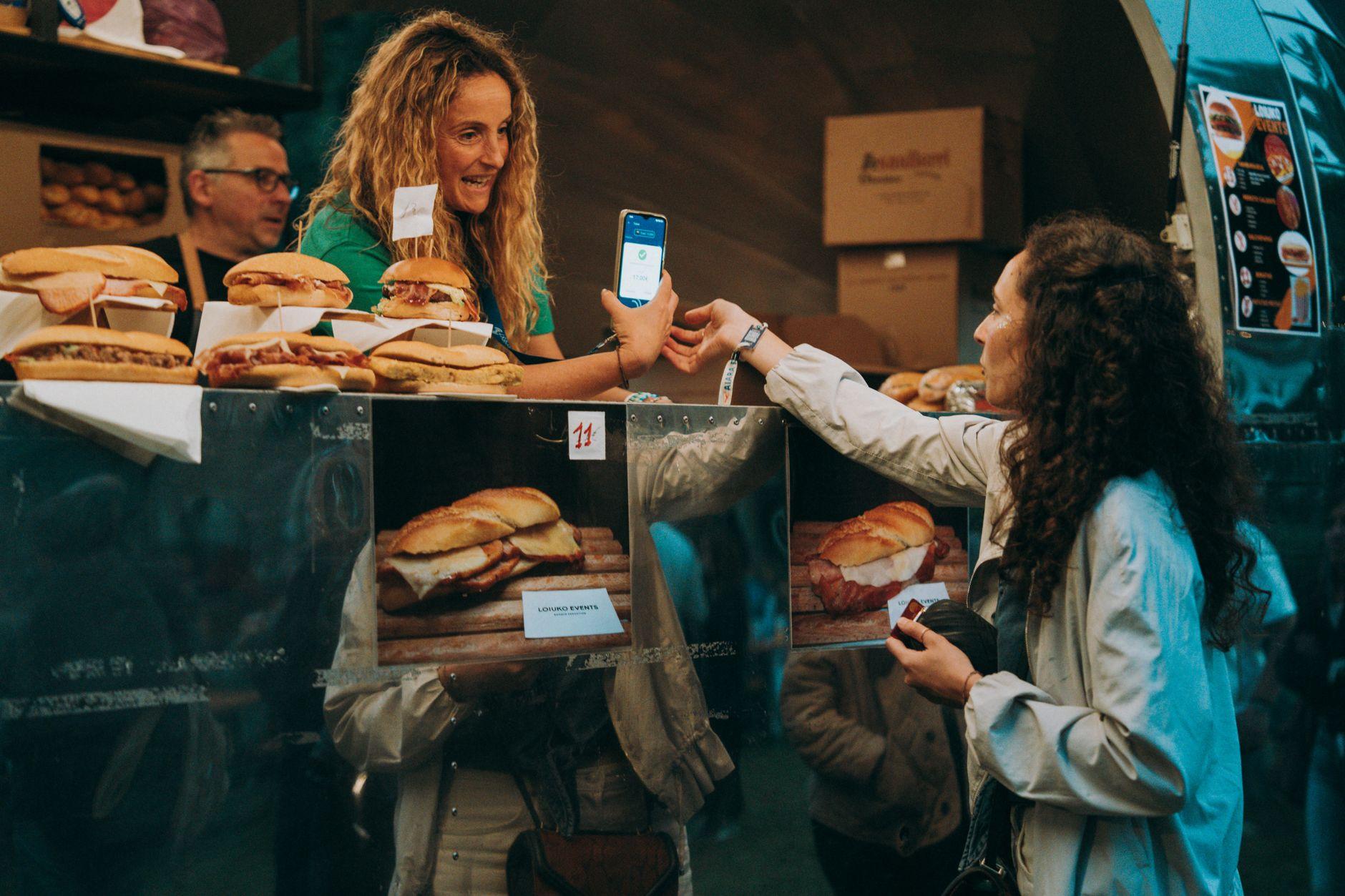

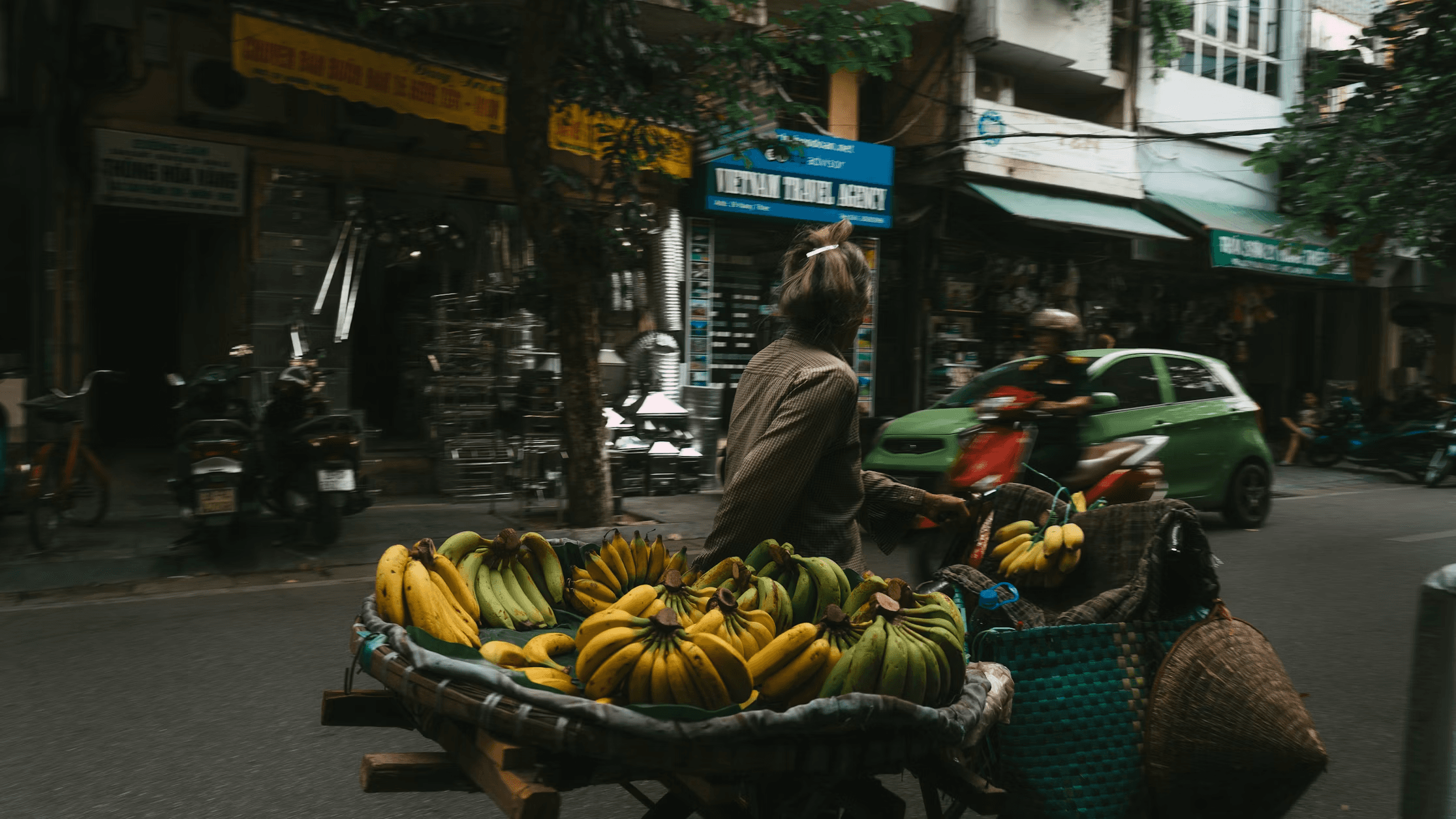
The first time I watched a Hanoi grandmother sell me dragon fruit from a wicker basket on the back of her bicycle and accept payment by laminated QR code, I paused on the sidewalk. She didn't say a word. She just tilted her phone, glanced at the notification when it pinged, and nodded for me to take my fruit. The whole exchange lasted maybe four seconds.
This kind of moment isn't a novelty in Vietnam anymore. It's the default. Somewhere in the last five or six years, a country that ran almost entirely on crumpled đồng notes flipped into one of the most QR-saturated payment cultures on earth. By mid-2025, VietQR transaction volume was up 66.7% year-on-year, and total value was up 159.6%. Acceptance now sits at roughly 85% of merchants. Most foreigners stepping off a plane in Tan Son Nhat have no idea what they're walking into.
So how did this happen? Why Vietnam, and why so fast?
The Cash Economy Was Bigger Than People Realize
To understand the speed of the shift, you have to understand the starting point. Vietnam in 2015 was overwhelmingly a cash society. ATMs were unreliable. Card terminals were rare outside of mid-range hotels and supermarket chains. Most people didn't have credit cards, and a lot of people didn't even have full bank accounts. Cash was just the way things worked.
That sounds like a disadvantage, and in some ways it was, but it turned out to set up the leap. Because the country never built out a deep card infrastructure, there was no legacy system to fight against when the next thing came along. No Visa lobby protecting interchange fees. No retailers depreciating expensive POS terminals they'd just bought. The slate was unusually clean. When phones got cheap and bank apps got functional, there was nothing in the way.
This is the same dynamic we covered across Southeast Asia, but Vietnam went harder and faster at it than almost anyone else in the region.
The Smartphone Showed Up Before the Credit Card Did
Around 2016 to 2019, cheap Android phones got into the hands of basically everyone in Vietnam, including hundreds of thousands of street vendors, market sellers, and tiny family-run shops who had never been on the bank card map.
Once they had a phone with a working camera and mobile data, the answer to how does this lady accept digital payment stopped being "buy her a card terminal" and started being "print her a QR code." A piece of paper costs nothing. The phone she already has does the rest.
Combine that with Vietnam's enormous unbanked-becoming-banked population — financial inclusion in the country roughly doubled in less than a decade — and you had a country where millions of people got their first bank account and their first digital payment method at almost the same moment. They never had a wallet full of cards. They went straight from cash to scan.
NAPAS Built the Real Plumbing
The piece that gets the least credit, and is arguably the most important, is what the State Bank of Vietnam and NAPAS (the National Payment Corporation of Vietnam) did behind the scenes.
In a lot of countries, digital payments are a tangle of competing private wallets, each one walled off from the others. You have to be on the same app as your friend to send them money. Vietnam went a different way. NAPAS built a national real-time settlement rail — NAPAS 247 — that any bank can plug into. They then layered a standardized QR format on top of it called VietQR. The result is that a single QR code on a coffee shop counter works with 40+ banking apps and most major e-wallets, including MoMo, ZaloPay, and ViettelPay. You don't need to be on the same app as the merchant. You just need a QR-capable app.
That's not a small detail. It's the entire reason the system spread the way it did.
NAPAS 247 processed roughly 9 billion transactions in 2024, up 33.8% year-on-year. VietQR alone now accounts for over a third of those. On a typical day, more than 10 million VietQR transactions are clearing through the system. For a country of 100 million people, that's a serious chunk of daily commercial life moving on a public rail.
For a foreigner with Moreta Pay, this interoperability is exactly what makes the whole thing work without a Vietnamese bank account. You scan the same QR code the local guy in front of you just scanned. The money lands in the merchant's account in real time. Nobody has to know or care which app you used.
The MoMo Effect
You can't talk about Vietnam's payment story without talking about MoMo. The e-wallet has become a kind of cultural shorthand for "pay digitally" — about the way "Venmo" did in the US, only with broader merchant penetration. Roughly 69% of Vietnamese smartphone users have MoMo installed. ZaloPay, the wallet bolted onto Vietnam's dominant messaging app, sits around 44%.
What these apps did, year after year, was hammer at the use cases that pull people away from cash. Bills, top-ups, deliveries, peer-to-peer transfers, motorbike rides, parking. They burned hundreds of millions of dollars on cashbacks and promotions in the process, but the effect was that an entire generation of urban Vietnamese never developed the cash habit. To them, MoMo is money.
The wallets and the bank-app QR codes don't really compete the way you'd expect. They live side by side, both reading the same VietQR standard. That coexistence is what locks the network in. A merchant who accepts VietQR is effectively accepting every digital payment in the country at once. The decision becomes obvious.
A Pandemic Pushed the Last Holdouts
Like a lot of things in payments, COVID accelerated the timeline by several years. Markets closed. Hand-to-hand cash got nervous. Vendors who had refused to bother with QR for years suddenly taped a code to their cart in a week.
What stuck after the pandemic ended is the part that matters. The behavior didn't reverse. Vendors realized they liked getting paid instantly with no register, no change, no end-of-day reconciliation. Customers realized they liked not having to break a 500,000 đồng note for a 25,000 đồng bowl of phở.
A lot of countries had pandemic-era spikes in cashless payment that drifted back toward baseline once life normalized. Vietnam didn't. The line kept climbing. Online and digital payment volume grew another 25% in 2025 alone.
Now It's Crossing Borders
The latest chapter, and probably the one that signals how serious this is long-term, is the cross-border QR linkages. Vietnam went live with bilateral QR payments with Thailand in 2024 and with Laos in early 2025. Cambodia is next. A Vietnamese tourist can now scan a Thai PromptPay code in a Chiang Mai night market and pay in đồng, settled directly between the two central banks at real exchange rates.
The fact that the rail is being treated as international infrastructure — public, interoperable, central-bank-supervised — is what makes it qualitatively different from what credit card networks ever offered. It's the closest thing to a public payment utility that exists anywhere right now, and Vietnam is one of the countries leading it.
What This Means If You're Visiting
For travelers, the practical takeaway is worth internalizing before you fly in.
Vietnam in 2026 expects you to pay digitally. Hotels, restaurants, coffee shops, convenience stores, ride-hailing, supermarkets, pharmacies, and a startlingly high percentage of street food vendors all take QR. Bring a card for your hotel and a small amount of cash for the rural fruit-cart edge cases, but your default payment method should be the same one everyone around you is using. As one writer who tried to ditch cash entirely found out, you can cover something like 85-90% of normal trip spending without ever touching a bill.
The catch is that most Vietnamese wallets — MoMo, ZaloPay, ViettelPay — require a local bank account, local SIM, and Vietnamese ID to actually function. Tourists who try to sign up usually hit a wall at verification. That's the specific gap Moreta Pay is built for. You top up in your home currency, scan VietQR codes the same way locals do, and skip the ATM fees and 4-6% foreign transaction surcharges your card would otherwise hit you with.
Vietnam didn't slowly adopt QR codes. It rewired its entire payment culture around them in under a decade. Show up ready for that, and you'll have a much smoother trip.
Show up assuming your Visa is going to do the heavy lifting, and you'll be the one fumbling for cash while the grandmother behind you scans her phone and walks off with the better dragon fruit.