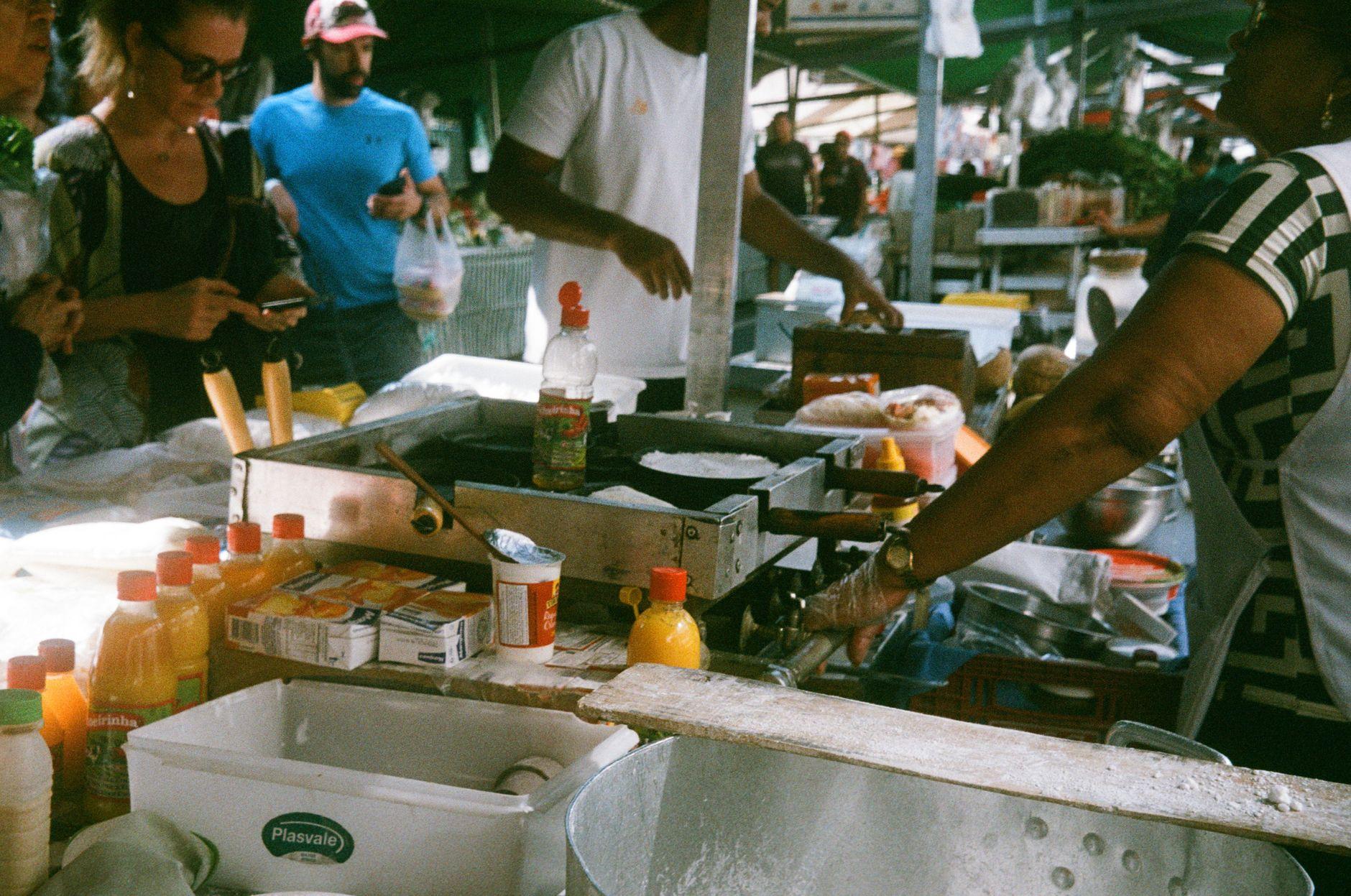

There's a running joke in Lima that "yapear" got added to the Peruvian dictionary before half the country got reliable running water. It's barely an exaggeration. In under a decade, one purple app went from a side project inside Peru's biggest bank to a verb — yapéame, "Yape me" — that you'll hear at every fruit stall, taxi window, and menú counter in the country.
If Brazil's payment revolution was engineered top-down by the central bank, Peru's happened almost by accident. Here's how.
A Bank App That Escaped the Bank
Yape launched in 2017 as an experiment inside BCP, Peru's largest bank. The pitch was modest: let customers send money to a phone number instead of typing out a 20-digit account code. Nobody involved was predicting a national institution.
The early growth was steady but unremarkable — because it had the same flaw every bank app has. You needed a BCP account to use it, and in a country where most workers are paid in cash and huge numbers of people have never held a bank account at all, that capped the ceiling hard.
Two things blew the ceiling off.
The Pandemic, and a DNI
The first was 2020. Lockdowns made cash feel radioactive overnight, and when the government needed to distribute emergency payments to millions of Peruvians, digital wallets suddenly went from convenience to lifeline. Corner bodegas that had never touched a card terminal printed a QR code on a sheet of paper and taped it to the counter. That was the whole onboarding process.
The second was smarter: Yape con DNI. In 2021, BCP made a move almost no bank makes voluntarily — it decoupled Yape from the bank. Any Peruvian could register with just their national ID and a phone number. No account, no branch visit, no paperwork. In a country where informal work is the norm rather than the exception, that single decision brought millions of unbanked Peruvians into digital payments for the first time.
The result: Yape now counts over 15 million users in a country of 34 million. Strip out kids and grandparents, and it's functionally everyone.
Plin, and the Peace Treaty
The rest of Peru's banks weren't going to hand BCP the whole market, so BBVA, Interbank and Scotiabank teamed up on a rival: Plin. Same idea, different color scheme, and for a couple of years Peru had a genuinely annoying problem — two networks that didn't talk to each other. Counters displayed two stickers. Vendors asked "¿Yape o Plin?" before quoting a price.
Then the central bank stepped in and mandated interoperability. Since 2023, a Yape user can pay a Plin QR and vice versa, and most counters have collapsed down to a single code that takes both. It's the quiet reason Peru's system now feels seamless: the wallet war ended in a draw, and merchants won.
Why It Beat Cards Cold
The obvious question: Peru had Visa terminals for decades. Why did QR win in five years what cards couldn't in forty?
- Cost. A card terminal means hardware, a merchant account, and fees on every sale. A QR code costs nothing — it's a printout. For the woman selling emoliente from a cart, that's not a small difference; it's the entire difference.
- The informal economy. Roughly seven in ten Peruvian workers operate informally. Card infrastructure was never built for them. A phone-number-based wallet was.
- Trust and social pressure. Splitting a lunch bill, paying back a friend, chipping in for a gift — Yape ate the social layer first, and commerce followed. Once your mother, your barber, and your taxi driver all yapean, holding out gets impractical fast.
It's the same pattern we've written about in Argentina and across Southeast Asia: countries with thin card infrastructure didn't catch up to the West — they leapfrogged it.
The Tourist-Shaped Hole
Here's the frustrating part if you're arriving on a tourist stamp. The system that works for 15 million Peruvians was built on exactly two things you don't have: a DNI and a Peruvian phone number. No DNI, no Yape. Which historically left visitors paying like it's 2005 — hunting ATMs that charge S/ 20–35 a withdrawal, and pulling out a card that half the country's best food stalls can't accept.
That's the gap Moreta Pay closes. Since launching across Latin America, Moreta connects directly into Peru's QR network — you scan the same purple sticker as everyone else, the vendor gets paid in soles instantly, and you pay from a balance you topped up in your own currency, with the exchange rate shown before you confirm. No DNI, no local SIM, no bank branch. Setup details are in our full guide to paying in Peru, and the QR payments feature page covers the mechanics.
The Verb Is the Tell
You can measure a payment system's success in transaction volumes, or you can measure it in language. Peruvians don't say "I'll transfer you" or "I'll pay digitally." They say te yapeo. When a brand becomes a verb — google it, uber home, yape me — the fight is over.
Peru went from cash-first to QR-first in half a decade, and it did it without anyone really planning to. All that's left is for visitors to catch up. Download Moreta before you fly (App Store / Google Play) and you can yapear with the best of them.