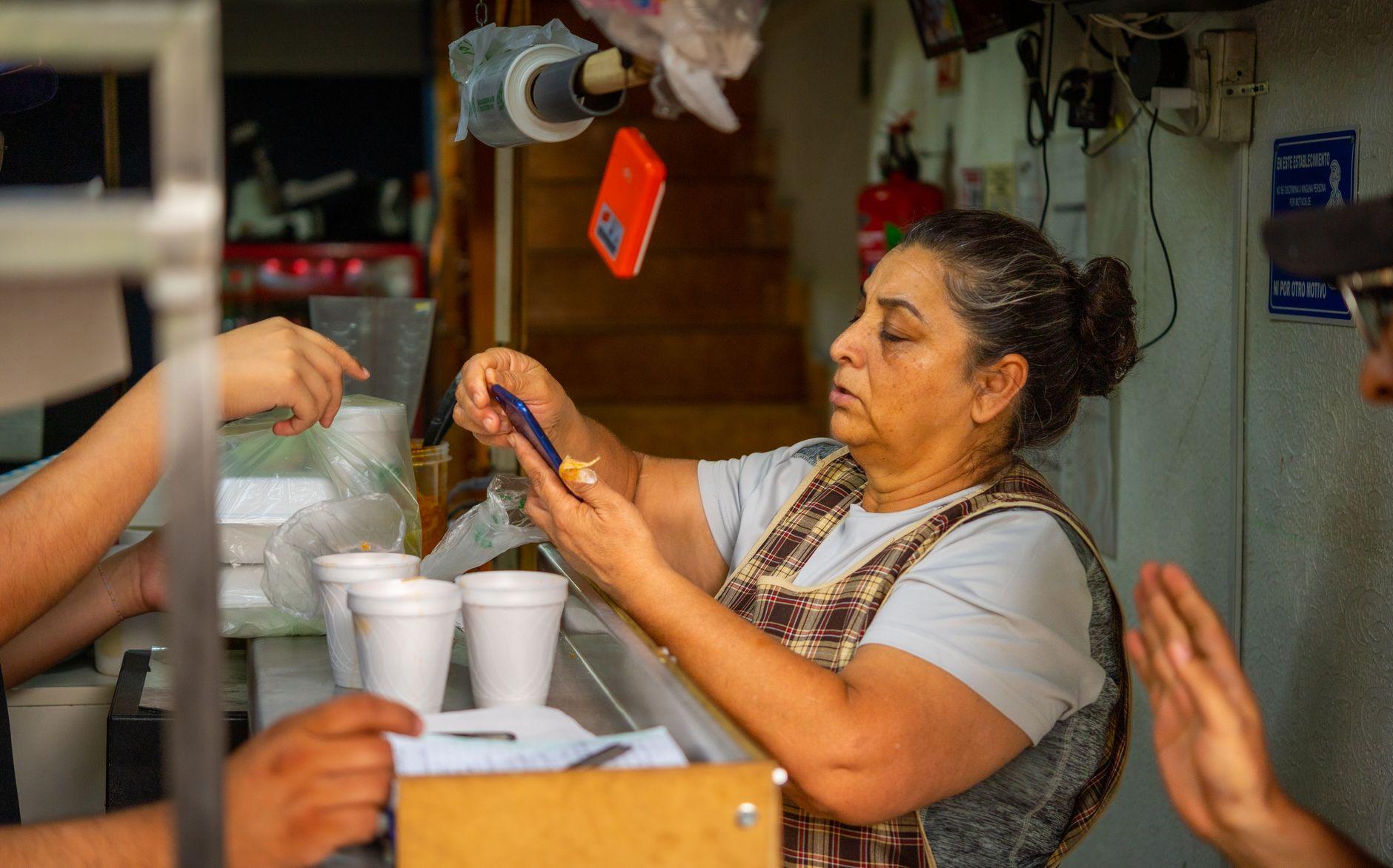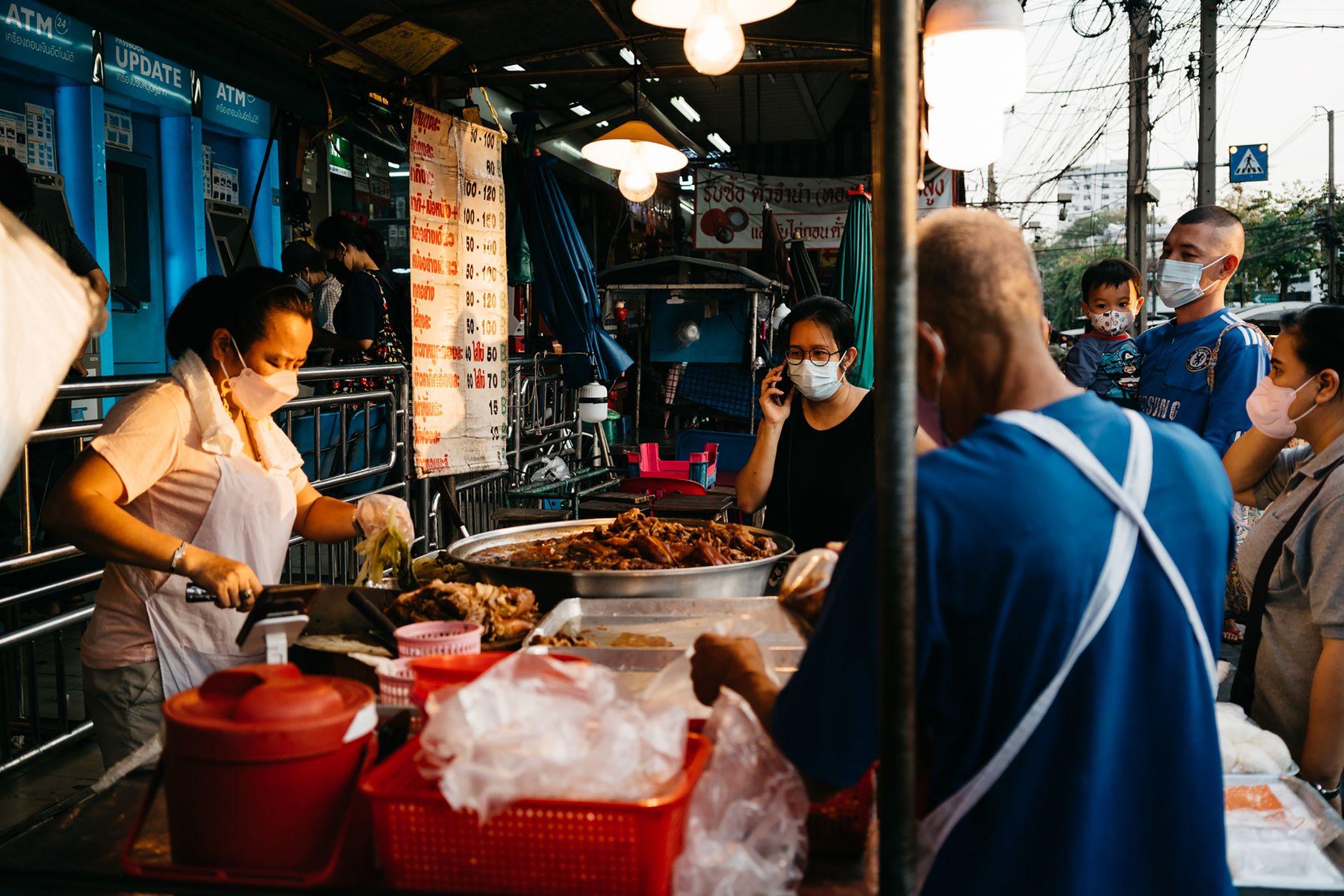

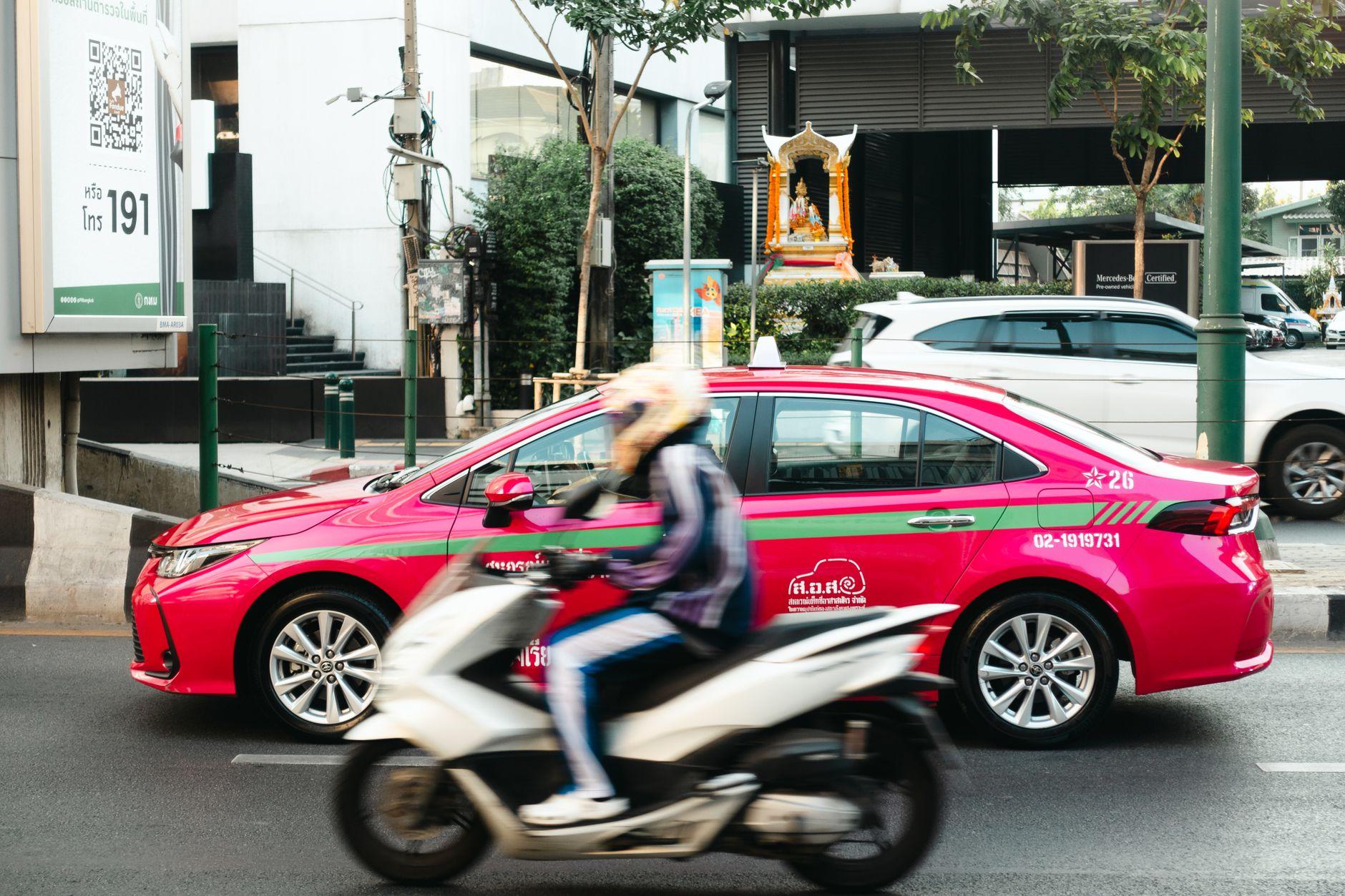
Opening a Thai bank account as a foreigner has gotten harder, not easier. Branches want a work permit, a long-stay visa, sometimes a residence certificate from immigration, and even then the answer can depend on which teller you get on which day. Meanwhile, life does not wait. Rent needs paying, the motorbike taxi needs paying, and the som tam lady at the end of your soi has a laminated PromptPay QR taped to her cart and no interest in your Visa card.
So the real question for a new expat is not "how do I open a bank account" but "how do I handle daily payments in Thailand while I don't have one, or possibly never get one." There are four realistic strategies. Each works. Each fails somewhere. Here is the honest comparison.
Strategy one: run everything on cash
Cash still works everywhere in Thailand. That is its entire pitch, and it is a genuinely strong one. The 7-Eleven takes it, the food court takes it, the landlord takes it, the guy fixing your air conditioner takes it. If your plan is cash, you will never be stuck.
The problem is how the cash gets into your hand. Foreign cards at Thai ATMs face a notoriously high withdrawal fee, often 220 THB per pull, charged by the ATM operator on top of whatever your home bank adds. That fee is flat, so the rational response is to withdraw large amounts rarely, which means walking around with thick stacks of baht or keeping them in your apartment. Expats who go this route end up building a whole ritual around ATM runs: which machine, which day, how much, where to stash it. It works, but it is a tax on both your money and your attention. And you still cannot pay online on Lazada or Shopee with a pile of banknotes.
Strategy two: lean on your foreign card
In the places where foreign cards work in Thailand, they work fine. Malls, chain restaurants, hotels, Big C, supermarkets in expat-heavy areas. If your life happens entirely inside air-conditioned buildings in central Bangkok, a card gets you surprisingly far.
Step outside that bubble and the card strategy collapses fast. Taxis are frequently cash-or-QR only. Street food is QR or cash, full stop. Many small merchants who technically have a card terminal will wave it off for a foreign card, or quote a minimum spend, because card acceptance costs them money that a PromptPay scan does not. On top of that, foreign transaction fees quietly eat into every swipe unless you specifically hold a card that waives them, a problem we broke down in our piece on the 3% foreign transaction fee. The card is a fine supporting player in Thailand. It cannot carry the show.
Strategy three: get onto a local wallet the hard way
PromptPay is the thing you actually want. It is Thailand's national QR payment rail, and it is accepted almost everywhere, from the 7-Eleven counter to the fruit cart to the laundry shop that has never seen a card terminal in its life. Locals scan QR codes for purchases of twenty baht without thinking about it. Watch a Bangkok food court at lunch and you will see more phones than wallets.
The catch is access. PromptPay is built on top of Thai bank accounts, which is exactly what you do not have. Tourist-oriented local wallet options exist, and some expats do eventually get set up with a Thai bank app after their visa and paperwork situation stabilizes. But for the newcomer, the retiree between visa runs, or the nomad who is only in Chiang Mai for three months, "just get a Thai bank account" is advice that assumes away the entire problem. Registration hurdles, Thai phone number requirements, and branch-by-branch discretion mean this path can take weeks or months, if it opens at all.
Strategy four: join the QR rail from your side
This is the newer option, and it changes the shape of the problem. Moreta Pay lets you scan the exact same PromptPay QR codes that locals use, but the money comes out of a wallet you top up from your own bank at home, via a US bank connection, ACH, SEPA in Europe, UK Faster Payments, Canadian e-Transfer, or an international card, in your own currency. You scan the merchant's QR, see the amount, the merchant name, and the exchange rate before you confirm, then the merchant gets paid instantly in baht.
The honest pros: no Thai bank account, no ATM fee arithmetic, no cash stash in the sock drawer, and the FX rate is shown up front rather than discovered on a statement three days later. It also covers QR-based online checkout on platforms like Trip.com and Agoda, and bill payments in supported countries, which cash never will. The honest cons: it is a phone-dependent method, so a dead battery or no signal means you are back to whatever backup you carry, and it only helps where QR is accepted (which in Thailand, admittedly, is nearly everywhere).
What this looks like across an actual week
Abstract comparisons hide the texture, so map it onto a normal expat week in Bangkok or Chiang Mai. Morning coffee at an independent cafe: QR or cash, card unlikely. Grab bike to a coworking space: paid in-app if you linked a card, but the wind-down motorbike taxi home is cash or QR. Lunch at a food court: QR or cash. 7-Eleven run for water and snacks: all three work, but the line moves fastest for the QR scanners. Weekend market in the evening: QR or cash, no exceptions. Ordering a fan for the apartment on Shopee: QR checkout or a card that may or may not be accepted.
Score that week and the pattern is obvious. Cash covers everything but demands expensive ATM trips. Cards cover maybe a third of it. PromptPay covers nearly all of it but is gated behind the bank account you cannot get. A wallet like Moreta Pay covers the same QR-shaped territory as PromptPay without the gate.
The setup that actually holds up
No single method should be your only method, a principle worth internalizing early (we have written before about why you should never keep all your travel money in one app). For Thailand specifically, the combination that expats without local accounts settle into looks like this: a QR wallet as the daily driver, a modest cash reserve of a few thousand baht refreshed occasionally rather than constantly, and a foreign card held back for hotels, flights, and the odd mall purchase.
That arrangement means the 220 THB ATM fee becomes something you pay rarely instead of weekly, the street food and taxi economy opens up to you on day one, and the Thai bank account becomes a nice-to-have you can pursue at your leisure instead of an emergency blocking your ability to eat lunch. If you are landing in Thailand without a local account, you can set up Moreta Pay before your flight and scan your first PromptPay code the same afternoon you arrive.