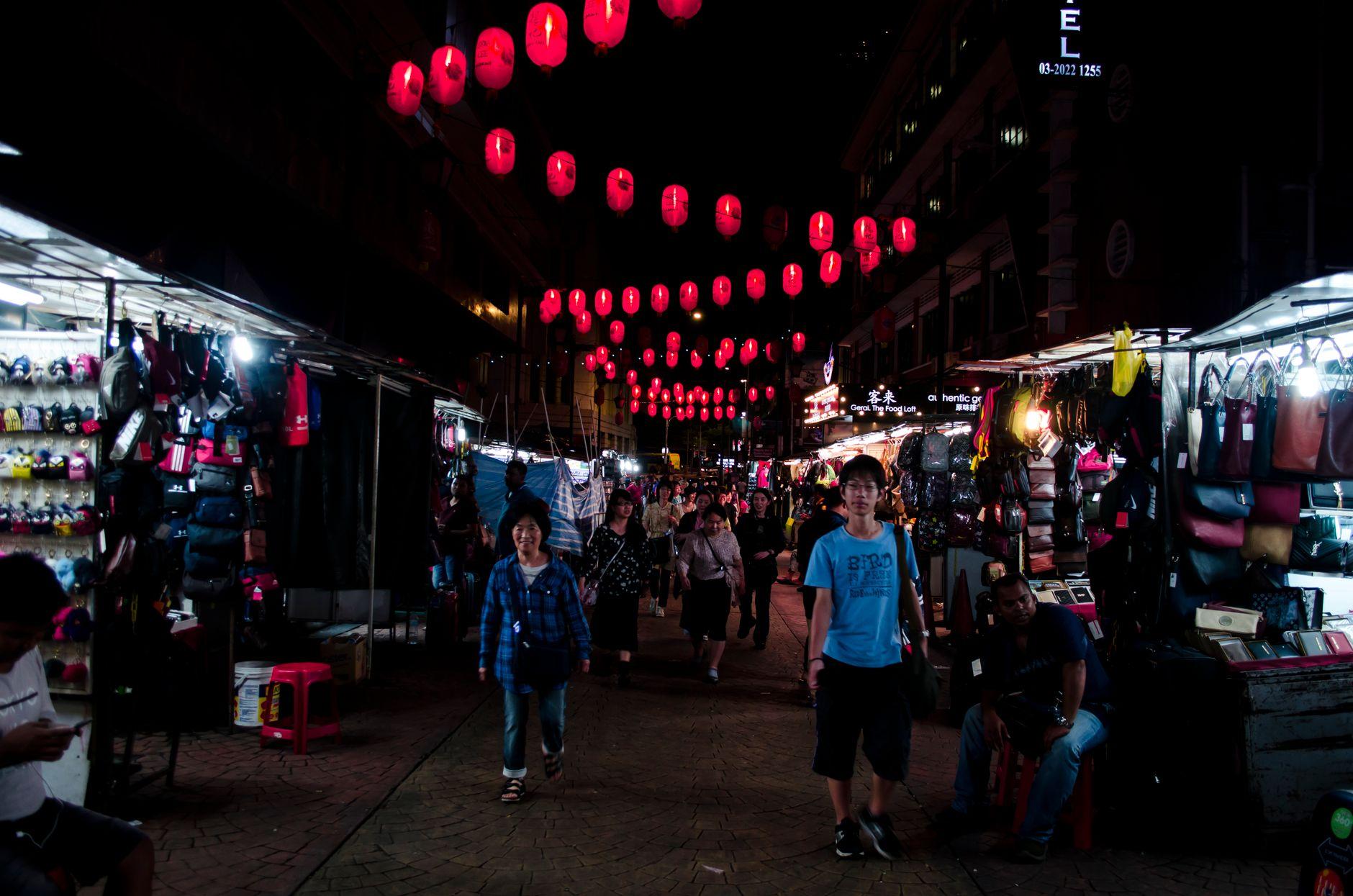


You're sitting at a mamak counter in Kuala Lumpur or a café in São Paulo, invoicing a client in New York or Berlin. The money arrives-but only after you've cleared three separate hurdles: proving what you invoiced, moving the money across borders without losing 4-6% to fees and markups, and reporting the income correctly in both your host country and your tax home. Solve those three and the rest is admin. Miss one, and you either get flagged by a payment processor, overpay on currency conversion, or file taxes wrong in a country where you didn't even realize you'd become a resident.
Malaysia and Brazil both exempt exported services from their local consumption taxes (SST and ISS respectively), but you still need proper registration and invoicing to prove the exemption applies. Physical presence past 182-183 days in either country triggers local tax residency, meaning you'd need to report worldwide income there in addition to any US or EU filing obligations. International wire transfer fees and exchange rate markups vary enormously by provider, from Wise's roughly 0.4-1% upfront fee to PayPal's 3.5-4% margin plus transfer fees. US freelancers abroad still owe self-employment tax on worldwide income. A clean freelance invoice template and a low-fee payment method are the two tools that prevent most cross-border payment disputes and compliance headaches.
About the author: Moreta Global Inc. is a FinCEN-registered Money Services Business built by a Y Combinator-backed team that spends its time studying exactly how money moves between US and EU bank accounts and local payment rails in Malaysia, Brazil, and a dozen other countries where freelancers and travelers work and spend.
How do freelancers in Malaysia get paid by US and EU clients?
A freelancer based in Malaysia typically gets paid one of three ways: a US ACH transfer or SEPA transfer into a local Malaysian bank account, a payment platform like PayPal or Wise, or a stablecoin transfer settled outside the traditional banking system. Each route has a different fee structure and a different paper trail requirement.
Providers processing your incoming payments will typically ask for a government-issued ID, proof of address, and occasionally invoices or proof of source of funds before releasing larger transfers. Verification across providers handling cross-border money movement into Malaysian accounts is standard practice. Keeping a folder of signed contracts and invoices ready before you request a payout saves days of back-and-forth when a provider asks for documentation.
On the tax side, Malaysia does not require freelancers to register for Service Tax (SST) unless annual taxable turnover exceeds RM500,000, and even then, services exported to clients outside Malaysia are generally exempt from SST. That means most freelancers billing US or EU clients from Malaysia never touch SST at all. The bigger trigger to watch is physical presence: spend 182 days or more in Malaysia in a calendar year and you become a Malaysian tax resident, obligated to file locally on top of whatever you owe your home country.
How do freelancers in Brazil get paid by US and EU clients?
Brazil's system is more paperwork-heavy at the front end but clearer once set up. To invoice international clients legally, a freelancer needs a CNPJ (a business tax ID) and a Municipal Registration, which together allow you to issue a Nota Fiscal de Servico Eletronica (NFS-e), Brazil's mandatory electronic service invoice. Without an NFS-e, an international client's finance department may reject the invoice outright, since it's the only document Brazilian tax authorities recognize as proof of a billed service.
The upside: exported services consumed abroad are typically exempt from the municipal ISS tax that would otherwise apply to domestic service income. So a designer in Florianopolis billing an EU agency for work the agency uses in Amsterdam generally doesn't owe ISS on that invoice, provided the CNPJ and NFS-e paperwork correctly document the export.
Receiving the actual payment adds another layer. Any authorized intermediary handling an international payment into Brazilian reais must verify your business documentation and invoice before releasing funds. This is why freelancers who skip the CNPJ step often find their PayPal or wire transfer stuck in review, not because the platform is being difficult, but because the intermediary is legally required to see the documentation.
Brazil's residency trigger works similarly to Malaysia's but with a twist: more than 183 days present within any 12-month period makes you a tax resident on worldwide income, and holding a permanent visa triggers residency immediately on entry, regardless of days spent.
What should a freelance invoice template include for cross-border clients?
A freelance invoice template built for international billing needs a few fields that a domestic template doesn't. At minimum: your full legal name or business name, your CNPJ or equivalent tax ID if operating in Brazil, the client's full legal entity name and country, the currency the invoice is denominated in, the exchange rate reference date if you're converting for your own records, a description specific enough to prove the service was exported (not just "consulting" but "UX design for mobile app, delivered remotely to client in Berlin, Germany"), and your preferred payment method with account details.
That specificity matters for two separate reasons. First, Malaysian and Brazilian tax exemptions on exported services depend on being able to show the client and the consumption of the service happened outside the country. A vague invoice description weakens that proof. Second, EU clients operating under DAC7 reporting rules are now required to report cross-border and domestic payments made to freelancers for personal services to their tax authorities, with no minimum earnings threshold. A clean, dated, itemized invoice makes their reporting easier and reduces the chance they push back or delay payment while they sort out documentation on their end.
Why do international wire transfer fees vary so much between providers?
International wire transfer fees vary because each provider profits differently: some charge a visible flat fee, others hide the cost inside the exchange rate itself. Wise applies the mid-market exchange rate with no markup and instead charges a transparent upfront fee, typically 0.4% to 1% of the transfer amount. Revolut also offers the mid-market rate with no markup on weekdays up to a monthly limit for standard-tier users, but adds a 1% markup on weekend transfers. PayPal, by contrast, applies a 3.5% to 4% margin above the base exchange rate plus its own transfer fees, meaning the cost is baked into a worse rate rather than shown as a line item.
The mechanism is the same one that makes airport currency kiosks a bad deal: whoever controls the exchange rate you see controls how much profit they can extract without you noticing a separate "fee" line. A $2,000 invoice converted through a 4% margin costs you roughly $80 more than the same invoice converted at the mid-market rate with a 0.5% fee, a difference of about $70 on a single payment, and that gap compounds every month you invoice.
For freelancers managing this personally, keeping a foreign-currency balance and spending it directly, rather than converting to reais or ringgit and back again for local purchases, avoids paying that margin twice. This is the same problem Moreta was built around for travelers: the Moreta app lets you hold a balance and pay local QR merchants in Malaysia (DuitNow QR) or Brazil (Pix) directly, converting at the point of payment with the exact rate shown before you confirm, rather than losing a chunk to conversion twice on the way in and the way out.
How does B2B cross-border payment verification affect freelancers?
B2B cross-border payments between a freelancer's home country and Malaysia or Brazil require standard verification that most freelancers only discover the first time a payment gets held. Providers will check your business documentation and invoice before releasing funds. Neither is arbitrary friction, it's the standard verification layer that any provider moving money across those borders is required to run.
The practical fix is the same in both countries: register your business ID (CNPJ in Brazil, or the relevant registration in Malaysia if your turnover requires it) before your first large international invoice, not after a payment gets stuck. Keep signed contracts and invoices for every client relationship, not just the ones you think might get audited.
What US tax obligations follow freelancers working abroad?
US citizens and residents remain on the hook for reporting worldwide freelance income on Form 1040 and paying self-employment tax, regardless of how long they've lived in Malaysia or Brazil. On the domestic side, US clients paying contractors directly will issue a 1099-NEC once payments to that contractor exceed $2,000 in 2026, while third-party platforms like PayPal report via 1099-K once a freelancer crosses $20,000 and 200 transactions.
Frequently Asked Questions
Do I need a local bank account to invoice EU or US clients while working in Malaysia or Brazil?
Not always. Many freelancers use Wise, Revolut, or a wallet like Moreta to receive and hold foreign currency without opening a local account, though a local account may still be required if you're withdrawing to spend cash locally or your CNPJ registration requires one in Brazil.
Does invoicing US clients trigger VAT or GST in Malaysia?
No. Exported services to clients outside Malaysia are generally exempt from Service Tax (SST), and SST registration only applies once turnover exceeds RM500,000 regardless of client location.
Can I avoid Brazil's ISS tax on international invoices?
Yes, provided the service is genuinely consumed abroad and your NFS-e documentation clearly shows the export. Without a CNPJ and proper NFS-e, you may not be able to invoice at all.
How long can I stay in Malaysia or Brazil before I owe local taxes?
182 days in a calendar year for Malaysia, and more than 183 days within any 12-month period for Brazil (or immediately with a permanent Brazilian visa).
What's the cheapest way to receive a large international invoice payment?
Providers using the mid-market exchange rate with a transparent fee, like Wise, generally cost far less than providers with a built-in margin, like PayPal's 3.5-4% margin.
Do EU clients have new reporting obligations for freelancer payments in 2026?
Yes. Under DAC7, digital platforms must report cross-border and domestic payments to freelancers for personal services with no minimum earnings threshold.
About Moreta
Moreta Global Inc. is a Delaware corporation, FinCEN-registered Money Services Business, and Y Combinator-backed company (Summer 2024 batch) built for people who live and spend across borders. While this article focuses on getting invoices paid, the harder daily problem for many freelancers abroad is spending that income locally without losing another chunk to conversion fees. Moreta's app lets you top up from a US or EU bank account or card and pay directly at local QR merchants in Malaysia (DuitNow QR) and Brazil (Pix), with the exact exchange rate shown before you confirm each payment. Funds sit with licensed partner banks, with identity verification through Persona and 24/7 fraud monitoring.
If you're managing freelance income across Malaysia, Brazil, or other markets where local QR payments dominate, see how Moreta compares on rates and fees at moretapay.com.