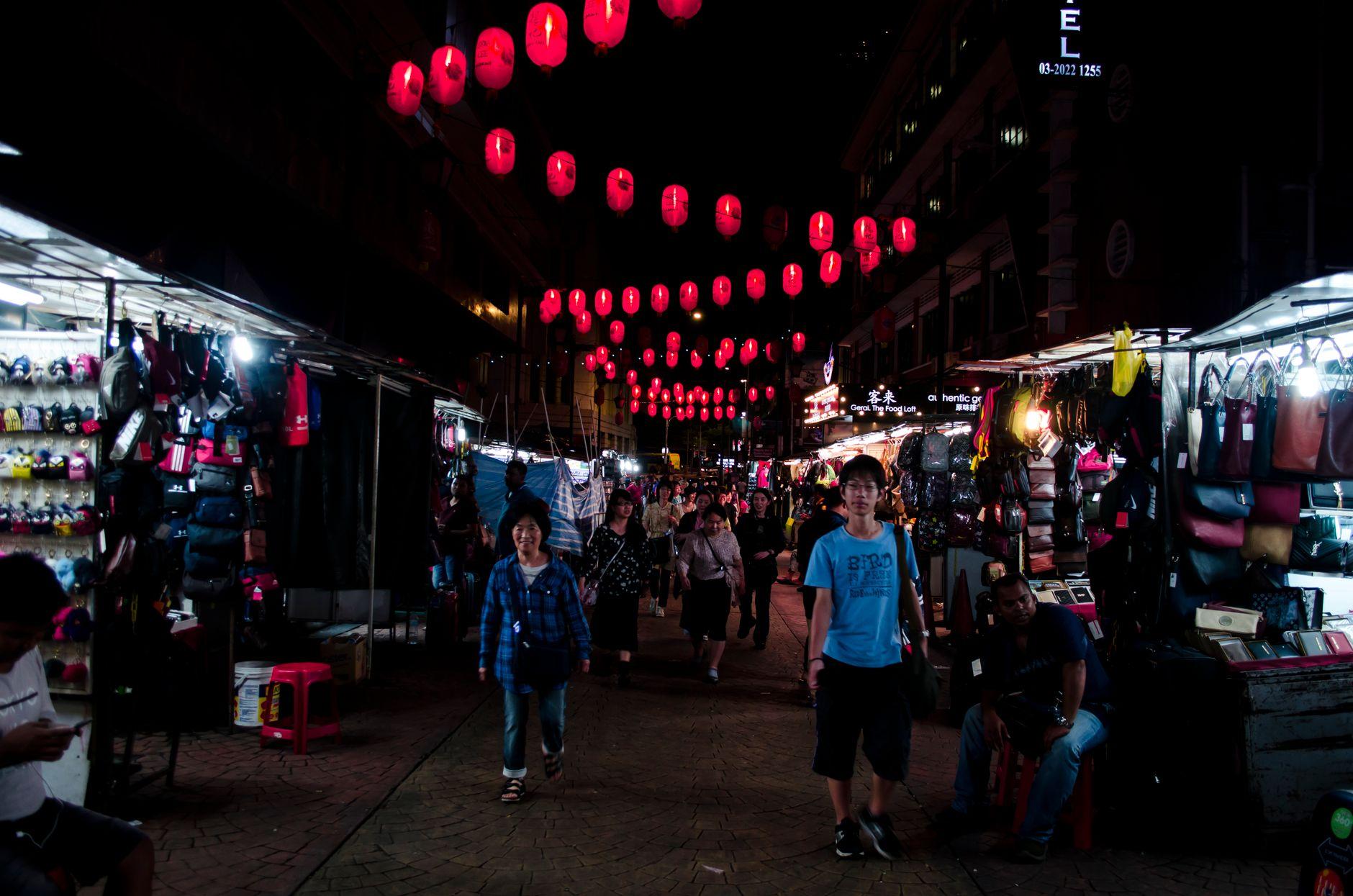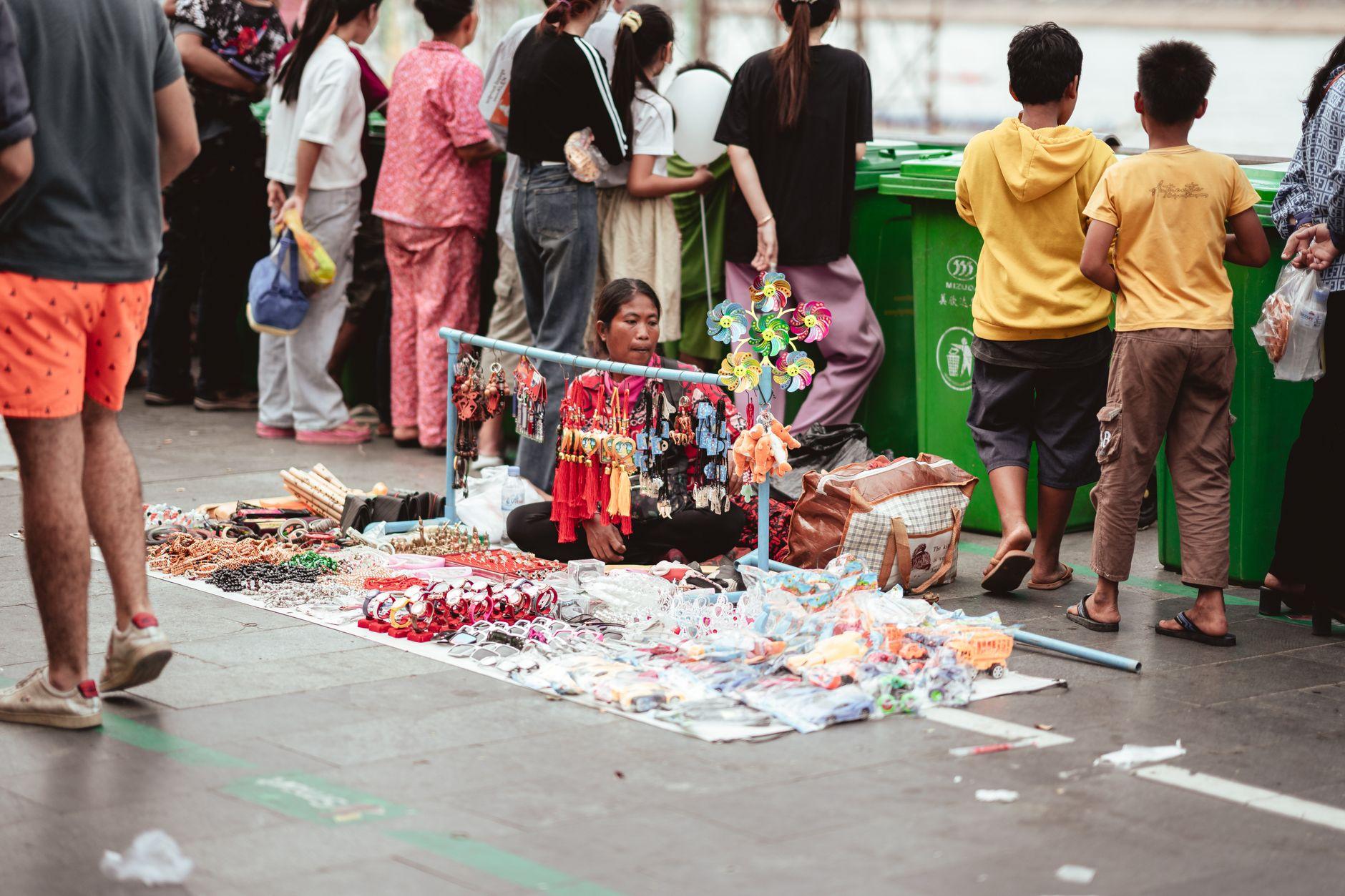


Four plates of char kway teow at a mamak stall in Bangsar, one round of Tiger beers, and three roommates staring at a single bill because the fourth person paid with a card that doesn't work at that particular DuitNow terminal. This is the actual mechanics of expat bill-splitting in Kuala Lumpur and Phnom Penh: not an app decision made in a vacuum, but a series of small currency and rail mismatches that happen every single week. Expats in both cities settle shared costs through a mix of native QR transfers (DuitNow QR in Malaysia, KHQR via Bakong in Cambodia), informal cash reconciliation, and international transfer apps like Wise, with the specific tool depending on whether the person owing money holds a local bank account or is still running on a foreign card.
About the Author: Moreta Global Inc. is a Delaware corporation and FinCEN-registered Money Services Business, built for travelers and expats who move between Asia's cashless economies.
How do roommates actually split rent and bills in Kuala Lumpur?
You're standing at the Maybank ATM in Mid Valley on a Friday evening, waiting to withdraw cash to hand to your roommate, when you realize: she has a local account and you don't yet. It's been three weeks in Kuala Lumpur, your application is still processing, and splitting the condo bill in Bangsar requires something you can't access. Rent splitting in KL almost always happens through a local bank transfer, because Malaysia's cashless infrastructure is built around DuitNow, the national instant transfer and QR standard that connects directly to Malaysian bank accounts. DuitNow QR alone reached almost 3 million registered merchant touchpoints in 2025 [varsoviaestate.com], and the same underlying rail handles person-to-person transfers between Malaysian bank accounts, not just merchant payments. If you and your roommates all have Maybank, CIMB, or Public Bank accounts, splitting a condo bill in Bangsar or Mont Kiara is a non-event: open your banking app, enter the recipient's phone number or DuitNow ID, transfer the amount, done.
The friction shows up the moment one roommate is new to the country and hasn't opened a local account yet. That person is stuck asking to be paid back "in cash" or over a foreign app that their roommates don't use, which turns a five-second transfer into a multi-day back-and-forth. This is the exact gap that pushes newer arrivals in the expat community in Kuala Lumpur toward apps that let them fund a wallet from a home bank account and pay directly into the local system without waiting for a Malaysian bank account to clear.
Keep ringgit on hand for small vendors in the neighborhoods surrounding your apartment. Wet markets in Bangsar and independent stalls in Sri Hartamas still move physical notes, and you'll want a modest reserve to avoid the awkward moment of asking a fruit seller if she takes QR.
How is bill splitting different in Phnom Penh?
A motorcycle taxi driver outside the Russian Market pulls up to the curb, and you and your roommate split the fare with your phones already out. He scans KHQR, she confirms the amount, and neither of you thinks twice about whether the transaction settled in dollars or riel. Phnom Penh runs on a different mechanism entirely, and the difference matters for how expats settle shared costs. Cambodia's KHQR network operates through Bakong, the National Bank of Cambodia's digital payment system, which processed over 600 million transactions in 2023 [varsoviaestate.com]. Bakong is unusual in that it settles in both Cambodian riel and US dollars from the same QR code, reflecting the fact that Cambodia's economy runs heavily on USD alongside riel. A shared taxi fare from Chroy Changvar to BKK1 can be split with one roommate paying in dollars and the other confirming in riel off the same code, without either side doing manual conversion.
For roommates sharing a place in Toul Kork or a shared apartment near the Russian Market, this makes local settlement genuinely simple, provided everyone has a Bakong-linked account. Monthly costs for expats living in Phnom Penh commonly run $150 to $550 depending on whether you're in a shared apartment or renting solo [twocantravel.com], with food and dining budgets typically landing between $200 and $400 a month on a modest lifestyle and $400 to $700 for a more comfortable one [cambodianess.com]. Those numbers mean a lot of small splits: a market run at Psar Tuol Tom Poung, a shared moto-taxi, a weekly cleaner. The settlement mechanism matters more here than in cities where roommates split three big bills a month instead of fifteen small ones.
Keep physical riel or dollars on hand for temple donations, rural motorbike trips, and the small vendors inside Psar Tuol Tom Poung who haven't linked to Bakong yet. A reserve of $20 to $40 USD equivalent avoids friction with the old-school economy that still operates alongside the QR network.
Can you send money between Malaysia and Cambodia to settle a shared bill?
Bank Negara Malaysia and the National Bank of Cambodia have set up a bilateral QR linkage that allows cross-border merchant payments, letting a Malaysian visitor scan a KHQR code in Phnom Penh or a Cambodian visitor scan DuitNow in KL. But that linkage covers merchant transactions, not peer-to-peer transfers, and direct cross-border person-to-person payments between the two systems remain frequently restricted [varsoviaestate.com]. You cannot simply KHQR your roommate back in KL the $12 you owe them for shared Grab rides, even though you could use that same KHQR code to pay for dinner at a restaurant.
That restriction is the actual reason expats juggling both cities fall back on international money transfer apps or foreign-currency wallets for cross-border roommate debts, while using the native QR rail for everything local. It's a split system, not a single-app solution, and most bill-splitting confusion stems from treating it as otherwise.
What's the real cost difference between transfer apps for expats?
The mechanism behind currency exchange in Malaysia and Cambodia comes down to markup on the conversion, not a flat fee, and the official exchange rate benchmark is approximately 1 MYR to 1,000 KHR [varsoviaestate.com]. Wise applies the mid-market rate with a transparent, disclosed fee on top, which is why it tends to come out cheaper for larger, infrequent transfers like a security deposit. PayPal applies a currency conversion markup of up to 4 percent, which adds up quickly if you're using it for frequent small splits rather than one-off payments. Revolut is currently unavailable to residents of either Malaysia or Cambodia [varsoviaestate.com], which rules out an app that a lot of expats default to elsewhere in Asia.
| Method | Best for | Cost mechanism |
|---|---|---|
| DuitNow QR / bank transfer (Malaysia) | Local roommate splits, MY residents | No conversion fee; instant local transfer |
| KHQR via Bakong (Cambodia) | Local roommate splits, KH residents | No conversion fee; settles in USD or KHR |
| Wise | Cross-border transfers, larger amounts | Mid-market rate plus transparent fee |
| PayPal | Occasional cross-border splits | Up to 4% currency conversion markup |
| Revolut | Not usable | Unavailable to MY/KH residents [varsoviaestate.com] |
What's the best way to actually track who owes what?
A roommate expense tracker and a payment app solve different problems. The tracker's job is arithmetic: logging that you covered the electric bill in Sri Hartamas and your roommate covered groceries, then calculating the net balance. Apps built for split expenses with friends do this well because they separate "who owes what" from "how the money actually moves," which matters once you're dealing with a mixed group of local-bank-account holders and expats still on foreign cards.
The best bill splitting app for your household must match your group's actual banking mix. A household of four Malaysians on DuitNow needs nothing more than their banking app's calculator function. A household of two Malaysians and two new expats needs a tracker for the math and a separate way for the newcomers to settle without asking for a Malaysian bank account they don't have yet.
Where does a wallet like Moreta Pay fit into this?
For the newcomer half of that equation, the practical gap is funding: you have money in a home bank account or on a foreign card, and you need to pay into a QR network built for local accounts. Moreta Pay addresses that specific gap by letting you top up from a home bank, card, or supported stablecoin balance, then scan the same DuitNow QR or KHQR code your roommate or the mamak stall uses, seeing the merchant name, amount, and exact FX rate before confirming. It doesn't replace a roommate ledger and it isn't a cross-border loophole around the Malaysia-Cambodia peer-to-peer restriction. What it does is remove the "I don't have a local account yet" excuse that turns a $12 taxi split into a three-day negotiation, which for cashless payments in Malaysia and increasingly in Cambodia is most of the actual friction.
Frequently Asked Questions
Can expats in Kuala Lumpur use DuitNow without a Malaysian bank account?
DuitNow bank-to-bank transfers require a Malaysian bank account, but DuitNow also integrates with e-wallets such as Touch 'n Go eWallet, which foreigners and expats can register for using a passport. That means peer-to-peer DuitNow transfers are still possible without a local bank account, as long as you're set up with a linked e-wallet.
Does KHQR work for both USD and riel?
Yes. Bakong settles KHQR transactions in either US dollars or Cambodian riel from the same code, reflecting Cambodia's dual-currency economy.
Can I send money directly from Malaysia to a friend in Cambodia using QR?
Merchant payments are linked between the two countries' QR systems, but direct peer-to-peer transfers between them remain frequently restricted [varsoviaestate.com].
What's the cheapest way to convert MYR to KHR for a shared bill?
Wise's mid-market rate with a disclosed fee is generally more transparent than PayPal's markup of up to 4 percent for currency conversion [varsoviaestate.com].
Is Revolut usable in Malaysia or Cambodia?
No. Revolut is currently unavailable for residents in either country [varsoviaestate.com].
How much do expats in Phnom Penh typically spend on food each month?
Budget lifestyles run $200 to $400 a month, while more comfortable dining runs $400 to $700 [cambodianess.com].
What should new roommates set up before splitting bills abroad?
Open a local bank account if staying long-term, agree on one shared ledger app for tracking balances, and keep a funded wallet or card ready for the gap period before local banking is set up.
About Moreta
Moreta Global Inc. is a Delaware corporation and FinCEN-registered Money Services Business, backed by Y Combinator's Summer 2024 batch. The platform lets travelers and expats top up a digital wallet from a home bank, card, or stablecoin balance and pay directly into local QR networks including DuitNow QR in Malaysia and KHQR in Cambodia, seeing the exact merchant, amount, and FX rate before confirming. For expats managing shared costs across both cities, Moreta Pay functions as the funding layer that sits underneath whatever ledger or tracker a household already uses. Security features include identity verification, 24/7 fraud monitoring, and funds held by licensed partner banks.
If you're splitting bills between Kuala Lumpur and Phnom Penh, or just tired of asking your roommate to front the taxi fare until payday, check out Moreta Pay to see how local QR payments actually work across both markets.