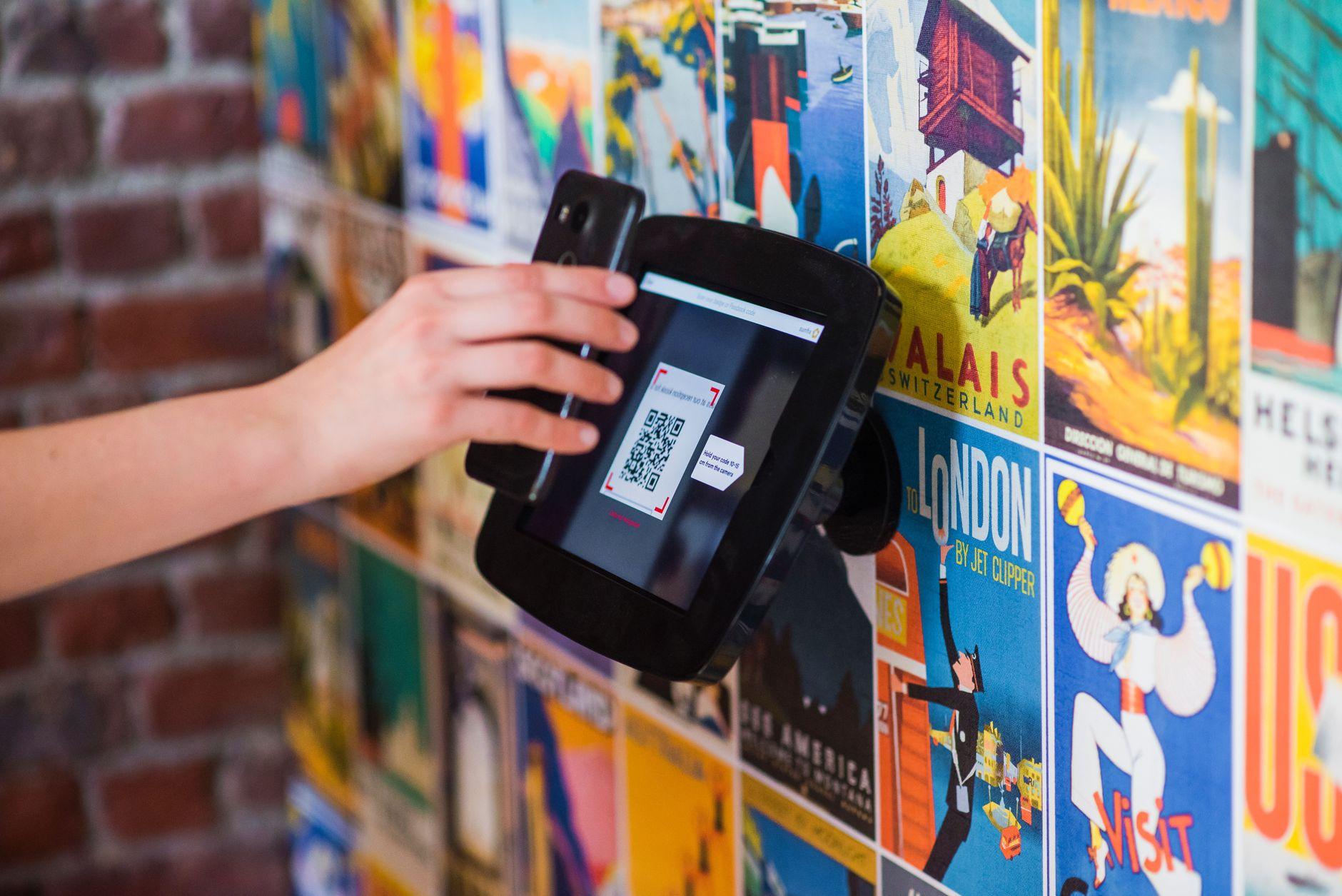

You're standing at a night market counter in Phnom Penh, phone out, ready to scan a QR code with a travel wallet you downloaded last week. The merchant swipes their laminated code. You tap the app. Then a question hits: how do you actually know this company won't vanish with your balance tomorrow?
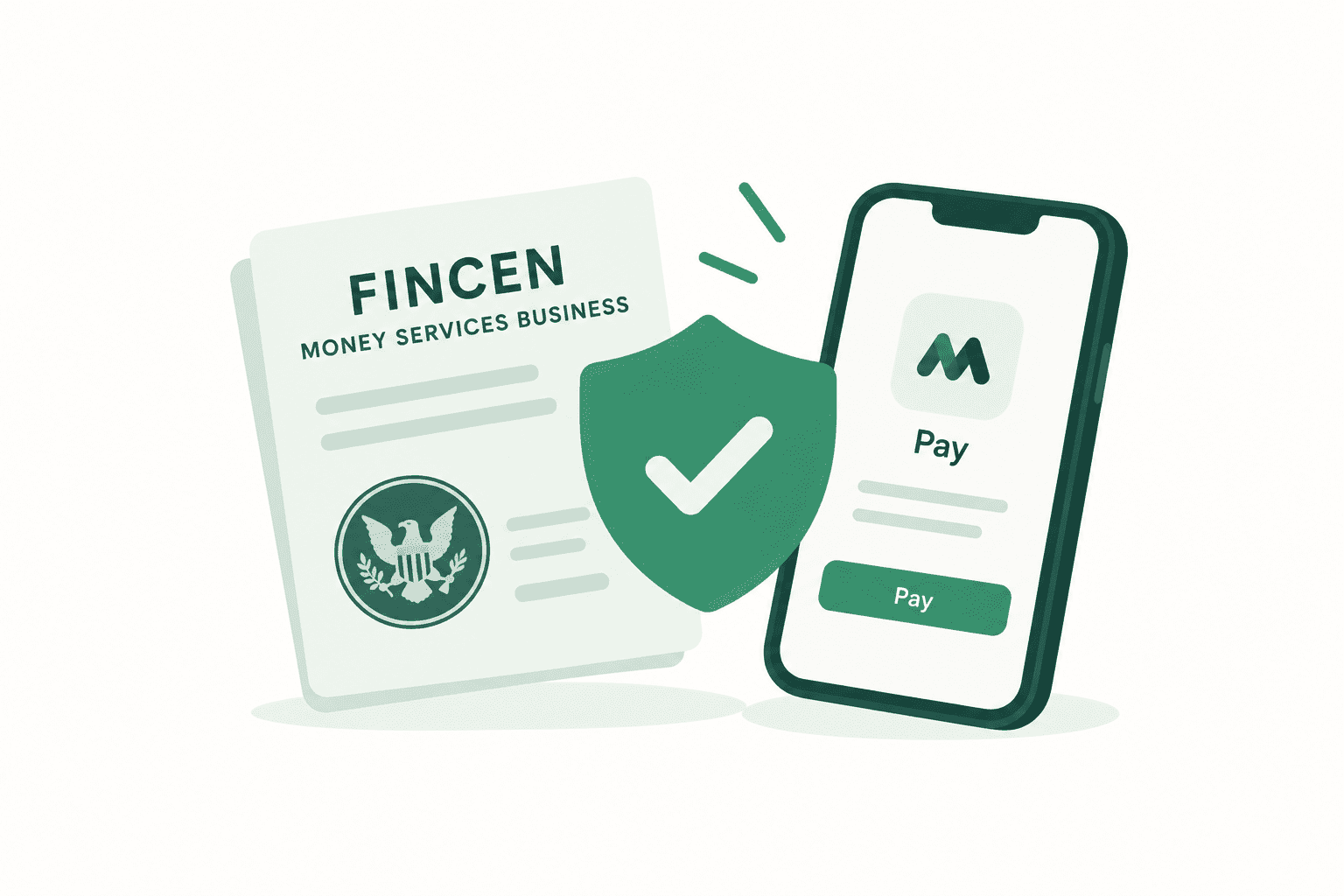
A five-digit Money Services Business registration number is the answer. It's public record, takes ninety seconds to verify, and tells you whether a fintech company handling your money is operating under U.S. federal oversight. A polished interface tells you nothing about that. A registration number tells you almost everything you need to know about whether your money is going somewhere accountable.
App store ratings, download counts, and design quality have zero correlation with regulatory status. A five-point checklist (registration lookup, funds custody, identity verification, fee disclosure, incident response) takes under ten minutes and screens out most risk. Moreta is FinCEN-registered as an MSB and Y Combinator-backed, and applies the same checklist standard it recommends to travelers.
About the Author: Moreta is a FinCEN-registered Money Services Business built for international travelers making local QR code payments across Asia and Latin America, and this checklist reflects the same due-diligence questions the company had to answer about its own infrastructure before launch.
What does it mean when a fintech is registered as a Money Services Business?
A company registered with FinCEN has filed the required federal form identifying itself as a Money Services Business and submitted to oversight. For a traveler, the practical takeaway is straightforward: registration is a public record you can look up in seconds. That single lookup separates apps that have submitted to a federal registration cycle from apps that haven't.
Why should a traveler care about regulatory status?
Because registration determines who is legally accountable if something goes wrong with your funds while you're standing at a night market counter in Phnom Penh or a 7-Eleven in Kuala Lumpur. This is the part travelers skip past because it sounds bureaucratic, but it's the layer that determines what happens if a transfer fails, a top-up disappears, or an app shuts down mid-trip.
Think of it like the difference between a food stall with a visible health inspection certificate and one without. The certificate doesn't guarantee the meal tastes good. It guarantees a specific authority checked that specific kitchen against specific standards, and that there's a paper trail if something makes you sick. Regulatory registration works the same way for money movement: it doesn't guarantee good exchange rates or a smooth app experience, but it guarantees a regulatory body has a file on the company and a mechanism to act if the company mishandles funds.
The data backs up that travelers already sense this instinctively. In a recent UnaFinancial survey of Southeast Asian consumers, 64.0% cited regulatory oversight as a key factor driving trust in a fintech platform, close behind the security of financial data (71.0%) and transparent fees (69.6%), and roughly tied with brand reputation (64.5%). Regulatory status isn't a fringe concern for compliance nerds. It's one of the top four things users actually weigh.
How do I check if a payment app is registered?
Search the company's legal name (not just its app name) on FinCEN's public MSB registrant search and confirm the registration is active, not expired or pending. Apps often trade under a consumer-facing brand name that differs from the legal entity that filed with FinCEN, so know the parent company name before you search. An active registration will show the entity's registration number and the date it was filed or last renewed. If a company doesn't show up, that's not automatically disqualifying if they use a different corporate structure, but it should prompt a direct question to their support team: "What's your MSB registration number?" A legitimate MSB will answer immediately, because it's public information anyway.
What else should I check besides registration status?
Registration is the floor, not the ceiling. Once you've confirmed it, here's the rest of the checklist, broken into what to look for and why it matters:
| Check | What to look for | Why it matters |
|---|---|---|
| MSB registration | Active FinCEN filing under the correct legal entity name [fincen.gov][irs.gov] | Confirms federal oversight and accountability |
| Funds custody | Where deposited money physically sits (partner bank, insured account) | Determines what happens to your balance if the app itself fails |
| Identity verification | KYC/identity check required at signup | Demonstrates a functioning compliance infrastructure |
| Security certifications | PCI DSS for card data, SOC 2 for data handling, ISO 27001 for information security management | Industry-standard baselines for how payment data is actually protected |
| Fee transparency | Exchange rate and fee shown before you confirm, not after | Prevents the DCC-style trick of hiding the real cost until it's too late |
| Rail specificity | Which local QR networks (VietQR, KHQR, DuitNow, QR Ph, Pix) are actually supported, not just "Asia" or "Latin America" broadly | Vague market claims are a red flag; real integrations name the rail |
On security certifications specifically: expect a fintech handling payment cards to reference PCI DSS, a fintech handling customer data broadly to reference SOC 2, and a company managing information security holistically to reference ISO 27001. Regional apps should also mention compliance with data protection rules relevant to where you're traveling. None of these are exotic asks. If a company can't name which of these applies to them, that's worth noting.
How does this compare across the apps travelers already use?
Wise and Revolut are both registered as MSBs with FinCEN and hold state-level money transmitter licenses in the US, and both route customer deposits through partner banks to provide FDIC-insured accounts for US consumers. That's a useful baseline: it shows registration and insured custody aren't unusual asks, they're standard practice among established multi-currency platforms.
Where the market differs is in rail access, not registration status. LocalPay operates as a non-custodial stablecoin wallet on Solana, converting USDT and USDC to local fiat at ordinary QR merchants. WanderWallet supports payments across multiple Latin American markets. Each of these has a defined lane. None of it replaces asking about registration first.
For a closer look at how paying by local QR stacks up against using a foreign card abroad, see Compare rates: Moreta vs card and cash.
Does a security-first design matter as much as registration?
Registration tells you a company is accountable to a regulator; security architecture tells you whether that company can actually keep your money safe day to day, and you need both. This is where identity verification at signup, 24/7 fraud monitoring, and login anomaly detection stop being nice-to-haves and start being the operational proof behind the regulatory standing. Registration confirms a company has submitted to oversight. Ongoing fraud monitoring and anomaly detection confirm they're actually running the systems that make that oversight meaningful in practice.
A credit card abroad exposes a magnetic stripe or chip to every terminal and every skimmer between you and the register; a QR payment removes that exposure entirely, since there's no card to hand over or insert and nothing physical for a skimming device to read. The trade-off is a different risk: a tampered or fake QR sticker placed over a legitimate merchant's code. That's why checking the merchant name, amount, and exchange rate in the app before confirming matters as much as the scan itself, since a mismatched merchant name is the tell that the code has been swapped. PCI DSS and SOC 2, the same certifications worth checking for card data handling, apply equally to how a QR payment app protects transaction data in transit.
Frequently Asked Questions
Is a money services business registration the same as a bank license?
No. An MSB registration with FinCEN is a federal filing for companies that transmit money or handle currency exchange; it's a distinct category from a banking charter, though many MSBs partner with FDIC-insured banks to hold customer funds.
Do I need a local bank account to use a QR code payment app abroad?
Depends on the app. Some travel wallets are built specifically so you don't need a local bank account; the same design principle applies broadly across the category of apps built for tourists using local QR rails.
What happens if a fintech app isn't registered with FinCEN and it's required to be?
That's a regulatory compliance failure on the company's part, and it should be treated as a hard red flag before you deposit any funds.
Are stablecoin wallets held to the same registration standard as traditional wallets?
Structure varies. Non-custodial stablecoin wallets may have a different regulatory posture than custodial fiat wallets, so check the specific entity's registration status rather than assuming.
Can I trust an app just because it has good app store reviews?
Reviews reflect user experience, not regulatory compliance or funds custody. Check registration status separately.
Why do exchange rate and fee disclosure timing matter so much?
An app that shows you the exact rate and fee before you confirm a payment is giving you the information needed to decline a bad deal, the same principle behind refusing dynamic currency conversion at a card terminal: always see the real number before you commit.
About Moreta
Moreta Global Inc. is a Delaware corporation and FinCEN-registered Money Services Business, backed by Y Combinator's Summer 2024 batch. The Moreta app is an international travel wallet that lets you top up from your home bank or card and scan the same local QR code a merchant already uses, whether that's KHQR in Cambodia, DuitNow in Malaysia, or Pix in Brazil, seeing the merchant name, amount, and exact exchange rate before you confirm. Identity verification runs through Persona, funds sit with licensed partner banks, and the platform runs 24/7 fraud monitoring and login anomaly detection as standard, not as an upsell. The company treats the checklist in this article as a baseline it holds itself to, not just advice for travelers to apply to everyone else.
If you're evaluating fintech apps for an upcoming trip, run the checklist above on any wallet before you fund it, and see how Moreta's own registration and security setup holds up at moretapay.com.