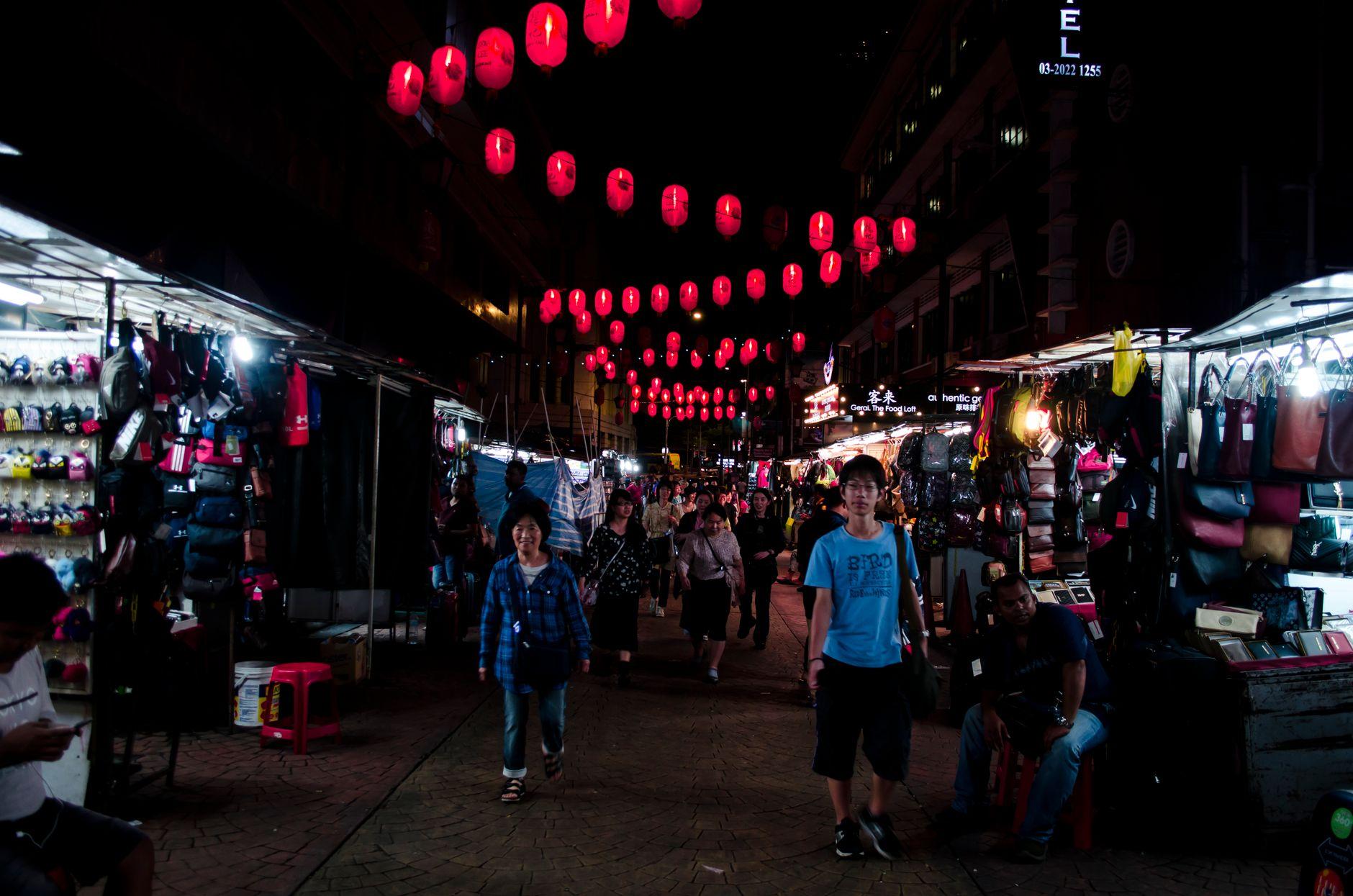

You walk up to a nasi kandar stall at Restoran Line Clear in Georgetown or a char kway teow cart at Old Town in Petaling Jaya and you see the same thing taped to the counter: three, sometimes four, laminated QR codes side by side. One says Touch 'n Go. One says Boost. One says GrabPay. The stall owner is not confused about technology. He is running three separate closed-loop wallet systems because, until recently, Malaysia had no single standard forcing them to talk to each other. That is changing. Bank Negara Malaysia's Interoperable Fund Transfer Framework, issued in June 2026, requires all proprietary QR networks to be phased out by June 30, 2028, in favor of one unified standard: DuitNow QR, which runs on PayNet's Real-time Retail Payments Platform. Until that deadline passes, the sticker collage at the cashier is the visible symptom of a payments system mid-migration.
What are the three QR codes at a Malaysian hawker stall?
The three codes you typically see are Touch 'n Go eWallet, Boost, and GrabPay, each representing a separate closed-loop payment network with its own backend ledger, its own merchant onboarding process, and historically no ability to accept a payment initiated from a competitor's app. A customer with only a Boost balance could not pay a QR code registered to GrabPay, and vice versa. So the hawker stall owner, wanting to capture sales from all three customer bases, simply printed and laminated one code per network and let the customer pick. This is not a display of technological sophistication. It is a workaround for a market structure where wallets did not interoperate, and the merchant bore the cost of maintaining three separate registrations to avoid turning away a paying customer.
What is DuitNow QR and how is it different?
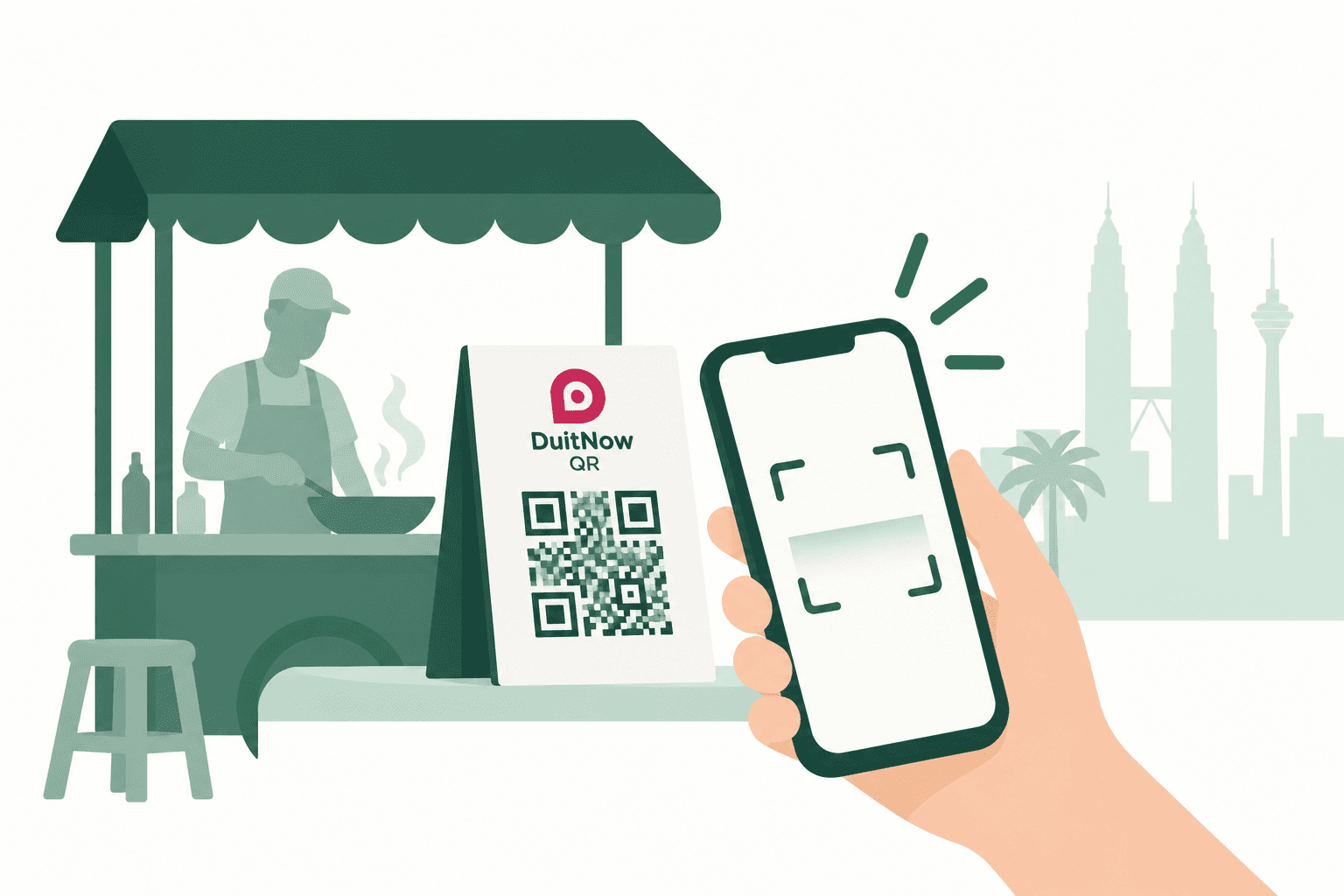
DuitNow QR is Malaysia's national QR standard, and its entire purpose is to eliminate the situation described above. Rather than requiring a merchant to display multiple codes, DuitNow QR lets a single code accept payment from any participating bank or e-wallet, because it operates on PayNet's Real-time Retail Payments Platform, a shared settlement layer that all participating institutions connect into. Think of it the way a universal power outlet works compared to a wall covered in country-specific socket adapters: instead of every appliance needing its own plug shape, one socket standard handles all of them because the wiring behind the wall is shared. That is the mechanical difference between a closed-loop wallet QR and DuitNow QR. The code itself does the interoperability work, so the merchant no longer needs to guess which network the customer is on.
For a hawker stall, this means the laminated three-code sign is not a permanent business decision, it is overhead that a single DuitNow QR code removes once the merchant and their bank finish the transition.
Why hasn't Malaysia already switched to one code?
Moving an entire national retail payments system from closed-loop wallets to a shared interoperable rail takes time, and Bank Negara Malaysia built that timeline into the regulation itself. The Interoperable Fund Transfer Framework does not ban Touch 'n Go, Boost, or GrabPay as apps, it bans their proprietary QR codes from operating outside the unified DuitNow QR infrastructure, with a hard deadline of June 30, 2028. Between now and then, hawker stalls, mamak restaurants, and pasar malam vendors are expected to progressively consolidate down to a single DuitNow QR sticker as their banks and wallet providers complete the technical migration. Some newer stalls, particularly those that opened after 2026 with digital-first setups like QR ordering systems, are already skipping the multi-code phase entirely and launching with DuitNow QR alone [rovasolution.com][eats365pos.com].
Does every merchant already accept DuitNow QR?
Not universally, but adoption is broad and growing, especially as businesses digitize their ordering and payment flow together rather than bolting QR payment onto an existing cash register. Malaysian restaurants adopting QR code ordering systems report faster table turnover and more hygienic, contactless transactions as side benefits of digitizing the payment step [eats365pos.com], and QR codes in Malaysia have expanded well beyond payments into public information use cases, like road safety signage carrying scannable emergency contact details [scanova.io] and halal certification labeling for imported meat products [foodnavigator.com]. The common thread across all of these is that a QR code in Malaysia is trusted infrastructure, not a novelty, which is exactly why Bank Negara Malaysia's push to standardize the payment version of it matters.
Can a foreign traveler use DuitNow QR directly?
The picture here is more mixed than most visitors expect. Touch 'n Go eWallet lets international tourists register using a foreign mobile number and passport, and top up using a foreign credit or debit card, without needing a Malaysian bank account or local phone number. GrabPay similarly supports registration with a foreign phone number and funding through a foreign credit card. Boost, however, is less accommodating to visitors without local banking ties. So even once the three-code sign at the hawker stall collapses into one, using that single DuitNow QR code as a tourist still means navigating which wallet you can actually register and fund from abroad, and going through the setup process before you can pay. This is the same gap we've covered in Cambodia's KHQR system, where the code is unified nationally but still has friction for anyone without a local account.
How does Moreta Pay let travelers pay with DuitNow QR?
Moreta Pay closes that gap by letting a traveler's home bank account or card fund a wallet that then pays directly into the DuitNow QR network, the same code the hawker stall already has taped to the counter. The mechanics work like this:
- Top up the Moreta app from your home bank account, debit card, or credit card in your own currency.
- At the stall, scan the same DuitNow QR code the merchant already uses, no separate merchant setup required.
- See the stall name, the exact amount in ringgit, and the live FX rate on screen before you confirm anything.
- Confirm the payment, and the merchant receives funds instantly in Malaysian ringgit, just as they would from a local Touch 'n Go or DuitNow-linked account.
- Check your app history for the transaction record, useful when you are tracking spending across multiple countries on one trip.
This is cross border QR payment in its most literal sense: a payment method built for a domestic network, extended to someone whose money originates outside the country, without asking the merchant to change anything about how they already accept DuitNow QR.
What should travelers still carry cash for?
Even with DuitNow QR coverage expanding fast, cash has not disappeared from Malaysia. Small kampung stalls in rural Kedah, temple donation boxes, and parking ticket machines at older buildings in George Town still run cash-only. Keep a modest reserve, something like RM50 to RM100 in small notes, for these specific gaps rather than assuming every counter you approach will have a working QR option.
If a card terminal or ATM ever asks whether you want to be charged in your home currency instead of ringgit, decline it. That prompt is dynamic currency conversion, and it applies a worse exchange rate than simply letting your card or wallet convert at the real rate.
Common questions
Is DuitNow QR the same as Touch 'n Go?
No. Touch 'n Go is one closed-loop e-wallet. DuitNow QR is the national interoperable standard that, once fully rolled out, will let any participating bank or wallet, including Touch 'n Go, transact through a single shared code.
Why do some stalls still have three QR codes in 2026?
Because the phase-out mandated by Bank Negara Malaysia runs through June 30, 2028. Many merchants have not yet completed the migration to a single DuitNow QR code.
Can I use my US or European bank card directly on a DuitNow QR code?
Not directly in most cases, though some Malaysian e-wallets, like Touch 'n Go eWallet and GrabPay, allow foreign cards to be linked once the wallet itself has been registered with a foreign phone number and passport.
Does Moreta charge the same as a Malaysian bank for DuitNow QR payments?
Moreta shows the exchange rate and any fees before you confirm each payment, so you can compare it directly against what an ATM withdrawal or card transaction would cost.
Will the multi-QR-code problem disappear completely by 2028?
That is the regulatory target. Bank Negara Malaysia's framework mandates it, though individual merchant migration timelines will vary.
Does Moreta work with GrabPay or Boost directly?
Moreta connects through the DuitNow QR standard, which is designed to be accepted wherever merchants display it, rather than integrating separately with each proprietary wallet.
About Moreta
Moreta Global Inc. is a Delaware corporation, a FinCEN-registered Money Services Business, and a Y Combinator-backed company from the Summer 2024 batch. The Moreta Pay app lets international travelers top up from a home bank account, card, or supported stablecoin balance and pay directly into local QR networks like DuitNow QR in Malaysia, KHQR in Cambodia, and Pix in Brazil, without needing a local bank account first. Every payment displays the merchant name, exact amount, and live FX rate before confirmation, so there is no guesswork at the counter. Identity verification runs through Persona, and 24/7 fraud monitoring is built into the account.
If you're heading to Malaysia and want to pay at hawker stalls the way locals do, without opening a local bank account first, visit Moreta Pay to see how it works before you land.