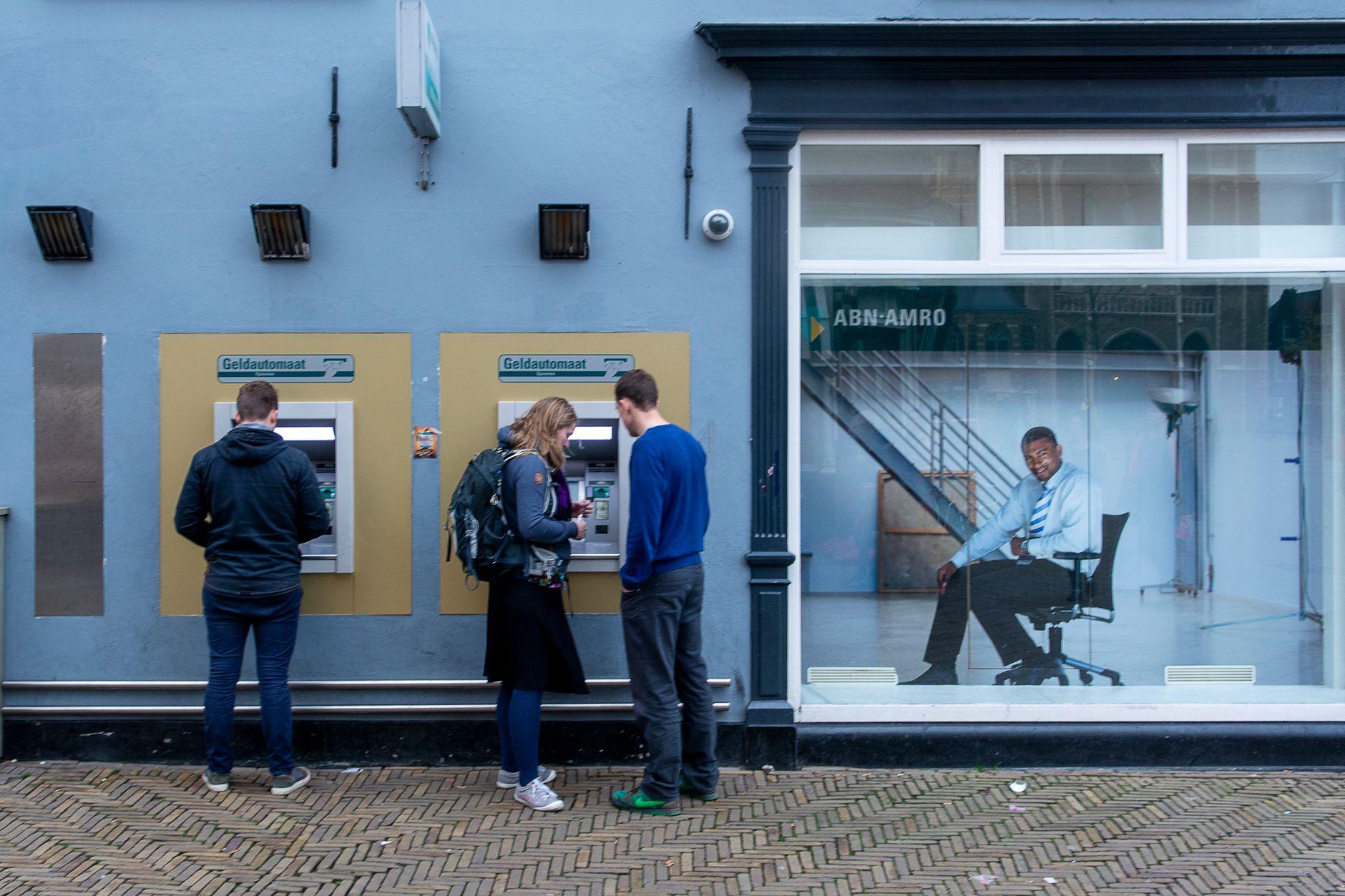


You land at Incheon, you’re jetlagged, and there’s a row of ATMs glowing at you near baggage claim. Every instinct says grab some won now, just in case.
Resist for a second. South Korea is one of the most cashless countries on earth, and the money you pull out of that machine will probably be the most expensive money you spend all trip. Here’s how the costs actually stack up, and how to route around them.
Two leaks, not one
Travelers usually think of “ATM fees” as a single problem. In Korea it’s two separate leaks.
Leak one is the fee stack: the Korean ATM operator’s fee, plus whatever your home bank charges for a foreign withdrawal, plus a possible foreign transaction fee on top. Each one looks small. Together they add up fast, especially if you withdraw little and often.
Leak two is the exchange rate, and this is the sneaky one. Many ATMs (and card terminals) will offer to charge you in your home currency instead of won. That’s called dynamic currency conversion, or DCC, and the rate baked into it is almost always worse than what your own bank or card network would give you.
Fixing leak one means using ATMs less. Fixing leak two takes exactly one habit: whenever a screen asks whether you want to pay in dollars, euros, or pounds, say no. Always choose won.
If you truly need cash, withdraw like this
You will want a small amount of cash in Korea. Topping up a T-money transit card at a subway machine usually means feeding it bills, and a handful of street stalls and countryside spots still run on paper. So when you do hit an ATM:
1. Look for a “Global ATM.” Machines marked Global (common at banks and inside convenience stores like GS25 and CU) reliably accept foreign cards and have English menus.
2. Withdraw once, not five times. If the operator fee is fixed per transaction, one larger withdrawal beats several small ones.
3. Decline the conversion. If the machine offers to complete the transaction in your home currency, refuse. Choose KRW and let your card network handle the exchange.
4. Skip the airport if you can. ATMs and exchange counters in arrivals exist because people are tired and captive. City-center bank ATMs are usually the better call, and you may need far less cash than you think anyway.
Cards work almost everywhere, until they suddenly don’t
Here’s the part that surprises first-time visitors. Your Visa or Mastercard genuinely works in most of urban Korea: department stores, chain cafes, CGV cinemas, Olive Young, big restaurants, even taxis.
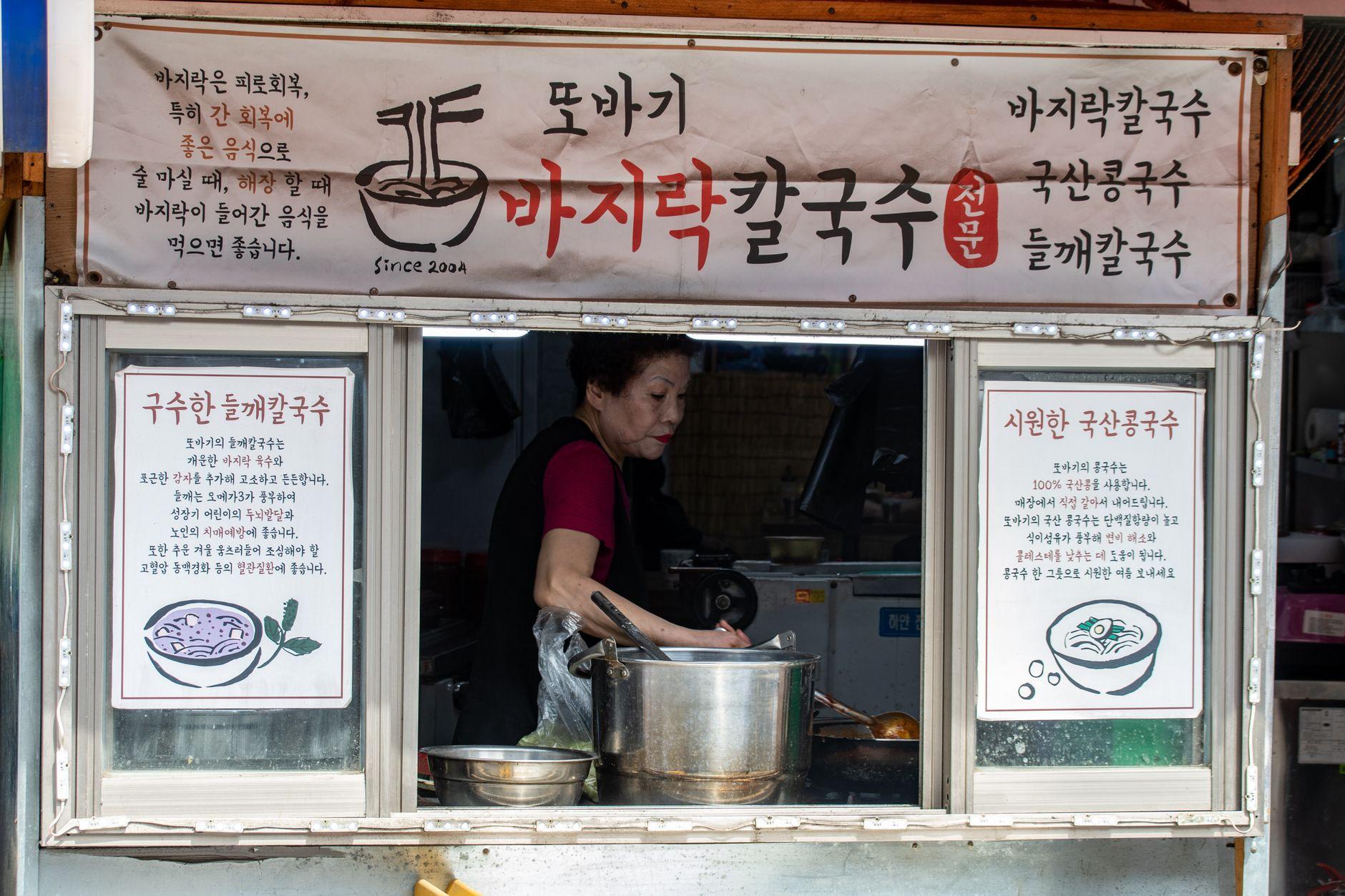
Then you sit down at a tiny kimbap place in a residential neighborhood, or you’re pointing at tteokbokki at Gwangjang Market, or you want a late-night snack at a pojangmacha tent, and suddenly the answer is local payment only. The ajumma running the stall taps a laminated QR code or asks for a Korean payment app, and your foreign card is just a piece of plastic.
These are precisely the places you came to Korea to eat at. Which brings us to the local apps.
The KakaoPay wall
Koreans mostly pay with KakaoPay and Naver Pay. Phones out, QR scanned or shown, done in seconds. It looks effortless, and it is, if you’re a resident.
For a visitor, both apps sit behind Korean phone number verification, and getting fully functional usually means local banking on top of that. On a two-week trip, or even a three-month nomad stint, that wall is not worth climbing. We’ve written before about local QR ecosystems that lock foreigners out, and Korea’s is one of the most polished examples.
The old workaround was to carry more cash for exactly these situations, which loops you right back to the ATM fees you were trying to avoid.
Scan instead of withdraw
This is where Moreta Pay changes the math. Instead of pre-buying a pile of won at a marked-up rate, you keep money in a wallet topped up from your own bank at home (US bank via Plaid or ACH, SEPA in Europe, UK Faster Payments, Canadian e-Transfer, or an international card).
When it’s time to pay at a supported QR merchant, you scan the code with your phone, see the amount, the merchant name, and the exact FX rate on screen, and confirm. The merchant gets paid instantly in won. No Korean phone number, no local bank account, and no guessing what rate you just got.
The practical effect: the cash you’d normally burn through in a week stretches across your whole trip, because QR-payable spending never touches an ATM.
Online is part of this too
Korea trips involve a lot of booking on your phone. Hotels on Agoda, trains and tours on Trip.com, random essentials from online shops. QR-based checkout on supported platforms works with Moreta Pay the same way an in-person payment does: scan, review the rate, confirm. Same transparency, same principle of never letting a hidden conversion decide your rate for you.
A sensible won strategy for 2026
Putting it all together, here’s the playbook:
Before you fly: set up your Moreta Pay wallet and top it up from home, in your own currency, on your own time. No airport panic.
On arrival: walk past the exchange counters. Make one modest Global ATM withdrawal in the city (declining DCC) for T-money top-ups and true cash-only edge cases.
Day to day: use your foreign card where it’s accepted and DCC isn’t being pushed, and scan QR codes for everything in the local-payment-only zone: market stalls, hole-in-the-wall eateries, small shops.
Everywhere: if any screen ever offers your home currency, decline it. Won, always won.
If you want the full comparison of every payment method side by side, our earlier piece on cash, cards, and KakaoPay in South Korea breaks it down. This article is the shorter version: the ATM is the expensive path, the QR code is the cheap one, and for the first time visitors can actually take the cheap one.
Set up your wallet before wheels-up and start scanning like a Seoul local with Moreta Pay.