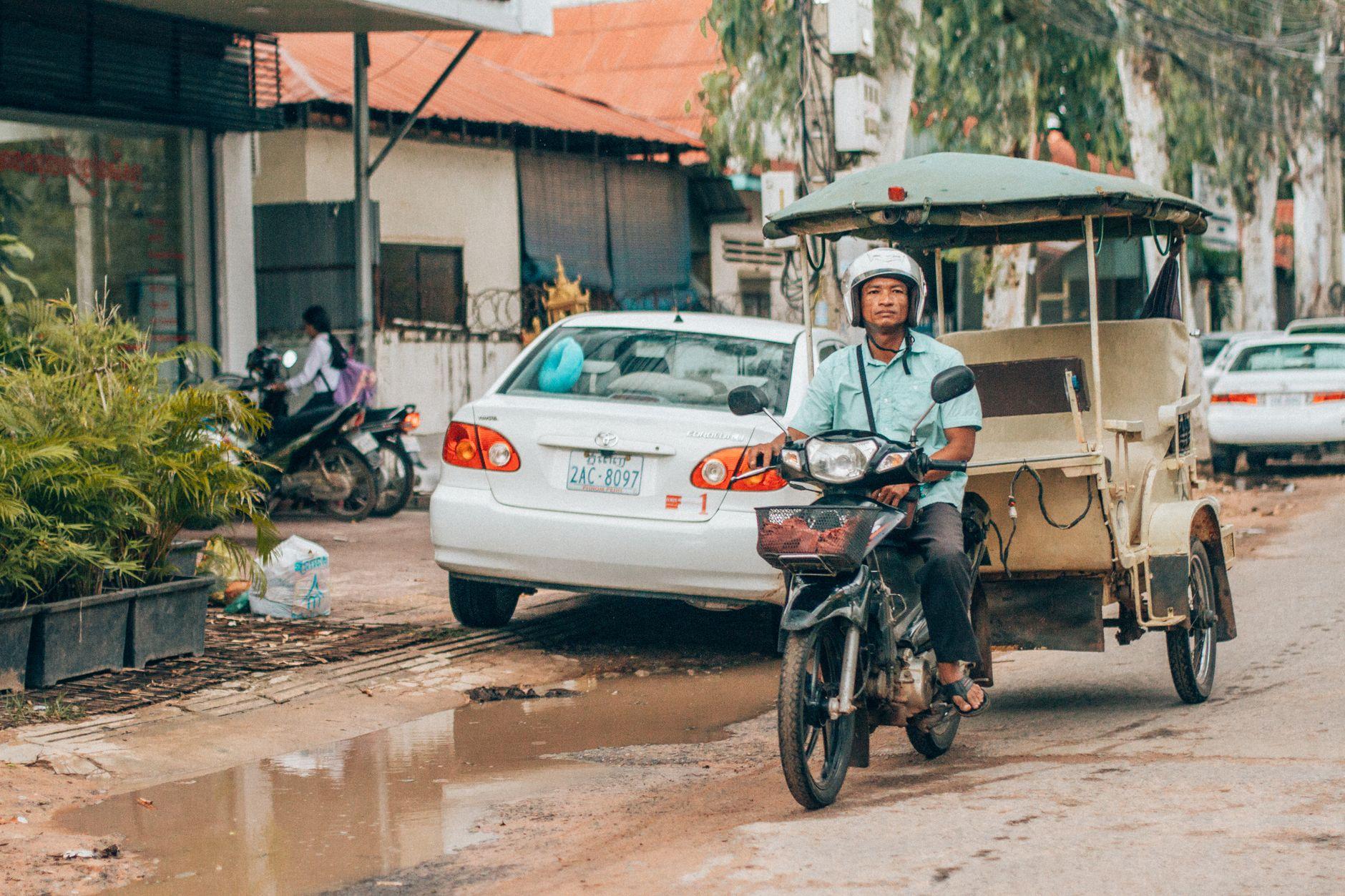

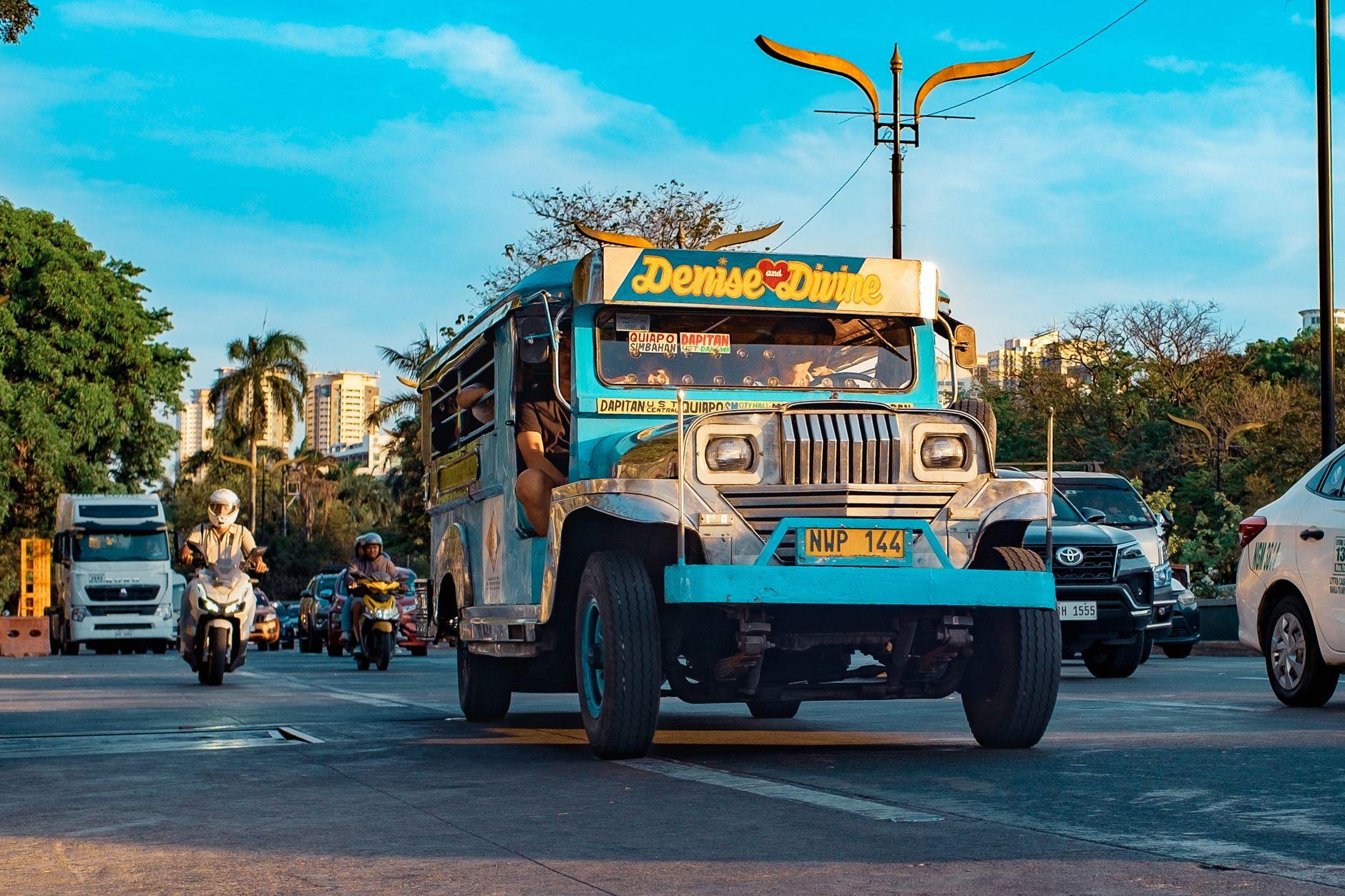
The driver has fifteen pesos in loose change rattling in a repurposed Milo tin, a route sheet taped to the dashboard, and eight more stops before he turns around. You hand him a 500-peso bill for a 14-peso jeepney fare. He looks at it the way you'd look at someone trying to pay for a candy bar with a gold bar. This is the actual texture of micro-fare transport across the Philippines, Vietnam, and Cambodia, and it explains something that surprises most travelers who've gotten used to scanning QR codes for everything from street noodles to shopping mall purchases: the jeepney, the tricycle, and the motorbike taxi are among the last holdouts of a cash-only system, and that holdout is not an oversight. It is a structural outcome of how these vehicles are owned, dispatched, and paid for.
Why don't jeepneys and tricycles accept QR codes?
A QR code at a merchant counter is really just a pointer to one bank or e-wallet account. For that to work, someone has to own the account, register it, and reconcile it. A 7-Eleven in Cebu or a Jollibee in Quezon City has that structure: one corporate entity, one settlement account, one person responsible for the till at the end of the shift. A jeepney route doesn't look like that at all. Multiple jeepneys from different individual operators run the same route, competing for the same passengers, with no shared dispatch or payment system binding them together [transport-links.com]. Each vehicle is effectively its own micro-business. The government's modernization programme is pushing operators into cooperatives, and the modern units some of them run do take Beep cards or QR, but the traditional fleet that carries most riders is cash. Asking every jeepney driver and tricycle operator in a city to individually register a merchant QR code, link a bank account, and manage settlement is a different scale of problem than asking a single convenience store chain to do it once for a thousand locations.
Tricycles add a second wrinkle: many are informal or semi-formal businesses, often family-operated, sometimes rented by the shift from a vehicle owner who isn't present for the transaction at all. The person taking your 15-peso fare may not be the person who'd receive a QR payment anyway.
Why does cash still win on fares this small?
Speed is the honest answer, not nostalgia. A jeepney fare in Metro Manila, a tricycle hop in a provincial town, or a xe ôm ride in Hanoi typically costs a dollar or less: a 14-peso jeepney ride is about the price of a bottle of water, and a short xe ôm hop in Hanoi about two or three bottles. At that price point, the entire transaction needs to resolve in the time it takes to say the fare out loud. Handing over a coin and getting handed a smaller coin back takes two seconds. Pulling out a phone, unlocking it, opening a wallet app, scanning a code, waiting for a confirmation screen, and getting a payment notification sound takes considerably longer, especially on a moving, bouncing vehicle where you're also trying not to drop your phone into the aisle.
There's also a volume argument. A single jeepney driver might handle 150 to 200 individual cash exchanges in a working day, each one for a different small amount depending on how far the passenger is going. Reconciling that many tiny digital transactions against a QR-linked account, each with its own transaction fee or settlement delay, adds friction that cash simply doesn't have. Cash nets out instantly: whatever's in the tin at the end of the day is the day's earnings, no statement to check.
Does government transport policy reflect this cash dependency?
It does, in a telling way. The Philippine government's 2026 support for jeepney and tricycle drivers has been paid through whatever channel actually reaches the driver: fuel cards and bank transfers, GCash and Maya wallets since the LTFRB's July 2026 partnership with GCash, and cash payout days for drivers without an account [tribune.net.ph][manilatimes.net], while the social welfare department's 5,000-peso relief for 1.4 million drivers went out over the counter. Cash is kept as the fallback rather than removed, because policymakers know a large share of this workforce still has no account for a payment to land in. This isn't a sector lagging behind by accident. It's a sector where cash remains the lowest-friction common denominator for everyone involved, drivers and policymakers alike.
Where does QR actually work well for transport in this region?
Building on the fare-level friction above, the pattern flips once you're dealing with a single corporate operator instead of hundreds of independent owner-drivers. Ride-hailing apps like Grab solve the payment problem entirely differently: you link a card or e-wallet once, inside the app, and the fare is deducted automatically with no in-vehicle QR scan required at all [business.yixingtravel.com]. For a traveler landing at Ninoy Aquino International Airport, the practical advice is usually to default to Grab or an authorized airport taxi for the first ride, since airport pickup zones are where most first-timers get overcharged or confused about options [business.yixingtravel.com]. Grab's in-app payment isn't really a QR story; it's a pre-authorized account story, which is exactly the structural difference that lets it work where jeepney QR doesn't.
City buses and metro systems in some regional capitals have also moved toward tap cards or app-based ticketing, Manila's Beep card among them, and a minority of modern jeepneys run by cooperatives take Beep or QR too, again because there's a single operator behind the payment, not hundreds of independent drivers.
What should a traveler actually do about this?
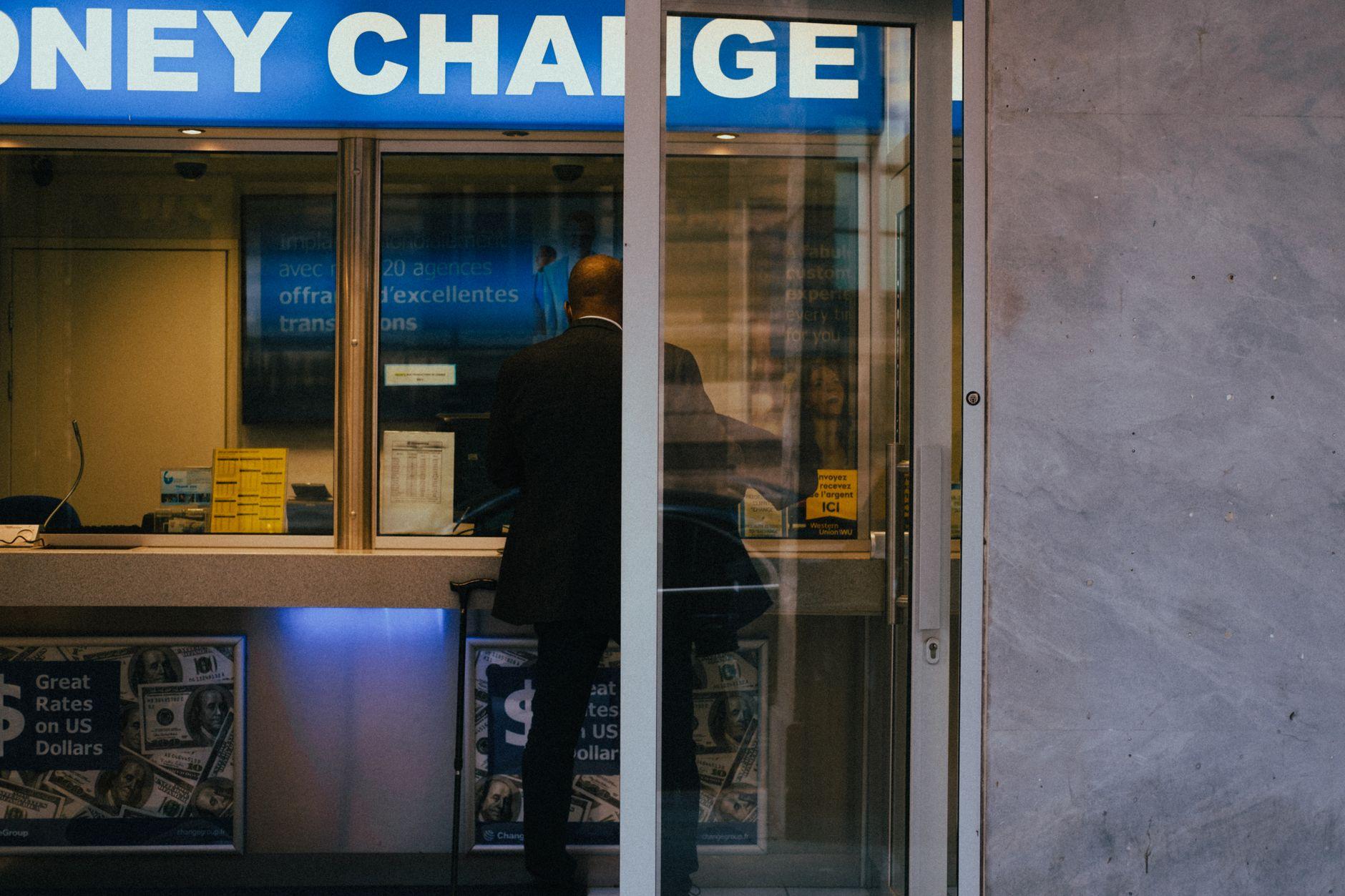
Keep the two payment worlds separate in your head and in your wallet. For restaurants, convenience stores, markets with fixed stalls, and malls, a QR-based wallet works well across the region, letting you pay in the merchant's own system without hunting for an ATM. For jeepneys, tricycles, and most tuk-tuks or xe ôm rides, carry small bills and coins specifically, because that's the only currency these vehicles are built to handle. A practical reserve is whatever covers a day or two of local transport in the smallest denominations your destination uses, kept separate from the money you plan to spend digitally.
This is also where a wallet that converts currency at the point of QR payment proves its value: you're not trying to force a tricycle driver to accept an app, you're reserving the app for the counters and stalls that already run on QR, and using cash where the vehicle fleet structure genuinely doesn't support anything else yet.
Frequently Asked Questions
Can I pay a jeepney driver with GCash or a QR code?
On a traditional jeepney, no: drivers expect exact or close-to-exact cash fares, consistent with how the route system is structured around independent owner-operators rather than a centralized payment system [transport-links.com]. Some modern jeepneys run by cooperatives take Beep cards or QR.
Is Grab a better option than a jeepney for a first-time visitor?
For airport pickups and unfamiliar routes, yes, largely because Grab's in-app payment and fixed pickup process removes the guesswork that trips up first-timers at the airport [business.yixingtravel.com].
Why do tricycles seem even less digital than jeepneys?
Many tricycles are family-run or rented by the shift, meaning the person collecting your fare may not be the account holder a QR payment would need to reach.
Should I carry exact change for jeepneys and tricycles?
Yes. Drivers run with limited change on hand, and handing over a large bill for a fare worth less than a dollar slows down the whole route for everyone on board.
Does this cash dependency apply across the whole region, not just the Philippines?
The same owner-operator structure appears in Vietnam's xe ôm network and Cambodia's tuk-tuk fleets, which is why QR adoption for those specific vehicle types lags behind QR adoption at fixed merchant counters in both countries.
About Moreta
Moreta is a Delaware corporation and FinCEN-registered Money Services Business, backed by Y Combinator, built for travelers who want to pay the way locals do across Asia and Latin America. The Moreta app lets you top up from your home bank or card and scan the same local QR codes merchants already use, whether that's QR Ph in the Philippines, VietQR in Vietnam, or KHQR in Cambodia, with the exact exchange rate shown before you confirm. It won't help you pay a jeepney driver, because nothing digital will right now, but it's built exactly for the counters, stalls, and storefronts where QR already works. Learn more at moretapay.com.
References
- How to Get a Ride in the Philippines: Grab, Taxis, More (business.yixingtravel.com)
- FINAL REPORT: Post-COVID-19 Mobility: Key levers to reform urban transport systems - High Volume Transport (transport-links.com)