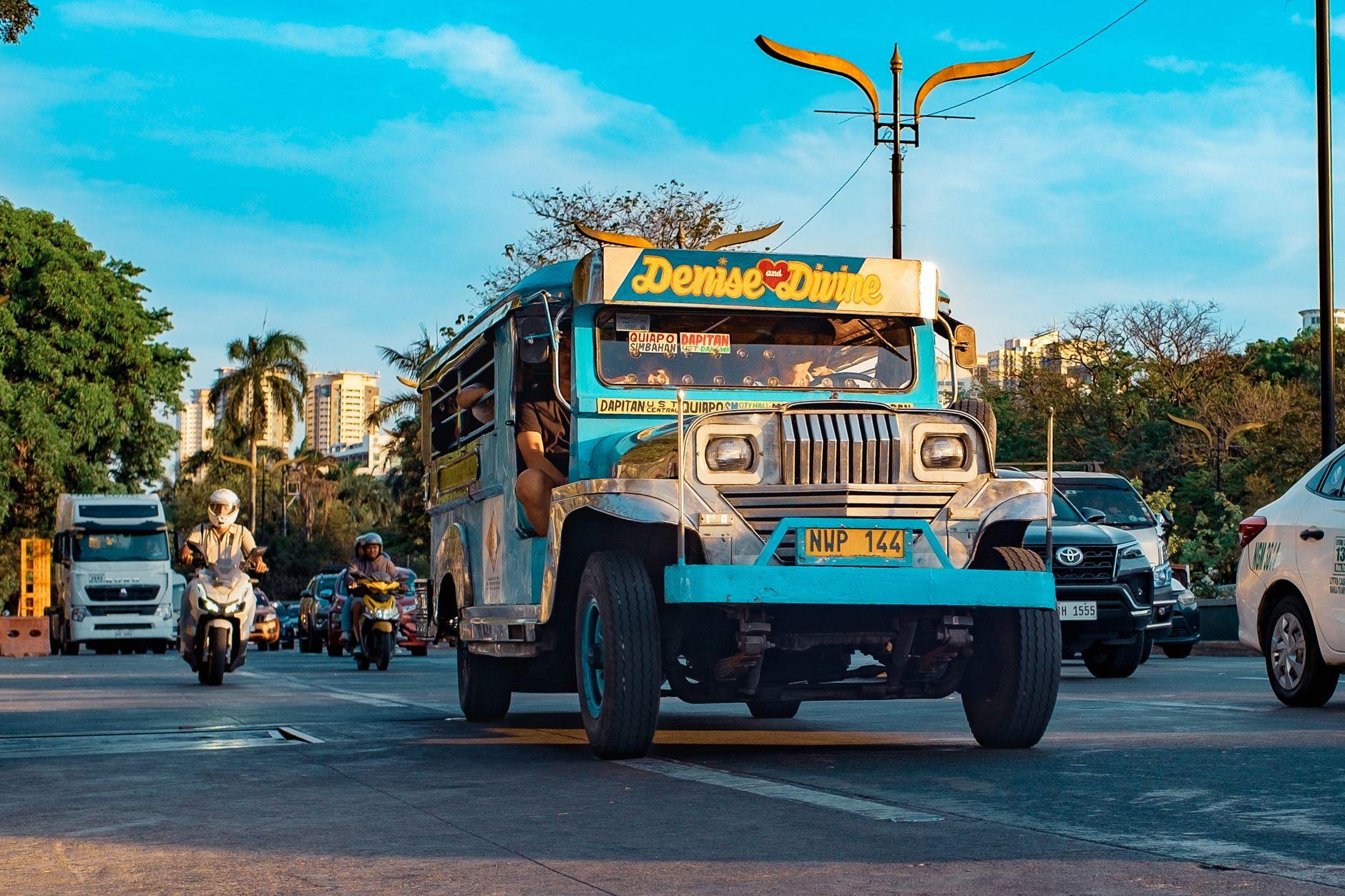

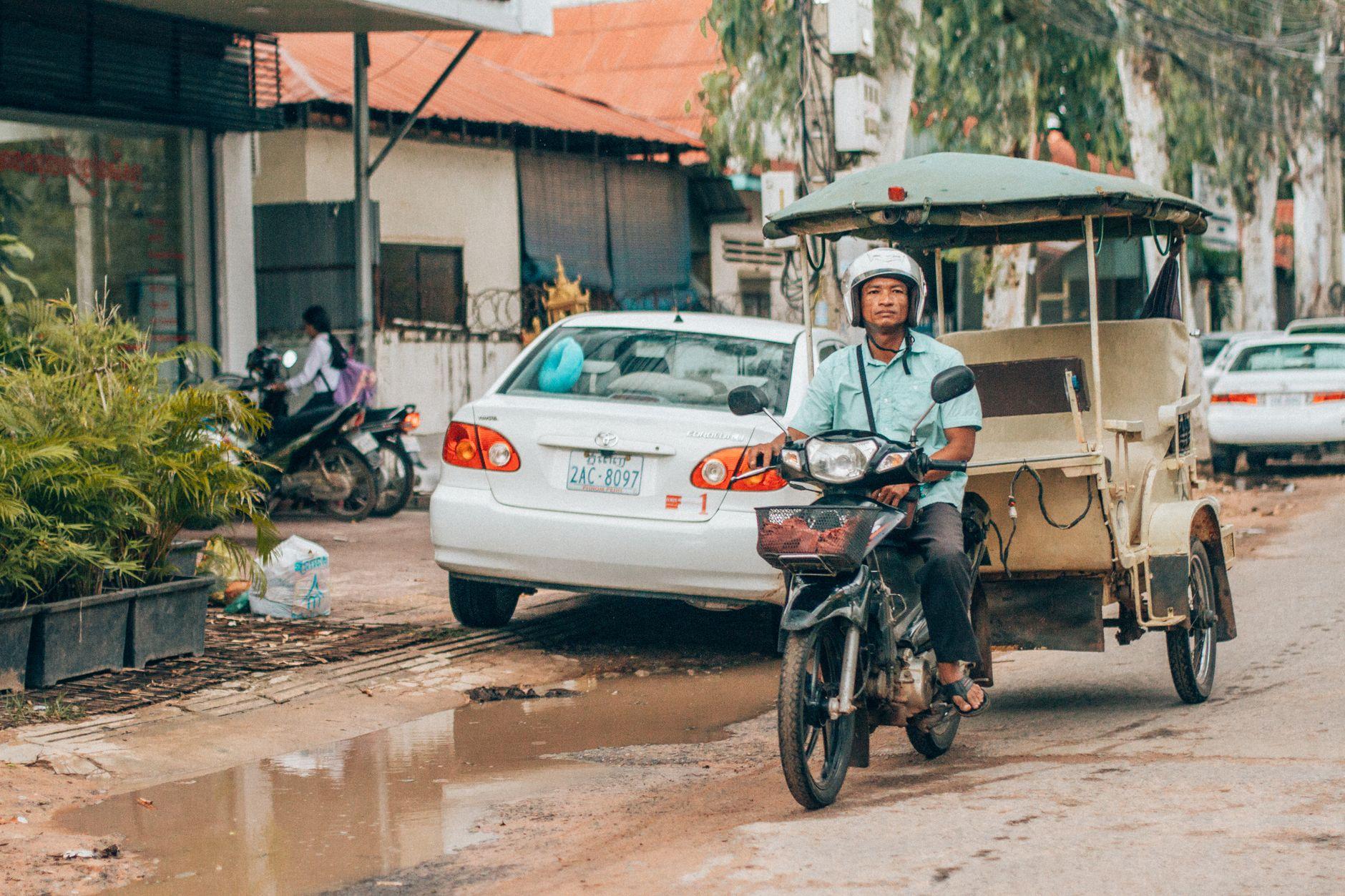
You are standing at a tuk-tuk rank in Phnom Penh, and the driver quotes you 8,000 riel to Wat Phnom, then holds out his phone with a KHQR code before you have even sat down. A Grab booking in Kuala Lumpur puts a hold on your card the moment the trip is confirmed, not when you are dropped at Pavilion. Neither driver is trying to scam you. Both are responding to the same practical reality: in cash-light economies built around QR payments, collecting money upfront protects the driver from the exact kind of dispute, no-show, or short-change moment that cash transactions invite at the end of a ride. The shift to pay-first is a side effect of how KHQR and DuitNow QR actually work, not a red flag.
Why do taxi drivers in Cambodia ask for payment upfront?
The short answer: a quoted fare and an instant QR confirmation remove most of the reasons to wait until the ride ends. Cambodian tuk-tuk and remork drivers typically negotiate a price before the ride starts anyway, since most routes are not metered [cambodiaexpatsonline.com]. Once a number is agreed, asking for payment at that moment rather than at the destination is a logical extension of a negotiation culture that already settles terms before departure.
There is also a practical settlement reason. Taxi payments in Cambodia are not governed by taxi-specific payment licenses; they fall under the National Bank of Cambodia's broader digital payment and KHQR regulations. KHQR is an EMV-based standard, meaning it follows the same security specifications used by major card networks worldwide, and a scan-to-pay transaction confirms in seconds through the passenger's banking app. That instant confirmation changes the economics of timing. With cash, a driver has leverage at the end of a ride, since the passenger has already arrived and wants to leave. With KHQR, that leverage disappears the moment the trip starts, because the money has already moved. Drivers who understand this simply collect at the point where they still have the stronger negotiating position: before the engine starts.
A second factor is route uncertainty. Drivers in Phnom Penh and Siem Reap have described arrangements where tuk-tuk operators partner informally with guesthouses to ferry guests to nearby attractions, sometimes layering small commissions into the arrangement [help.kilroy.net]. Upfront payment simplifies these layered relationships because the fare is settled cleanly before any detours, stops, or add-on requests happen mid-route.
Why do ride-hailing drivers in Malaysia also prefer payment before the trip?
Malaysia's answer is more structural than cultural. E-hailing operators in Malaysia must hold an intermediation business licence from APAD, drivers need a PSV licence from JPJ, and the payment side of the transaction sits under Bank Negara Malaysia's e-payment frameworks. With a licensed platform in the middle, the payment is an auditable app event tied to a booking and a licensed driver, not an ambiguous cash handoff at the curb.
Malaysia ride hailing apps have built this into the product itself. Fare estimates are shown before you book, and for in-app payment, whether by card or GrabPay, the amount is pre-authorised as a hold when you book and charged when the trip ends, with any difference released. The driver never has to ask for money because the app has already secured it.
Outside the app ecosystem, many independent taxi drivers in Kuala Lumpur carry a DuitNow QR code and will ask you to scan and pay before pulling out of the rank once a fixed fare is agreed. At the airport, do not count on it: have the fare in ringgit or an app booking ready. The logic mirrors Cambodia: once the fare is fixed, there is no reason to wait.
How does cashless payment malaysia change the pay-first habit?
Cashless payment malaysia infrastructure has matured to the point where paying before a service starts feels normal across many transaction types, not just taxis. Hawker stalls in Kuala Lumpur's Chow Kit market, parking kiosks, and even some informal roadside vendors now display a DuitNow QR code at the counter and expect payment before the item leaves their hands. Taxi payment norms did not emerge in isolation. They followed a broader shift in which qr code payment malaysia adoption made instant, verifiable payment the default expectation in nearly every face-to-face transaction.
The mechanism worth understanding here is what DuitNow QR actually confirms. When you scan a DuitNow QR code, your bank's app authenticates the transaction and sends confirmation back to the merchant's device within seconds, following EMV specifications for payment security. The driver sees the payment land before you even get in the car. There is no ambiguity about whether the money arrived, which is exactly the uncertainty that cash-at-drop-off used to carry.
Is this pay-first pattern a scam risk for tourists?
No, but it does require basic diligence. The pattern itself (agree on price, then pay) is not evidence of dishonesty; it reflects how fixed-fare, QR-confirmed transactions naturally settle. The real risk in both countries is not the timing of payment but the agreement itself. Overland travelers crossing land borders in Southeast Asia report inflated "official" fees quoted with false confidence, a tactic that works regardless of whether payment happens before or after a trip [twobirdsbreakingfree.com]. The defense is the same either way: confirm the exact amount, in the correct currency, before you hand over your phone to scan.
How does Moreta fit into paying taxi drivers in Cambodia or Malaysia?
Moreta is a digital wallet that lets you top up from your home bank account or card and then pay directly into the same KHQR and DuitNow QR networks that Cambodian and Malaysian drivers already use. You fund the wallet in your own currency, scan the driver's existing QR code exactly as a local would, and see the merchant name, the amount, and the exact exchange rate before you confirm. The payment settles instantly in local currency, so the driver experiences it no differently than a payment from a local banking app.
Pay-first norms in both countries reflect QR payment mechanics and driver risk management, not fraud. If a driver expects payment before the ride starts, you need a way to pay instantly and in the right currency without fumbling for cash or hoping your home bank card works on a foreign QR reader. Moreta is built for exactly that moment.
Small tuk-tuk hops in Phnom Penh's back streets, parking attendants in Kuala Lumpur's older districts, and rural routes outside Siem Reap or Ipoh sometimes skip QR altogether. Keep a modest reserve of riel and ringgit for those stretches, and treat QR as your default rather than your only option.
Frequently asked questions
Do all taxi drivers in Cambodia use KHQR?
Many urban tuk-tuk and remork drivers in Phnom Penh and Siem Reap display a personal KHQR code, but rural and smaller-town drivers may still expect cash only.
Can I use DuitNow QR as a foreign tourist in Malaysia?
Yes, provided you have a wallet or banking app connected to the DuitNow network; Moreta lets travelers fund a wallet from a home bank or card and pay into DuitNow QR without opening a Malaysian bank account.
Why do Grab drivers in Malaysia confirm payment before the trip starts?
Because the fare is fixed and the card or wallet amount is held at booking in most Malaysia ride hailing apps; the charge itself lands when the trip ends, so there is nothing left to settle in the car.
Is it normal to negotiate the fare before getting into a Cambodian tuk-tuk?
Yes, most tuk-tuk and remork rides in Cambodia are unmetered, so agreeing on a price before departure is standard practice.
Should I worry if a driver asks for payment before the ride?
Not inherently. Confirm the exact fare and currency first, then pay; the timing of payment is normal, but the amount still deserves a quick check.
What happens if DuitNow QR or KHQR payment fails mid-transaction?
Both are EMV-based systems with bank-side authentication, so a failed scan typically means no money moves at all rather than a partial charge; retry the scan or ask the driver for an alternative payment method.
Does Moreta work with both KHQR and DuitNow QR?
Yes, Moreta supports direct QR payments into both networks, alongside other QR standards across Southeast Asia and Latin America.
About Moreta
Moreta Global Inc. is a Delaware corporation, FinCEN-registered Money Services Business, and Y Combinator-backed company (Summer 2024 batch) that builds a digital wallet for travelers paying into local QR payment networks across Asia and Latin America. Rather than relying on cash withdrawals or international card fees, Moreta users top up from a home bank, card, or other supported funding method and pay directly into networks like KHQR and DuitNow QR at a transparent exchange rate shown before every transaction. The platform includes identity verification and fraud monitoring designed for cross-border use, so travelers can pay the way locals pay without carrying a wallet full of cash.
If you are planning a trip to Cambodia or Malaysia and want to pay taxi drivers, hawkers, and shops the same way locals do, visit Moreta to see how the wallet connects to KHQR and DuitNow QR before you land.
References
- Is taxi driver always ask for more than agreed price? - Page 3 - Cambodia Expats Online (cambodiaexpatsonline.com)
- Kilroy_FAQ (help.kilroy.net)
- 12 Tips For Avoiding Costly Land Border Crossing Scams In Southeast Asia (twobirdsbreakingfree.com)