

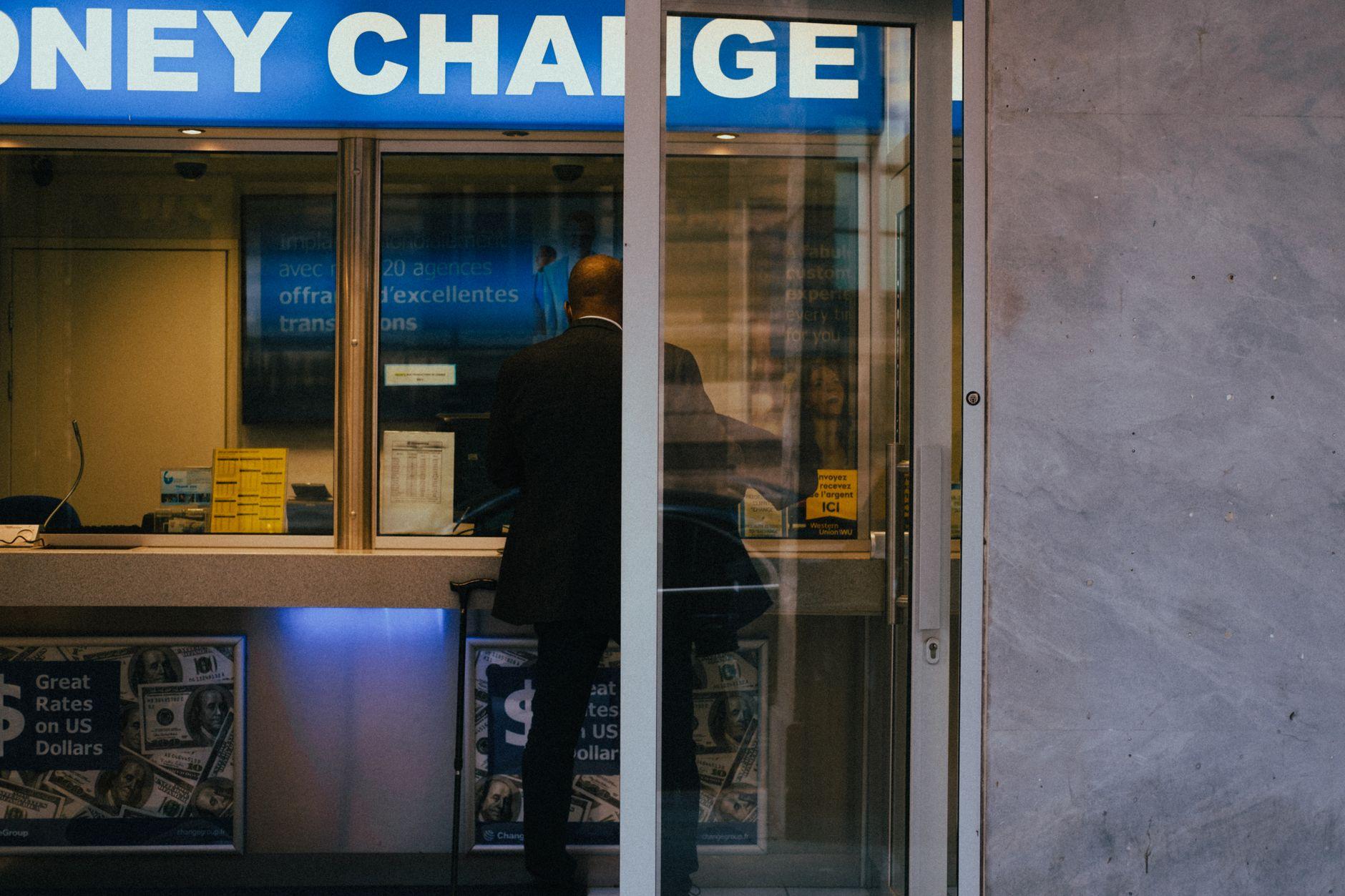
You are standing at a money changer in Manila on Friday morning, watching the teller refresh her screen for the third time. Your cousin's wedding catering deposit was supposed to arrive Tuesday. The receiving bank shows "processing." No mystery here, no lazy clerk sitting on your transfer. International wire transfers sent through the SWIFT correspondent banking network typically take 1 to 5 business days to complete, and the exact timeline depends on how many intermediary banks the money passes through, the time zone gaps between them, and which currencies are being converted along the way. The delay is the predictable result of several banks, often in different countries, each independently checking the transaction before passing it forward.
What is the specific timeline for a correspondent bank transfer?
A correspondent bank transfer is a wire that moves between two banks that do not have a direct relationship, so one or more intermediary banks sit in the middle to relay the funds and the messaging instructions. International wire transfers sent through the SWIFT correspondent banking network typically take 1 to 5 business days to complete. The exact timeline depends on the number of intermediary banks involved, time zone differences, and the specific currencies being exchanged. SWIFT's own gpi service now gets most payments to the receiving bank within hours, but what you see as the sender depends on the slowest bank in the chain. A dollar-to-peso transfer routed through a single correspondent in New York might settle in a day. The same transfer routed through a correspondent in Hong Kong, then a second correspondent in Singapore, then a final local bank in Manila, can easily stretch past three business days, especially if any leg of that chain closes for the weekend before the next bank picks it up.
This is the mechanism behind "the wire is stuck." It is rarely stuck in the sense of being lost. It is sitting in a queue at one of these intermediary banks, waiting for that bank's own working hours and processing sequence to catch up.
How many correspondent banks are typically involved in a single transfer?
Building on the timeline question above, the number of hops in the chain is the single biggest driver of how long a wire actually takes. A single cross-border transfer passes through one or more correspondent or intermediary banks, often two or three on less common corridors. Each bank adds processing time because it must individually perform regulatory compliance checks, such as sanctions screening, and reconcile differing messaging formats or operating hours before passing the funds along.
Think of it like a relay race where each runner has to stop, check a different rulebook, and re-tie their shoes before handing off the baton. The baton (your money) is not moving slowly on any single leg. The delay accumulates at each handoff point. That is why the same transfer corridor can behave differently depending on which two banks happen to be connected on a given day. Your sending bank does not always control which correspondent gets used.
Why do traditional banks still dominate despite being slower?
Stepping back from the technical detail, the obvious question is why anyone still uses a rail with this kind of lag when faster options exist. Bank transfers remain the largest channel in cross-border payments, with about 42% of provider revenue in 2025 according to Grand View Research, and crypto rails are still a rounding error next to the roughly one quadrillion dollars the IMF estimates crosses borders each year. Habit, existing banking relationships, and the fact that large institutional and business transfers still default to SWIFT all play a role. For a wedding gift or an emergency medical payment, though, the sender usually has no reason to stick with the slow rail other than not knowing a faster one exists.
What is the fastest international wire transfer option available?
This is where the comparison between a traditional bank transfer and a digital-first platform becomes concrete rather than theoretical. Digital-first platforms like Wise and Revolut typically complete international transfers in a fraction of the time of traditional banks, often settling in seconds to a day; Wise reports that three quarters of its payments complete in under 20 seconds. The mechanism behind this speed is structural, not magic: these platforms hold local currency balances in-country and net transactions internally, rather than routing every single transfer through the full correspondent chain described above. When Wise moves money from a US account to a Philippine account, it often does not send dollars through three banks to arrive as pesos. It matches your dollar deposit against someone else's peso withdrawal on the other side and settles both locally.
| Transfer method | Typical speed | Why |
|---|---|---|
| Correspondent bank wire (SWIFT) | 1 to 5 business days | Each intermediary bank performs its own processing steps |
| Wise / Revolut | Seconds to 1 day | Local balances netted in-country, skipping the correspondent chain |
| Local QR wallet top-up (e.g. Moreta Pay) | Instant at point of payment | Funds converted and spent directly on the local rail, no wire involved |
If you are comparing a cheap international money transfer option against a traditional wire for a time-sensitive wedding gift, the fastest international wire transfer available to most consumers in 2026 is rarely a bank wire at all, it is one of these account-to-account digital platforms.
Is there a faster way to pay for something abroad, not just send money to a bank account?
This is a different problem from the wire-transfer question above, and worth separating out. If the money is not going into someone's bank account but is meant to pay a vendor, a hotel, or a caterer directly while you are traveling for the event, routing through any bank account at all, fast or slow, adds a step you may not need. Moreta Pay works as an instant money transfer app for exactly this situation: you top up your wallet from your home bank, card, or Apple Pay or Google Pay, then scan the same local QR code the merchant already uses, whether that is QR Ph in the Philippines, KHQR in Cambodia, or Pix in Brazil. You see the merchant's name, the exact amount, and the FX rate before confirming, and the merchant is paid instantly in their own currency. There is no correspondent chain because there is no wire. The conversion happens once, at the moment you tap confirm.
This does not replace a bank-to-bank wire for every use case. If you genuinely need funds to land in someone else's checking account, a wire or a service like Wise is still the right tool. But for the wedding caterer, the emergency clinic bill, or the hotel deposit you are paying in person or online while abroad, skipping the bank account entirely and paying the local QR rail directly removes the delay altogether.
Frequently Asked Questions
Why does an international wire transfer time vary so much between transfers to the same country?
Because the specific correspondent banks used can differ transfer to transfer, and each one has its own processing hours, queue volume, and review speed.
What is a typical SWIFT transfer time for a wedding gift sent abroad?
Industry experience points to 1 to 5 business days, with the number of intermediary banks and currency conversion steps being the main variables.
Is a cheap international money transfer always the slowest option?
Not necessarily. Digital platforms like Wise often combine lower fees with faster settlement because they avoid routing every transfer through the full correspondent chain.
Does sending more money make a wire transfer faster?
No. The compliance checks that add delay apply regardless of the amount, though very large transfers may trigger additional manual review.
Can I avoid correspondent bank delays entirely?
For payments to a merchant or vendor rather than a personal bank account, a local QR payment app that converts currency at the point of payment avoids the correspondent chain altogether.
Why do banks not just disclose how long a transfer will take?
Because the timeline depends on which correspondent banks end up handling the transfer, which is not always known in advance, even to the sending bank.
Is a wire transfer safer than a digital transfer app just because it takes longer?
The extra time comes from compliance screening at each bank, not from additional security measures unavailable to regulated digital platforms, which perform their own KYC and fraud monitoring as part of standard operations.
About Moreta
Moreta Global Inc. is a Delaware corporation, a FinCEN-registered Money Services Business, and backed by Y Combinator (Summer 2024 batch). The Moreta Pay wallet lets travelers top up from a home bank account, card, Apple Pay, or Google Pay and pay directly on local QR networks across Asia and Latin America, including VietQR and MoMo in Vietnam, KHQR in Cambodia, QR Ph in the Philippines, DuitNow QR in Malaysia, SeoulPay in South Korea, Pix in Brazil, and Yape in Peru. Funds are held with licensed partner banks, identity verification is handled by Persona, and 24/7 fraud monitoring is active on every account. For anyone who has watched a wedding gift or an emergency payment sit in correspondent bank limbo, the core idea behind Moreta Pay is straightforward: show the exact FX rate before you confirm, and settle the payment instantly on the rail the local merchant already uses.
If you are planning a trip for a wedding, an emergency, or simply want to stop guessing how long your money will take to arrive, visit Moreta to see how local QR payments work in the country you are headed to.