
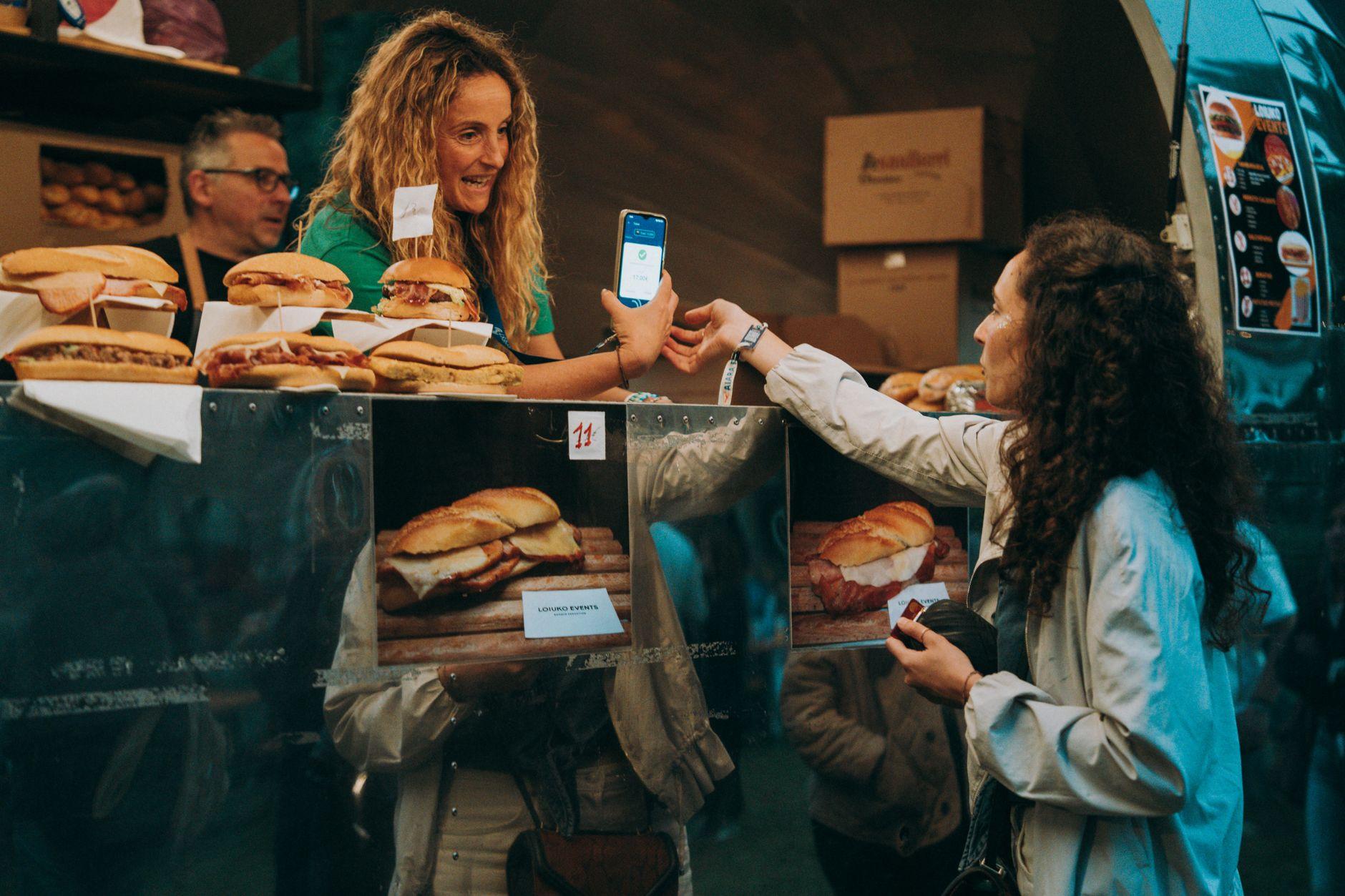
Merchants who can accept both a tap-to-pay card and a local QR code often steer customers toward the QR code, and the reason is not convenience. It is arithmetic. A tap-to-pay transaction routes through a card network that charges a merchant discount rate, typically 1% to 3.5% in Southeast Asia and Latin America alike, lower for debit cards and higher for small-ticket gateways and foreign cards, depending on the country and acquirer. A QR scan through a local instant payment network like Pix in Brazil often costs a fraction of that, sometimes under a quarter of a percent, and lands in the merchant's bank account in seconds instead of days. For a noodle stall owner or a market vendor running on thin margins, that gap is not trivial. It is the difference between keeping or losing a meaningful slice of daily revenue.
Card network fees typically run 1% to 3.5% across Southeast Asia and Latin America; local QR rails like Pix charge merchants around 0.22% per transaction. Card tap-to-pay needs a PCI-certified reader, a terminal or a certified tap-to-phone app, and keeps the merchant inside PCI DSS, while a printed bank-transfer QR puts no card data in the merchant's hands at all. QR payments on rails like Pix settle instantly, 24/7; card transactions authorize instantly but typically take 1 to 3 business days to fully settle. The fee gap compounds daily for high-volume, low-ticket merchants, which is why street vendors and small shops push QR harder than tap-to-pay even when both work. Travelers who understand this merchant-side math can make smarter choices about how they pay abroad, and tools like Moreta Pay let them tap into the same low-cost local rails merchants prefer.
About the author: Moreta Pay builds a travel wallet that connects directly to local QR payment networks across Asia and Latin America, including Pix in Brazil and QR Ph in the Philippines, giving the Moreta team a direct line of sight into how merchants in these markets actually get paid and what it costs them.
What fees does a merchant pay on a tap-to-pay transaction versus a QR scan?
A merchant discount rate is the percentage a merchant pays to the card network and acquiring bank every time a customer taps a card or phone wallet. In Southeast Asia, Visa and Mastercard MDRs typically range from about 1% to 3.5% depending on the country, the card type, and domestic interchange caps, with debit cards at the low end and small-ticket gateways and foreign cards above it. In Latin America, MDRs generally sit in the same 1% to 3.5% band: Brazil's central bank puts the average credit card rate at about 2.1%, while some Colombian merchants pay more.
Local QR networks operate on a different cost structure entirely, because they usually move money as a direct bank-to-bank transfer rather than routing through a card scheme. MoMo in Vietnam currently waives collection fees for its standard business partners, and VietQR bank-transfer codes are typically free for the merchant. Pix in Brazil, built by the country's central bank as an instant payment system, cost merchants an average of just 0.22% per transaction in the Bank for International Settlements' 2022 study, a figure low enough that it changes how a business owner thinks about pricing altogether.
Run the numbers on a single day and the gap stops looking academic. A vendor processing the local-currency equivalent of $200 in sales a day loses roughly $4 to $7 to card fees at a 2% to 3.5% MDR. On a Pix-equivalent 0.22% rail, that same vendor loses closer to $0.44. Multiply that by every operating day in a month and the difference is real money, not rounding error.
Why does hardware and compliance cost matter in this decision?
Building on the fee gap above, the harder cost a merchant weighs is what it takes just to stand up a tap-to-pay terminal in the first place. Tap-to-pay acceptance requires a PCI-certified reader: a dedicated NFC terminal with its purchase or rental cost and maintenance, or, more recently, a certified tap-to-phone app on an ordinary smartphone. Accepting cards also means the merchant's systems touch cardholder data, which pulls them into PCI DSS compliance obligations designed to protect that data in transit and storage.
QR acceptance sidesteps most of this. A merchant can display a single printed static QR code taped to the counter, or generate a dynamic one from a phone app, and accept payment with close to zero hardware investment. Because a bank-transfer QR moves funds account to account, no card data ever passes through the merchant's hands, so PCI DSS does not apply to them at all.
This is the quiet reason a coconut vendor working from a cart, not a storefront, can accept digital payment at all. No terminal to buy, no compliance program to maintain, just a laminated code and a bank account on the other end.
How much faster does a merchant actually get paid with QR versus tap-to-pay?
A related but distinct question is settlement speed, which matters as much to a small merchant's cash flow as the fee itself. Local QR payment networks like Pix process and settle funds instantly or within seconds, directly into the merchant's bank account, around the clock including weekends and holidays. Tap-to-pay transactions on major card networks authorize instantly at the counter, but the actual settlement, the point where funds clear into the merchant's account, typically takes one to three business days, and in Brazil a credit card sale normally pays out only after 30 days unless the merchant pays to have it advanced.
For a merchant buying fresh produce before sunrise or restocking inventory daily, a three-day settlement lag is a real constraint on working capital. Instant settlement means the money from yesterday's lunch rush is already usable for this morning's supply run. That is a mechanism, not a convenience, and it explains why merchants with tight cash cycles gravitate toward QR even when a card terminal sits right next to it.
Is this pattern specific to one country, or does it show up everywhere QR and tap-to-pay coexist?
Stepping back from any single market, this cost structure repeats across every country where a national instant payment rail competes with international card networks. Brazil's Pix system is the clearest example: a payment system run by the central bank that settles in real time and charges merchants a fraction of a card network's rate, which is a major reason Pix adoption at small merchants has grown so fast since launch. The same basic pattern, lower merchant cost plus instant settlement, shows up in Vietnam's MoMo and VietQR, the Philippines' QR Ph, and Malaysia's DuitNow QR.
The comparison is not unique to any one rail. Any time a country builds a national instant-transfer QR standard, it tends to undercut international card network pricing, because it strips out the interchange and cross-border routing costs baked into a card transaction.
Payment gateway fees comparison: a quick reference
| Payment method | Typical merchant fee | Settlement time | Hardware needed |
|---|---|---|---|
| Visa / Mastercard tap-to-pay (Southeast Asia) | 1% to 3.5% | 1 to 3 business days | PCI-certified terminal or tap-to-phone app |
| Visa / Mastercard tap-to-pay (Latin America) | 1% to 3.5% | 1 to 3 business days | PCI-certified terminal or tap-to-phone app |
| MoMo / VietQR (Vietnam) | Typically free for standard merchants | Instant, 24/7 | Printed or dynamic QR code |
| Pix (Brazil) | ~0.22% | Instant, 24/7 | Printed or dynamic QR code |
What does this mean for travelers, not just merchants?
The honest answer is that travelers rarely see this math, because the price on the menu looks the same whichever way they pay. But a merchant's cost structure shapes what gets encouraged at the counter, and travelers who understand why a vendor hands them a QR code instead of reaching for a card reader are better equipped to play along rather than insist on a tap. Using the local rail, Pix in São Paulo, QR Ph in Cebu, often means faster service, since the merchant does not have to wait on a card authorization.
When you understand a merchant's cost structure, you can make smarter payment choices abroad. Moreta Pay lets you top up from your home bank or card, then scan the same local QR code the merchant already uses, whether that is Pix in Brazil, DuitNow QR in Malaysia, or KHQR in Cambodia. You see the merchant name, the amount, and the exact exchange rate before confirming, and the merchant gets paid instantly in their own currency, the same rail, the same speed, the same low cost they prefer in the first place.
Cash still matters in plenty of corners, a rural stall, a temple donation box, a parking attendant who only takes small notes, so keep a modest reserve. At counters where both options sit side by side, the vendor reaches for the QR code first because the arithmetic favors it.
Frequently Asked Questions
Why do merchants prefer QR codes over tap-to-pay if both work?
Lower transaction fees, little to no hardware cost, and instant settlement into their bank account, instead of the 1 to 3 business day wait typical of card network settlement.
Is Pix in Brazil cheaper for merchants than a Visa or Mastercard transaction?
Yes. Pix averaged around 0.22% per transaction for merchants in the BIS's 2022 study, well below the roughly 2% Brazil's central bank reports for credit cards and the 1% to 3.5% typical across Latin America.
Do merchants need special equipment to accept QR payments?
Usually not. A printed static QR code or a phone generating a dynamic code is enough, compared to the PCI-certified terminal or certified tap-to-phone app that card tap-to-pay needs.
How fast do merchants get paid through QR networks versus card networks?
QR networks like Pix settle instantly, 24/7. Card transactions authorize instantly but typically settle to the merchant's account in 1 to 3 business days.
Does accepting QR payments reduce a merchant's compliance burden?
Generally yes. Bank-transfer QR payments bypass card networks entirely, so no card data touches the merchant's systems and PCI DSS does not apply, unlike card acceptance.
Can travelers use these same low-cost local QR rails?
Yes, through a wallet that connects to local QR networks directly. Moreta Pay is one option that lets travelers top up and scan the same QR code merchants already use, in Brazil, Malaysia, Cambodia, and other markets.
Are card network fees the same everywhere?
No. MDRs vary by country, card type, and domestic interchange rules, generally about 1% to 3.5% in both Southeast Asia and Latin America, lower for debit and higher for small-ticket gateways and foreign cards.
About Moreta
Moreta Global Inc. is a Delaware corporation and FinCEN-registered Money Services Business, backed by Y Combinator. The Moreta Pay wallet connects travelers directly to the local QR payment networks that merchants across Asia and Latin America already rely on, from Pix in Brazil to DuitNow QR in Malaysia to KHQR in Cambodia, letting visitors top up from their home bank or card and pay at the same rate and speed locals use. Funds are held with licensed partner banks, identity is verified at signup, and every account is monitored for fraud around the clock. The goal is simple: let travelers pay the way the merchant in front of them actually prefers to get paid.
Ready to pay like a local on your next trip? Visit Moreta Pay to see how it works.