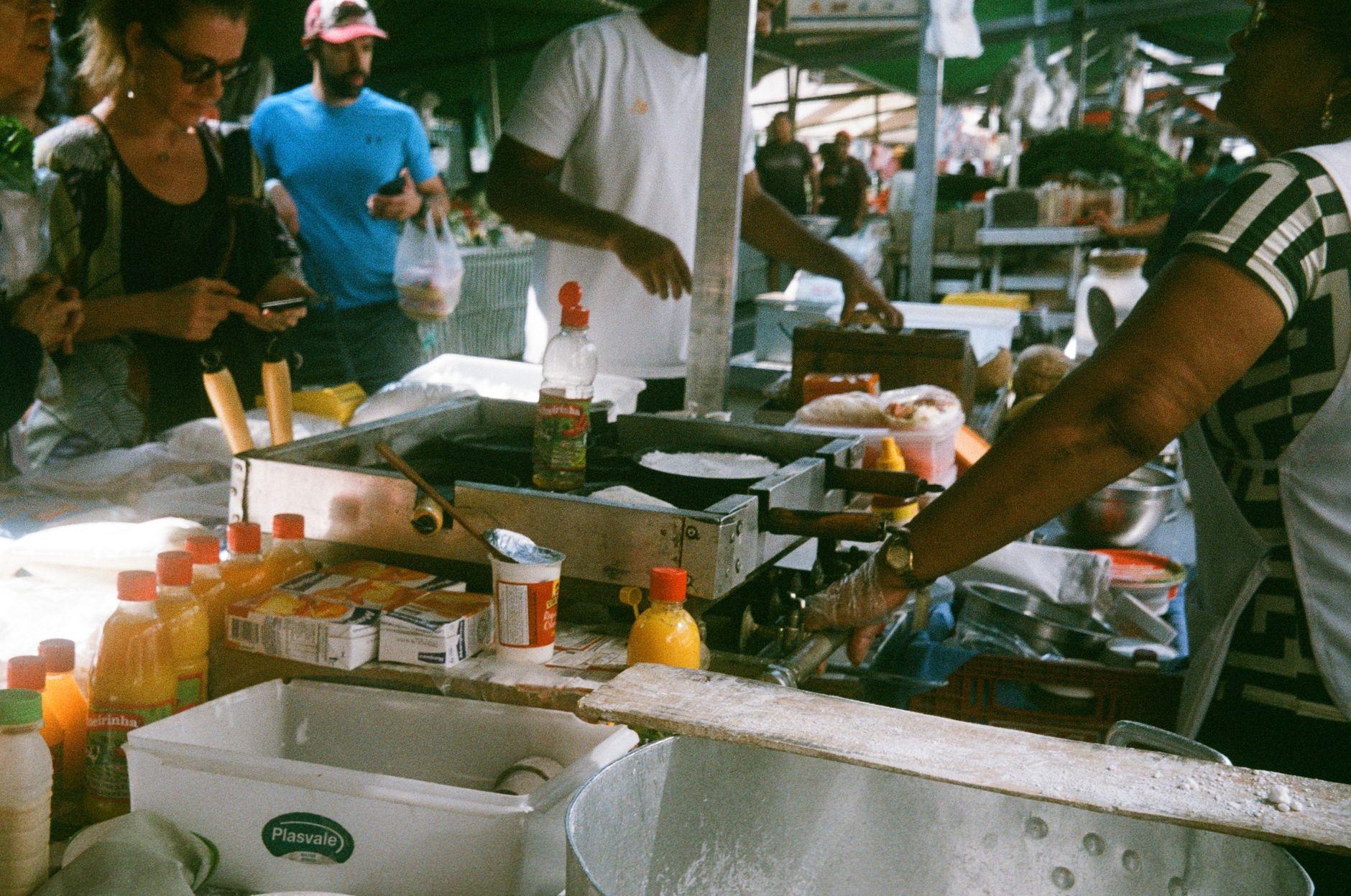

You're at a noodle stall in Hanoi, phone ready to pay, and the vendor points at a laminated QR code taped to their cart. You tap your Apple Pay or Google Pay, expecting the familiar contactless buzz. Nothing happens. The vendor waits. You have just discovered why Apple Pay and Google Pay do not work with VietQR, KHQR, DuitNow, or QR Ph: they are built for different hardware entirely.
Apple Pay and Google Pay are NFC-based contactless systems designed for terminals, not QR scanners [intellias.com]. A handful of markets have layered NFC acceptance into their own wallet apps, but none of the major Asian national QR standards read an Apple Pay or Google Pay card directly off your phone screen. If your trip depends on scanning a laminated QR code at a noodle stall in Hanoi or a sundry shop in Kuala Lumpur, your phone's native wallet is the wrong tool for that specific moment, even though it might work fine at the 7-Eleven register next door.
NFC versus QR: The underlying difference
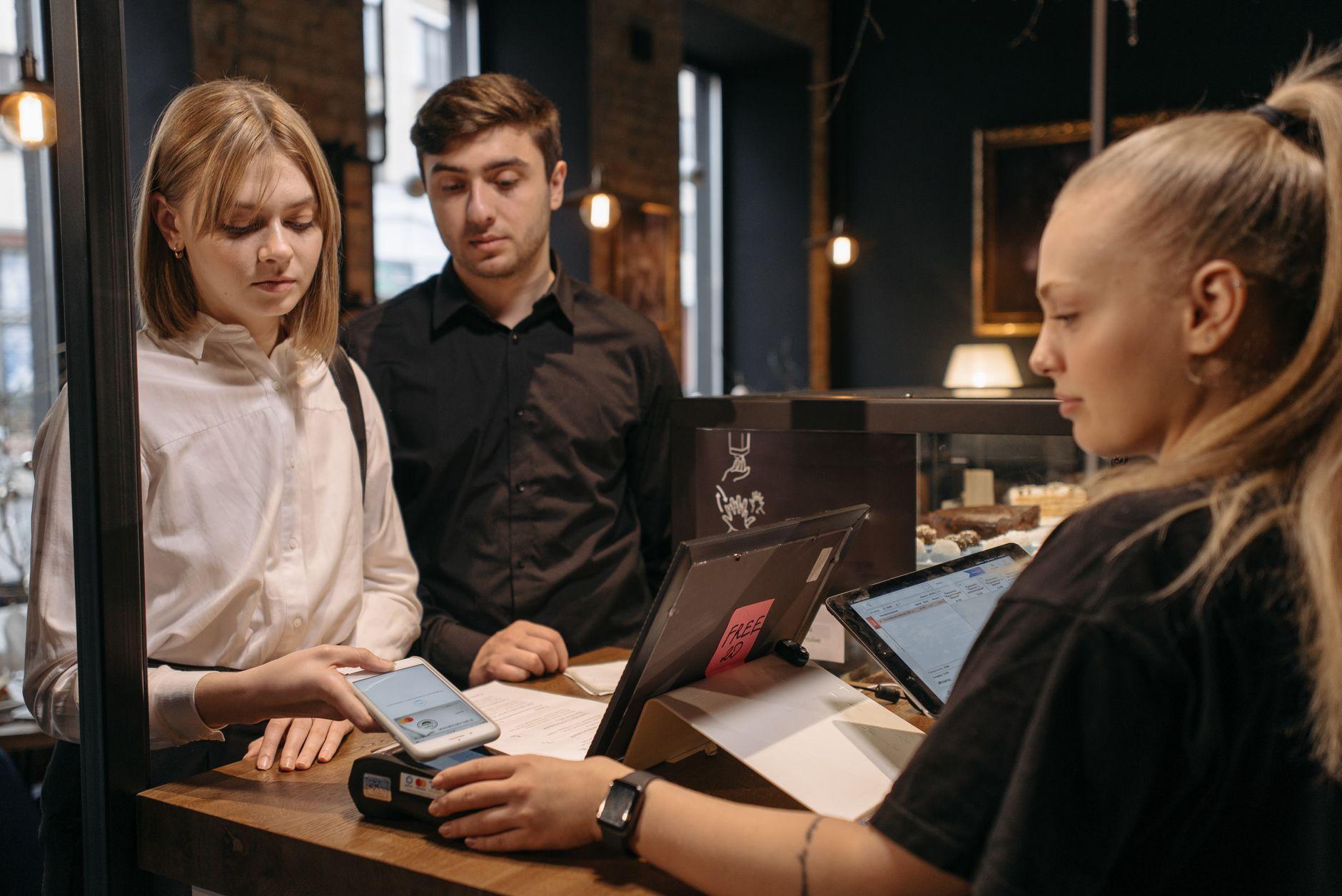
Apple Pay and Google Pay are wallets that store a tokenized version of your card and transmit it over near-field communication (NFC) when you tap your phone against a compatible terminal [apple.com][intellias.com]. A QR payment network works in the opposite direction: the merchant displays a code, generated by their bank or a payment app, and you scan it with your own phone to push payment to their account. Think of NFC as a handshake between two devices in close physical range, while QR is a published address that any scanning app can read if it understands the code format. That difference in mechanism is why a terminal upgrade (NFC) and a camera-based scan (QR) are not interchangeable, even when both feel equally "cashless" to the person standing at the register.
This matters because large parts of Vietnam, Cambodia, the Philippines, and Malaysia run cash-light economies through QR, not NFC. A market vendor with a single laminated VietQR code taped to a cart has no NFC terminal to tap. Apple Pay and Google Pay simply have nothing to connect to at that specific stall, regardless of how modern your phone is.
Can I use Apple Pay to pay a QR code in Vietnam?
Apple Pay's core function remains NFC tap-to-pay, and Apple has been expanding the wallet into identity and authentication features rather than native QR scanning [chargeflow.io][apple.com]. Some merchants in markets like the Philippines generate a QR code that, once scanned by a separate banking or wallet app, triggers a payment that happens to settle through a card network Apple Pay also supports, but that is not Apple Pay reading the QR code itself. Apple Pay in the Philippines is live for NFC-equipped terminals [nextpay.ph], and Apple Pay in South Korea is also live, layering onto Korea's existing card infrastructure. Neither deployment gives you a QR scanner inside the Apple Wallet app that reads KHQR, VietQR, or DuitNow codes.
Apple has talked publicly about expanding into travel spending, with an Apple executive describing ambitions to serve more of travel payment at Money 20/20 in late 2025 [paymentsdive.com]. That is a statement of intent about the NFC and identity side of the wallet, not an announcement of QR interoperability with Southeast Asian national rails.
Can I use Google Pay to scan a QR code in Cambodia?
Google Pay's answer is more nuanced, because the Google Pay app in some markets includes an in-app QR scanner as a feature distinct from the NFC tap function used at point-of-sale terminals. A Google Pay QR scan inside the app can work for peer-to-peer transfers or specific partner merchants in markets where Google has built that integration, but this is not the same as the app reading a country's national QR standard the way a local banking app or a dedicated travel wallet does. In Google Pay Vietnam and Google Pay Cambodia, the app's NFC function faces the same wall as Apple Pay: VietQR and KHQR are closed networks run by each country's banking system, and neither accepts a generic Google Pay NFC tap as a funding instruction at the vendor level.
Google Pay Malaysia is a useful case study. DuitNow QR is Malaysia's unified QR standard, used everywhere from mamak stalls in Petaling Jaya to parking machines in Johor Bahru. Google Pay's NFC function works at malls and chains with compatible terminals, but the mamak counter running only a DuitNow QR sticker on the till is not part of that acceptance network.
Which markets accept NFC wallets, and where does that fall short?
| Market | Apple Pay / Google Pay (NFC) | National QR standard | Do they connect? |
|---|---|---|---|
| Philippines | Apple Pay live, Google Pay live since 2025 [nextpay.ph] | QR Ph, GCash | No |
| South Korea | Apple Pay live [support.apple.com] | ZeroPay QR | No |
| Malaysia | NFC accepted at chain retailers | DuitNow QR | No |
| Vietnam | NFC accepted at select chains | VietQR, MoMo, ZaloPay | No |
| Cambodia | Limited NFC coverage | KHQR | No |
The pattern holds across every market in the table: NFC coverage and QR coverage run on separate rails, operated by separate systems, and a phone wallet built for one does not read the other [intellias.com][teya.com]. This is not a flaw in either system. Apple Pay and Google Pay were designed for markets where card terminals are already standard. QR standards were designed for markets where bank-to-bank transfer, not card rails, is the cheaper infrastructure to build at scale.
What actually works for QR-dominant markets?
The practical fix is a travel wallet app built specifically to scan the local QR code and settle through the underlying local rail, rather than attempting to force an NFC wallet into a QR transaction it was not built for [teya.com][nomadesim.com]. Moreta Pay works this way, and this is where Apple Pay and Google Pay do fit in: you top up from your home bank account, a card, Apple Pay or Google Pay (card, Apple Pay and Google Pay top-ups land instantly, with a 2.5% fee, minimum 1.50 USD), then scan the same QR code the vendor already uses for VietQR, KHQR, QR Ph, or DuitNow, see the merchant name, amount, and exact exchange rate before confirming, and the merchant is paid instantly in their own currency. The mechanism matters more than the branding here: the wallet isn't trying to upgrade the vendor's hardware, it's reading the code format the vendor already has. However you top up, the balance pays any of these rails the same way, with a 1.5% fee on each payment.
A few honest caveats apply. Temple donations, rural roadside stalls, and tiny village shops across Southeast Asia and Latin America still run on cash, QR coverage or not. Keep a modest cash reserve in local currency for those gaps, regardless of which wallet app you carry. And if you use a card at an ATM or terminal abroad, decline any dynamic currency conversion prompt and always choose to be charged in local currency.
Can I use Apple Pay to pay a street vendor's QR code in Vietnam?
No. Vietnamese street vendors display VietQR or bank-specific QR codes that require a scanning app connected to Vietnam's banking rails, not an NFC tap.
Is Google Pay accepted in Cambodia?
Google Pay's NFC function has limited coverage in Cambodia, and it does not connect to KHQR, the national QR standard used by most small merchants.
Does Apple Pay work in Thailand?
Apple Pay is not currently listed among Apple's supported countries and regions for local cardholders [support.apple.com]. Travelers may still be able to tap an NFC-enabled terminal in Thailand using a foreign-issued card tied to Apple Pay, but this is not the same as Apple Pay being locally supported, so check current coverage directly, as acceptance varies by merchant hardware and card issuer.
What is a travel wallet app and how is it different from Apple Pay?
A travel wallet app like Moreta Pay tops up from your home card, bank account, Apple Pay or Google Pay and scans the actual local QR standard a merchant uses, rather than relying on NFC hardware the merchant may not have.
Why don't Apple Pay and Google Pay just add QR scanning for these countries?
QR standards like DuitNow and QR Ph are run by national banking consortiums and regulators, not by Apple or Google, so integration requires direct partnership with each country's payment infrastructure.
Does DuitNow QR work with Google Pay in Malaysia?
No. DuitNow QR is Malaysia's national standard and operates independently of Google Pay's NFC wallet function.
Before you board
Top up a QR-capable travel wallet from your home bank, card, Apple Pay or Google Pay before departure. Confirm which national QR standard your destination uses (VietQR for Vietnam, KHQR for Cambodia, QR Ph for the Philippines, DuitNow for Malaysia). Keep a modest cash reserve of local currency in small denominations for rural areas and temple donations, regardless of how confident you are in digital payment coverage. Decline dynamic currency conversion at any ATM or terminal and always choose local currency billing.
Moreta Global Inc. is a Delaware corporation and FinCEN-registered Money Services Business, backed by Y Combinator (Summer 2024). The platform connects travelers to the exact QR standard a local merchant already uses, including VietQR, KHQR, QR Ph, and DuitNow QR, by topping up from a home bank account, card, Apple Pay or Google Pay and showing the exact exchange rate before every payment confirms.
References
- Apple Pay vs Google Pay in 2026: Adoption, Features & Security (chargeflow.io)
- Wallet - Apple (apple.com)
- Digital Wallet Implementation: Apple Pay Vs Google Pay (intellias.com)
- Countries and regions that support Apple Pay - Apple Support (support.apple.com)
- Accepting Mobile Payments: A Guide to Apple Pay, Google Pay, and QR Codes - Teya | Card Payment Solutions for Small Businesses (teya.com)
- Apple Pay & Google Pay in the Philippines | NextPay (nextpay.ph)
- Making payments while traveling: Can I use Apple Pay and Google Pay? | Nomad eSIM (nomadesim.com)
- Apple sets sights on travel spending | Payments Dive (paymentsdive.com)