
Most advice about money in Brazil was written for a country that no longer exists. Old forum threads tell you to arrive with crisp dollars, hunt for a good casa de câmbio, and keep small bills for taxis. Follow that playbook in 2026 and you will spend your first week watching Brazilians breeze through payments you can't make, all while you fumble with change.
The reason is Pix, Brazil's instant payment system. It moved from novelty to default faster than almost any payment method anywhere, and it rewrote the rules for everyday spending. If you're a digital nomad or expat trying to figure out how to pay in Brazil, the fastest way to get oriented is to unlearn a few things. Here are the myths worth burying.
Myth 1: Brazil runs on cash, so bring a thick stack of reais
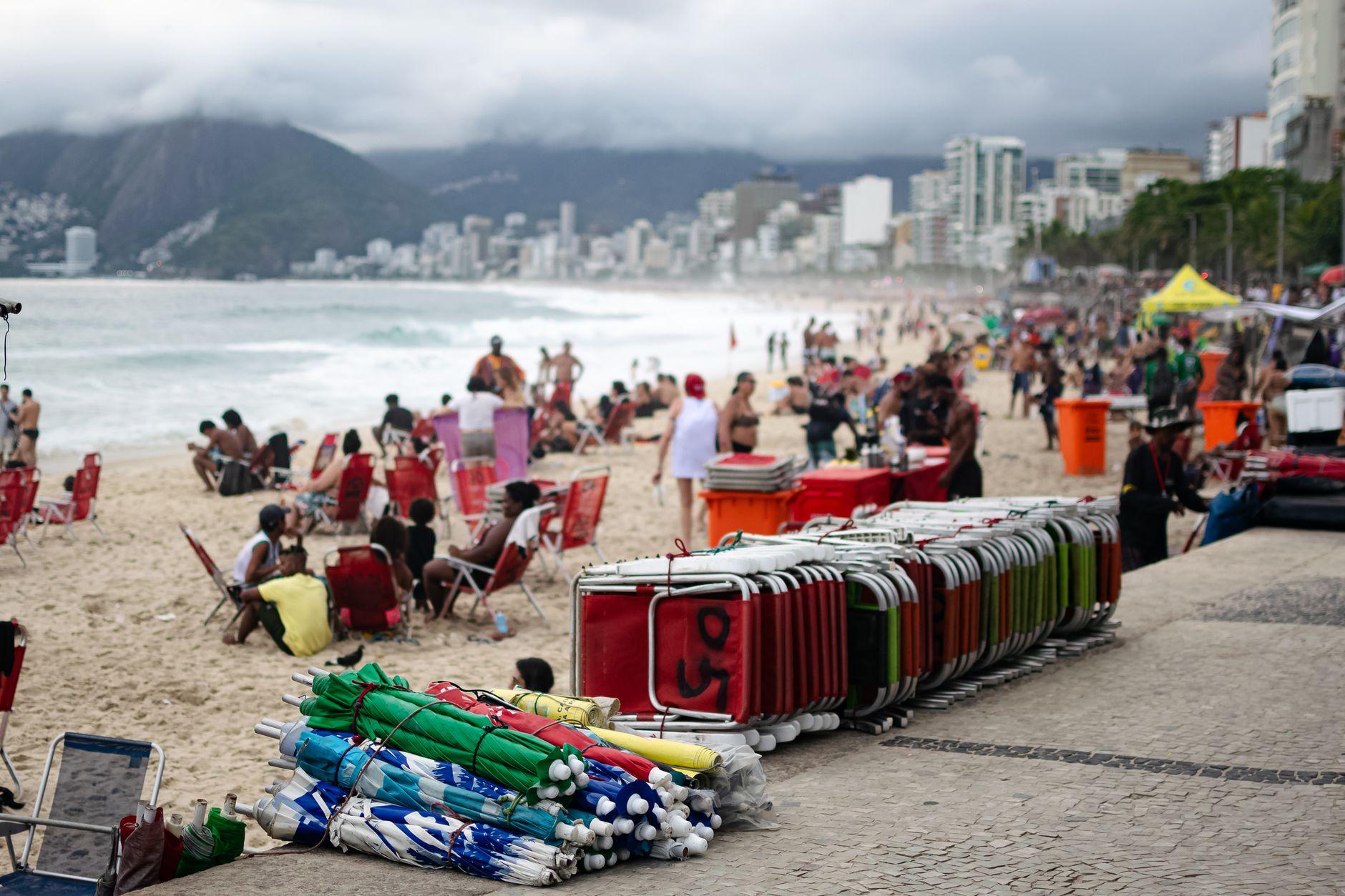
This was true once. It isn't now. Pix is used by virtually everyone, and that word is doing real work. The vendor selling água de coco on the sand in Ipanema has a laminated QR code clipped to the cooler. The woman grilling queijo coalho on a portable charcoal stick has one tucked into her apron. Uber drivers ask if you'd rather settle in Pix. Stalls at the Sunday feira, the corner padaria, the guy renting beach chairs, all of them.
Cash still circulates, and nobody will refuse a banknote. But it's increasingly the slow lane. Small vendors often don't carry much change because most of their customers pay by scanning a code, so handing over a fifty for a twelve real snack can produce a sigh and a wait while they ask the next stall to break it. In Brazil, cash went from the main event to the backup plan in a remarkably short time.
Myth 2: Your international card covers everything anyway
Cards work fine in supermarkets, shopping malls, chain restaurants, and anywhere with a proper card machine, the famous maquininha. The gap is everywhere else, which happens to be where Brazil is most fun. Many small merchants actively prefer Pix over cards, and plenty of the smallest ones never bothered with a card machine at all. QR code, Pix, done.
Even where cards are accepted, you'll hit familiar traveler annoyances: terminals that reject foreign cards for no stated reason, dynamic currency conversion prompts trying to bill you in your home currency at a worse rate, and your bank's foreign transaction markup sitting invisibly on top of everything. Brazilians standing behind you in line are paying the sticker price with a two second scan. Tourists without Pix routinely miss the cheapest and fastest option in the country without ever realizing it.
Myth 3: Pix is for Brazilians only, end of story
This is the myth that keeps the most travelers stuck. The traditional route into Pix does run through a Brazilian bank account and a CPF, Brazil's tax ID, which most visitors don't have and don't want to spend their first week acquiring. So nomads conclude the whole system is closed to them and resign themselves to cards and ATM runs.
That's no longer the full picture. Moreta Pay lets you scan the exact same Pix QR codes locals use, straight from your phone. You top up a wallet in your own currency, from a US bank, SEPA in Europe, UK Faster Payments, Canadian e-Transfer, or an international card. When you scan a merchant's code, you see the amount, the merchant's name, and the exchange rate before you confirm anything. Tap confirm and the merchant is paid instantly in reais. No Brazilian account, no CPF paperwork, no guessing what the conversion cost you after the fact.
Myth 4: ATMs are a perfectly good plan B
ATMs in Brazil will keep you fed, but they're a worse fallback than most arrivals expect. Machines that accept foreign cards aren't universal, withdrawal limits can be low, and you'll often pay two separate charges on a single withdrawal, one from the machine's operator and one from your own bank. We've broken down why ATM networks charge you twice before, and Brazil is a textbook case of that double hit.
There's also a practical rhythm problem. Brazilians don't structure their days around cash machines anymore, so ATMs aren't always where you need them, and locals will generally advise against using street machines late at night. Relying on withdrawals in a country where everyone else pays by QR means you're always managing an errand nobody around you has.
Myth 5: QR payments stop at the street stall
Pix isn't just a street-level tool. It shows up at online checkouts across Brazil, often as the first and most prominent option. Booking a pousada, paying for a coworking day pass, ordering from Shopee, or settling a reservation on Trip.com or Agoda, you'll frequently be offered a QR code to scan instead of typing in card details. Moreta Pay handles those QR-based online payments the same way it handles the beach vendor's laminated code, and it covers bill payments in supported countries too. For a nomad settling in for a month in Florianópolis or São Paulo, that matters more than any single street purchase.
Myth 6: You can sort all this out after you land
Technically yes, but your first days in Brazil are exactly when you're most exposed: airport transfers, a hungry first evening, a SIM card, groceries for an empty apartment. That's a lot of transactions to fumble through while jet-lagged. Connecting your bank and loading your wallet before departure takes minutes and means your very first purchase, probably a coconut water somewhere you shouldn't be making financial decisions, goes through like a local's. If Brazil is one stop on a longer route, our pre-trip checklist for a multi-country QR itinerary walks through the setup once so you don't repeat it per country.
What a Pix-ready day actually looks like
Morning: pão de queijo and a coffee at the padaria, scan the code at the counter. Midday: an Uber across town, settled by QR when the driver asks. Afternoon: a fresh juice at the feira and a beach chair rental, two scans, no change counted. Evening: splitting a rodízio dinner, then paying for tomorrow's day trip on a booking site, Pix at checkout. Not one banknote touched, not one foreign transaction fee quietly skimmed, and every exchange rate shown to you before you confirmed.
That's the Brazil locals actually live in, and there's no reason to experience it from the outside. Set up Moreta Pay before your flight and your first scan in Brazil can happen before your luggage even hits the carousel.