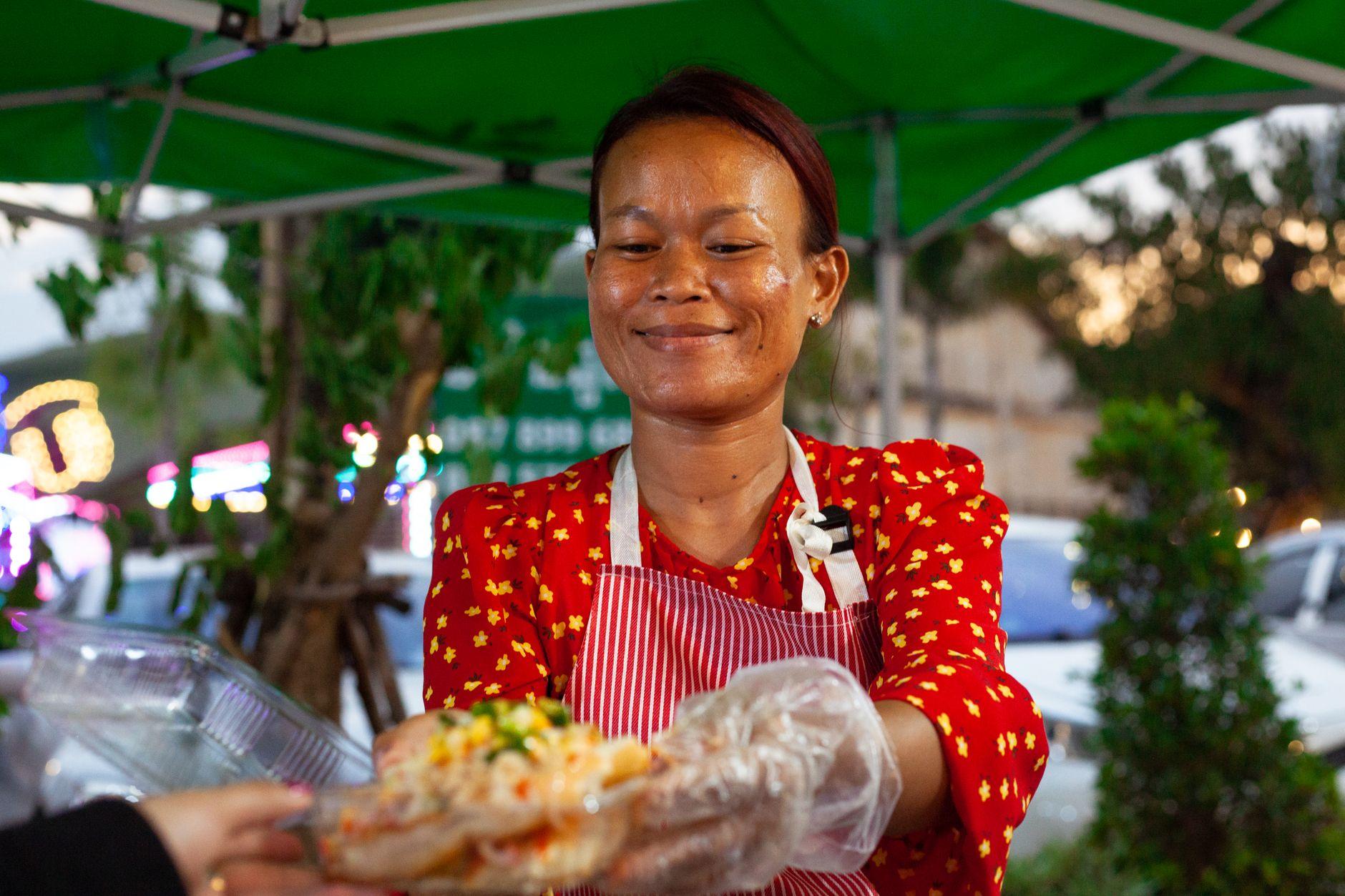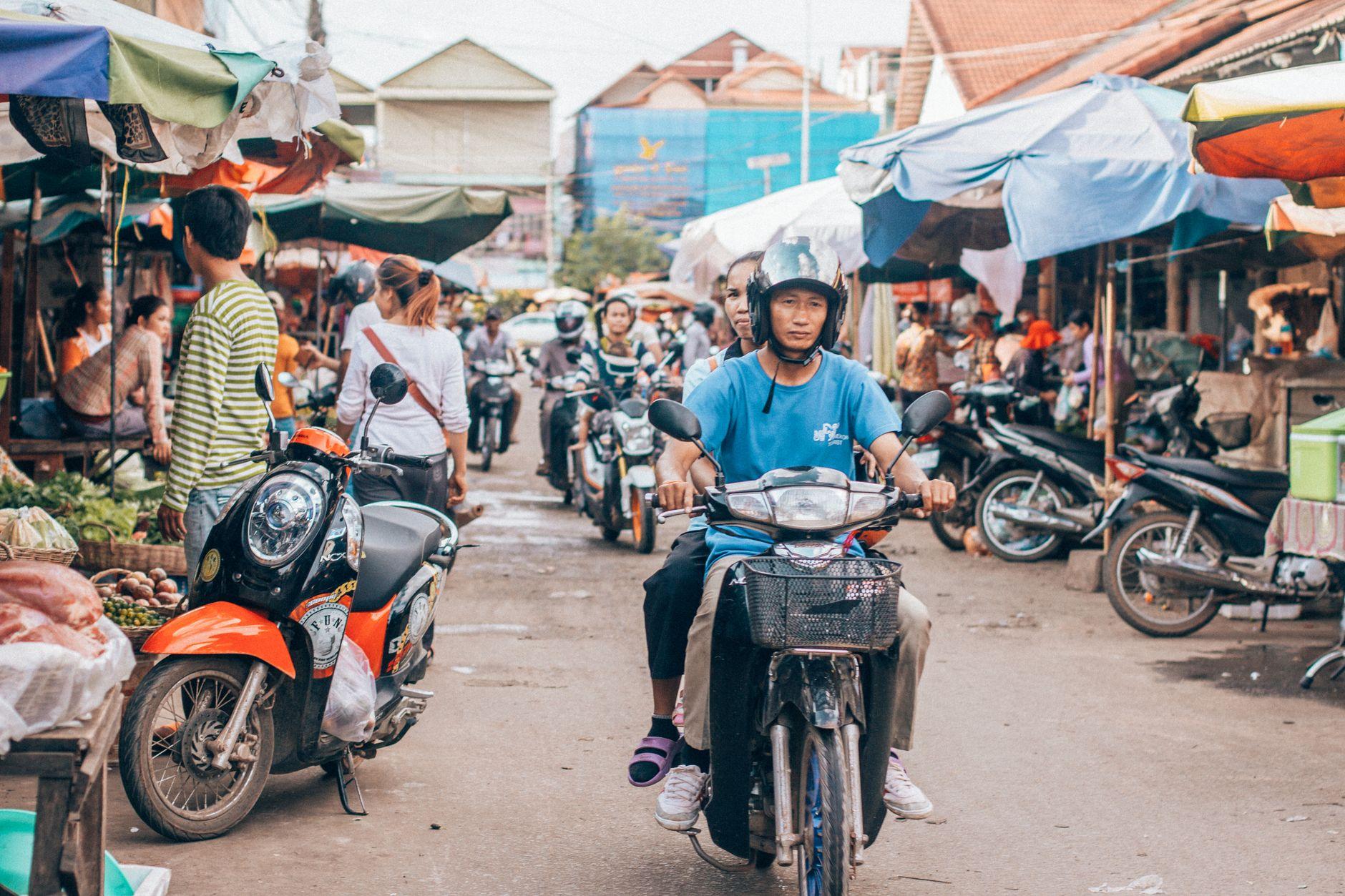

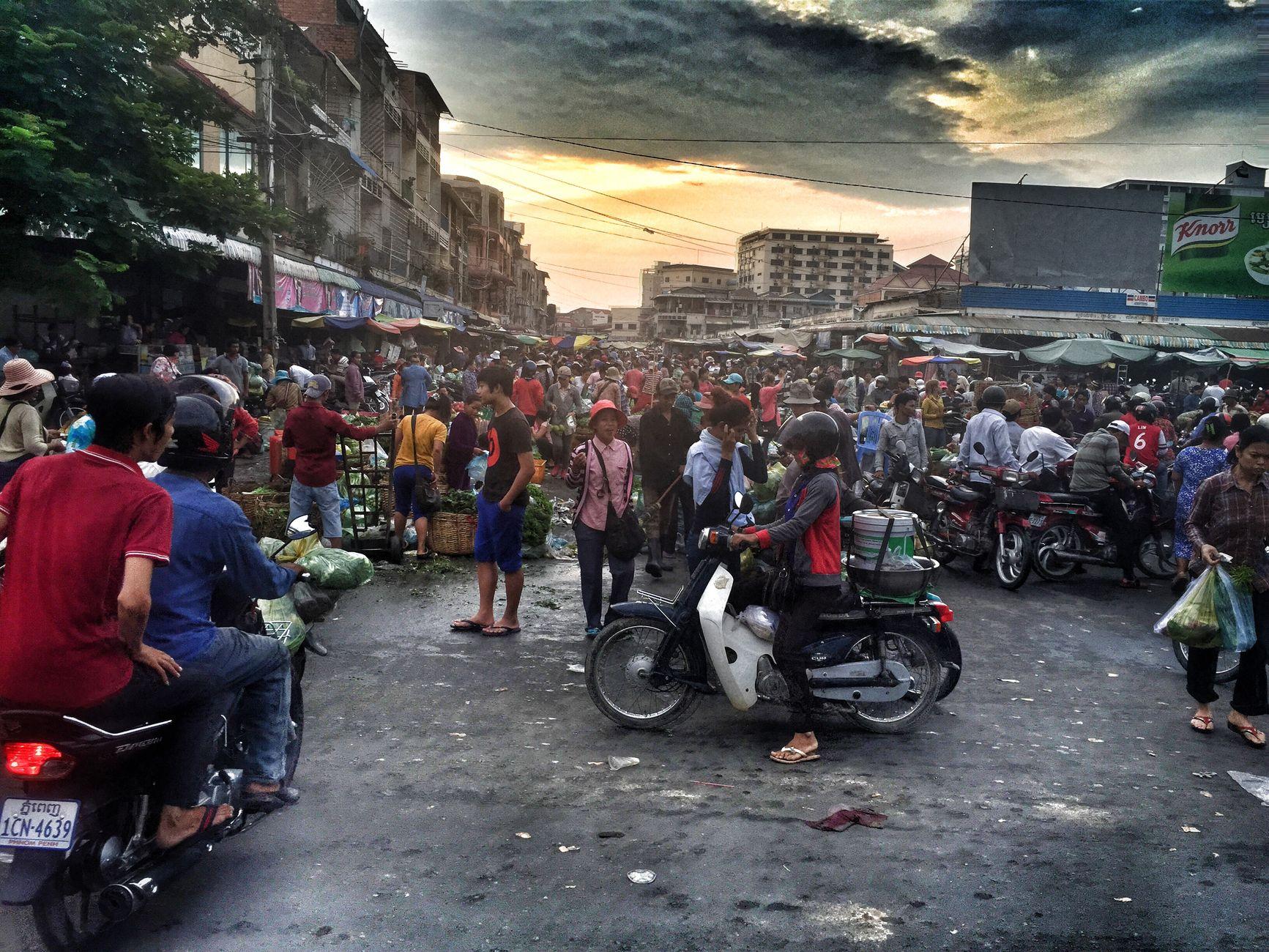
It’s 7:40 in the morning at a fruit stall near Kampot’s old market. You hand over a five dollar bill for a bag of mangosteens and a coconut. The vendor smiles, digs into a tin box, and hands you back a small brick of riel notes in three different colors. You have no idea if it’s correct. She knows it’s correct. A week from now, you’ll have a drawer full of riel notes you keep forgetting to spend, and you’ll still be doing this dance every single morning.
Welcome to the strangest, most charming money system in Southeast Asia. Cambodia runs on two currencies at once, and if you’re settling in as a digital nomad, learning how the locals actually pay will save you from a month of pocket-change chaos.
Two Currencies, One Pocket, Zero Instructions
Here’s the unwritten rule nobody explains at the airport: US dollars handle the big stuff, Cambodian riel handles the small stuff. Your coworking membership, your apartment deposit, your dive course in Sihanoukville, those get quoted in dollars. Your iced coffee, your motodop ride, your bag of fried noodles from the night market, those live in riel territory.
The friction happens at the seam between the two. Pay in dollars for something small and your change comes back in riel, converted by a mental shortcut every vendor knows and you don’t. Hand over a dollar bill with a small tear and it may get politely refused, because worn US notes are a genuine problem here. Meanwhile the riel piles up: 100 riel notes, 500 riel notes, little slips of paper that are individually worth almost nothing and collectively form a growing archaeological layer in your backpack.
Long-term visitors develop coping strategies. A riel jar by the door. A rule about only breaking big bills at supermarkets. None of it fully works, because the dual system guarantees a constant trickle of small change.
The Red and Blue Sticker That Solves Almost All of It
Look at the counter of any cafe in Phnom Penh, any pharmacy in Siem Reap, any noodle cart with ambitions, and you’ll see it: the KHQR sticker. KHQR is Cambodia’s national QR payment standard, built on the Bakong system run by the central bank, and it has spread with remarkable speed. One code format works across essentially every Cambodian bank and wallet, which means merchants don’t need five different stickers and customers don’t need five different apps.
For locals, KHQR has become the default way to pay for daily life. Scan, confirm, done. And here’s the part that matters most for a visitor drowning in small notes: a QR payment is exact. There is no change. The 6,500 riel coffee costs exactly 6,500 riel, not a two dollar bill plus a negotiation plus a handful of paper coming back at you. The dual currency headache mostly evaporates the moment the payment goes digital, because the app does the conversion math the fruit vendor was doing in her head.
If you’ve been told Cambodia is a cash-only country where you need a money belt full of crisp twenties, that advice has aged badly. We went through the biggest misconceptions in our rundown of outdated Cambodia money beliefs, and the short version is that the country digitized its payments faster than the travel blogs updated.
A Normal Nomad Day, Measured in Friction
Walk through an ordinary day in Phnom Penh or Siem Reap and count where money actually changes hands. Morning coffee at a third-wave cafe on Bassac Lane or near Wat Bo: KHQR sticker on the counter. Tuk-tuk booked through PassApp or Grab to your coworking space: payable in-app or by QR when you arrive. Lunch at a local rice shop: KHQR, often taped to the wall next to the menu. Groceries at Lucky or Chip Mong: QR at the register. Evening beer at a riverside bar: you guessed it.
Then count the moments cash would have created. Six transactions, six rounds of change, six chances to receive a stack of riel or a dodgy dollar bill. Multiply by thirty days. That’s the real cost of ignoring the QR ecosystem in Cambodia. It’s not that cash doesn’t work, it’s that cash generates a constant low-grade administrative burden that locals opted out of years ago.
It also compounds if you’re doing the classic Southeast Asia circuit. Cross into Laos or Thailand and you’ll find the same pattern with different stickers, something we mapped out in our comparison of every way to pay in Laos. The region has standardized on QR. The only question is whether you can join in.
Scanning KHQR Without a Cambodian Bank Account
Here’s the catch that frustrates most newcomers: the local Bakong-connected apps generally assume you have a Cambodian bank relationship, and setting one up as a nomad on a tourist visa or fresh arrival is somewhere between tedious and impossible.
This is exactly the gap Moreta Pay exists to fill. You top up a wallet from your home bank in your own currency, whether that’s a US account via Plaid or ACH, a European SEPA transfer, UK Faster Payments, a Canadian e-Transfer, or an international card. Then you scan the same KHQR codes the locals scan. Before you confirm anything, you see the amount, the merchant’s name, and the exact FX rate, so there’s no mystery math and no hidden foreign transaction fee buried in a statement three weeks later. The wallet converts, and the merchant gets paid instantly in their currency.
It also covers the online side of nomad life in Cambodia. Booking a weekend in Kep on Agoda, ordering gear on Lazada, arranging a bus on a QR-based checkout: same flow, scan and confirm. In supported countries you can knock out bill payments too, which matters once your Cambodia stay stretches from weeks into months.
Keep a Little Riel Anyway
Don’t go fully cashless on day one. Some situations in Cambodia still want paper: a donation box at a pagoda, a remote village stall on a Mondulkiri road trip, a tip for the cleaner at your guesthouse, the ice cream bicycle that has no counter to stick a QR code on. A modest stash of small riel notes covers all of it, and because QR now handles your daily volume, that stash stops regenerating every day. You spend it down instead of accumulating it.
The goal isn’t zero cash. It’s flipping the ratio, so that cash becomes the occasional backup instead of the default, and the dual-currency shuffle becomes a once-a-week curiosity instead of a six-times-a-day tax on your attention.
Arrive Already Set Up
The nomads who enjoy Cambodia most are the ones who stopped thinking about money logistics within the first week. Skip the phase where you’re rationing torn dollar bills and hoarding riel, and start scanning the same red and blue stickers everyone around you uses. Set up Moreta Pay before your flight lands in Phnom Penh, and your first market coffee can be a scan instead of a math problem.