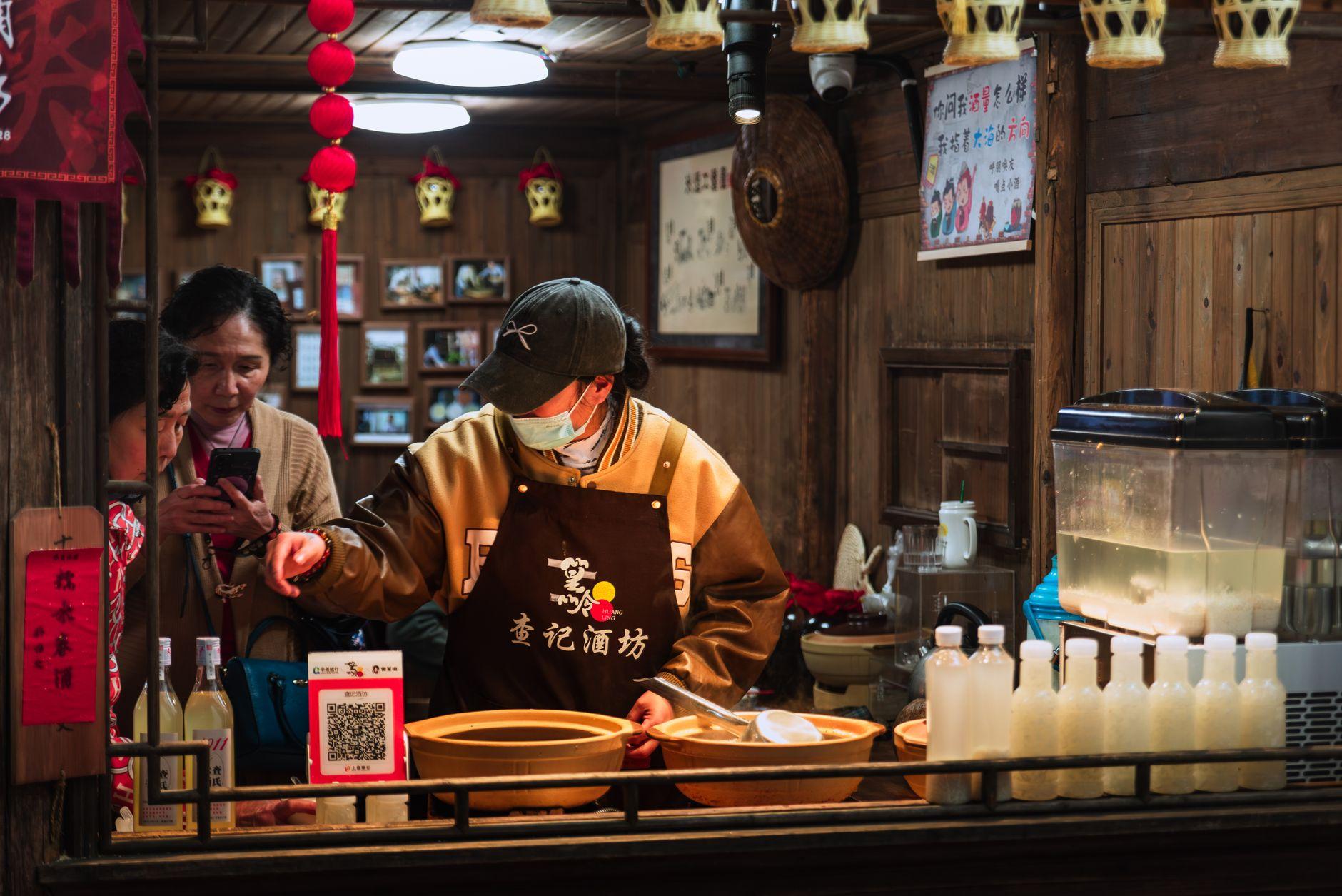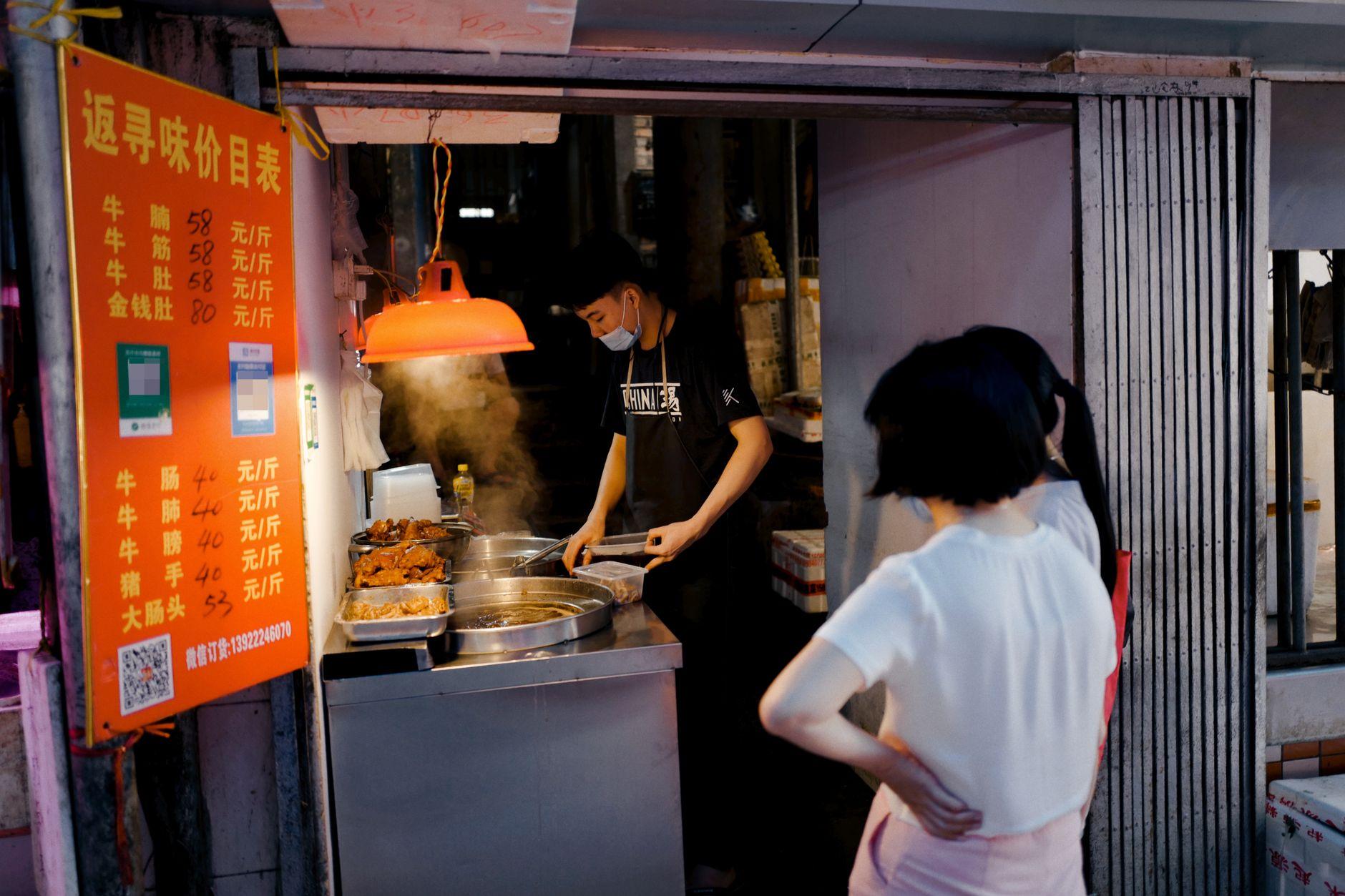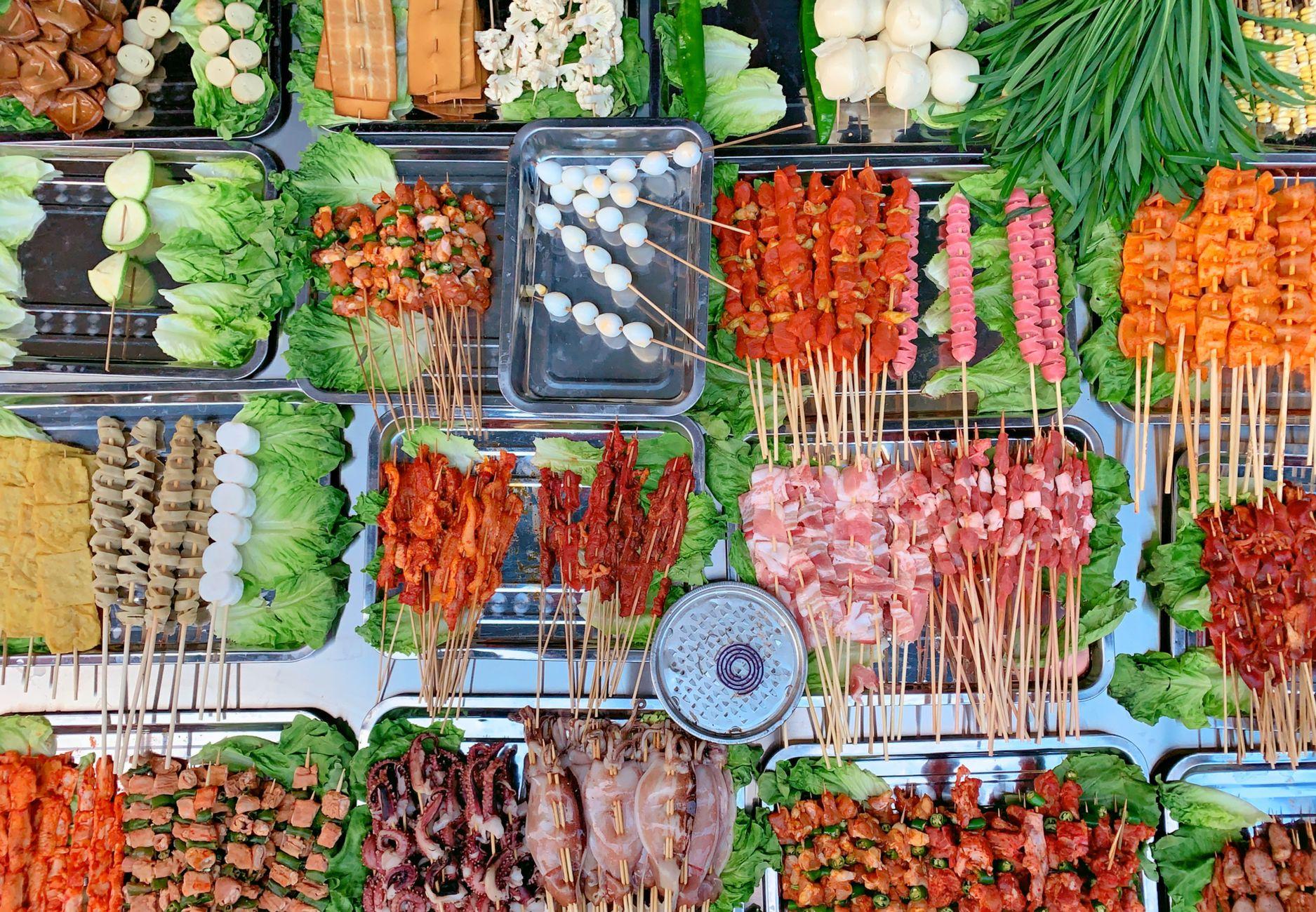

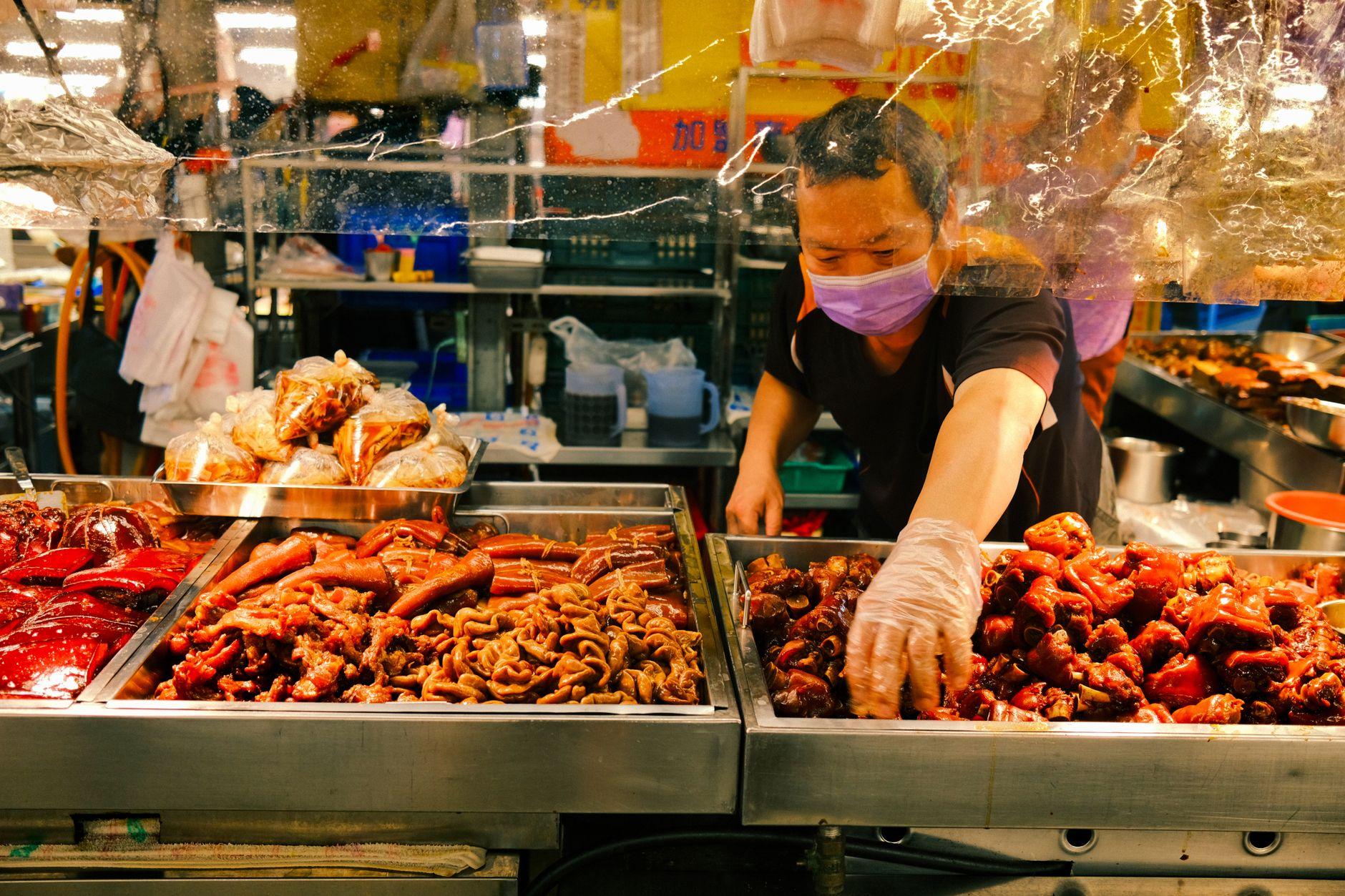
Picture the scene. You're standing in front of a chuan'r stall in Xi'an, the lamb skewers are smoking, and you're pointing at what you want. The vendor nods, grabs a handful, and gestures at a laminated board hanging off the cart. On it: one green QR code, one blue QR code, and zero interest in the 100 yuan note in your hand.
This is the moment where a lot of first-time visitors to China freeze. Here's exactly what's happening, and exactly what to do.
Green means WeChat, blue means Alipay
Almost every street food stall, market vendor, and hole-in-the-wall noodle shop in China displays one or both of these codes. Green is WeChat Pay. Blue is Alipay. Locals pay for essentially everything this way, from a 5 yuan jianbing to a full grocery run.
Many vendors print both codes on one sheet, or use an aggregator code that accepts either. You don't need to memorize logos. If there's a QR code taped to the cart, hanging from the awning, or propped up next to the till, that's the payment terminal. There often isn't any other one.
Why your cash makes the vendor sigh
Cash is technically legal tender in China, and yes, vendors are supposed to take it. In practice, a busy street food stall may not have a cash box at all. The vendor hasn't handled change in months. Handing over a 100 yuan note for a 12 yuan snack gets you a pained look, a shout to the neighboring stall to see if anyone can break it, and a line of hungry locals scanning past you while you wait.
Your foreign cards fare even worse. Visa and Mastercard acceptance at street level is close to nonexistent. Nobody at a night market has a card reader. This isn't a market thing either; small restaurants and taxis run on the exact same QR codes, which is why travelers regularly find themselves stuck at the end of a meal or a cab ride with no way to settle up.
If you're planning more than a quick trip, it's worth reading how China treats every payment method over a full month of daily life. We covered that in detail in our breakdown of what survives China's daily spending gauntlet. The short version: QR wins everything, everywhere.
The two kinds of scans you'll encounter
At street food stalls, the flow almost always works one of two ways.
You scan them. The stall has a static printed QR code. You scan it with your phone, type in the amount the vendor tells you, and confirm. The vendor's phone chimes or a little speaker box announces the payment out loud (you'll hear these robotic voices constantly at any Chinese market). That chime is your receipt. Don't walk away before it sounds.
They scan you. More common at bigger stalls, bakeries, and chain snack shops with a proper register. You show a barcode on your screen and the cashier scans it with a handheld reader. The amount is pulled automatically.
At a true street cart, expect the first version. The vendor will say the price, sometimes hold up fingers, sometimes point at a handwritten sign. If you don't catch the number, show them your phone with the amount field open and let them type it or nod. Vendors do this dance with confused customers daily. Nobody is fazed.
Where foreign visitors get stuck (and the way around it)
The obvious question: can't you just download WeChat or Alipay and link your foreign card? Sometimes, but travelers routinely hit verification walls, card rejections, and setup steps that assume you have a Chinese phone number or local bank account. Plenty of people land in Shanghai, spend their first evening fighting an app instead of eating, and end up surviving on hotel restaurants that grudgingly take cash.
This is exactly the gap Moreta Pay exists to close. You scan the same standard QR code the locals scan, the app shows you the amount, the FX rate, and the merchant name before you confirm, and the vendor gets paid instantly in yuan. Your wallet is funded from your own bank at home (US bank via Plaid or ACH, SEPA in Europe, UK Faster Payments, Canadian e-Transfer) or an international card, in your own currency. No Chinese bank account, no local phone number, no ATM runs, and no mystery foreign transaction fees buried in your statement later.
For a 12 yuan skewer, that means: point, scan, confirm, eat. Same speed as the local next to you.
Small habits that make market eating smoother
Sort your data connection before you're hungry. QR payments need internet. An eSIM or local SIM set up at the airport saves you from hunting for Wi-Fi with grilled squid getting cold in front of you.
Carry a power bank. In China, a dead phone means you cannot pay for anything, including the taxi home. Locals treat power banks like wallets for good reason.
Confirm the merchant name on screen. When you scan a static code, the merchant name appears before you pay. A quick glance protects you from the rare swapped-sticker scam. Moreta Pay shows this on the confirmation screen for exactly this reason.
Wait for the chime. The vendor's speaker announcing the payment is the universal signal that you're done. If it doesn't sound, show your confirmation screen rather than paying twice.
Keep a little cash anyway, but think of it as a spare tire. A few small notes (10s and 20s, not 100s) can rescue you at a rural stall or with an older vendor, but treat cash as backup, not the plan. This is roughly the opposite of the advice for some neighboring countries, where carrying real cash outside the capital still matters. In urban China, the QR code is the plan.
The same skill works far beyond the food stall
Once you can pay at a night market, you can pay everywhere in China, because it's all one system. The taxi driver shows you a QR code on his dashboard. The tiny dumpling restaurant has one taped to the wall next to the menu. The fruit seller outside the metro has one clipped to her umbrella. Scan, confirm, done.
It extends online too. QR-based checkout works on platforms like Trip.com when you're booking trains and hotels mid-trip, so the wallet you use for skewers handles your logistics as well.
China without cash sounds intimidating until your first successful scan. After that, you'll wonder why anyone still queues at an ATM. Set up Moreta Pay before you land, top up from your home bank, and walk into that night market ready to point at the skewers like you've lived there for years.