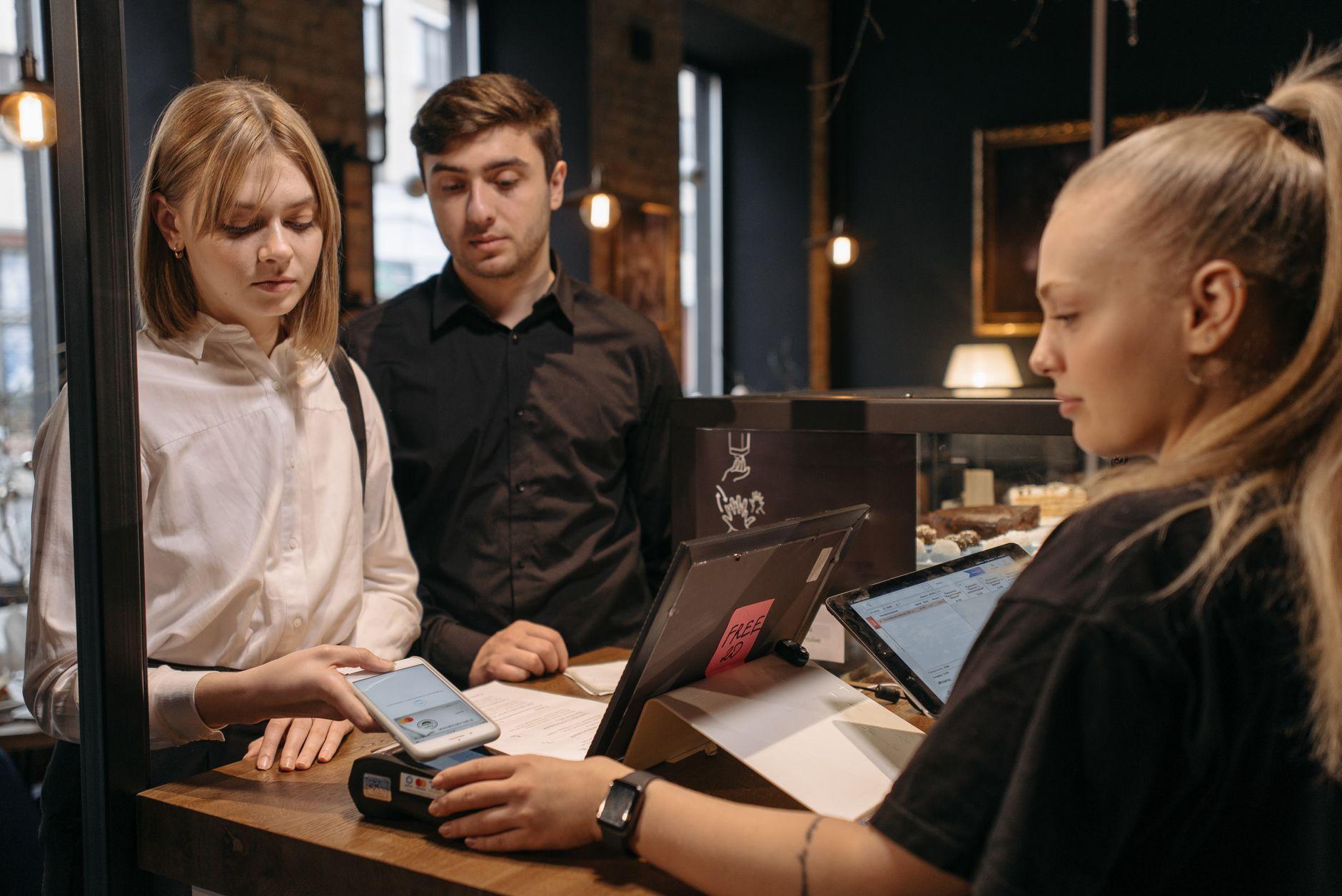

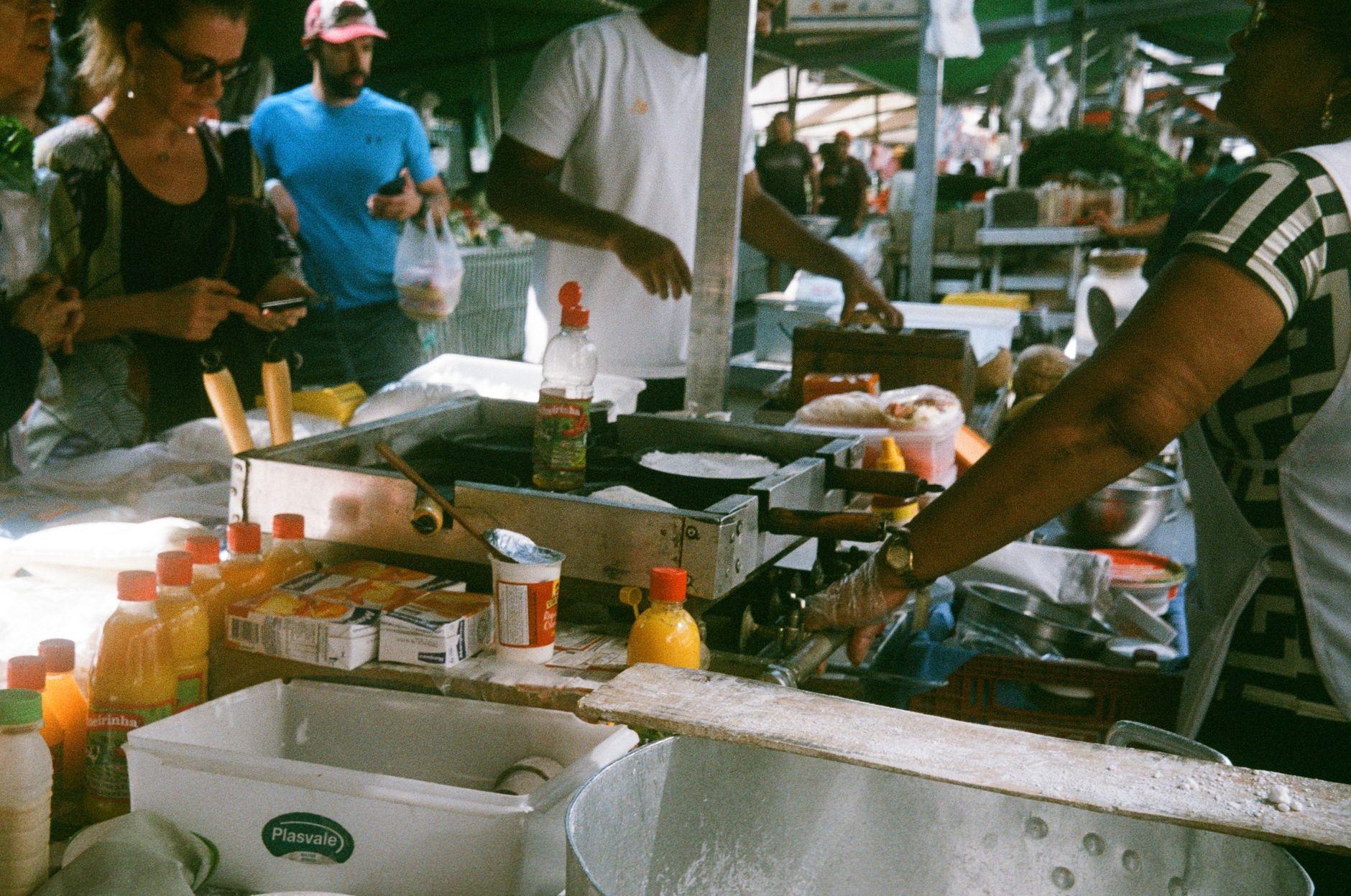
The feira vendor in São Paulo selling queijo coalho has a laminated Pix QR code taped to her cart. Three stalls down, the guy selling acai bowls has a card machine clipped to his belt and waves off anyone who asks about Pix. Same market, same morning, two completely different payment logics, and if you only carry a foreign card you will find that one of these vendors simply will not serve you no matter how much you insist.
That split is not random. Brazilian merchants choose between Pix and card machines based on settlement speed, fee structure, and the size of the purchase, and that choice directly shapes what a given business will sell you and whether it offers a discount for paying a certain way. Pix is a centralized instant payment system run directly by the Central Bank of Brazil that moves money bank-to-bank through QR codes, Pix keys, or NFC taps, with no card network and no physical terminal required. Card machines route through the traditional acquirer and card network stack. The gap between those two mechanisms, not vendor preference alone, shapes the price tag and sometimes whether the sale happens at all.
What is Pix and how is it different from a card machine?
Pix is Brazil's instant payment system, built and run by the Central Bank of Brazil rather than by a private network or bank consortium. A merchant generates a QR code, you scan it with a banking app or compatible wallet, and the money moves bank account to bank account in seconds. There is no card swipe, no chip read, no POS terminal rental, and critically, no card network sitting in the middle taking a cut.
A card machine (maquininha) is the opposite architecture. It routes the transaction through an acquirer, then a card network such as Visa or Mastercard, then the issuing bank, before funds eventually land in the merchant's account. That extra routing is exactly why the two systems behave so differently in practice, and why a merchant's choice between them is really a choice about cash flow, not a choice about convenience.
Why does settlement speed change what a merchant is willing to sell?
Settlement speed decides how much working capital risk a merchant can tolerate, and that risk tolerance shows up directly in pricing and product selection. Pix settles instantly, 24/7, through the Central Bank's Instant Payment System under Resolution No. 1/2020. A credit card sale on a card machine in Brazil typically reaches the merchant in about 30 days unless they pay extra for faster settlement, while debit usually lands the next business day.
For a street vendor buying fresh ingredients every morning, a 30-day wait for credit card revenue, or a fee to get it sooner, is a real cash flow cost. That is the mechanism behind what looks like a style preference but is actually a financing decision: the vendor who only takes Pix is choosing same-day liquidity over the ability to let customers pay with a credit card, and pricing her queijo coalho accordingly. Pix transactions are also generally cheaper to process than card payments, since there is no card network, acquirer markup, or interchange fee built into the cost [stripe.com][primer.io]. Pix cuts out layers of processing cost that a card machine transaction has to pay for at every hop [knowledge.antom.com].
Why do some merchants keep card machines anyway?
Card machines persist largely out of habit and existing infrastructure around installment sales. Brazilian consumers expect "10x sem juros," the interest-free installment plans traditionally built into the card network's processing rails, and many merchants have years of systems and customer expectations built around that card-based flow. A merchant selling a 2,400-reais television set often defaults to the card machine because that is the installment path shoppers and store systems are already set up for, even though Pix has its own growing installment options through bank and fintech features like "Pix no crédito," where a customer splits the cost using a credit line while the merchant still receives the full amount instantly.
This is the honest asymmetry in the system. Pix wins on cost and speed for anything a customer can pay in full right now, and increasingly for installment purchases too as "Pix no crédito" style features spread. Card machines still dominate for many big-ticket and installment sales simply because that infrastructure and habit are already in place. That is why you will see:
- Market stalls, food trucks, and small service providers (barbers, mechanics, tattoo artists) running Pix-only or Pix-first
- Electronics stores, furniture shops, and travel agencies keeping card machines front and center for installment sales
- Mid-size restaurants offering both, with a small discount for Pix because it trims their processing cost
Does the payment method actually change the price you pay?
Yes, and this is the part tourists usually miss. Because Pix carries lower processing costs for the merchant, it is common in Brazil to see a "desconto no Pix" (Pix discount) of a few percentage points off the card price, particularly at small businesses and street vendors. The merchant is not being generous, he is simply passing along part of what he saves by skipping the card network. According to Brazil's central bank, about 45% of all payments in 2024 moved over Pix, which is used by more than 150 million people [gi-de.com], which tells you this is not a niche workaround, it is now the default rail for day-to-day spending.
Can tourists actually use Pix in Brazil?
This is where most visitors hit a wall. The problem is access: Pix runs between accounts at Brazilian banks and payment institutions, and opening one normally requires a CPF (Brazilian taxpayer ID), which most visitors on a two-week trip don't have.
That gap, a payment network open to anyone in theory but locked behind local banking infrastructure in practice, is exactly what a wallet like Moreta Pay is built to close. You top up the Moreta app from your home bank or card in US dollars, euros, pounds, Canadian dollars or Australian dollars, then scan the exact same Pix QR code the feira vendor already has taped to her cart. You see the merchant's name, the amount in reais, and the exact exchange rate before you confirm, and the vendor receives an instant Pix payment in local currency just as if a Brazilian customer had paid. No CPF, no local account, no separate card machine required.
What should you still carry cash for in Brazil?
Pix has not replaced cash everywhere. Small toll booths on rural highways, tips for parking attendants (flanelinhas), and some tiny inland towns still run on paper reais. Carry a modest reserve, something like 50 to 100 reais in small notes, for exactly these situations rather than assuming every counter in the country has gone fully digital.
Frequently Asked Questions
Is Pix only for Brazilian residents?
Using Pix directly requires an account at a Brazilian bank or payment institution, which normally means having a CPF, so most tourists can't. A wallet like Moreta Pay lets you scan Pix QR codes without opening a local account.
Why do some vendors offer a discount for paying with Pix?
Pix carries no card network or interchange fee, so merchants save on processing costs and sometimes pass part of that saving to the customer as a small discount.
How fast does a merchant get paid with Pix compared to a card machine?
Pix settles in seconds, 24/7. Credit card sales on a card machine usually reach the merchant in about 30 days unless they pay for faster settlement, and debit usually arrives the next business day.
Can I use Pix to pay in installments?
Pix itself is designed as an instant, single transfer, but features like "Pix no crédito" offered by banks and fintechs let customers split a purchase into installments using a credit line while the merchant still receives the full amount instantly.
Is there a minimum or maximum amount I can send over Pix?
There's no single Central Bank cap on Pix amounts, but banks set their own daily and per-transaction limits, and Central Bank security rules add lower default limits, such as 1,000 reais for transfers between individuals at night. Paying through Moreta, a single Brazil payment can be up to 16,000 BRL, with a weekly limit of 32,000 BRL.
Do all Brazilian merchants accept Pix?
No. Pix is very widely accepted, especially by smaller vendors and service providers, while larger retailers selling big-ticket items usually keep card machines alongside it for installment sales.
About Moreta
Moreta Global Inc. is a Delaware corporation and FinCEN-registered Money Services Business, backed by Y Combinator. The Moreta app is a digital wallet that lets international travelers top up from their home bank or card and pay directly on local QR networks, including Pix in Brazil, without needing a local bank account or a CPF. The platform shows the merchant name, amount, and exchange rate before every payment is confirmed, and funds are held with licensed partner banks and every account is verified with a passport scan and a selfie. Beyond Brazil, Moreta supports local rails across Asia, Latin America and Africa, including KHQR in Cambodia and DuitNow QR in Malaysia, for travelers who want to pay like a local instead of relying on cash or foreign card fees.
If you are heading to Brazil and want to Pix a vendor directly from your phone without opening a local account, visit Moreta Pay to see how it works before you land.
References
- Payments in Brazil Pix CBDC payment cards | G+D Spotlight (gi-de.com)
- A guide to Pix payments in Brazil (stripe.com)
- Beyond Cards: How Pix Is Rewiring the Future of Payments in Brazil (knowledge.antom.com)
- Pix payment method: Why it matters for merchants in Brazil | Blog | Primer (primer.io)