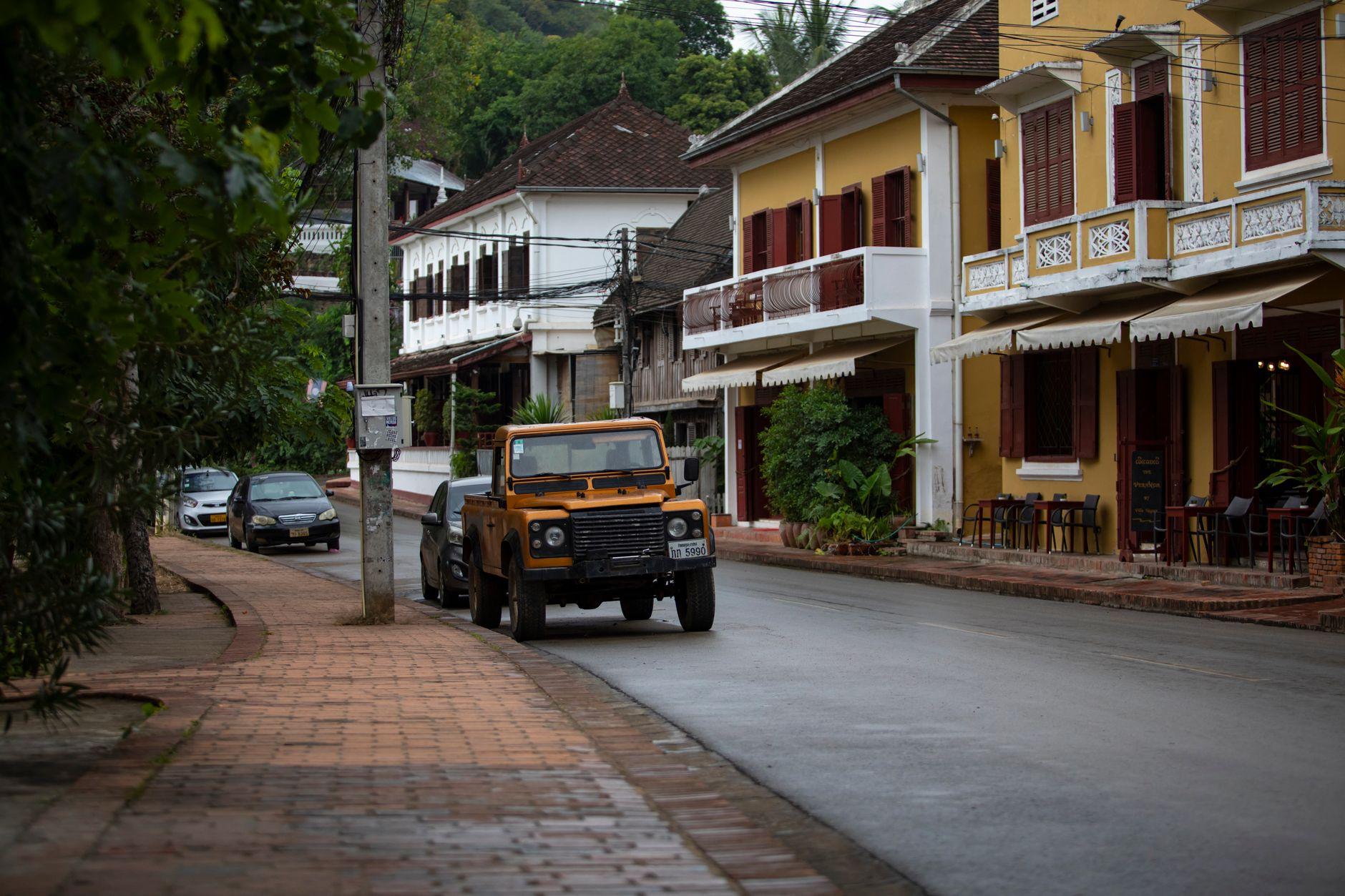


You are standing at a yellow ATM outside a 7-Eleven on Sukhumvit Soi 11 in Bangkok, and the screen adds a flat 250 baht fee to your withdrawal. The Thai bank that owns the machine charges that fee, not your bank at home. A card marketed with "no ATM fees" only covers it if the account terms explicitly reimburse fees charged by foreign ATM operators. To find out, check three things: whether the refund applies worldwide, whether it has a monthly cap, and whether it covers the operator's surcharge or only your own bank's fee. Then confirm the answer with one small test withdrawal. Moreta builds a wallet for paying local QR codes abroad and publishes a calculator comparing ATM withdrawals against cards and exchange counters.
What exactly is the ATM fee, and who charges it?
A flat surcharge is added to every withdrawal made on a foreign card at Thai bank ATMs. The bank that owns the machine sets the amount, and the screen shows it before you press confirm.
The fee is flat, so it hurts most on small withdrawals:
| Withdrawal | Fee (250 baht) | Fee as share of cash |
|---|---|---|
| 2,000 baht | 250 baht | 12.5% |
| 10,000 baht | 250 baht | 2.5% |
| 20,000 baht | 250 baht | 1.25% |
The ATM withdrawal fee punishes the traveler who pulls out 2,000 baht every other morning for pad kra pao and a Grab ride. It barely registers for someone who withdraws once a week.
Why doesn't "no ATM fees" always mean the fee comes back?
A single withdrawal can trigger up to four separate charges, and most refund programs target only one or two of them.
| Charge | Who sets it | Refunded? |
|---|---|---|
| Operator surcharge (220 to 250 baht) | The bank that owns the ATM | Only with worldwide reimbursement |
| Out-of-network or international ATM fee | Your home bank | Often waived on travel accounts, so check |
| Foreign transaction fee | Your bank or card network | Not an ATM fee. Avoided only on accounts with no foreign transaction fee |
| DCC markup | The ATM, if you accept its conversion | Never. Decline it |
A refund program works like a company expense policy. It pays back the categories it names, not the ones you assume are included. On many statements, the surcharge is folded into a single debit along with your cash. A bank that only reimburses itemized "ATM fee" lines may never register it as a fee.
How do you check your debit card's ATM fee reimbursement policy?
You check by reading the account's fee schedule and then testing it, because the marketing page is the least precise document your bank publishes.
- Open the fee schedule or account agreement PDF. Search it for "reimburse," "refund," "foreign ATM" and "worldwide."
- Confirm the word "worldwide" or "international." A promise to refund "out-of-network ATM fees" that never mentions other countries is ambiguous. Treat it as unconfirmed.
- Find the cap. A 15 USD monthly cap sounds generous until you realize that two withdrawals at roughly 8 USD each already exceed it.
- Ask the bank in writing. Send this exact question through secure message: "Do you reimburse surcharges charged by foreign ATM operators, and is there a monthly limit?" Keep the reply.
- Make a small test withdrawal. Photograph the fee screen, then watch your statement. Some refunds post per transaction and others at the end of the statement cycle, so on a short trip you may not see the credit until you are home.
Which travel debit cards actually refund the fee in 2026?
With that checklist in hand, the field narrows quickly. Charles Schwab and Betterment both offer checking accounts with unlimited worldwide ATM fee refunds. Colonial's accounts automatically refund up to 15 USD a month in ATM fees.
For a travel debit card, look for one with unlimited worldwide reimbursement, because any cap disappears within a couple of withdrawals.
If you are weighing a Wise card against a bank debit card, ask both providers the same written question from step 4. Wise publishes the fee figures in its own guides for different regions. Whether a specific card absorbs that fee is answered only by the provider's current fee page.
Does a refunded ATM fee mean you got a good exchange rate?
No. The fee is the visible cost. The exchange rate applied to your withdrawal is the quieter one, and on large withdrawals it matters more.
- Decline dynamic currency conversion. When the ATM offers to charge you in dollars at a "guaranteed" rate, refuse and choose to be charged in local currency. Your card network's rate applies instead of the machine's.
- Treat currency exchange counters as a comparison, not a default. Check the rate on the board against the mid-market rate on your phone before handing over dollars.
- Withdraw less often, in larger amounts. This keeps a flat fee from becoming a double-digit percentage of your cash.
Thailand still runs on some cash. Keep a modest reserve, about 1,000 baht in 20- and 100-baht notes, for songthaews, temple donations and vendors who count change from a biscuit tin.
What changes when your trip continues to Cambodia, Malaysia or Brazil?
The ATM math above assumes cash is your main way to pay. In many of the countries travelers visit next, local QR networks cover everyday spending in cities and visitor areas: KHQR in Cambodia, DuitNow QR in Malaysia, Pix in Brazil and WeChat Pay in China.
Moreta Pay works on those networks:
- Top up from home in your own currency through a US bank (ACH), card, Apple Pay or Google Pay.
- Scan the same QR code the locals use.
- Check the merchant name, the amount and the exact FX rate before you slide to pay.
- The merchant is paid instantly in local currency.
Moreta reports one 1.5% fee per payment, shown before you confirm. Cash still matters in rural areas. We covered Cambodia's two-currency quirk, where change often comes back in riel, in our Cambodia guide.
Frequently Asked Questions
How much is the ATM fee abroad?
Thai bank ATMs add a flat surcharge to each withdrawal on a foreign card. The amount appears on screen before you confirm.
Can I avoid the ATM fee at the machine?
Generally, no. ATMs apply the surcharge to foreign cards. You can get it reimbursed through your bank, or pay it less often by making fewer, larger withdrawals.
Does a "no foreign transaction fee" card cover ATM fees?
No. A foreign transaction fee is a percentage charged on the conversion. The ATM surcharge is a separate flat fee set by the operator.
Should I accept the ATM's offer to charge me in dollars?
No. Decline the conversion and choose local currency every time.
When does an ATM fee refund appear on my statement?
It depends on the bank. Some credit each fee as it happens, and others credit the total at the end of the statement cycle. Your account terms will say which.
Is exchanging cash before I fly cheaper?
Sometimes. Compare the rate you are quoted with the mid-market rate. A large gap means you are paying the markup up front.
About Moreta
Moreta Global Inc. is a Delaware corporation, a FinCEN-registered Money Services Business and part of Y Combinator's Summer 2024 batch. Its app, Moreta Pay, lets travelers top up from home and pay local QR codes on networks including DuitNow QR in Malaysia, KHQR in Cambodia, Pix in Brazil, WeChat Pay in China and QR Ph in the Philippines. Each payment shows the merchant, the amount and the exchange rate before you confirm. Its compare-rates calculator shows what a deposit buys through Moreta compared with a bank card, an ATM withdrawal or an airport counter.
Do this before you board: send your bank the written refund question, note your monthly cap, and set your card to decline conversion. For the countries on your route where you would rather scan than withdraw, see how Moreta Pay works at moretapay.com.