
Ask ten travelers how to pay in Bolivia and you will get ten confident, contradictory answers. Someone will swear the whole country runs on cash. Someone else will tell you their coffee in Santa Cruz was paid by scanning a QR code taped to the counter. Both are right, which is exactly the problem. Bolivia in 2026 is mid-transition: QR Simple payments are growing fast in La Paz and Santa Cruz, while much of the rest of the country still runs on crumpled boliviano notes and exact change.
So instead of one answer, here is an honest comparison of your four real options, and where each one wins or falls apart.
Option 1: Cash, the default that still rules the altiplano
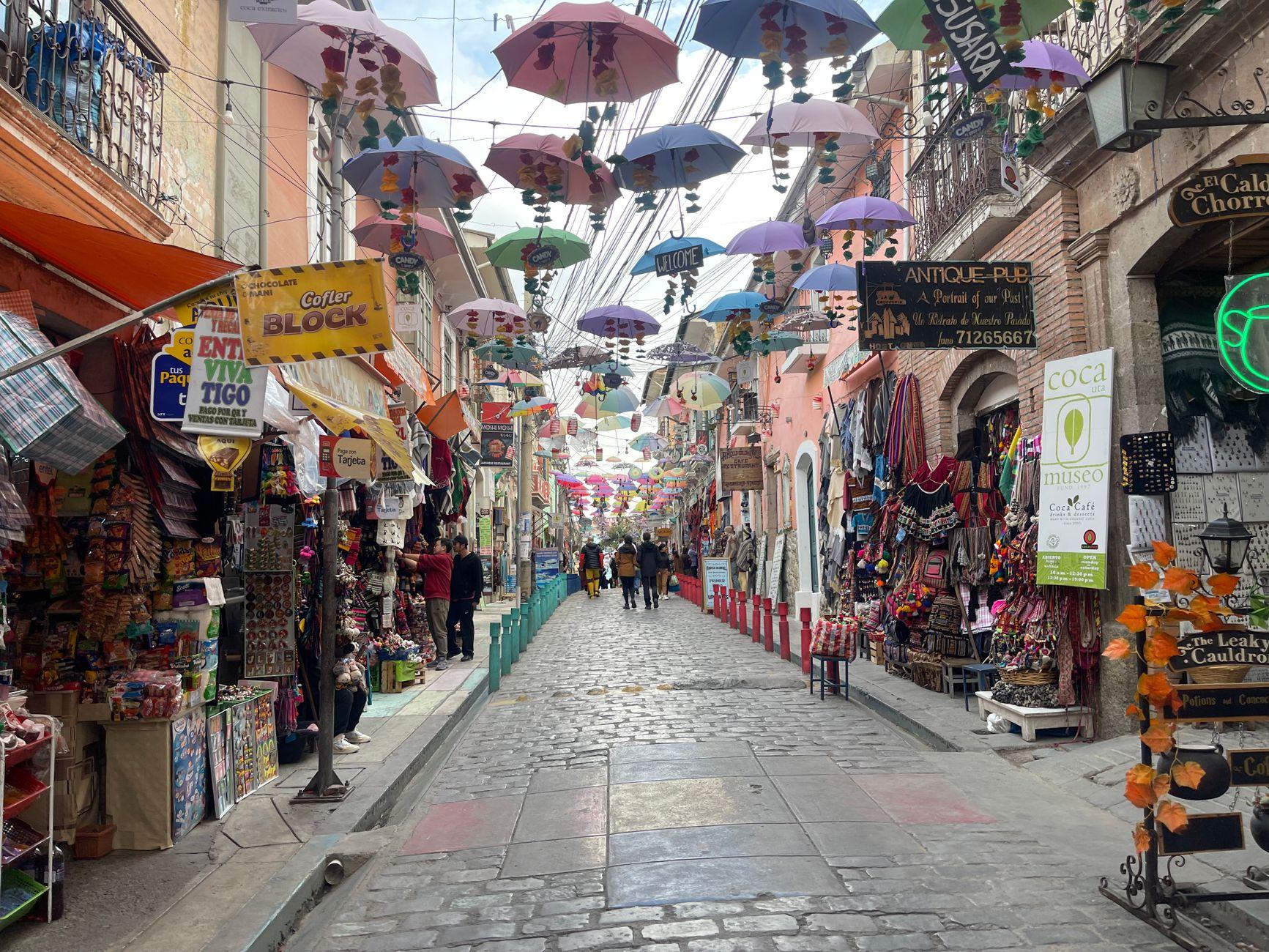
Cash is not optional in Bolivia. Outside the big cities, it is often the only game in town. The salteña stand near your hostel, the shared trufi to Copacabana, the entrance fee collected at a small museum, the market stall in El Alto selling everything from phone cases to dried llama fetuses: bolivianos, please, and ideally small notes, because breaking a 200 can genuinely stall a transaction.
Pros: accepted absolutely everywhere, no technology required, and haggling at markets basically assumes it.
Cons: getting it is the hard part. ATMs that accept foreign cards are concentrated in La Paz, Santa Cruz, Cochabamba, and a few tourist hubs. Head toward the Salar de Uyuni, the Yungas, or smaller towns in the valleys and working ATMs for foreign cards become rare enough that seasoned travelers withdraw days in advance. That means carrying more cash than you would like, which brings its own stress on night buses and in crowded markets.
Option 2: Your foreign card, useful in a narrow lane
Visa and Mastercard work at the places built for people like you: mid-range and upscale hotels, larger restaurants in the Zona Sur of La Paz or the second ring of Santa Cruz, supermarket chains, and tour agencies that cater to international visitors.
Pros: familiar, no setup, decent for big-ticket items like multi-day Uyuni tours booked through an established agency.
Cons: the acceptance map is small and shrinks fast the moment you leave tourist infrastructure. Card terminals can be temperamental, staff sometimes prefer cash even where a terminal exists, and your home bank may quietly add foreign transaction fees and an unflattering exchange rate on top. Treat your card as a backup for hotels and tours, not a daily payment method.
Option 3: QR Simple and local wallets, the way locals actually pay now
Here is the part most guides gloss over. Bolivia has been quietly building a national interoperable QR standard called QR Simple, and in La Paz and Santa Cruz it has changed daily life. Cafes print a QR next to the till. Delivery drivers show one on their phone. Even small neighborhood shops increasingly have a laminated code taped by the register. Locals scan it with their banking app, the money moves instantly, and nobody handles change.
It is the same pattern we watched play out in neighboring Peru, where Yape swallowed everyday commerce: once instant QR payments arrive, small merchants adopt them faster than anyone expects, because they are free of card terminals and settlement delays.
Pros: instant, widely trusted, and increasingly the preferred way to pay in the two biggest cities.
Cons: the whole system hangs off Bolivian bank accounts. To scan a QR Simple code with a local app, you need a local account, which generally means residency paperwork most travelers and even many expats do not have. So visitors end up in the strange position of standing in front of a perfectly good QR code they cannot use, watching the person behind them pay in three seconds.
Option 4: Moreta Pay, joining the QR economy without the bank account
This is the gap Moreta Pay was built for. You top up a wallet from your home bank (US bank via Plaid or ACH, SEPA in Europe, UK Faster Payments, Canadian e-Transfer) or an international card, all in your own currency. When you hit a QR code in Bolivia, you scan it with Moreta Pay like a local would. Before you confirm, you see the merchant name, the amount, and the exact FX rate. Tap confirm, the wallet converts to bolivianos, and the merchant is paid instantly. There are no hidden foreign transaction fees buried in the rate.
Pros: you pay the same QR codes locals pay, without a Bolivian bank account, without hunting for an ATM that likes your card, and with the exchange rate shown upfront instead of discovered on your statement weeks later.
Cons: it only helps where QR codes exist. In cash-only villages and at merchants who have not adopted QR Simple yet, no app on earth saves you. Bolivia is not Brazil, where Pix is everywhere. It is a two-speed country, and you should plan for both speeds.
How this plays out on an actual trip
Picture a common two-week route. In La Paz, you can lean digital: coffee near Plaza Avaroa, a lunch spot in Sopocachi, your groceries, even some market stalls now show QR codes you can scan with Moreta Pay. Keep small cash for trufis, the teleférico ticket window if the card line is long, and street food. Santa Cruz feels similar, maybe even more QR-forward in its cafe and restaurant scene.
Then you head to Uyuni. Withdraw cash before you leave the city, more than you think you need, in small denominations. Your three-day salt flats tour, your snacks at the train cemetery, your hot shower upgrade at the salt hotel: cash, cash, cash. The same logic applies around Lake Titicaca and most of rural Bolivia. It is the same city-versus-everywhere-else split we described in Mongolia, where the capital scans and the countryside counts notes.
One more scenario worth knowing: online bookings. If you are arranging hotels or transport through platforms like Trip.com or Agoda that offer QR-based checkout, Moreta Pay handles those payments too, which spares your foreign card another chance to get flagged for suspicious activity in South America.
The verdict, such as it is
Nobody wins outright. Cash is mandatory for rural Bolivia and small transactions, so carry it, in small bills, withdrawn in big cities. Your foreign card is a narrow backup for hotels and tour agencies. Local wallets are locked behind residency you probably do not have. And a QR wallet like Moreta Pay is what turns you from the tourist fumbling with a 100 boliviano note into the person who scans, confirms, and walks off with their api and pastel while the queue moves on.
The practical formula for Bolivia in 2026: cash for the countryside, QR for the cities, card for the hotel. If you want the QR part sorted before you land in El Alto at 4 a.m., set up Moreta Pay and load your wallet while you are still on home wifi.