
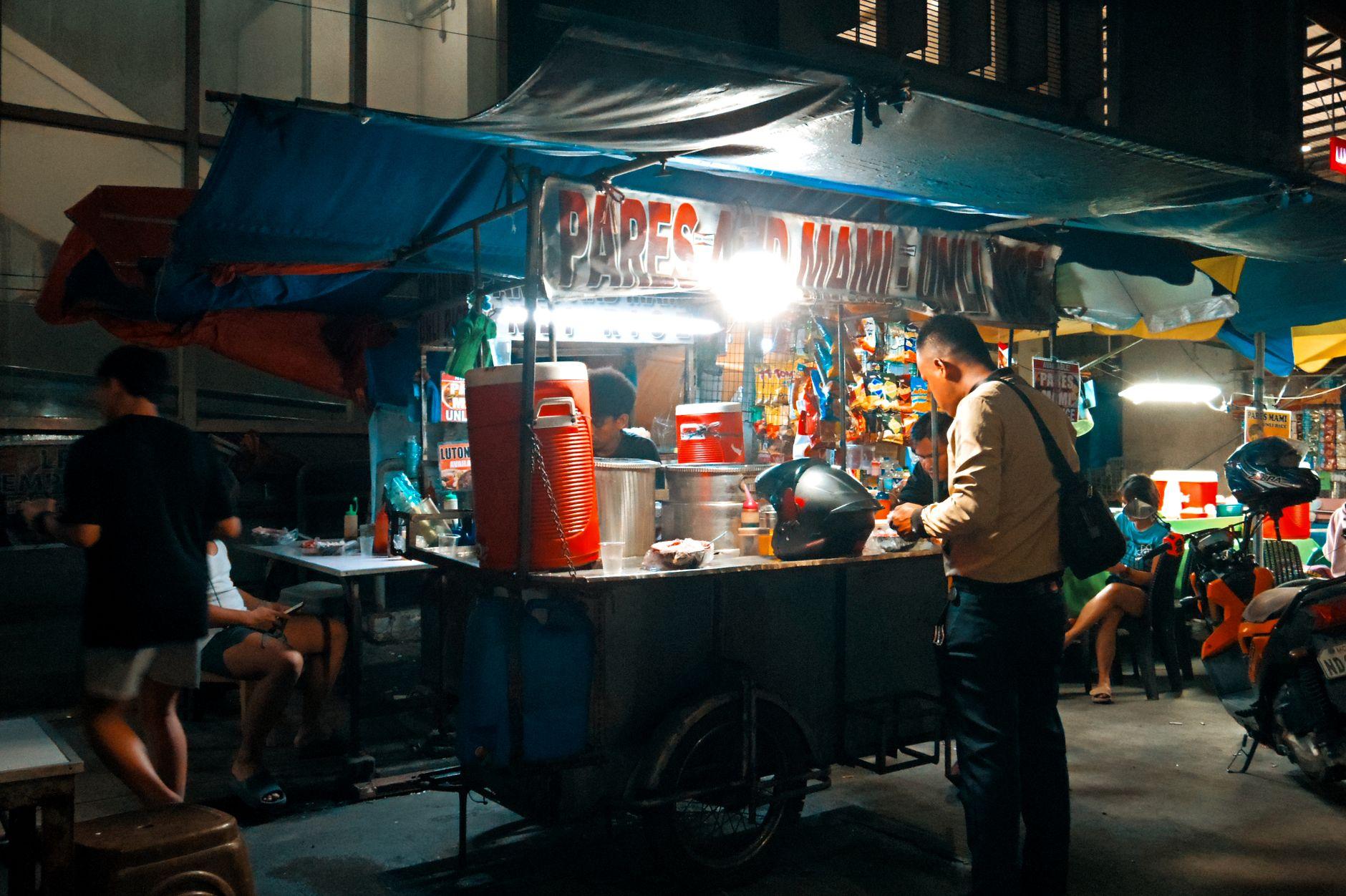
Spend a week in Manila or Cebu and you will notice something fast: everyone pays by phone. The sari-sari store, the coffee cart, the barber, even the tricycle driver in some neighborhoods will point you to a small laminated QR code before they reach for change. Then you fly to a smaller island and nobody wants anything but crumpled pesos. The Philippines runs two payment worlds at once, and as a digital nomad you will live in both. Here are the questions people actually ask, answered straight.
What is that blue QR Ph sticker on every counter?
QR Ph is the national QR standard for the Philippines. It means one code works across wallets and banks, so a merchant does not need five different stickers. A customer with GCash, Maya, or a participating bank app scans the same QR Ph code and the payment lands instantly. For merchants this killed the old mess of separate codes per app, which is why you see the standard almost everywhere in cities now, from mall food courts to roadside fruit vendors.
Can I just download GCash or Maya as a foreigner?
You can download them. Actually using them is the hard part. Both wallets typically want a Philippine mobile number to register, and full verification leans on local ID. Tourists and even long-stay nomads routinely get stuck at verification, or end up with a limited account they cannot top up easily from a foreign bank. Some people buy a local SIM at the airport specifically to attempt GCash registration, then spend their first afternoon in the country fighting the verification queue instead of eating lechon. It is doable for some expats with the right paperwork, but it is not a reliable day-one plan.
So how do I pay by QR without a local wallet?
This is where a travel wallet built for visitors fits. Moreta Pay lets you scan the same QR Ph codes that locals scan with GCash or Maya, but you fund it from your own bank at home (US bank via Plaid or ACH, SEPA in Europe, UK Faster Payments, Canadian e-Transfer) or an international card. You scan the merchant's code, see the amount in pesos, the FX rate, and the merchant's name on screen, confirm, and the merchant is paid instantly in local currency. No Philippine SIM, no local ID, no local bank account. From the merchant's side it looks like any other QR Ph payment, which matters because many small vendors genuinely prefer QR over handling change.
Is the Philippines really still a cash country?
Outside the big cities, yes. Metro Manila, Cebu City, and Davao are heavily QR-enabled. But head to the provinces, to Siquijor, to the smaller stops on a Palawan island-hopping route, and cash is king again. Habal-habal rides, beachfront grills, small guesthouses, entrance fees at waterfalls, these are often cash only. The practical answer is not choosing between QR and cash, it is carrying both and knowing which world you are standing in. Our guide on how much cash to actually carry on a multi-country trip applies doubly here, because within one country you will cross that line several times.
What about ATMs when I'm island hopping?
Plan around scarcity. El Nido and Coron have ATMs but they run out of cash during peak season, and queues before a long weekend are legendary. Smaller islands may have one machine or none. On top of that, Philippine ATM withdrawals for foreign cards usually stack an operator fee on top of whatever your home bank charges, a two-layer problem we unpacked in our breakdown of the double ATM fee. The smart pattern most nomads settle into: withdraw a sensible cash buffer in a major city before flying out, then pay by QR everywhere it is accepted so the cash lasts for the places that truly need it.
Do credit cards work in the Philippines?
At hotels, malls, big restaurants, and chain supermarkets, usually yes. At the places where a nomad actually spends most days (carinderias, markets, laundry shops, coffee kiosks, co-working snack counters), often no. Where cards are accepted, foreign transaction fees and vague conversion rates can quietly inflate the bill. One of the quieter advantages of paying through QR with a wallet like Moreta Pay is that you see the exact FX rate before you confirm, in the open, instead of discovering the markup on a statement two weeks later.
Can I use QR for online shopping and travel bookings?
Yes, and this surprises a lot of newcomers. Lazada and Shopee, which dominate online shopping in the Philippines, support QR-based checkout, as do travel platforms like Agoda and Trip.com. That matters when your foreign card gets declined by a local payment gateway, which happens more often than anyone admits. Scanning a QR at checkout from a wallet that already works in the country sidesteps the whole card-decline lottery.
What about recurring stuff like bills?
If you are staying a few months, you will eventually face a utility bill, an internet bill, or a condo association fee. Locals handle most of this through their wallets, and in supported countries Moreta Pay covers QR-based bill payments too, so a longer-stay expat is not stuck hunting for a payment center with a fistful of cash on a Saturday morning.
What does a realistic daily setup look like?
Here is the pattern that works for most nomads in the Philippines in 2026:
- In cities: QR first. Scan the QR Ph code at coffee shops, restaurants, groceries, and markets. Keep small bills for jeepneys, tricycles, and tips.
- Before island trips: withdraw cash in Manila, Cebu, or Puerto Princesa. Assume the island ATM is broken or empty and be pleasantly surprised if it is not.
- On the islands: cash for small vendors and boat crews, QR at the dive shops, cafes, and hostels that have adopted it (more of them every season).
- Online: QR checkout on Shopee, Lazada, and Agoda when your card gets fussy.
The Philippines rewards travelers who stop treating payments as one problem and start treating it as two: a QR problem in the cities and a cash problem in the provinces. Solve the first one before you land, and the second one becomes simple logistics. If you want to scan the same QR Ph codes locals use from day one, funded straight from your home bank, get Moreta Pay set up before your flight to Manila and leave the GCash verification queue to someone else.