
South Korea has a reputation as the most cashless country a traveler will ever visit, and the reputation is mostly earned. Locals tap phones, cards fly out for a single bottle of banana milk, and some cafes in Seoul will look genuinely puzzled if you hand over a banknote. But the system that makes life effortless for Koreans was built around Korean phones, Korean bank accounts, and Korean ID verification, and that is exactly where visitors trip up. Here are the questions travelers actually ask before and during a Korea trip, answered without the usual hand waving.
Is South Korea really as cashless as everyone says?
Yes, and more so every year. Daily life in Seoul, Busan, and even smaller cities runs on cards and on two mobile wallets, KakaoPay and Naver Pay. Convenience stores, cafes, department stores, pharmacies, and restaurants of any real size all take cards without blinking. Many younger Koreans go weeks without touching cash. The mistake tourists make is hearing "cashless" and assuming it means "your foreign card works everywhere." It means locals rarely need cash. Those are not the same thing.
Can I just download KakaoPay or Naver Pay as a tourist?
This is the single most common mistake, and it usually happens at the airport. You can download the apps, but you cannot really use them. Both KakaoPay and Naver Pay require verification with a Korean mobile number registered to your identity, and typically a Korean bank account behind the wallet. A tourist SIM or eSIM with a data-only plan does not get you through that gate. Expats who go through the full alien registration process can eventually set these up, but a visitor on a two week trip cannot. Plan around it rather than fighting it.
Will my foreign Visa or Mastercard work in South Korea?
In most of the places tourists spend money, yes. Hotels, chain restaurants, convenience stores like GS25 and CU, Olive Young, department stores, and coffee chains all take international cards. Two caveats. First, some terminals are set up only for domestic cards, and you will not know until the cashier taps the screen a few times and apologizes. Second, your home bank may be quietly adding foreign transaction fees on every tap, which adds up fast in a country where you pay small amounts many times a day. Check your card terms before you fly, not after the statement arrives.
Where do foreign cards actually fail?
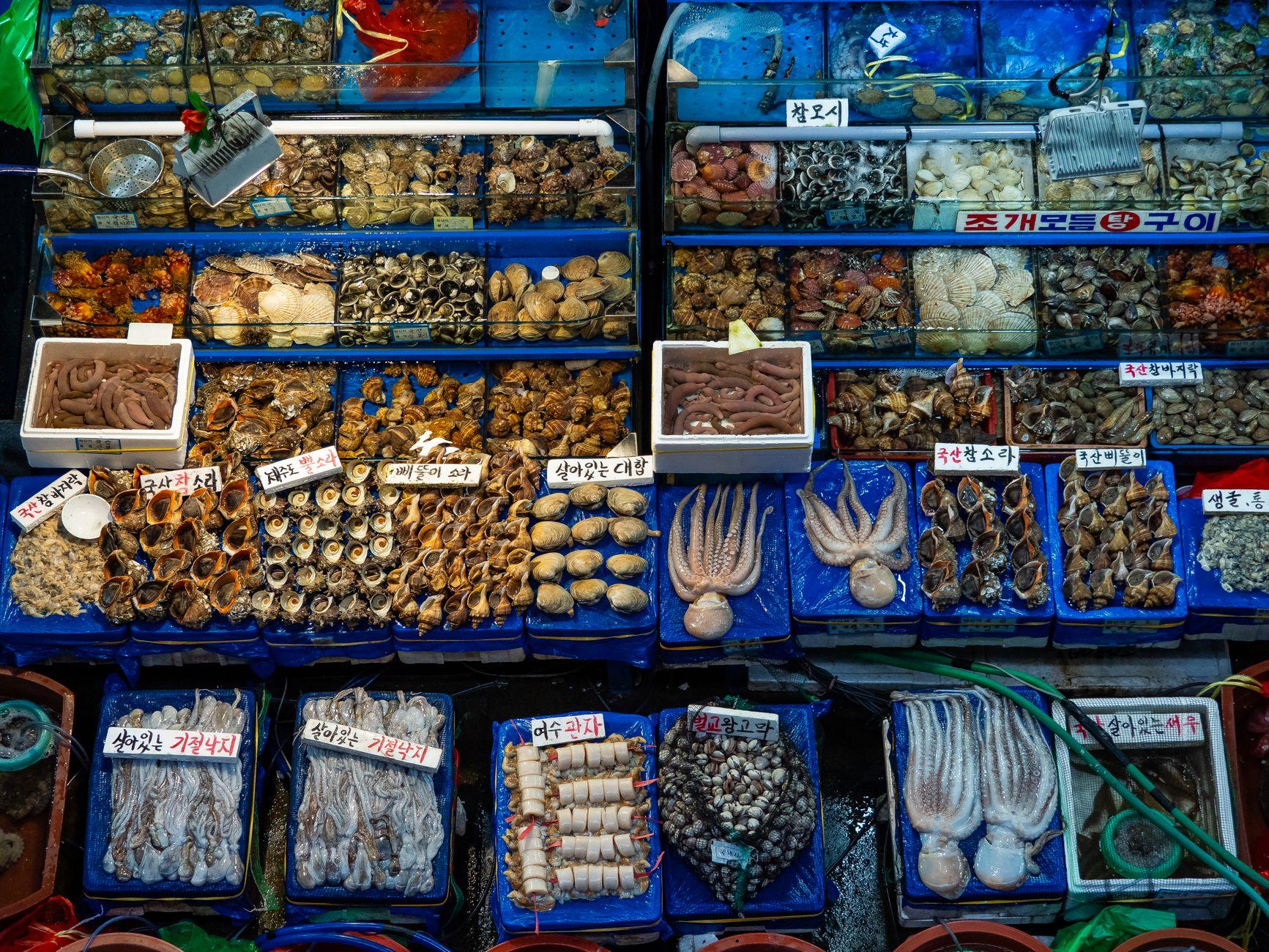
Exactly where the most memorable eating happens. Market stalls in Gwangjang or Mangwon, tiny kimbap and sundae shops with six seats, pojangmacha street tents at night, a grandmother selling hotteok from a cart. These vendors often take local mobile payment or a domestic card, and sometimes cash, but a foreign Visa is a coin flip at best. Travelers who assumed "cashless country, my card is enough" end up watching their friends order a second round of mandu while they hunt for an ATM. This is why it pays to think about which payment network a place actually uses rather than which country you are in, a distinction we have written about in choosing a cashless travel app by network, not country.
How do visitors pay the way locals do, without a Korean phone number?
The practical workaround is a wallet built for exactly this gap. Moreta Pay lets you scan the same merchant QR codes locals scan, review the amount, the exchange rate, and the merchant name on your screen, then confirm. The wallet converts from your home currency and the vendor is paid instantly in won. You top it up before or during the trip from a US bank via Plaid or ACH, a European SEPA transfer, UK Faster Payments, a Canadian e-Transfer, or an international card. No Korean phone verification, no local bank account, no guessing what the conversion cost you, because the rate is shown before you tap confirm.
Do I still need some cash in South Korea?
A little, yes. Keep a modest amount of won for the occasional cash-preferred stall, a temple donation, a countryside bus where your transit card balance ran out, or a vending machine at a jjimjilbang. The mistake is the opposite extreme, landing with a thick envelope of won "just in case" and then spending the trip worrying about it on night trains and in hostel lockers. In 2026 Korea, cash is a backup, not a plan. Withdraw small amounts from a Global ATM at a convenience store or bank when you genuinely need it, rather than front-loading the whole trip.
How do I pay for the subway and buses?
Transit is its own system. Pick up a T-money card at any convenience store, load it with a small amount, and tap in and out on the subway, buses, and even many taxis. Tourists sometimes try to tap a foreign contactless card at the gate and hold up the queue; some gates now accept them, many do not, and T-money is cheaper per ride anyway. Reload at convenience stores or station machines as you go.
What about taxis, and do I tip?
Regular taxis in Seoul and Busan take cards, and the Kakao T app will hail one even if you pay the driver directly at the end. As for tipping, do not. There is no tipping culture in South Korea, not in restaurants, not in taxis, not at hair salons. Leaving extra money can cause confusion or mild embarrassment, and a server may chase you down the street to return it. Travelers raised on North American tipping habits regularly overpay out of pure reflex. The listed price is the full price.
Can I use the same wallet for online bookings?
For the big travel platforms, often yes. QR-based checkout on sites like Trip.com and Agoda means you can pay for a Busan hotel or a KTX-adjacent booking from the same Moreta Pay balance you use at a market stall, instead of exposing your home card to another foreign merchant. One habit worth building either way: lock down your wallet app before the trip. If your phone disappears in a crowded Hongdae bar, your money should not go with it, and we covered what actually happens in how secure a QR payment app is once your phone gets stolen.
So what does a sensible Korea money setup look like?
Three layers. A foreign card with no foreign transaction fees for hotels, chains, and big purchases. A T-money card for every bus and subway ride. And a QR wallet like Moreta Pay for the local-payment-only layer, the market aunties, the hole-in-the-wall naengmyeon place, the late night tent bar, so the most Korean parts of your trip are never the hardest ones to pay for. Set up the wallet and connect your home bank before you board the flight, because airport wifi and jet lag are a bad combination for financial admin. You can get Moreta Pay ready before you land in Korea and walk out of Incheon already able to pay like a local.