
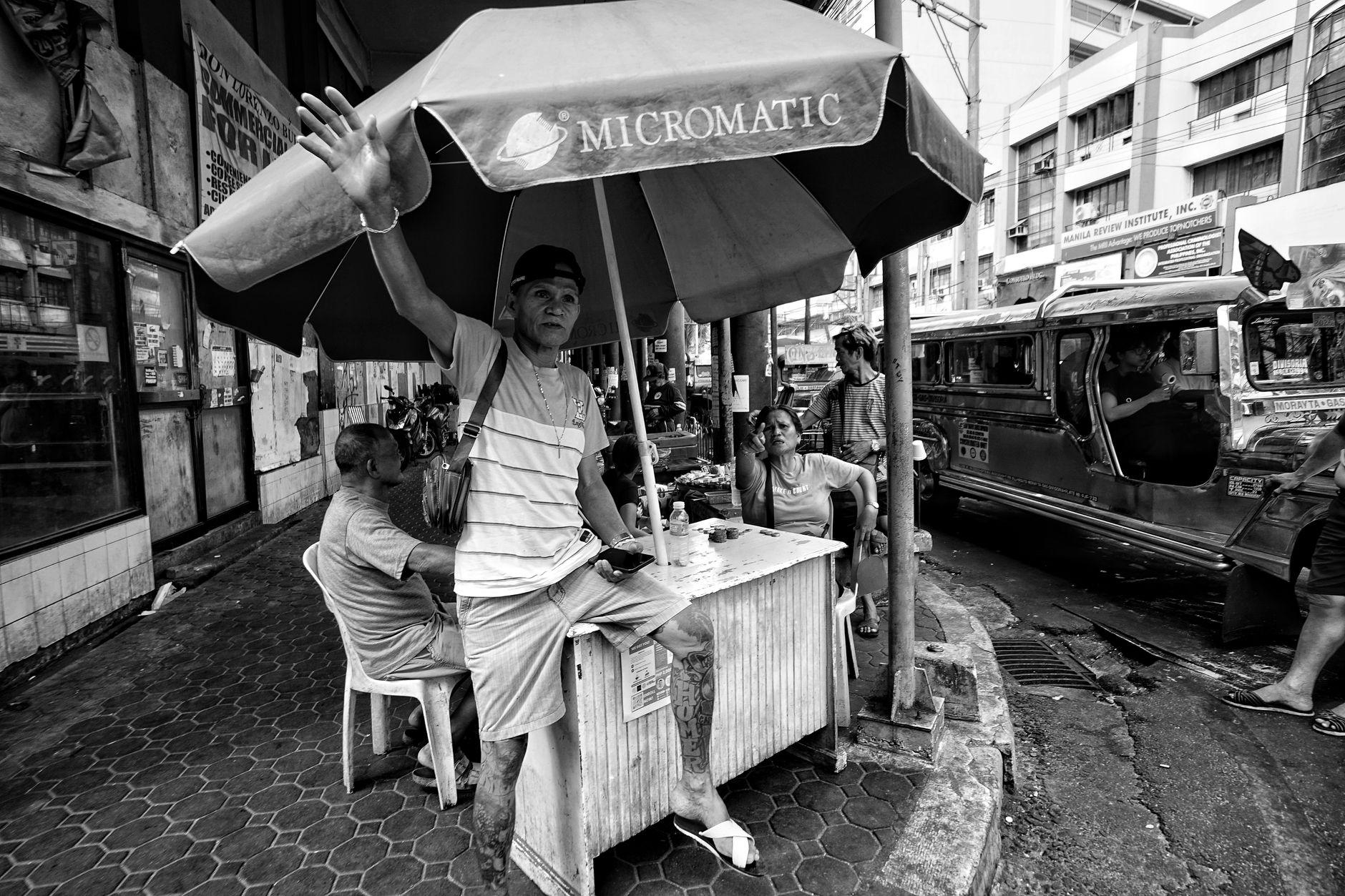
Land in Manila, grab a coffee, and you'll see it within the hour: someone holds up their phone, the cashier nods, done. No card, no cash, no change counted out. That's GCash or Maya, and between them they handle an enormous share of everyday payments in the Philippines.
Then you try to join in, and the door closes. GCash wants a Philippine mobile number to even start registration. Full verification wants a local ID. Maya is similar. A handful of foreign residents with ACR cards get through. A tourist on a two-week trip almost never does.
So here's what actually works in 2026, from the QR system underneath those apps to a realistic plan for Palawan and Siargao, where the nearest working ATM might be a boat ride away.
QR Ph is the part that matters, not the apps
GCash and Maya get all the attention, but the thing taped to the counter is usually a QR Ph code. QR Ph is the Philippines' national QR standard, backed by the central bank, and it's what lets a GCash user pay a merchant whose account sits with Maya, or with a bank like BPI or UnionBank.
This matters for you because QR Ph is interoperable by design. The merchant doesn't care which app scans their code. They care that pesos land in their account instantly. That one sticker works for the sari-sari store, the carinderia, the pharmacy, the Grab driver who prefers QR to cash, and the market vendor weighing your mangoes.
You'll spot QR Ph codes everywhere in Metro Manila, Cebu City, and Davao: convenience stores, mall kiosks, street food stalls, even church donation boxes. The standard itself is national. The coverage is not, and we'll get to that.
Why you can't just download your way in
A quick reality check so you don't waste your first afternoon:
- GCash requires a Philippine SIM to register, and meaningful wallet limits require local ID verification. Buying a tourist SIM gets you past step one, but verification is still a wall for most short-term visitors.
- Maya has the same basic shape: local number, local verification for full use.
- Borrowing a local's account works until it doesn't. You're dependent on their balance, their availability, and awkward math about who owes whom.
This is the same pattern across Southeast Asia. Locals get a brilliant instant-payment system, and visitors stand outside it. It's the exact situation travelers hit in Malaysia with Touch 'n Go, which we broke down question by question, and the answer in the Philippines is the same category of answer: you don't need the local app, you need something that can pay the local QR code.
Scanning QR Ph with a foreign wallet
This is where Moreta Pay fits. You top up a wallet from your own bank at home (US bank via Plaid or ACH, SEPA in Europe, UK Faster Payments, Canadian e-Transfer) or with an international card, in your own currency. In the Philippines, you scan the same QR Ph code every local scans.
The flow at the counter: open the app, scan, check that the merchant name matches the stall you're standing at, see the peso amount and the exchange rate on screen, confirm. The merchant is paid instantly in pesos. From their side, it looks exactly like any other QR Ph payment, which is why it works at a fish stall in Iloilo just as well as at a Makati cafe.
No Philippine SIM, no local bank account, no begging a hotel receptionist to pay for you and handing them cash after. And because the rate shows before you confirm, there's no post-trip surprise on your bank statement.
The island problem, honestly
Here's where you should not get overconfident. The Philippines is 7,000-plus islands, and the payment landscape changes fast once you leave the big cities.
In Metro Manila and Cebu, you could plausibly go days without cash. In El Nido town proper, QR codes are common at restaurants and tour operators. But take a bangka to a smaller island for an overnight stay, and you're back to crumpled bills and a host who's never heard of digital anything. Cash is still king across much of the provinces, full stop.
ATMs make this worse, not better. Island-hopping destinations are famous for machines that are out of cash, offline, or simply don't exist. Travelers in Siargao and Port Barton swap ATM status reports the way people elsewhere discuss the weather. If your whole plan is "I'll withdraw when I get there," you're gambling.
The sane split looks like this:
- Cities and tourist towns: QR first. Pay restaurants, cafes, shops, and tours by scanning. Keep small bills for tricycles and jeepneys.
- Remote islands and provinces: Withdraw cash before you leave the last proper town. Palawan trips mean stocking up in Puerto Princesa or El Nido. Treat that cash as your island budget.
- Everywhere: Carry some pesos regardless. Power cuts and dead mobile signal happen, and no QR system survives either.
We wrote a similar split-strategy plan for Mongolia, where the city scans and the countryside doesn't. The Philippines is less extreme, but the principle holds: the less infrastructure where you're going, the more cash you carry in, and the more QR covers everything else.
Beyond the counter: bookings and bills
QR payments in the Philippines aren't only face to face. Booking platforms and online shops increasingly offer QR as a checkout option. If you're reserving island tours, buying from Shopee or Lazada for delivery to your hotel, or paying on Agoda or Trip.com, a QR checkout can be scanned and paid from your Moreta Pay wallet the same way you'd pay a street vendor.
For longer stays, this gets more useful. Digital nomads and expats settling into Cebu or Dumaguete for a few months can handle recurring payments by QR instead of queueing at a payment center with cash, which is still how a surprising amount of bill paying happens here.
Your first 24 hours, step by step
If you want this working before you've even found your hotel:
- Before you fly, download Moreta Pay and connect your home bank or card. Top up in your own currency so the wallet is ready on landing.
- At the airport, skip the money changer queue for anything beyond a small cash buffer. You don't need a thick stack of pesos anymore.
- First purchase, pick somewhere low stakes. A convenience store or coffee shop with a QR Ph code at the register. Scan, check the name and peso amount, confirm. Thirty seconds and you're a functioning participant in the local payment system.
- Before any island hop, map your cash needs for the days you'll be off-grid and withdraw once, in town, rather than hunting ATMs on arrival.
That's the whole trick. The Philippines built one of the most useful QR systems in Asia, then locked the front door to visitors. You don't need to pick the lock. Set up Moreta Pay before your flight and walk in through the side entrance every local merchant already left open.