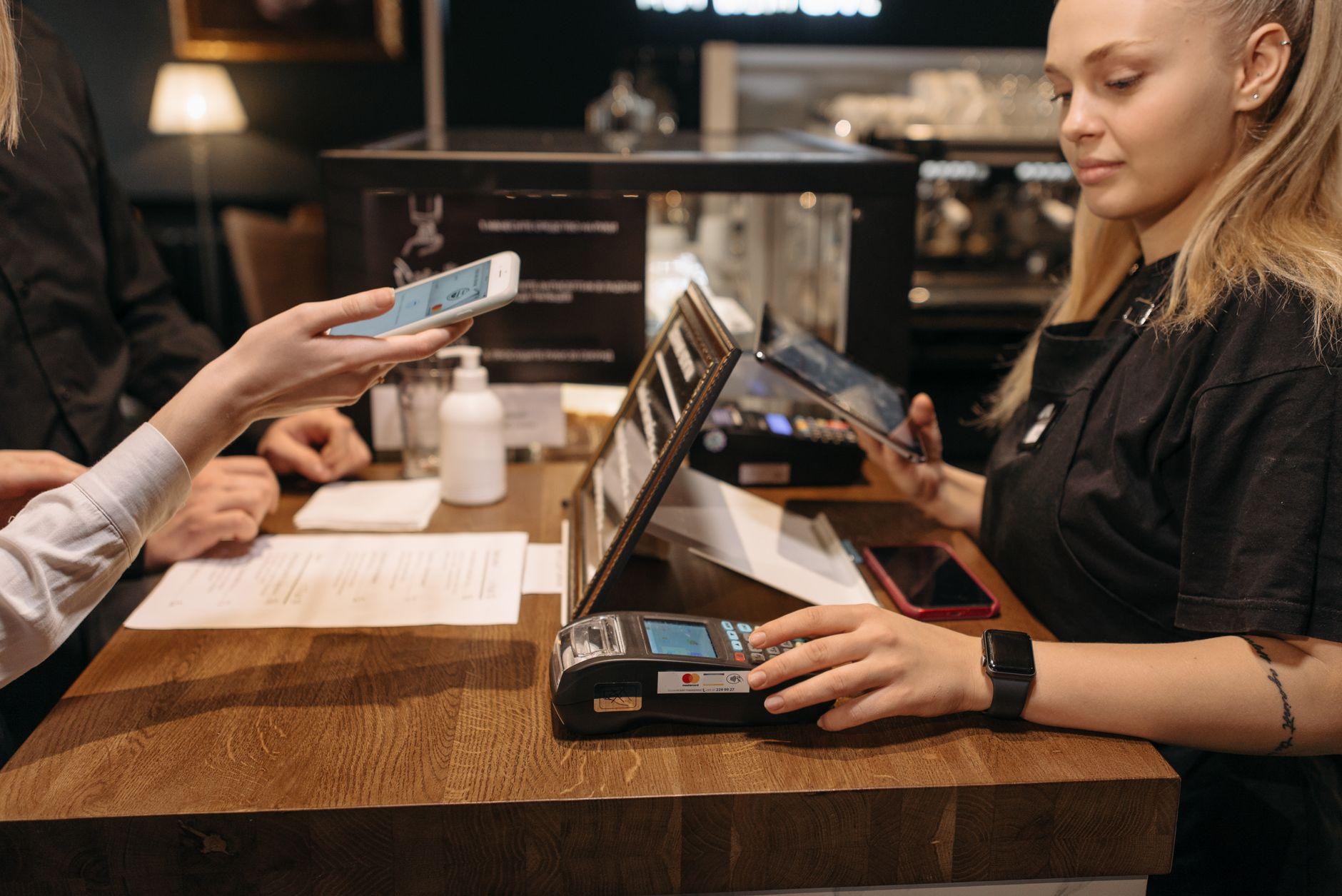

Funding a travel wallet with USDC or USDT means converting a stablecoin balance into a spendable multi-currency wallet before you ever land, so that a Pix payment in São Paulo, a QR code payment in Vietnam, and a purchase in Kuala Lumpur all draw from the same source without a bank wire or a currency exchange counter in between. The mechanism works because stablecoins hold a 1:1 peg to the U.S. dollar, so the wallet provider can convert that balance into local currency at the point of sale rather than requiring you to guess your spending in five currencies before departure [stripe.com]. For a traveler moving through Peru, Malaysia, Brazil, and the Philippines in one trip, that means one funding source instead of four separate cash withdrawals or currency exchanges.
What is a stablecoin, and why use one to fund a travel wallet?
You're standing at a money exchange counter in a shopping mall, waiting for the teller to punch numbers into a calculator to convert dollars to the local currency. USDC and USDT are dollar-pegged stablecoins that let you top up a travel wallet instantly, often on networks like Solana that settle in seconds rather than days [stripe.com]. The two dominant stablecoins by transaction volume, with USDC having overtaken USDT in annual adjusted transaction volume in 2025 at roughly $18.3 trillion processed compared to USDT's $13.3 trillion, out of an estimated $33 trillion in total stablecoin volume that year [reap.global]. For a traveler, the practical appeal isn't the blockchain technology itself. It's that a stablecoin balance can move between wallets and across borders faster than a traditional bank transfer, without the multi-day settlement window that comes with SEPA or Interac e-Transfer.
The mechanism behind cross-border stablecoin payments is straightforward: funds convert into a stablecoin, move across a blockchain network like Solana or Tron, and land in the recipient wallet in seconds rather than days [activantcapital.com]. Think of it the way you'd think of a courier who hand-carries a sealed envelope across a border instead of routing it through five different mail sorting facilities. The envelope's contents don't change value in transit, and it doesn't sit in a queue overnight. That's the entire value of pegging a coin to the dollar: it turns a currency-conversion problem into a delivery-speed problem.
How does a stablecoin top-up actually work for a travel wallet?
Topping up a travel wallet with USDC or USDT follows a predictable sequence: you send stablecoins from an exchange or personal wallet to your travel wallet provider, the provider credits your account balance, and that balance becomes available for spending in whatever currency you need at the point of sale. Building on the peg mechanism above, the practical value shows up in three ways:
- Speed. Stablecoin transfers on networks like Solana settle in seconds, compared to ACH transfers that can take a business day or more to clear.
- Predictability. Because the coin is pegged to the dollar, you know the value arriving at the other end without worrying about a rate moving against you mid-transfer.
- Availability outside banking hours. A stablecoin network doesn't observe weekends or holidays, which matters if you're topping up the night before an early flight.
A related but distinct question is what happens after the stablecoins land in the wallet. Providers handle the crypto-to-fiat conversion at different points in the payment flow.
What is a crypto wallet multi currency setup, and how does it differ from a single-country wallet?
A crypto wallet multi currency setup holds one balance that can convert into multiple local currencies depending on where you're spending, rather than requiring separate wallets or accounts for each country. This matters specifically for a multi-country itinerary. If you're flying from Phnom Penh to Kuala Lumpur to São Paulo in the same month, a single-country wallet forces you to either carry multiple apps or re-fund a wallet every time you cross a border.
Moreta's wallet works this way: you top up once using ACH, SEPA, Faster Payments, Interac e-Transfer, a card, or (outside Thailand, Cambodia, and China) USDC/USDT on Solana, and the balance converts to local currency automatically at the moment you pay, whether that's a VietQR merchant scanning QR codes or a stall in Kuala Lumpur running DuitNow QR. The conversion happens once, at the point of sale, not weeks in advance at a rate that might not hold.
How do stablecoin top-ups compare to funding a wallet from a bank or card?
Funding from a bank or card is the default most travelers already know: link an account via a service like Plaid, or top up with a Visa, Mastercard, or American Express card, and the balance is available immediately in most cases. Stablecoin funding is not a replacement for this, it's an additional rail for travelers who already hold USDC or USDT and want to move it directly into spending power without first converting it to fiat through an exchange.
The honest comparison looks like this:
| Funding method | Settlement speed | Best for |
|---|---|---|
| Bank transfer (ACH, SEPA, Faster Payments, Interac) | Same day to a few business days | Travelers funding from a primary bank account |
| Card top-up (Visa, Mastercard, Amex, Discover, Apple Pay, Google Pay) | Instant | Quick, small top-ups before departure |
| USDC/USDT on Solana | Seconds | Travelers already holding stablecoins who want to avoid a separate cash-out step |
None of these is universally "best." A traveler who doesn't already hold crypto has no reason to buy stablecoins just to fund a wallet. But for someone who already holds USDC or USDT, perhaps from freelance income paid in stablecoins or from an existing crypto position, funding directly avoids an extra conversion to fiat and back.
How does stablecoin funding work with local QR payment networks across countries?
This is where the multi-country use case becomes concrete. Once a stablecoin top-up lands as spendable balance, the wallet needs to work with each country's native QR standard, because that's how most local merchants actually get paid. In practice:
- Vietnam: You scan a VietQR code, the wallet shows you the merchant name, the amount in Vietnamese dong, and the exact exchange rate before you confirm.
- Brazil: You scan a Pix payment QR code, the same instant bank-to-bank rail that Brazilian consumers use daily, and the merchant receives reais without ever touching a card network.
- Malaysia: DuitNow QR works the same way, showing the rate before confirmation so there's no mystery markup after the fact. (Stablecoin funding does not apply in Thailand, Cambodia, or China due to local regulations, though card and bank-transfer top-ups still work there.)
We covered the mechanics of QR standards varying by country in our Malaysia and Cambodia guides, but the funding side is universal for card and bank transfer: however the balance got into the wallet, the payment experience at the counter is identical, except that USDC/USDT funding specifically is not available for spending in Thailand, Cambodia, or China.
What should travelers know before funding a wallet with stablecoins for the first time?
Not every provider handles the crypto-to-fiat conversion the same way, and that difference matters for reliability at the counter. LocalPay, for instance, operates as a non-custodial stablecoin wallet on Solana that lets travelers spend USDT and USDC at ordinary QR merchants by converting crypto to local fiat instantly, and is limited to specific Southeast Asian markets. WanderWallet takes a different approach for Latin America, letting travelers pay via Pix and Mercado Pago using USD or EUR balances without a local bank account, though its coverage is limited to Brazil, Argentina, Colombia, and Bolivia specifically.
Moreta's approach centers on being FinCEN-registered as a Money Services Business, with funds held in custodial accounts at partner banks. For a traveler comparing options, the real question isn't which app has the flashiest crypto branding, it's which one shows the exchange rate before you confirm, and which one is regulated enough that you trust it holding your balance across a three-week, four-country trip.
Frequently Asked Questions
Can I top up a travel wallet with USDT if I only hold USDC?
Most providers that accept stablecoin funding accept both USDC and USDT, since both are widely supported dollar-pegged coins, but confirm with your specific provider which coin and which network (Solana, Tron, Ethereum) they accept before sending funds.
Does converting USDC or USDT to local currency cost more than a card top-up?
Costs depend on the provider's conversion spread and the network fee for moving the stablecoin, so compare the total rate shown at the point of sale rather than assuming crypto is automatically cheaper.
Is a stablecoin top-up faster than a bank transfer?
Generally yes. Stablecoin transfers on networks like Solana settle in seconds, while ACH and similar bank transfers can take a business day or more to clear.
Do I need a crypto wallet multi currency account to travel across Asia and Latin America?
You need a wallet that supports multiple local currencies and QR standards, whether or not it accepts stablecoins as a funding source. Stablecoin support is one funding option, not a requirement for multi-country travel.
Will merchants in Vietnam know I'm paying with a stablecoin-funded wallet?
No. Once the wallet converts your balance to local currency, the merchant sees a normal QR code payment in dong, identical to a payment funded by card or bank transfer.
Is it safe to hold a stablecoin balance in a travel wallet for weeks?
Depends on the provider's custody model. Ask whether the provider holds funds in insured custodial accounts at partner banks or in a non-custodial wallet where you retain the private keys.
About Moreta
Moreta Global Inc. is a Delaware corporation, FinCEN-registered Money Services Business, and Y Combinator-backed fintech (Summer 2024 batch) built for travelers spending across Asia and Latin America's local QR payment networks. The wallet supports funding via ACH, SEPA, Faster Payments, Interac e-Transfer, major card networks, Apple Pay, Google Pay, and (outside Thailand, Cambodia, and China) USDC/USDT on Solana, then converts that balance to local currency at the exact moment of payment, whether that's VietQR in Vietnam, KHQR in Cambodia, DuitNow QR in Malaysia, or Pix in Brazil. Every payment shows the merchant name, amount, and exact exchange rate before you confirm, so there's no guessing what a purchase actually costs in dollar terms. Funds are held in custodial accounts with pass-through insurance.
Travelers can fund their Moreta wallet with Apple Pay or Google Pay and spend abroad through local QR networks like VietQR, KHQR, DuitNow QR, or Pix.
Planning a trip across multiple countries and want one wallet that works with local QR networks from Phnom Penh to São Paulo? Learn more at Moreta.