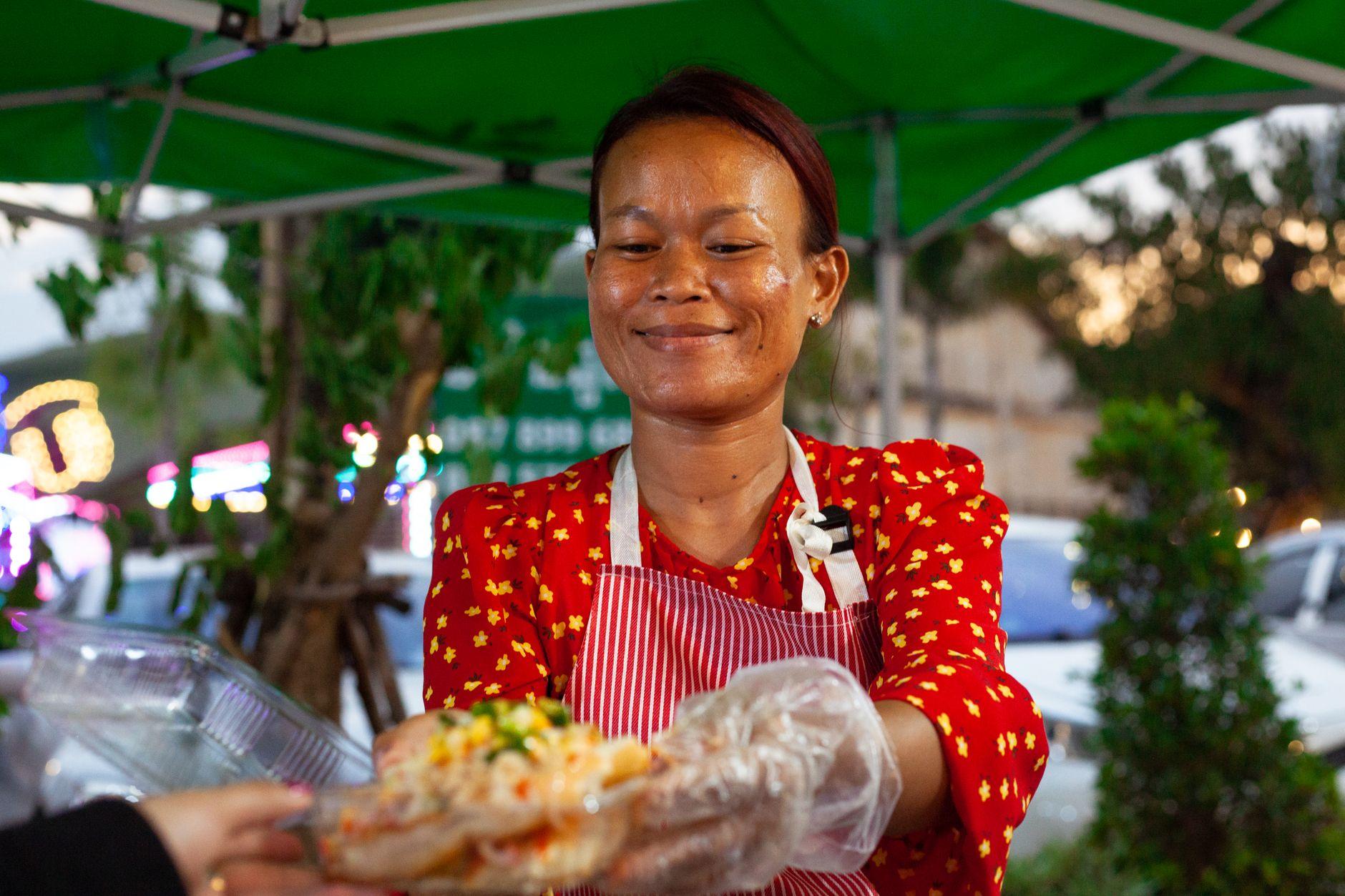


A woman at a Kampung Baru nasi lemak stall waves her phone at a sticker taped to the glass counter, and the transaction is done before she has even picked up her tray. The tourist behind her fumbles for cash, gets waved off by the vendor, and is told, somewhat apologetically, to find an ATM down the street. That gap, between the local who scans and the visitor who can't, is the entire story of QR code payment in Malaysia today. DuitNow QR is the country's interoperable national standard, built by PayNet on the EMVCo merchant-presented QR specification, and it now reaches more than three million registered touchpoints nationwide, from hawker stalls to shopping malls. Foreign travelers can't open a DuitNow-linked bank account on a two-week visa, but several apps now let them scan the same QR code anyway, each with different fees, funding methods, and exchange rate treatment. This guide breaks down the real options.
What is DuitNow QR and why can't tourists just use it?
DuitNow QR is Malaysia's official National QR Standard, established by PayNet and based on the EMVCo merchant-presented QR specification. It is not a single app or wallet. It is the plumbing underneath dozens of Malaysian banking apps and e-wallets, meaning a merchant displays one QR sticker and can accept payment from any participating institution. Around 50 banks, e-wallets and payment providers plug into this one network, and Bank Negara Malaysia's Interoperable Fund Transfer Framework, issued in June 2026, requires banks and e-wallets to phase out their own proprietary QR networks and move to DuitNow QR by 30 June 2028 [ringgitplus.com].
The catch for visitors is straightforward: most of those apps require a Malaysian bank account, a local phone number, or a MyKad national ID to sign up. A tourist landing at KLIA with a foreign passport and a foreign SIM card is, by default, locked out of the rails that every hawker stall and mamak counter already runs on. Southeast Asia's digital payments passed 1.1 trillion USD in transaction value in 2024, according to Google, Temasek and Bain's e-Conomy SEA report, and about two-thirds of Malaysians use QR codes every month, second only to China, according to DataReportal. The infrastructure is everywhere. Access to it, for a foreigner, is not automatic.
What apps let foreign travelers scan DuitNow QR codes?
A handful of apps have built specific pathways for non-resident access, and they fall into three categories: regional wallet partnerships, dedicated tourist apps, and global multi-country wallets.
| App type | Example | How it works for foreigners | Main limitation |
|---|---|---|---|
| Malaysian e-wallet, opened to visitors | Touch 'n Go eWallet | Since May 2025, visitors can register with a passport, a selfie and their own foreign phone number, top up with a home card, and scan DuitNow QR | Open to passports from nine ASEAN countries only so far; card top-ups carry a fee |
| Cross-border QR linkage | Bakong app (Cambodian riel accounts) | Cambodians with riel accounts scan DuitNow QR in Malaysia, settled in ringgit | Only for holders of a Cambodian account |
| Dedicated visitor app | MY TouristPay | Launched by PayNet in 2023: add a Visa or Mastercard to the app, then scan DuitNow QR | Malaysia only; check the app stores for current availability before you rely on it |
| Global multi-country wallet | Moreta | Top up from a home bank or card, then scan DuitNow QR the same way a local does, with the rate and fee shown before you confirm | A one-time passport and selfie check before you travel |
The common thread across these options is that none of them require a Malaysian bank account. Touch 'n Go opening its eWallet to visitors from nine ASEAN countries in 2025 was a meaningful step [lowyat.net], and the Cambodia-Malaysia QR linkage, live since September 2024, shows regulators are actively building cross-border QR interoperability rather than treating it as a one-country problem [cambodianess.com]. For a traveler from outside ASEAN, though, the local options mostly close, and the practical question becomes which of the remaining apps works with your passport and what each one actually costs you at the point of sale.
How does a malaysia e-wallet for foreigners actually work at checkout?
Building on the access problem above, the mechanism matters more than the branding. A malaysia e-wallet for foreigners that works properly follows the same basic sequence regardless of which app you use:
- Load funds into the app from your home bank, debit card, or credit card, in your home currency.
- Open the app at the merchant counter and select scan.
- Point your camera at the same DuitNow QR sticker or screen prompt every local customer uses.
- Confirm the merchant name, the amount in ringgit, and the exchange rate applied, before you approve.
- The merchant receives instant settlement in ringgit, while your balance is debited in your home currency.
Step four is where most travelers lose money without noticing. Some apps apply the conversion silently in the background with a wider margin baked in, rather than showing you the rate up front. A wallet that displays the exact rate before you tap confirm is functionally no different from one that hides it, except that you can actually see what you're paying. That transparency is the entire point of comparing apps rather than grabbing whichever one ranks first in the app store.
Which app gives you the best exchange rate malaysia travelers can get?
A related but distinct question from app availability is cost, and this is where most comparisons go wrong by looking only at headline fees. Wise converts at the mid-market rate with a disclosed fee, and Revolut uses the interbank rate on weekdays up to a monthly allowance, with no foreign transaction fee on card purchases, which makes both genuinely competitive for point-of-sale spending. Cash withdrawal is where costs creep in: Wise and Revolut both apply tiered monthly limits on free ATM withdrawals, after which additional withdrawal fees kick in. Travelers should also be aware that their own home bank may separately charge a fee for withdrawing cash overseas, depending on the cardholder's bank and account type. None of that changes if you avoid ATMs entirely and scan DuitNow QR directly instead, since there's no cash machine withdrawal fee in the chain at all.
Moreta's model sits in that cashless lane: fund the wallet from a US bank account linked through Plaid, SEPA, UK Faster Payments, Canadian Interac e-Transfer, Australian PayID, cards, Apple Pay, Google Pay, or USDC, then pay at the DuitNow QR code with the live rate and one 1.5% fee displayed before you confirm. In Malaysia a single payment can be up to 12,000 MYR and a week's payments up to 24,000 MYR. For travelers comparing exchange rate malaysia options, the math worth doing is total landed cost per transaction, including any card network fee, any wallet margin, and any withdrawal fee, not just the advertised headline rate. The rate comparison puts those side by side.
Is cash still necessary anywhere in Malaysia?
Yes, though less than you might expect. Malaysia's highway tolls went cashless in 2017 and street parking in Selangor is paid by app, so the places that still want notes are the small ones: some wet market stalls in towns outside the Klang Valley, temple donation boxes, and older vendors who never set up a QR code. Keep roughly RM50 to RM100 in small denominations as a reserve, particularly if you're heading beyond Kuala Lumpur, Penang, or Johor Bahru into more rural stretches where small-business adoption of DuitNow QR, while growing fast, hasn't reached full saturation yet.
Frequently Asked Questions
Can tourists get a Malaysian e-wallet without a local bank account?
Generally no for most domestic apps, which require a MyKad ID or a Malaysian bank link. Touch 'n Go eWallet has opened registration to visitors with passports from nine ASEAN countries [lowyat.net], and multi-country wallets like Moreta bypass the local-account requirement entirely by funding from a foreign bank or card.
Does DuitNow QR work the same at every merchant?
Yes. Because DuitNow is a single interoperable standard rather than separate closed-loop systems, the same QR sticker works whether the merchant's bank is Maybank, CIMB, or any of the other participating institutions, around 50 in all.
Is scanning DuitNow QR cheaper than withdrawing cash?
Usually. ATM withdrawals through apps like Wise or Revolut can still trigger additional costs once you exceed the free monthly withdrawal allowance, and your home bank may add its own overseas withdrawal fee on top. Scanning QR directly from a wallet balance skips that withdrawal fee chain.
Will DuitNow QR replace other QR systems in Malaysia?
Bank Negara Malaysia's Interoperable Fund Transfer Framework requires banks and e-wallets to phase out their proprietary QR networks and move to DuitNow QR by 30 June 2028, so the answer is effectively yes, on a set regulatory timeline.
Can I use my home credit card directly at a DuitNow QR terminal?
Not directly by tapping the card. You need an app, whether a dedicated tourist app, a regional wallet, or a global wallet like Moreta, that loads funds from the card and then performs the QR scan on your behalf.
About Moreta
Moreta Global Inc. is a Delaware corporation and FinCEN-registered Money Services Business, backed by Y Combinator (Summer 2024 batch). The Moreta Pay wallet lets travelers top up from a US bank account linked through Plaid, SEPA, UK Faster Payments, Canadian Interac e-Transfer, Australian PayID, cards, Apple Pay, Google Pay, or USDC, then scan the same local QR codes residents use, including DuitNow QR in Malaysia, KHQR in Cambodia, VietQR in Vietnam, QR Ph in the Philippines and Pix in Brazil, with the live rate and one 1.5% fee shown before every payment. Money added with crypto can't be spent in Thailand, Cambodia or China. Identity is checked by Persona with a passport scan and a selfie, bank links go through Plaid, funds are held with licensed partner banks, and transactions are monitored around the clock with real-time alerts on your account.
Before you land in Kuala Lumpur, set up your funding method, confirm your target markets are supported, and check the live rate comparison against your usual card. Visit Moreta to see how it works before you board.
References
- 8.44 billion transactions processed in 2025 as digital payments become Malaysians' preferred way to pay | PayNet (paynet.my)
- Bank Negara phases out proprietary QR payment networks by June 2028 | RinggitPlus (ringgitplus.com)
- TNG eWallet now lets tourists sign up with their own phone number | Lowyat.NET (lowyat.net)
- Riel Account Holders Can Make QR Payments in Malaysia (cambodianess.com)
- MY TouristPay App Revolutionizes Payment Experience for International Visitors in Malaysia | VSDaily (vsdaily.com)