
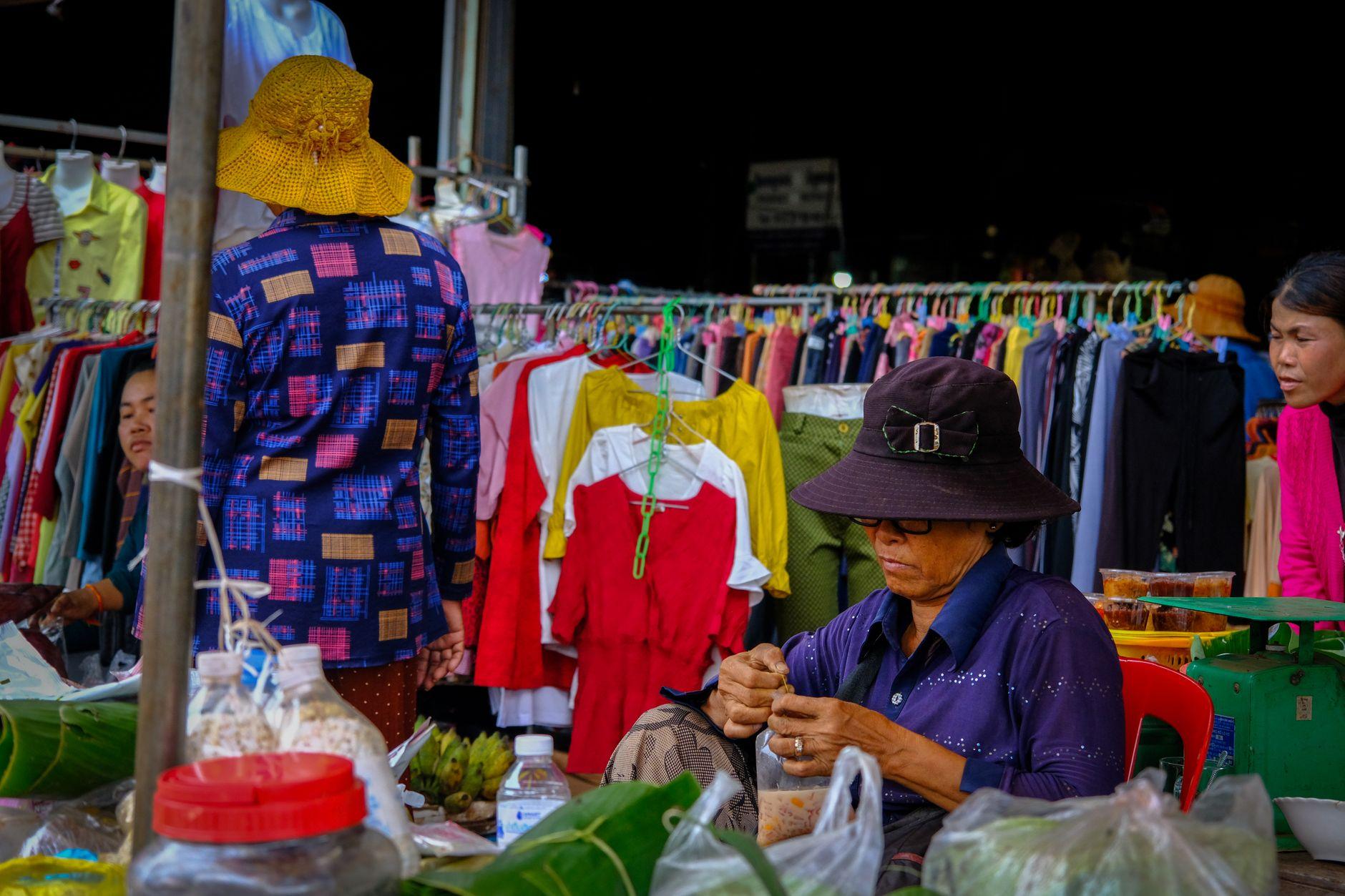
You're standing at a num banh chok stall near Phnom Penh's Russian Market. The vendor tells you the price, you hand over a US five dollar bill, and you get back a small stack of riel notes in denominations you've never seen before. You do the math in your head, get it wrong, smile, and walk away hoping it worked out. This happens to almost every first-time visitor, because Cambodia runs on two currencies at once and the smallest transactions are exactly where that gets confusing.
So what's the smartest way to pay for street food and market shopping in Cambodia in 2026? Let's weigh the real options honestly, because each one has a case, and the answer isn't the same for every traveler.
First, understand the two-currency thing
Cambodia uses US dollars and Cambodian riel side by side. Bigger amounts are usually quoted in dollars, small amounts in riel, and change under a dollar almost always comes back in riel. At a market stall, that means every cash transaction involves a mental conversion, a handful of riel notes, and a vendor who may not have change for your twenty. It's manageable, but it's constant, and it's most annoying at exactly the places you'll visit most: food carts, fruit stands, tuk tuk drivers, market vendors. We've covered the dual currency system in depth in our guide to managing Cambodia's two currencies day to day, so here we'll focus on how it plays out at the stall level.
Option one: cash, the default that fights back
Cash works everywhere in Cambodia. That's its entire pitch, and it's a strong one. The most remote provincial market, the grilled banana lady with no signage of any kind, the ice coffee cart at 6am: cash always works.
But the friction is real. Vendors are picky about US bills, and a torn, worn, or heavily creased dollar note can be politely refused. You need small denominations constantly, because breaking a fifty at a stall selling skewers is a nonstarter. Change comes back in riel whether you asked for it or not, so by day three you're carrying a wad of low-value notes you keep forgetting to spend. And restocking cash means ATM runs, where foreign cards typically face withdrawal fees on top of whatever your home bank charges. Cash is reliable. It is not pleasant.
Option two: your foreign card, which the market has never heard of
Your Visa or Mastercard is genuinely useful in Cambodia, just not here. Hotels, malls, nicer restaurants in Phnom Penh and Siem Reap, and supermarket chains take cards. Street stalls and traditional market vendors do not. There's no terminal, there's no tap-to-pay reader, and there isn't going to be one, because a family-run noodle stall has no reason to pay for card acceptance when everyone around them uses something better.
Add foreign transaction fees and dynamic currency conversion tricks at the places that do take cards, and the honest verdict is: keep the card for your hotel, forget it for the market.
Option three: local wallets, brilliant and mostly out of reach
Here's what makes Cambodia quietly impressive. The National Bank of Cambodia built Bakong, an interbank payment system, and KHQR is its standard QR code. Walk through any market in Phnom Penh, Siem Reap, Battambang, or Kampot and you'll see the KHQR sticker taped to stalls that look like they predate electricity. Locals scan it with ABA Mobile, Wing, ACLEDA, and other bank apps, and the money moves instantly. No change, no currency debate, no worn-bill inspection. The vendor's phone chimes and the transaction is done.
The catch for visitors: opening one of these accounts generally requires a local phone number and local documentation. If you're an expat settling in for a year, it's worth the paperwork. If you're in Cambodia for two weeks, or even two months, you're effectively locked out of the payment system the entire country actually uses. It's a similar story to what we found with street food payments in Thailand: the local QR system is excellent, and it wasn't built with tourists in mind.
Option four: scanning KHQR without a Cambodian bank account
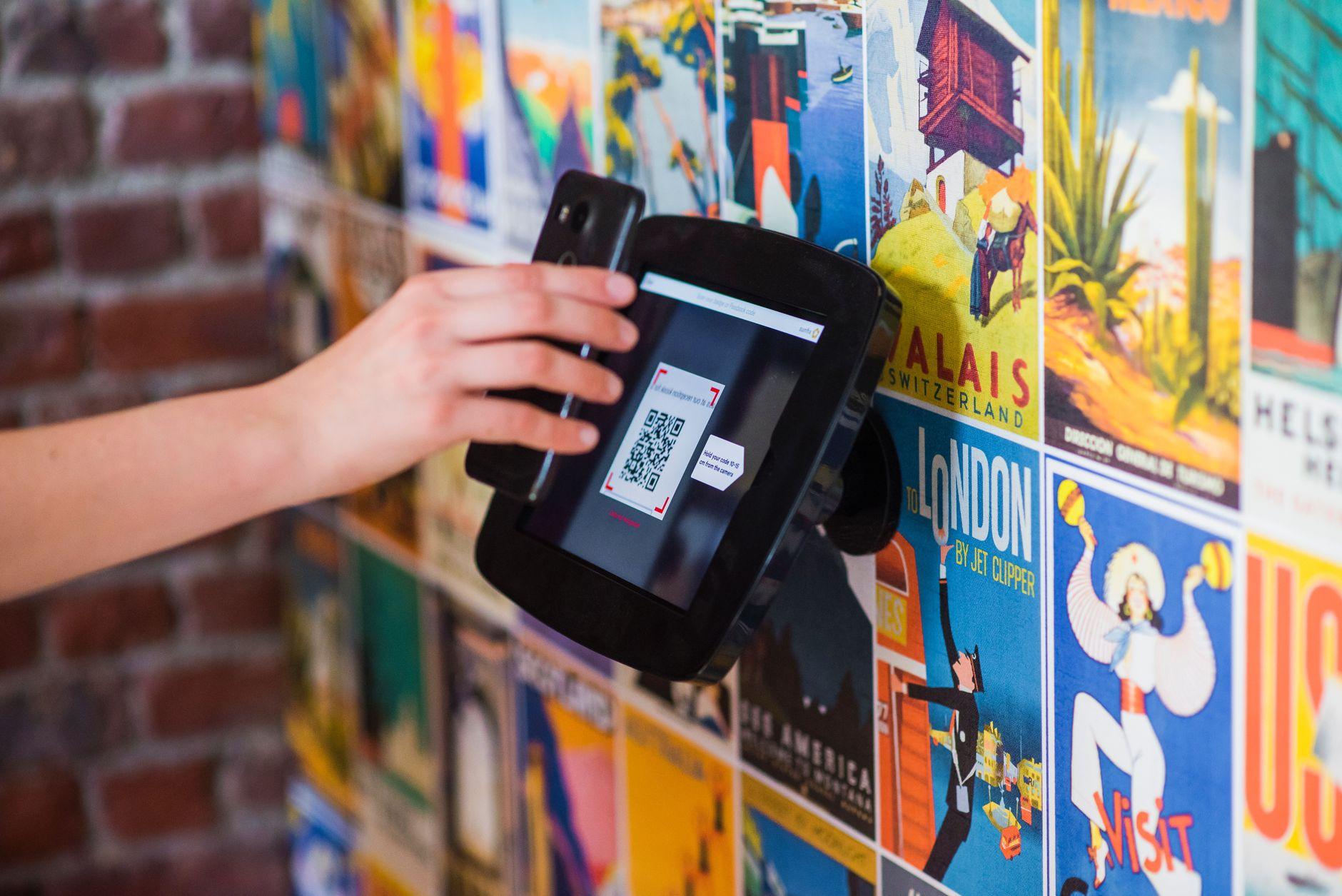
This is where Moreta Pay changes the comparison. It's a wallet you top up from home, from a US bank via Plaid or ACH, a European SEPA account, UK Faster Payments, Canadian e-Transfer, or an international card, and it lets you scan the exact same KHQR codes locals scan. At the stall, you point your camera at the sticker, see the amount, the merchant name, and the exchange rate on screen, confirm, and the vendor gets paid instantly in local currency.
Notice what disappears from the earlier list of problems. No riel change to count or lose. No debate about whether your dollar bill is acceptable. No mental math between two currencies, because the app shows you exactly what you're paying in your own currency before you confirm. No ATM runs. The dual currency confusion that defines cash payments in Cambodia simply doesn't apply to a QR payment, because the amount is the amount.
The honest limitation: you still need a data connection to scan, and the vendor needs a KHQR code, which nearly all market vendors in towns and cities now have, but a roadside stall deep in a rural province might not.
How this plays out over an actual market morning
Picture a morning at Phsar Chas in Siem Reap. Coffee from a cart, a plate of bai sach chrouk, some rambutans, a scarf you didn't plan to buy. With cash, that's four rounds of small-bill negotiation and a pocket filling with riel. With a card, it's zero transactions completed. With a local wallet, it's effortless, if you happen to have spent a week acquiring one. With Moreta Pay, it's four scans, four confirmations, and your wallet balance quietly doing the conversion each time while you eat.
The same logic extends beyond the market. KHQR shows up at pharmacies, minimarts, laundries, and tuk tuk drivers who've printed their code, and QR-based checkout works on platforms like Agoda and Trip.com when you're booking the next leg of your trip.
What to actually carry in Cambodia
The conclusion that emerges isn't cash versus digital. It's a small cash float plus QR for everything else. Keep some small riel notes and a few crisp low-denomination dollars for the rare stall without a code and for rural day trips. Pay everything else by scanning KHQR, which is what the locals around you are doing anyway. You'll eat more, haggle less over change, and stop performing currency arithmetic over a bowl of kuy teav.
Set up Moreta Pay before you land, top up in your own currency, and that red KHQR sticker on the noodle cart stops being a locals-only club and starts being how you pay for lunch.