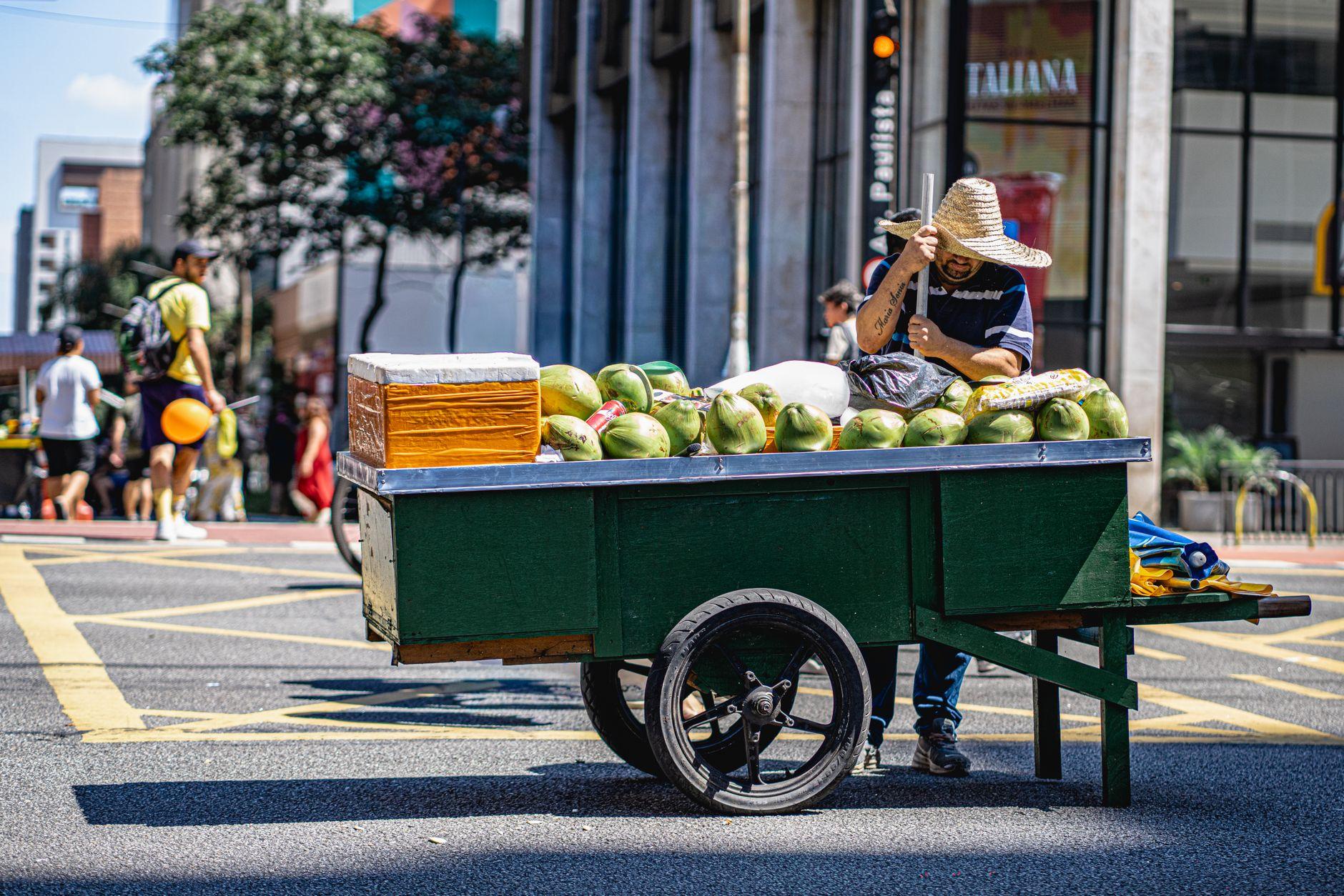

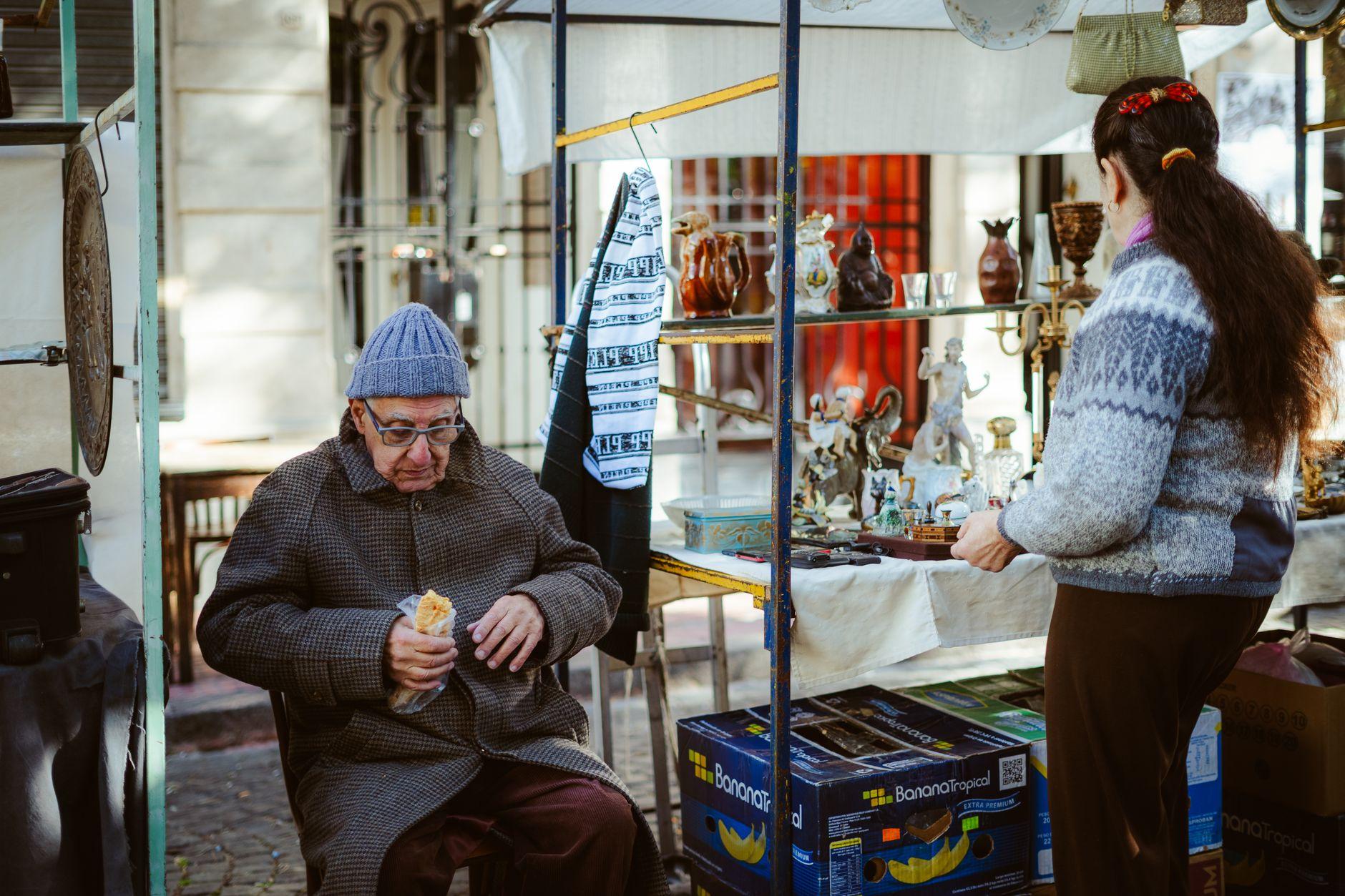
Stand at a choripán cart in Buenos Aires for ten minutes and you will watch a small economics lecture play out. One customer peels notes off a thick fold of pesos. The next taps their phone at a laminated QR code taped to the chimichurri jar. A tourist behind them holds out a foreign credit card and gets a polite shrug. All three are trying to pay for the same sandwich, and the gap between their experiences is wider in Argentina than almost anywhere else travelers go.
So let's do this properly. If you're wondering how to pay in Argentina at street food stalls, ferias, and markets, there are four realistic options. Each one has real advantages and real problems. Here they are, honestly weighed.
Option one: cash, the traditional answer with a modern problem
For years the advice for Argentina was simple: bring US dollars, exchange them locally, pay cash for everything. The parallel exchange rate made cash dollars dramatically more valuable than anything running through official banking channels, and vendors loved cash anyway.
Parts of that are still true. Cash is accepted absolutely everywhere, from the Feria de Mataderos to the smallest empanada window in Salta. No vendor will ever refuse it, and at flea markets it remains the language of haggling.
But inflation has turned cash into a logistics exercise. Prices in pesos are large numbers, which means even a modest market lunch can require a visible stack of notes. Travelers end up carrying a brick of currency, counting it in public at a crowded stall, and recounting change while the queue grows behind them. There's also the exchange problem itself: the gap between the official rate and other rates shifts, the best way to convert dollars changes depending on the month, and getting it wrong means quietly overpaying for everything. Add the security angle of walking through a packed Sunday feria in San Telmo with a week's budget in your pocket, and cash starts looking less like freedom and more like homework.
Cash verdict: universally accepted, essential as a backup, increasingly annoying as a primary method.
Option two: your foreign card, better than it was, still not for street food
Foreign cards in Argentina have improved. Card payments for visitors are now typically settled at a more favorable rate than the old official rate, which removed the worst of the historical penalty. In restaurants, supermarkets, and hotels, paying with a foreign card is now a reasonable choice.
The catch is where this article lives: street food stalls and markets. The choripán cart does not have a card terminal. The woman selling tortas fritas at the feria does not have one either. Small vendors in Argentina skipped card machines almost entirely and went straight to QR codes, because a printed QR costs nothing and a terminal does not. Your card also exposes you to whatever foreign transaction fees your bank charges, and the rate you actually received only becomes clear days later on your statement. In a country where travelers are already confused about which exchange rate applies to what, that opacity stings. There's also the quieter risk of handing a physical card around busy markets, which we've written about before in our comparison of what a skimmer or pickpocket can take from a card versus a QR wallet.
Card verdict: fine for sit-down meals and big shops, nearly useless at the stalls this article is about.
Option three: local wallets, the system everyone around you is using
Here is what Argentines actually do. They pay with Mercado Pago or MODO, scanning interoperable QR codes that work across apps thanks to the country's Transferencias 3.0 framework. This is why that laminated QR code is taped to nearly every market stall, parrilla cart, and verdulería in the country: one code, every local wallet, instant settlement, no cash counting.
It is genuinely excellent infrastructure. If you crossed into Argentina overland you may have noticed the pattern repeating across the continent, something we traced in our guide to how payments change between Peru, Bolivia, and Argentina. The problem for visitors is the front door. Mercado Pago and MODO are built for residents: they generally expect local identification and a local bank account or local funding. A traveler on a two-week trip, or even a nomad settling in for a Buenos Aires winter, usually cannot just download the app and start paying the way locals do.
Local wallet verdict: the best payment experience in the country, mostly locked to people who live there.
Option four: a travel wallet that speaks the local QR language
This is the gap Moreta Pay was built for. You top up the wallet from your own bank at home (a US account via Plaid or ACH, SEPA in Europe, UK Faster Payments, Canadian e-Transfer) or with an international card, in your own currency. At the stall, you scan the same standard QR code the locals scan. Before you confirm, the app shows you the amount, the merchant name, and the exact FX rate being applied. You approve, the conversion happens at that moment, and the vendor is paid instantly in pesos, exactly as if a Mercado Pago user had paid.
For Argentina specifically, two things matter here. First, you get into the QR ecosystem without a local bank account, which solves the access problem of option three. Second, you see the rate before you pay, which solves the confusion problem of options one and two. No wondering whether you converted your dollars well this week, no waiting for a card statement to learn what rate you got. The number is on the screen before your thumb hits confirm.
The honest limitation: like any digital method, it depends on the stall having a QR code (most do, but not all, especially in rural areas) and on you having signal. Argentina without cash entirely is not realistic yet, and anyone who tells you otherwise has not tried to buy a bus-stop empanada in a dead zone.
How this actually plays out at the feria
Put it together and a sensible setup for a market day in Argentina looks like this. Carry a modest amount of pesos, enough for the stray cash-only vendor and small tips, not a brick. Keep your foreign card for restaurants and anything with a terminal. And for the stalls, the ferias, the choripán carts, and the artisan stands with a QR taped to the table, scan with Moreta Pay and pay the way the person in front of you just did.
The pattern that emerges from the comparison is not that one method wins everything. It's that Argentina's street economy already chose QR, and the only question is whether you can join it. Residents join through Mercado Pago and MODO. Visitors join through a wallet that accepts their home bank and speaks the same QR standard on the other end.
Your first feria is more fun when you're watching the grill instead of counting notes. Set up Moreta Pay before you land in Argentina and scan the same codes the porteños do.