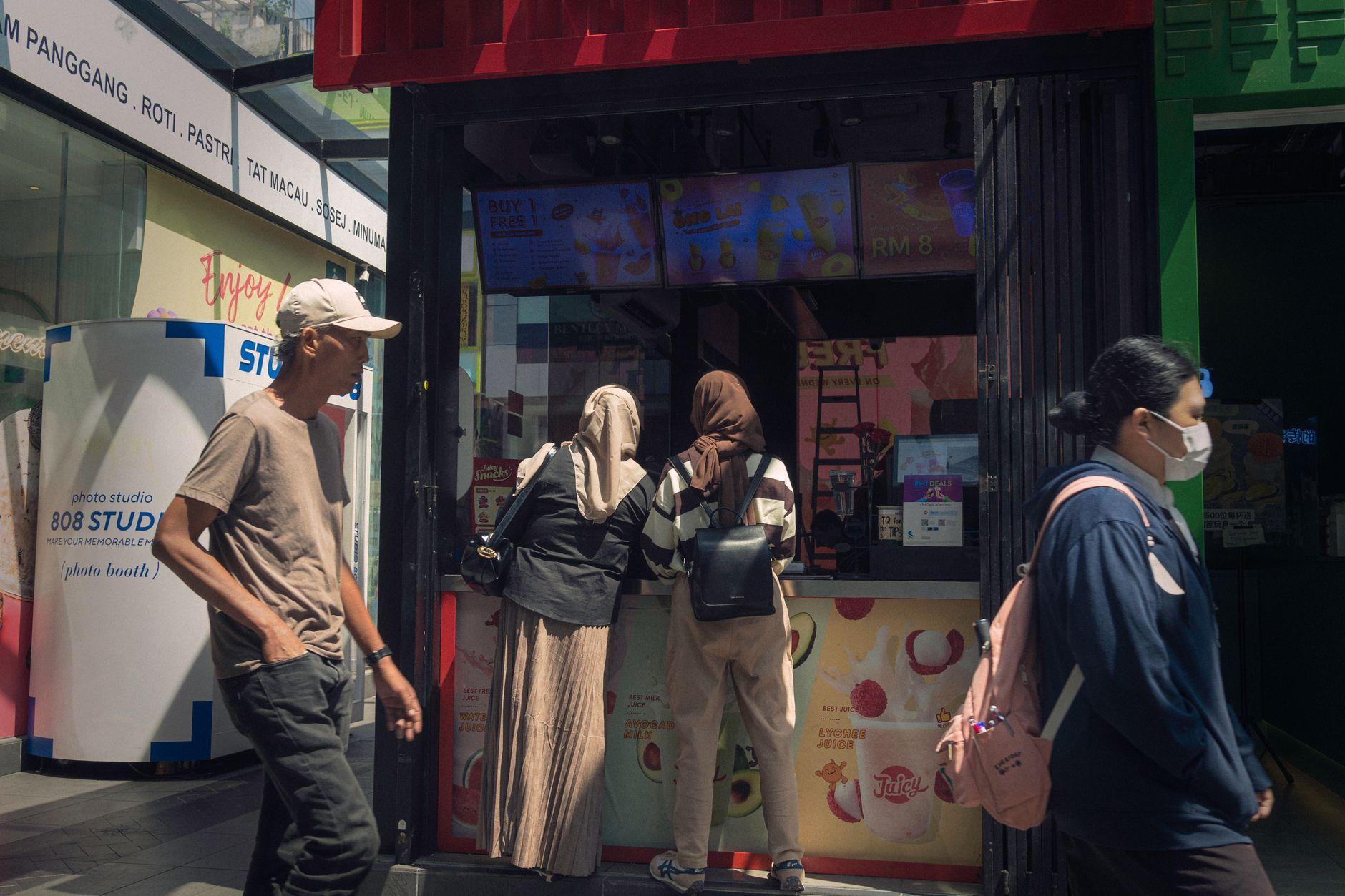

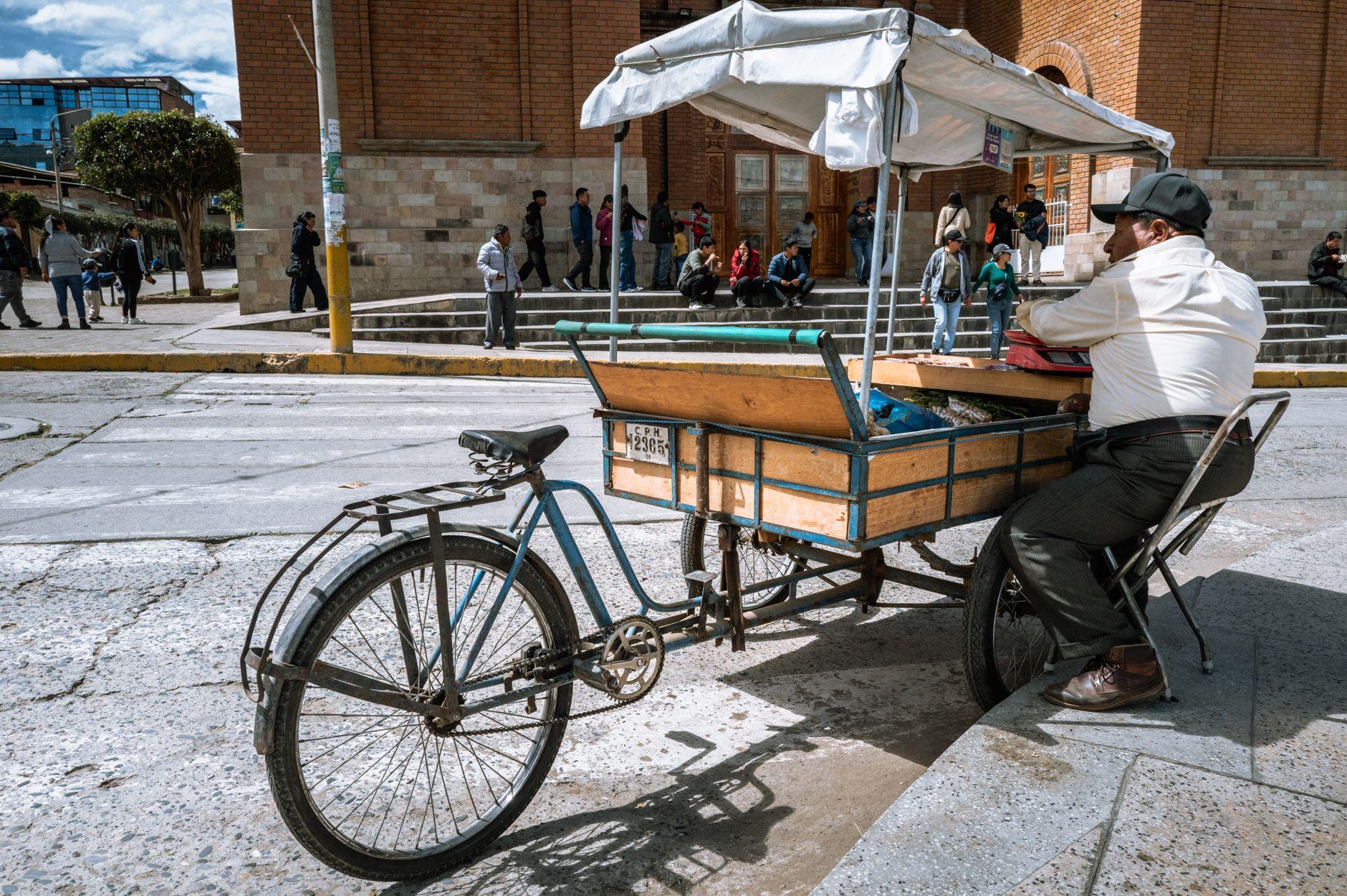
At a juice stand in Mercado de Surquillo, the woman behind the blender taps a purple laminated card instead of the coin tray. A Lima regular scans it, and her phone buzzes before the papaya hits the blades. On an overland trip from Lima to La Paz to Buenos Aires, that QR code taped to the counter looks almost the same in all three countries. The network behind it changes at every border. Peru runs on Yape and Plin, Bolivia on QR BCB, and Argentina on Transferencias 3.0. All three are domestic rails built for local bank accounts and local phone numbers, so a visitor cannot simply join them. Moreta Pay connects to all three from one wallet funded in your home currency. That turns this route into one payments problem instead of three. The money you lose on this route mostly goes at the borders, when travelers convert leftover cash a second time.
How do QR payments work in Peru, Bolivia, and Argentina?
You can see the core of this route at that Surquillo juice stand. The scan, the buzz, the papaya in the blender. Done.
That buzz is an instant bank-to-bank transfer. The same thing happens at a salteña counter in La Paz and a kiosco in Palermo.
- Peru: Yape and Plin. The Banco Central de Reserva del Perú (BCRP) required the two wallets to become interoperable by April 2023.
- Bolivia: QR BCB. All providers support one standard QR system for payments across the country.
- Argentina: Transferencias 3.0. Any wallet or bank app can pay any QR in the market, whether the sticker says Mercado Pago, MODO or Cuenta DNI.
Why can't a tourist just download Yape or Mercado Pago?
The shared technical standard does not make these rails open to visitors. Each one is domestic by design and expects a local bank account and phone number. A foreign app cannot pay a local QR code unless a cross-border gateway routes the payment.
Think of it like a phone network without roaming. Your home SIM works perfectly at home, but a tower abroad won't connect it unless a carrier has a roaming agreement. A cross-border gateway plays the role of that roaming agreement for QR payments.
This also explains why searches like "revolut peru" or "wise bolivia" don't fully answer the question at the stall. Those searches are mostly about cards and ATM withdrawals. Card networks and domestic QR rails are separate systems.
What changes when you cross from Peru into Bolivia?
The first border is where most of the cash waste happens. At Kasani, past Copacabana on Lake Titicaca, or at Desaguadero, moneychangers will turn your leftover soles into bolivianos. You already paid one spread when you bought those soles. Selling them now costs you a second spread. The cheapest way to convert soles to bolivianos is to arrive with very few soles.
You will also see the term bolivia blue dollar. It borrows from Argentina's dólar blue and refers to an informal cash rate set on the street rather than by a bank. Street rates move daily, so this guide doesn't quote one.
In La Paz, QR BCB codes hang at counters in Sopocachi and around Mercado Lanza. Some travelers skip the long Puno bus legs and fly instead.
What changes at the Bolivia Argentina border?
The second border follows the same pattern with different paperwork. Most overland travelers cross the bolivia argentina border on foot between Villazón and La Quiaca. Spend your bolivianos down before the bridge rather than converting them again.
On the Argentine side, Transferencias 3.0 means one wallet can pay any sticker. Some travelers fly the whole southern stretch between Buenos Aires and La Paz instead of busing it.
For anyone spending a month in Villa Crespo, weekly totals matter more than single payments. Repeated grocery, café and laundry spending adds up quickly.
How does Moreta Pay work across all three rails?
Moreta Pay answers the roaming problem with one balance that pays all three domestic rails:
- Top up in your own currency by US ACH, SEPA (EUR), Faster Payments (GBP), Interac e-Transfer (CAD), or card, Apple Pay, Google Pay.
- Scan the same Yape, QR BCB or Argentine code the locals use.
- Check the merchant name, the amount and the exact exchange rate before you confirm.
- Slide to pay. The merchant receives local currency instantly.
Your balance never becomes soles, then bolivianos, then pesos. Each payment converts directly at the moment you pay. Moreta charges one 1.5% fee per payment. You don't need a local bank account or SIM, only mobile data or Wi-Fi when you pay.
| Country | Rail | Currency | Moreta max single payment / weekly limit |
|---|---|---|---|
| Peru | Yape, Plin | PEN | 10,000 / 20,000 |
| Bolivia | QR BCB | BOB | Not listed yet |
| Argentina | Transferencias 3.0 | ARS | 4,350,000 / 8,700,000 |
Limits as listed on Moreta's fees page.
Where will you still need cash on this route?
QR coverage is strong in cities. The route itself is not all city. Moreta Pay needs a data connection at the moment you pay, and parts of the Altiplano and the Salar de Uyuni have none. You will also run into terminal bathrooms, border-post snacks and colectivo fares.
- Carry a few 10-boliviano notes and some 1- and 2-boliviano coins in Bolivia.
- Carry a handful of 1-sol coins for Peru's bus stations.
- Carry small peso notes for Jujuy's rural stops in Argentina.
At ATMs and card terminals, a screen may offer to charge you in your home currency. That offer is dynamic currency conversion. Decline it and always choose to be charged in local currency.
What should you set up before leaving Lima?
Do these three things before you board:
- Verify your identity in Moreta Pay with your passport and a selfie while you have reliable Wi-Fi.
- Top up enough to cover Bolivia, so you aren't funding the account at a border with one bar of signal.
- Withdraw or exchange only the small cash reserve above, in local currency, never at an airport counter.
Frequently Asked Questions
Can a foreigner sign up for Yape?
Yape is built for users with a Peruvian bank account and phone number. A cross-border wallet like Moreta Pay scans Yape and Plin codes instead.
What is the bolivia blue dollar?
It is the informal street exchange rate for dollars in Bolivia. The name comes from Argentina's dólar blue.
Should I convert soles to bolivianos at the border?
Only small amounts. Every cash conversion adds another spread.
Do I need an Argentine bank account to pay QR in Buenos Aires?
Local wallets require one. Moreta Pay pays Transferencias 3.0 codes from a balance funded abroad.
Does Moreta Pay work offline?
No. You need mobile data or Wi-Fi at the moment you pay.
Is Moreta a bank?
No. Moreta is a FinCEN-registered money services business.
About Moreta
Moreta Global Inc. builds Moreta Pay, a wallet for travelers, expats and nomads who want to pay the way locals do. It connects to national QR networks including Yape and Plin, QR BCB, Transferencias 3.0, Brazil's Pix and Colombia's Bre-B. Moreta Pay shows the live exchange rate before every payment. Moreta is Y Combinator-backed and registered with FinCEN as a money services business.
Planning the Lima to Buenos Aires run, or continuing north to Bogotá? See how Moreta Pay works at https://moretapay.com/.