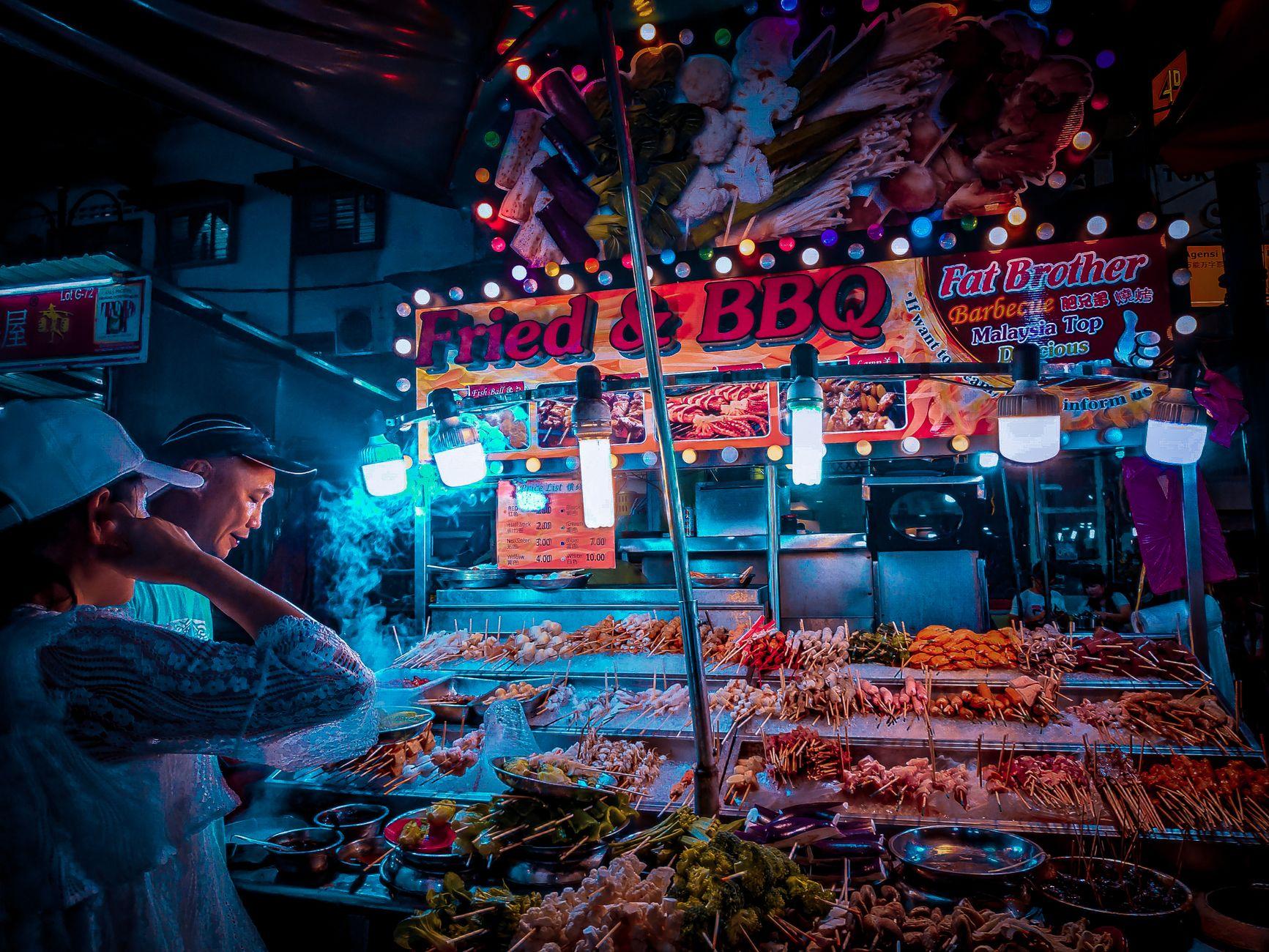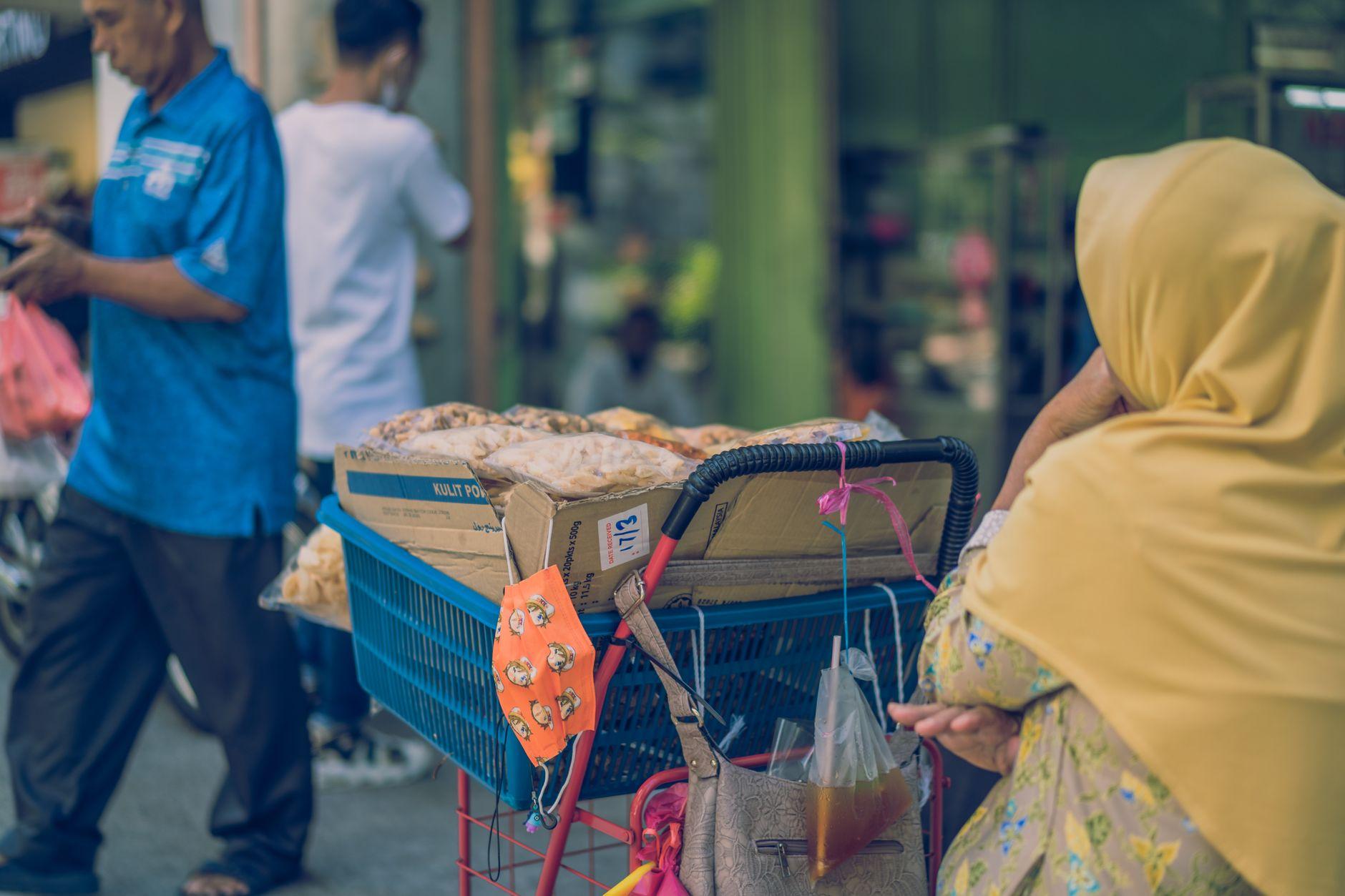

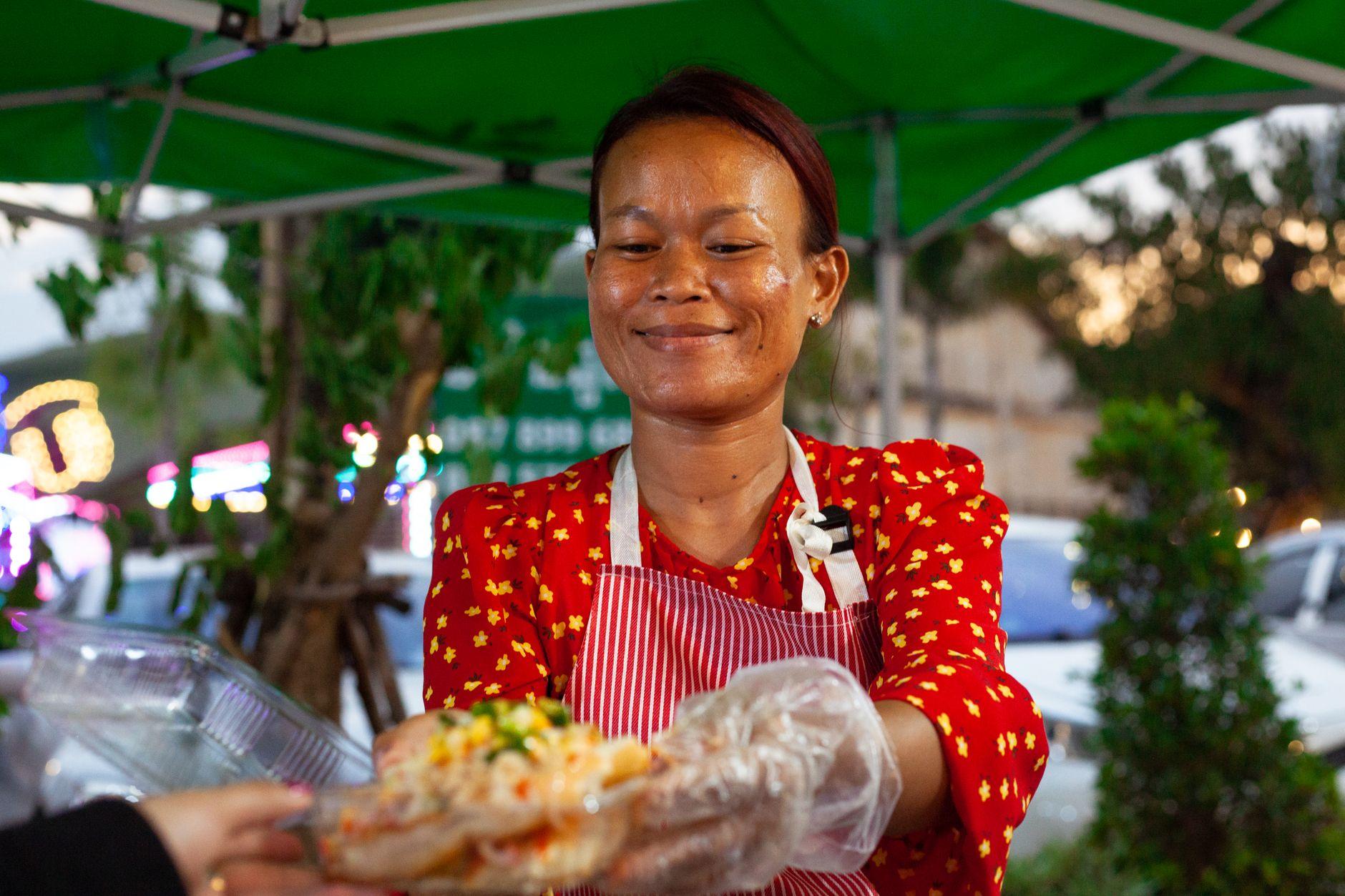
A woman at the Russian Market in Phnom Penh sells you a $4 kroma scarf, taps her phone screen awake, and points to a laminated QR code taped next to a jar of incense sticks. No cash register. No card reader. Just a square black-and-white code and her phone waiting for the payment notification sound. This is how Cambodia pays, and as a foreigner you can join in, scan for scan, with the right setup. The short answer: download the Bakong Tourists app, register with an email address, verify your passport and a selfie in the app to lift the daily limit to 3,000 USD, top up with a Visa or Mastercard, and scan the same KHQR code every local merchant already uses. Moreta Pay offers a second route into the same KHQR network, letting you top up in your home currency and see the exact exchange rate before you confirm, so you can compare both paths before you land.
Cambodia's KHQR standard is one national QR read by more than 60 banks and wallets, including ABA, ACLEDA and Wing, and about 4.5 million merchant points accept it. Foreigners can use the Bakong Tourists app with an email address, and verifying a passport and a selfie in the app raises the daily limit to 3,000 USD; no long-term visa is needed. Moreta Pay lets you fund your wallet from a home bank or card and scan the same merchant KHQR codes. US dollars still circulate widely in Cambodia, but small riel notes matter for tuk-tuks, markets, and parking. If a card terminal or ATM offers to charge you in your home currency, decline: pay in US dollars or riel.
About the author: Moreta Pay is a FinCEN-registered Money Services Business built specifically to let travelers tap into local QR networks like KHQR, VietQR, and QR Ph without opening a local bank account, and this guide draws on that direct operating experience in Cambodia's payment system.
What QR payment system do merchants in Cambodia actually use?
Merchants in Cambodia officially run on KHQR, a single national standard that ties together what used to be separate systems. Bakong, the National Bank of Cambodia's digital payment backbone, links more than 60 banks, microfinance institutions and wallets, ABA, ACLEDA and Wing among them, and KHQR is the glue that lets all of them read the same code. About 4.5 million merchant points accept it, meaning the fruit stand outside Wat Phnom and the boutique coffee shop in BKK1 are both plugged into the identical rail.
Under the hood, Cambodia's QR codes follow the EMV QR Code Specification for Payment Systems, a standard built around a Tag-Length-Value payload structure. In practice this means one physical QR sticker can carry multiple payment network credentials at once, in either merchant-presented or consumer-presented mode. You do not need to know which bank the vendor uses. You just need an app that can read the standard, which is exactly why KHQR adoption scaled so fast, there was no need to retrain every market stall on a new piece of hardware.
Can foreigners actually get access to KHQR without a Cambodian bank account?
Yes, and this is the detail most travel blogs skip past. Foreign nationals can register for the Bakong Tourists app with an email address. An account like that sits in the National Bank of Cambodia's basic tier, around 500 USD a day, and verifying your passport and a selfie in the app raises the limit to 3,000 USD or 12 million riel a day, according to the app's own manual [lolc.com.kh]. You can top up with a Visa or Mastercard, which travelers report costs about 3.5%, or with cash at a Wing branch [themapcambodia.com]. Either ceiling covers a week of guesthouse stays, street food, and tuk-tuk fares comfortably for most visitors.
Opening an actual Cambodian bank account is a different matter: banks generally ask for a passport, a long-term visa, and proof of residence or employment. This is where most short-term visitors stop, and reasonably so, since the tourist app's verified limit rarely gets tested on a two-week trip through Siem Reap and Phnom Penh.
A separate but related question is whether a non-Cambodian wallet can scan the same codes without going through Bakong's own app at all. It can. Any wallet built to read the KHQR standard, including Moreta Pay, can scan the identical sticker on the counter. The difference is in how you fund it and what exchange rate you see before the money leaves your account.
How does Moreta Pay work for scanning KHQR codes?
Moreta Pay closes the gap between your home bank account and a market stall in Battambang that has never heard of SWIFT transfers. The mechanism is the same one Moreta uses with every national QR network it supports in Southeast Asia and Latin America. In Cambodia it pays merchant and business KHQR codes:
- Top up your Moreta wallet by bank transfer in US dollars, euros, pounds, Canadian or Australian dollars, or with a card, Apple Pay or Google Pay.
- Open the app and scan the merchant's KHQR code, the same sticker ABA and Wing customers scan.
- Confirm the merchant name, the exact amount in riel or dollars, and the live FX rate before you tap pay, with no surprise conversion applied after the fact.
- The merchant receives instant local-currency payment, settled through the KHQR rail, the same way any Cambodian customer's payment lands.
Money added with crypto (USDC) can't be spent in Cambodia, nor in Thailand or China. Card top-ups and bank transfers work normally, so if part of your balance came from USDC, top up another way before you land in Phnom Penh.
How do exchange rates and fees compare to cash or competitor apps?
This is where most travelers lose money without realizing it, usually at the airport exchange counter or the ATM that quietly applies dynamic currency conversion. Wise prices currency conversion at the mid-market rate with a transparent variable fee layered on top. On Revolut's free Standard plan, weekday exchanges carry no markup up to a monthly allowance, weekend exchanges carry 1%, and ATM withdrawals above the free allowance cost 2%; paid plans reduce or remove these. Neither of those apps, however, scans a KHQR code directly. You still need cash in hand or a Cambodian bank account to spend what you've converted.
Moreta Pay's rate comparison shows you the exchange rate, fees, and total spending power side by side with these alternatives before you commit funds, so the comparison happens on your screen, not after your statement arrives. Moreta charges one 1.5% fee per payment at its live rate. The practical advantage isn't just rate transparency, it's that the conversion and the payment happen in the same motion, at the same counter, instead of a two-step process of converting cash then finding somewhere to spend it.
Do I still need cash anywhere in Cambodia?
Yes. US dollars remain widely accepted and circulate alongside the riel, particularly for larger transactions, but a stash of small riel notes still matters [themapcambodia.com]. Tuk-tuk drivers in Siem Reap, parking attendants near Angkor Wat, and tiny village stalls along the road to Kampot often can't make change for a $20 bill or don't run a QR terminal at all. Keep roughly $20 to $30 worth of small riel notes on you for these moments, treating KHQR as your default and cash as the backup, not the other way around.
The same caution applies at ATMs and card terminals across the country. If a machine or merchant offers to charge you in your home currency "for convenience" instead of US dollars or riel, decline it. That's dynamic currency conversion, and it almost always applies a worse rate than letting your card or wallet convert at the real exchange rate. Being charged in US dollars is normal in Cambodia and not the trap.
Frequently Asked Questions
Can I use KHQR without downloading a Cambodian banking app?
Yes. Any wallet built to read the KHQR standard, including the Bakong Tourists app or Moreta Pay, can scan the same merchant codes.
What's the daily spending limit for tourists using KHQR?
Around 500 USD a day for an email-only Bakong Tourists account, rising to 3,000 USD or 12 million riel a day once you verify your passport and a selfie in the app. Moreta Pay applies its own limits, shown in the app before you pay.
Do I need a Cambodian visa to use QR payments?
No. A tourist visa is enough for Bakong Tourists, including the higher verified tier, which needs only a passport and selfie check in the app. A long-term visa matters only if you want a Cambodian bank account.
Can I load money before I travel?
Yes. Add money to your Moreta wallet before you leave and it's ready to spend at any merchant KHQR code the moment you land. Moreta in Cambodia pays merchant and business codes, not personal accounts.
Are US dollars still useful if I'm mostly using QR codes?
Yes, dollars remain widely accepted for larger purchases, but keep small riel notes for tuk-tuks and stalls that don't take cards or QR.
Does stablecoin funding work for spending in Cambodia?
No. Money added with USDC can't be spent in Cambodia, though card and bank transfer top-ups work normally for KHQR spending.
Is KHQR accepted outside Phnom Penh and Siem Reap?
Yes. About 4.5 million merchant points accept KHQR nationwide, covering markets, guesthouses, and restaurants well beyond the two main tourist hubs, though small village stalls may still want cash.
About Moreta
Moreta Global Inc. is a Delaware corporation and FinCEN-registered Money Services Business, backed by Y Combinator (Summer 2024 batch). The Moreta Pay wallet lets travelers top up from a US bank account linked through Plaid, SEPA, UK Faster Payments, Canadian Interac e-Transfer, Australian PayID, cards, Apple Pay, Google Pay, or USDC, then scan the same local QR codes residents use, including DuitNow QR in Malaysia, KHQR in Cambodia, VietQR in Vietnam, QR Ph in the Philippines and Pix in Brazil, with the live rate and one 1.5% fee shown before every payment. Money added with crypto can't be spent in Thailand, Cambodia or China. Identity is checked by Persona with a passport scan and a selfie, bank links go through Plaid, funds are held with licensed partner banks, and transactions are monitored around the clock with real-time alerts on your account. At a market stall in Phnom Penh, you see the same QR code, the same price, with no guesswork on the exchange rate.
Ready to see your rate before you land? Set up your wallet at Moreta Pay and compare it against cash, Wise, or Revolut before your next trip to Cambodia.
References
- How to pay in Cambodia: cash, cards and Bakong Tourist (themapcambodia.com)