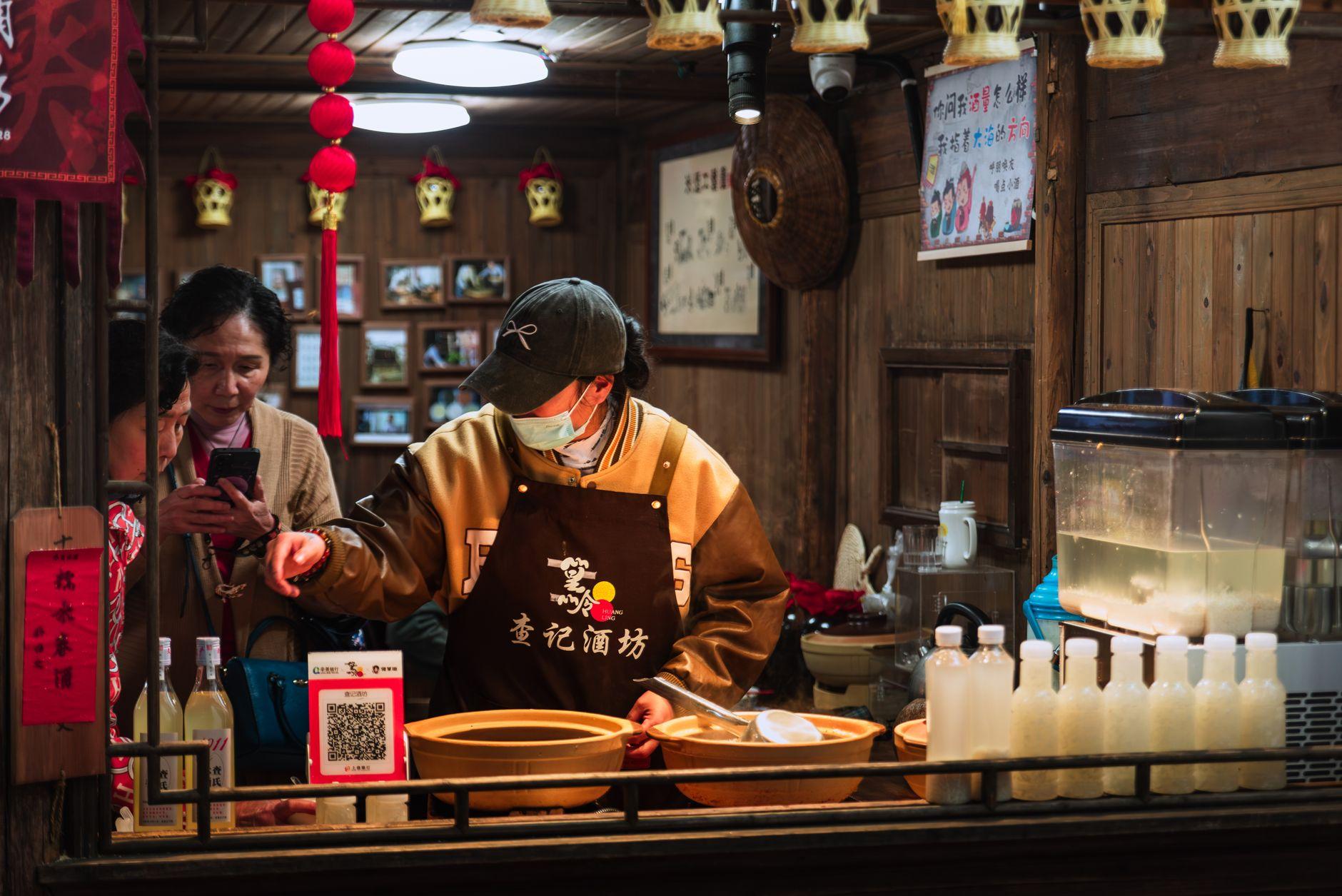

Spend an afternoon in central Ulaanbaatar and you'll notice something that surprises most first-time visitors: this is a QR code city. The coffee shop near Sukhbaatar Square, the CU convenience store on the corner, the lunch spot serving khuushuur, the Nomin supermarket checkout. Almost all of them have a small printed QR code at the register, and locals pay by scanning it with their banking app in about four seconds.
Then you drive two hours out of the city and none of that exists. Mongolia is one of the sharpest city-versus-countryside payment splits anywhere in Asia, which means the real question for a visitor isn't "how do I pay in Mongolia" but "which combination of payment methods covers the whole trip without bleeding money." Let's weigh the actual options.
First, what that QR code actually is
The sticker you'll see most often belongs to QPay, the network that stitches together Mongolia's banks so that a customer of one bank can scan a merchant code issued through another. Behind it sit the apps Mongolians actually open: Khan Bank's app, Golomt Bank's SocialPay, TDB's app, Monpay, and others. The merchant doesn't care which app you use. One code at the counter, everyone scans it, money moves in tugrik instantly.
That interoperability is why QR took over Ulaanbaatar so fast. It's also why the system feels closed to outsiders: every one of those apps assumes you're a customer of a Mongolian bank or a holder of a Mongolian phone number and ID. Which brings us to the comparison.
Option one: tugrik cash
Where it wins: everywhere, eventually. Cash is the only option that works at Narantuul market stalls, at a ger camp in Terelj, at a roadside guanz on the way to the Gobi, and with the driver you hired for a week. Outside Ulaanbaatar, cash isn't a backup plan. It's the plan.
Where it hurts: getting it. You'll pull tugrik from ATMs in the city, which means ATM operator fees, your home bank's foreign withdrawal fees, and whatever conversion rate gets applied, stacked on every withdrawal. Carrying enough cash for a two-week countryside loop also means walking around with a thick envelope of banknotes, since the tugrik comes in relatively small denominations and countryside expenses add up.
Verdict: mandatory for rural Mongolia, wasteful as your only method in the city.
Option two: your foreign Visa or Mastercard
Where it wins: hotels, the bigger restaurants, airline offices, the State Department Store, some tour operators. If a business caters heavily to foreigners, there's a decent chance a card terminal exists.
Where it hurts: almost everywhere else. Mongolia leapfrogged card terminals in the same way much of Asia did. The small café, the pharmacy, the taxi you flagged down, the dumpling place locals actually eat at: QR sticker, yes; card machine, often no, or one that's "broken today." Add foreign transaction fees and possible dynamic currency conversion tricks on the terminals that do work, and your card quietly becomes the most expensive option per purchase.
Verdict: fine for the hotel bill, unreliable as a daily wallet.
Option three: signing up for a local wallet
Where it wins: in theory, this is paying exactly like a local. SocialPay, Monpay, and the bank apps are genuinely good software.
Where it hurts: you can't realistically get in. These apps want a Mongolian phone number, and the useful ones want a Mongolian bank account, which requires residency paperwork most visitors don't have and won't get for a two-week trip. Even expats in Ulaanbaatar often describe the account-opening process as their first real bureaucratic battle. For a tourist, the effort-to-payoff ratio is terrible. It's the same wall travelers hit with local wallets across the region, like the SIM-and-ID requirements that keep foreigners out of GCash in the Philippines.
Verdict: the right answer for long-term residents with a visa that allows a bank account. A dead end for visitors.
Option four: scanning the same codes with Moreta Pay
Where it wins: this is the gap the other three leave open. Moreta Pay lets you scan the same standard merchant QR codes locals use, without a Mongolian bank account, SIM card, or ID. You top up the wallet from home (US bank via Plaid or ACH, SEPA in Europe, UK Faster Payments, Canadian e-Transfer, or an international card) in your own currency. At the counter you scan the code, see the merchant name, the amount in tugrik, and the exact FX rate before anything moves, then confirm. The merchant gets paid instantly in tugrik, same as if a Khan Bank customer had scanned it.
Where it hurts: it shares the QR system's one hard limit, which is geography. Where there's no QR code and no mobile signal, no app helps you, Moreta included. The grasslands do not take digital payments of any kind.
Verdict: covers the entire city-QR layer of the trip that cash makes annoying and cards can't reach, but it doesn't replace banknotes on the steppe.
How this plays out across one actual trip
Picture a common itinerary: four days in Ulaanbaatar, then a week with a driver through central Mongolia, then two more city days before flying out.
City days are QR days. Breakfast café, museum gift shop, supermarket run for road snacks, dinner, all of it scannable, all of it payable from your phone with Moreta Pay at a rate you see upfront. Your hotel can go on the credit card if it takes one. You make a single, deliberate ATM withdrawal sized for the countryside leg instead of four panicked ones, and QR also covers the online side of the trip, like QR-based checkout on booking platforms for your flights back out.
Countryside days are cash days, full stop. Ger camps, fuel stops, small shops in aimag centers, tips for your driver and guide. Budget it, carry it, and enjoy the fact that you're somewhere money genuinely still means paper. We went deep on how to size that cash budget and sequence the withdrawals in our city-versus-steppe money plan for Mongolia, so this piece won't repeat the arithmetic.
Back in the city for the final stretch, you're scanning again, and whatever you didn't spend never got converted to tugrik in the first place, which beats flying home with a wad of banknotes no bank outside Mongolia wants to exchange.
The honest conclusion
No single method wins Mongolia outright, and anyone who tells you otherwise hasn't left Ulaanbaatar. The realistic ranking looks like this: QR for the city (because that's what merchants actually have), cash for everything beyond the city limits (because nothing else exists there), and your foreign card as a narrow tool for hotels and big-ticket bookings rather than a daily wallet. Local apps, as good as they are, simply aren't open to you on a tourist visa.
The piece visitors have historically been locked out of is the QR layer, and that's the piece worth fixing before you land, since Chinggis Khaan International is not where you want to start troubleshooting. Set up Moreta Pay and fund your wallet before your flight, and the first QPay sticker you meet in Ulaanbaatar will work for you the same way it works for everyone in line behind you.