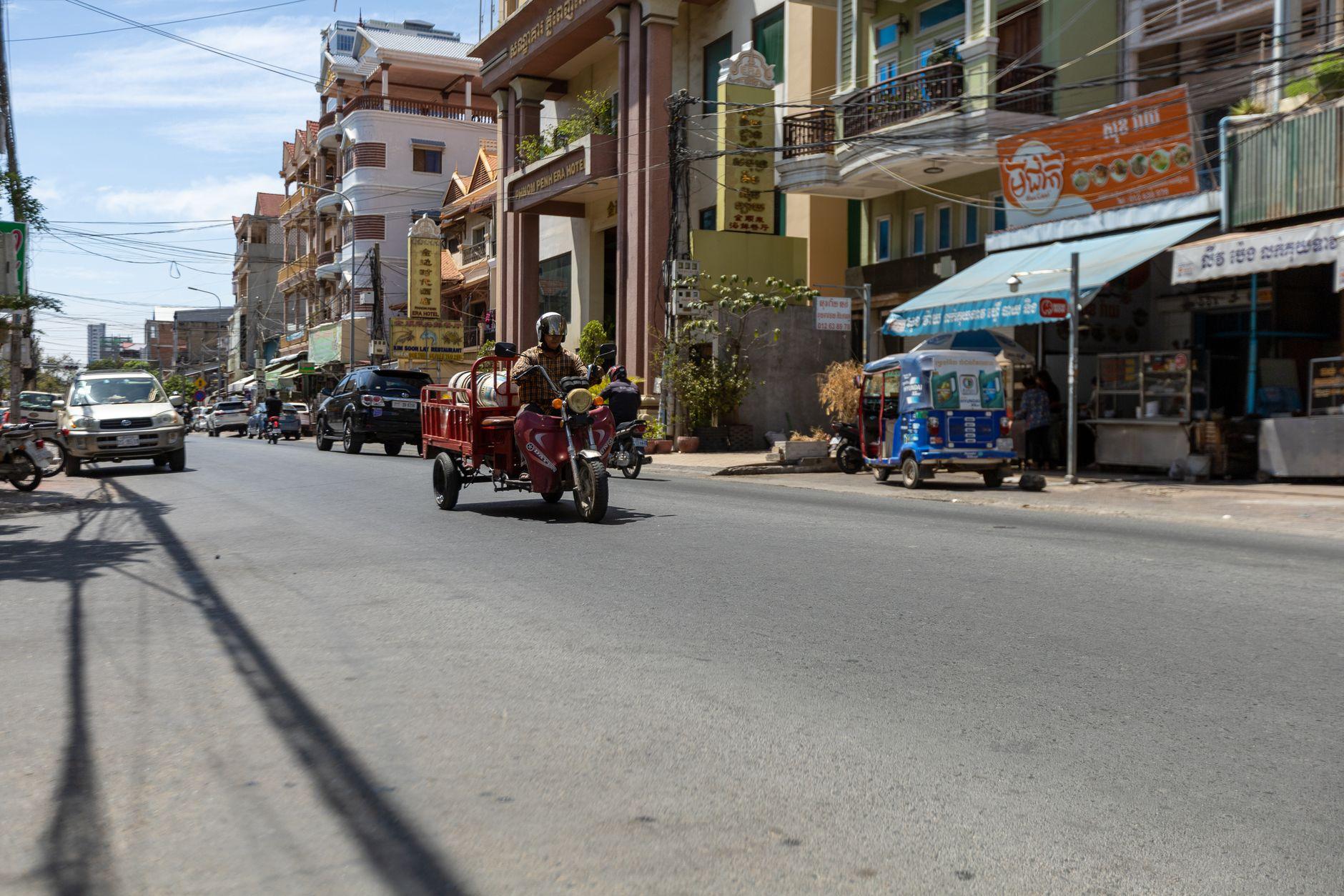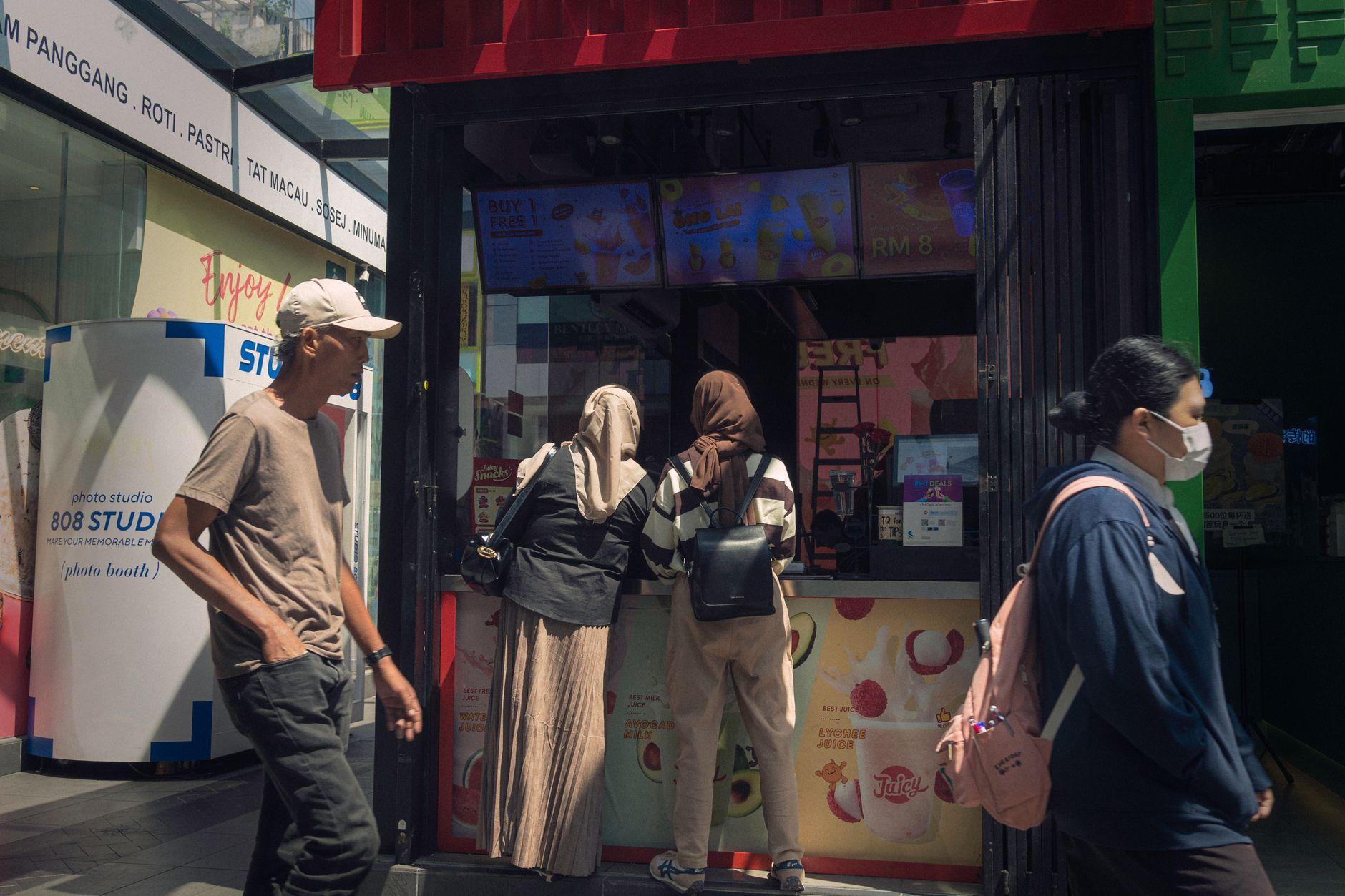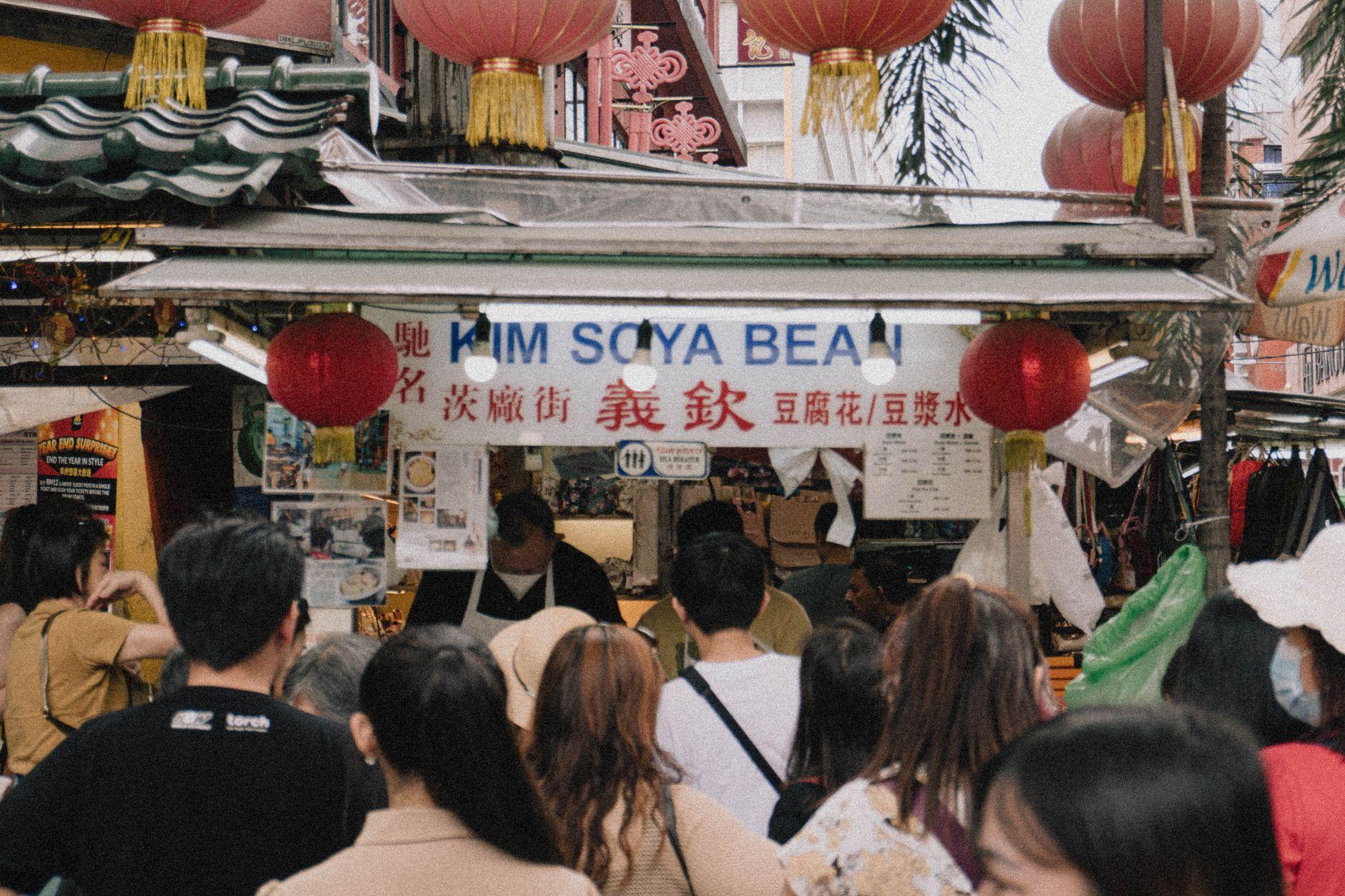

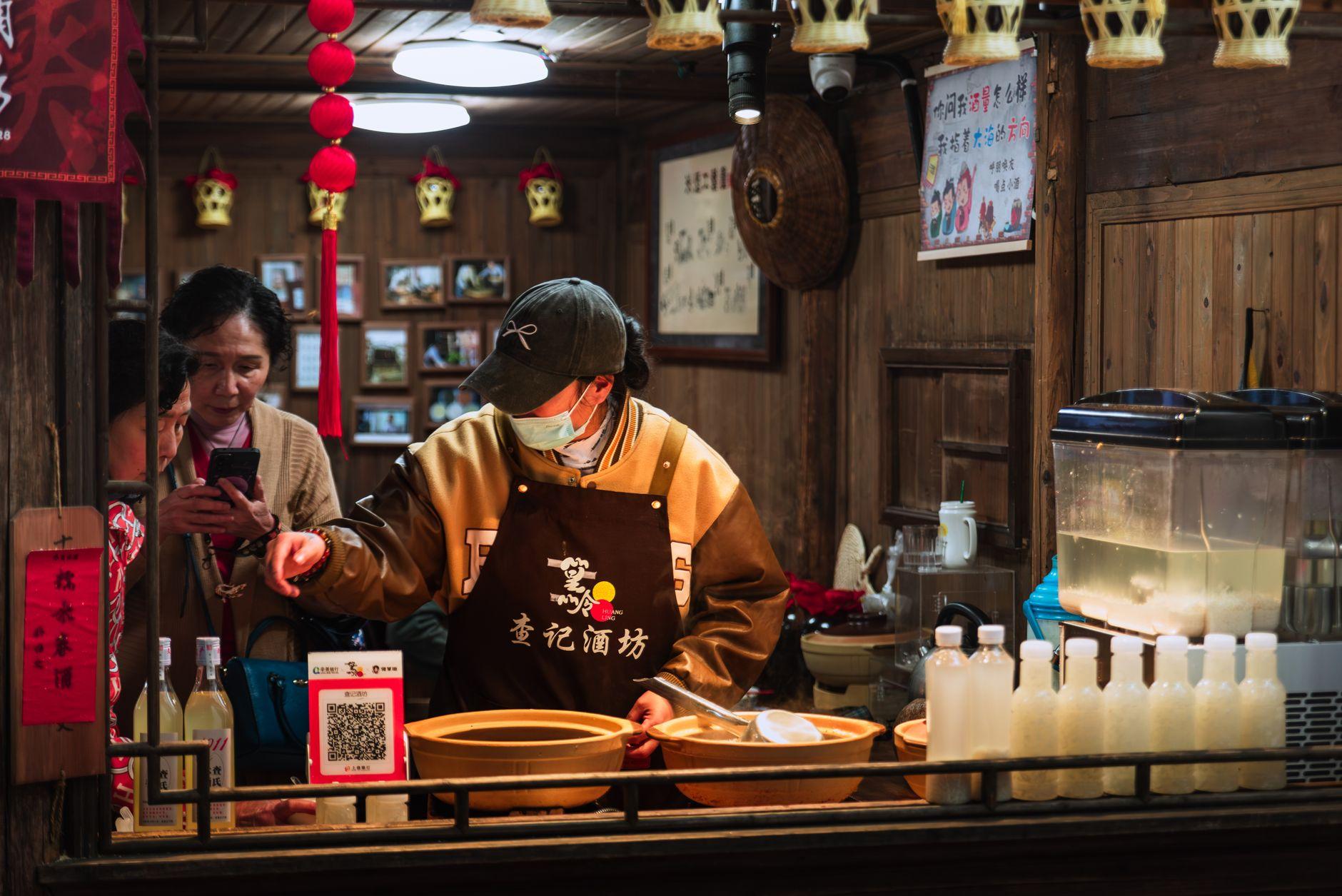
Is there a laminated code taped to the counter, or is the cashier pointing a scanner gun at you? That one glance settles it. If the merchant displays a QR code, you scan it. If the merchant has a scanner or camera aimed at you, you show your own payment code. In Malaysia, Cambodia, Brazil, Vietnam, the Philippines and Peru, scanning the merchant's code is the everyday default. China mixes both, and chain stores there often scan the code on your phone. Moreta Pay puts Scan and Your code on one payment screen, so you can pay the way locals pay on networks like DuitNow, KHQR, Pix and WeChat Pay.
Merchant-presented vs. consumer-presented mode: what's the difference?
The scan-or-show question comes down to who holds the code and who holds the camera. The EMVCo specification, which national QR standards like VietQR and QR Ph build on, defines two modes:
- Merchant-Presented Mode (MPM): the code carries the merchant's routing data. You scan it and push the money.
- Consumer-Presented Mode (CPM): your app generates a short-lived code containing a tokenized account identifier. The merchant scans it and pulls the payment.
MPM works like a transfer you send to an account number printed on the wall, because you start it. CPM works like a one-time voucher that the cashier redeems, because they start it.
How do I know whether to scan or show at the counter?
The hardware on the counter decides the mode, so look at the equipment before you read any signs.
| What you see | What you do | Where you'll see it |
|---|---|---|
| Printed sticker or acrylic stand | Scan it, type the amount | Mamak stall in Kuala Lumpur, juice cart in Phnom Penh |
| Merchant turns a phone or tablet showing a code toward you | Scan it, amount usually pre-filled | Café in São Paulo, pharmacy in Lima |
| Handheld scanner gun or upward-facing camera window | Open your payment code and hold it under the reader | Supermarket checkout in Shanghai |
| Card terminal only | Neither. Use a card or cash | Hotel front desks |
What is static vs dynamic QR, and does it matter for travelers?
The scan side adds a second layer: whether the merchant's code is static or dynamic. This changes what you need to check before you confirm.
- Static: printed once and tied to the merchant's account. You enter the amount yourself. The common mistake is an extra zero in dong or riel.
- Dynamic: generated for each sale with the amount embedded. You review it and confirm. These are common at POS terminals and online checkouts.
A merchant with a static code cannot see your payment until it lands. The nasi lemak seller in Kampung Baru leans over to read your confirmation screen. Show it to them without being asked.
Scan-first vs. show-first by country
Country by country, most of the places travelers visit are scan-first. China is the main exception.
| Country | Network | Usual mode for visitors | Watch for |
|---|---|---|---|
| Malaysia | DuitNow QR | Scan | One national code read by bank and wallet apps |
| Cambodia | KHQR | Scan | Codes priced in US dollars or riel |
| Brazil | Pix | Scan | Static stickers at stalls, dynamic codes at checkout |
| China | WeChat Pay, Alipay | Both | Stalls display codes. Chains scan yours |
| Vietnam | VietQR | Scan | Typing the amount on static codes |
| Philippines | QR Ph | Scan | Single-wallet labels may not be QR Ph |
| Peru | Yape, Plin | Scan | Bodega codes printed on cardboard |
Alipay vs WeChat Pay: these are separate networks. Moreta Pay pays WeChat Pay codes while you are physically in China. A code marked only for Alipay belongs to a different network.
Pix for foreigners: Pix moves money between Brazilian accounts, and opening one usually requires a CPF taxpayer number. Most visitors lack a Brazilian tax ID.
VietQR for foreigners: the barrier is the same, a Vietnamese bank account. We covered it in our Vietnam guide, so we won't repeat it here.
Is it safer to scan the merchant's code or show your own?
Each direction moves the risk to a different place. The safer habit depends on which mistake you are guarding against.
- Scanning: fraudsters can paste a malicious code over a real one, a tactic called quishing. Run a thumb over the sticker for layering, and compare the merchant name on your screen with the stall sign.
- Showing: someone can photograph your code over your shoulder or capture it from a screenshot before the merchant scans it. Open the code only when the scanner is ready, never screenshot it, and close it afterward.
Native QR payments in Vietnam and the Philippines are generally irrevocable account-to-account push transfers without standardized chargeback rights. Fixing a misdirected payment usually depends on the merchant's goodwill.
How do you pay either way with Moreta Pay?
Scan or show only matters if your app can reach the local network at all. Local wallets usually require a local phone number, a local ID or a local bank account, and most visitors have none of these. Moreta Pay needs no local bank account or SIM:
- Top up in your own currency by bank transfer, card, Apple Pay or Google Pay.
- Open Pay. Tap Scan for a displayed code, or Your code where locals pay by being scanned.
- Check the merchant name, the amount and the exchange rate.
- Slide to pay. The merchant receives local currency and you get a receipt with the merchant ID and payment number.
Moreta reports one 1.5% fee per payment, with the live rate shown before you confirm. Money added with crypto can't be spent in Cambodia or China.
Where will you still need cash, and what should you set up before landing?
A QR payment needs mobile data or Wi-Fi at the moment you pay. That leaves gaps, so be honest with yourself about them. Rural Mongolia, temple donation boxes and the tuk-tuk driver without a code still run on cash. Keep a modest reserve:
- A few 1,000-riel notes plus a 20 USD bill in Phnom Penh
- An RM10 note in Penang
- A 20 BRL note in Salvador
Do this before you board:
- Verify your identity with your passport and a selfie, which usually takes a few minutes, then top up.
- Find Scan and Your code in the app so you aren't hunting for them at the counter.
- If a card terminal or ATM offers to charge you in your home currency, decline. Always choose local currency.
Frequently Asked Questions
Can I show my own code instead of scanning in Malaysia?
Most small DuitNow merchants display a code for you to scan. Use your own code only where the cashier has a scanner.
What if I type the wrong amount on a static QR?
The transfer is generally final. Show the merchant your receipt and settle the difference with them directly.
Does the merchant need the Moreta app?
No. Merchants receive payment on their usual local network.
Can Moreta Pay pay an Alipay-only code?
No. In China, Moreta Pay pays WeChat Pay codes while you are physically there.
Do I need a local SIM card?
No. Any mobile data or Wi-Fi connection at the moment you pay is enough.
Is Moreta a bank?
No. Moreta Global Inc. is a FinCEN-registered money services business, and funds are held with licensed partner banks.
About Moreta
Moreta Global Inc. is a Delaware corporation, a FinCEN-registered money services business, and Y Combinator-backed (Summer 2024 batch). Its app, Moreta Pay, lets travelers, expats and nomads top up in their home currency and pay on local QR networks including DuitNow, KHQR, Pix, QR Ph, Yape and WeChat Pay. Every payment shows the merchant name, amount and exchange rate before you confirm. Scan and Your code sit on the same screen, so you can match the counter in front of you.
The five-second version: code facing you, scan it. Scanner facing you, show yours. To set up a wallet that does both, visit Moreta.
References
- How Does a QR Code Payment Work? - Decentro (decentro.tech)