
South Korea has a reputation as the place where money simply works. Fast internet, tap-to-pay everywhere, a society that treats cash like a relic. So nomads arrive in Seoul or Busan with a Wise card and a shrug, and then hit a wall at a gimbap counter that only takes KakaoPay, or a self-order kiosk that rejects their foreign Visa three times while the lunch line grows behind them.
The truth is that Korea is both easier and harder than travelers expect. Easier, because you genuinely do not need cash for most of your day. Harder, because the local payment ecosystem was built for people with Korean phone numbers and Korean bank accounts, and it quietly assumes you have both. Let’s take the most common beliefs one at a time.
Myth 1: “Korea is cashless, so my foreign card works everywhere”
Cashless and card-friendly are not the same thing. Yes, your international Visa or Mastercard will work in a huge share of places: convenience stores like GS25 and CU, Olive Young, chain cafes, department stores, most sit-down restaurants in tourist-heavy neighborhoods. That part of the reputation is earned.
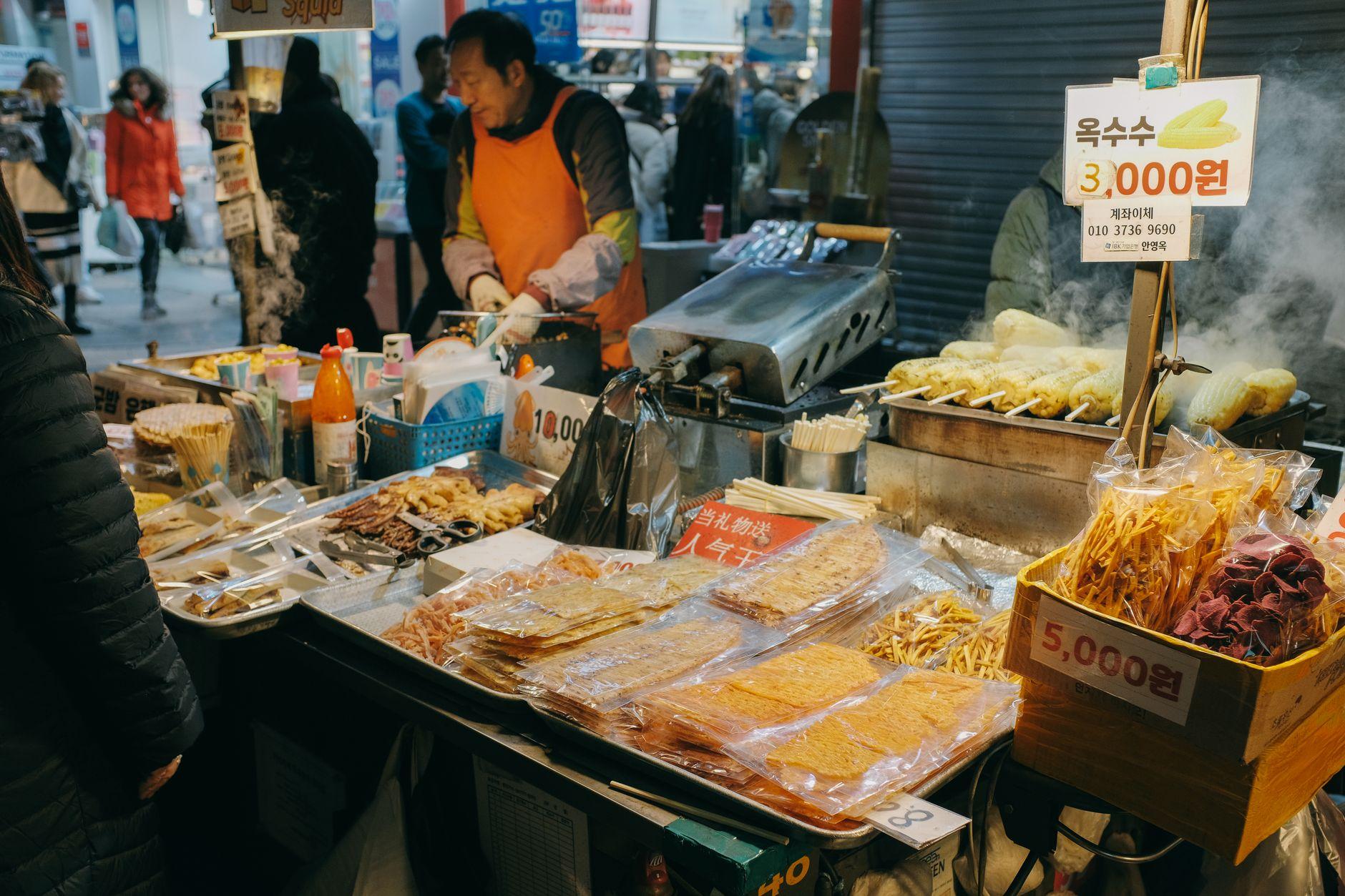
The gaps show up exactly where the best food and the real daily life happen. Small eateries in Gwangjang Market, the tteokbokki stall near your officetel, the ajumma-run kimchi jjigae place with six tables, unmanned late-night cafes, some self-order kiosks. Many of these run on domestic payment rails only: Korean-issued cards, KakaoPay, Naver Pay, or Zero Pay QR codes. Your foreign card is not broken. It is just not part of that club.
Myth 2: “I’ll just download KakaoPay like everyone else”
This is the one that burns the most time. KakaoPay and Naver Pay dominate everyday spending in Korea, and both look downloadable from any app store. But activating them for payments requires Korean phone number verification, and realistically a Korean bank account behind it. A tourist SIM or eSIM with a data-only plan does not get you through identity verification. Long-term expats with an ARC and a local bank account can eventually set this up. A nomad on a 90-day stay usually cannot, and shouldn’t plan around it.
We wrote a whole walkthrough on paying in South Korea without a Korean phone number, but the short version is this: instead of trying to become a KakaoPay user, use an app built for exactly your situation. Moreta Pay lets you scan the same merchant QR codes locals scan, funded from your home bank or card in your own currency, with the exchange rate shown before you confirm. No Korean number, no Korean bank account, no verification maze.
Myth 3: “I should carry a thick stack of won as backup”
A little cash is fine to have. A lot of it will mostly sit in your bag. Korea has been steadily pushing cash out of daily life; Seoul has even been phasing cash out of city buses, and plenty of cafes are openly cash-free. Some staff will look genuinely inconvenienced when you hand over a 50,000 won note for a 4,500 won americano, because their till barely handles change anymore.
The old nomad routine of hunting for a “global ATM,” eating a withdrawal fee, and rationing bills for two weeks is solving a problem Korea no longer has. Keep a small emergency amount for the rare cash-only pojangmacha or a temple donation box, and let everything else run through your phone.
Myth 4: “T-money covers my daily spending”
T-money is genuinely great, and you should get one. It handles the subway, buses, taxis, and small purchases at convenience stores. But its ceiling is low. You cannot pay for dinner at most restaurants with it, market vendors don’t take it, and topping it up often means feeding cash into a machine, which puts you right back on the ATM treadmill you were trying to escape. Treat T-money as your transit card, not your wallet.
Myth 5: “QR payments are a Southeast Asia thing; Korea is all card taps”
Korea’s QR layer is quieter than Thailand’s or Vietnam’s, but it is very much there. Look at the counter of a small shop and you will often spot a Zero Pay sticker, a KakaoPay QR stand, or a Naver Pay code taped next to the till. Market stalls and mom-and-pop restaurants love QR precisely because it spares them a card terminal.
This is where a visitor can actually plug into the local system. With Moreta Pay you scan that same standard QR code, see the amount, the merchant name, and the FX rate on screen, confirm, and the merchant is paid instantly in won while your wallet stays funded in your own currency. It is the same move locals make with KakaoPay, minus the Korean paperwork. If you have used QR wallets elsewhere in Asia, the muscle memory transfers directly; it works the same way it does in the DuitNow world of Malaysia.
Myth 6: “Booking anything online in Korea requires a Korean card”
Korean domestic e-commerce (Coupang, local delivery apps) is admittedly hostile to foreigners without local verification. But most of what a nomad actually books, like accommodation and transport, lives on international platforms. Trip.com and Agoda are the go-to for Korean hotels and KTX-adjacent trips, and both support QR-based checkout that Moreta Pay handles the same way it handles a market stall, with the rate shown upfront and no hidden foreign transaction fee stacked on top.
What a realistic first week looks like
Land at Incheon, grab a T-money card and an eSIM. Withdraw a modest amount of won once, for emergencies, and stop thinking about ATMs. Pay chains and bigger restaurants however you like, since foreign cards are fine there. For the small eateries, market stalls, and QR-sticker counters where your card gets a polite head shake, scan the code with your wallet and move on with your day. That combination covers essentially all of daily life in Korea without a Korean bank account, without KakaoPay, and without a money belt full of paper.
Korea rewards people who pay the way locals do, and for the first time you don’t need a Korean identity to do it. Set up Moreta Pay before your flight to Incheon and walk into that market with the right tool already on your phone.