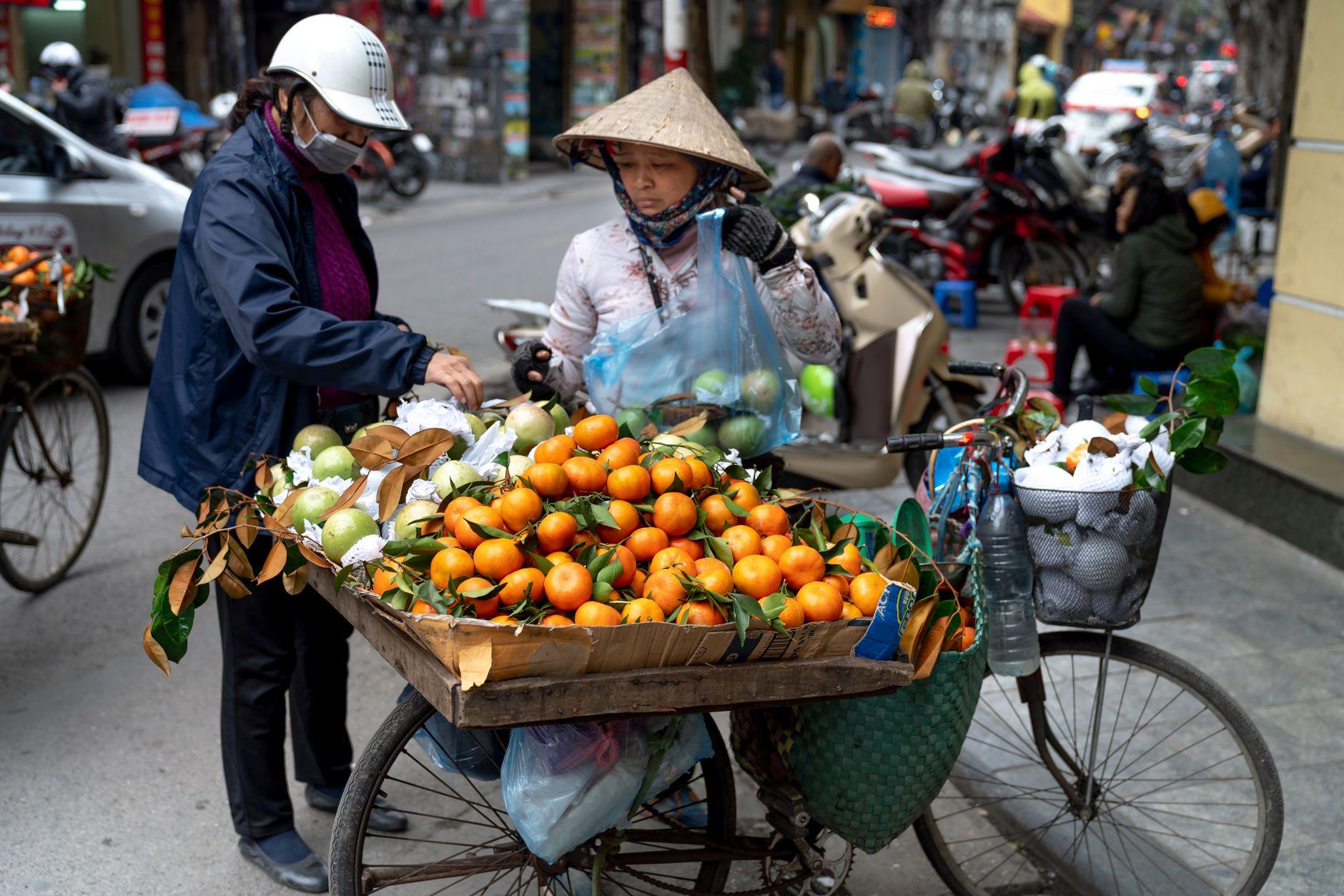

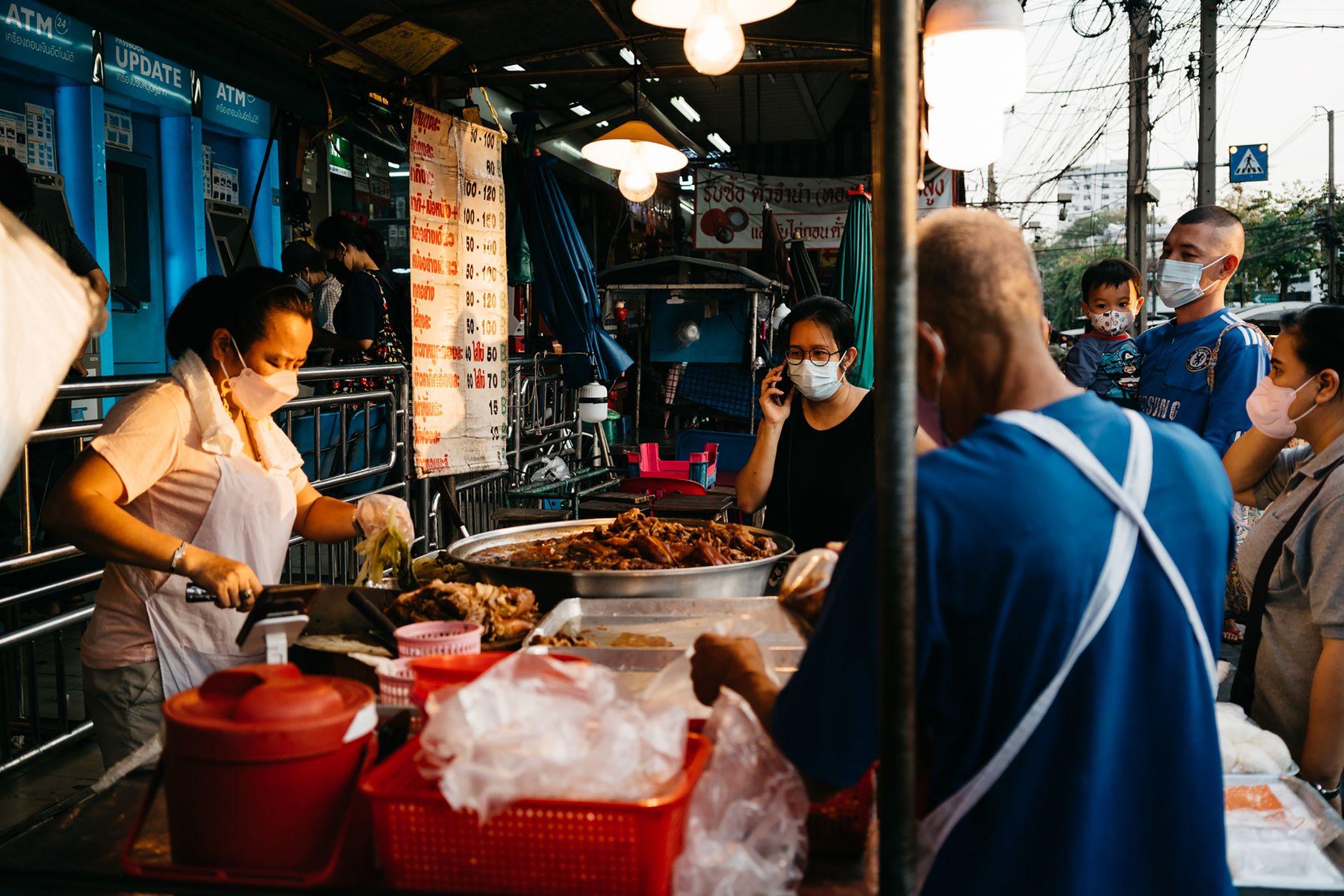
Ask ten travelers how to pay in Thailand and you will get ten confident answers, most of them a few years out of date. Thailand changed fast. PromptPay, the national QR payment system, went from a government project to the default way Thais pay each other, and it happened quietly enough that guidebooks and forum threads never caught up. So let's do this the direct way: take the most common beliefs visitors arrive with and check them against what actually happens at a Bangkok noodle cart, in a Chiang Mai songthaew, or at the 7-Eleven counter at midnight.
Myth one: Thailand is a cash country, so stock up on baht
This was true for decades, which is why it refuses to die. But walk through any fresh market today and look at what is taped to every stall: a laminated blue and white PromptPay QR code. The grandmother selling mango sticky rice has one. The motorbike taxi stand has one. The temple donation box often has one. Thais themselves increasingly carry very little cash, because scanning a QR from their banking app is faster than counting change and nobody argues about whether a 1,000 baht note can be broken.
Cash still works, of course. Nobody will refuse your baht. But the idea that cash is the only reliable option gets the situation backwards. In 2026, the QR code is the reliable option, and cash is the fallback. Visitors who plan their whole trip around withdrawing and carrying paper money are solving a problem Thailand already solved.
Myth two: your Visa or Mastercard will cover everything else
Foreign cards work at hotels, malls, and chain restaurants. Step outside that bubble and the picture changes quickly. Street food, markets, small cafes, laundry shops, most taxis, and plenty of independent restaurants simply do not take cards at all. It is not hostility, it is economics: card terminals cost money and take a cut, while a PromptPay QR sticker is free and settles instantly into the merchant's bank account.
Taxis deserve a special mention. Many Bangkok drivers operate strictly cash-or-QR. Hand them a card and you will get a polite shake of the head. Hand them exact cash or scan their QR and everyone is happy. The same pattern shows up with tuk-tuks, boat piers, and the red trucks of Chiang Mai. If your payment plan is "card plus a little cash," you will spend your trip hunting for ATMs anyway.
Myth three: ATMs are everywhere, so fees are no big deal
ATMs are indeed everywhere. That is exactly the trap. Thai ATMs charge foreign cards a withdrawal fee that commonly runs 220 baht per transaction, on top of whatever your home bank charges and whatever the machine's exchange rate quietly takes. That fee applies whether you pull out a large sum or a small one, which pushes visitors into withdrawing big amounts and walking around with a fat wallet in a hot, crowded city.
Then there is the dynamic currency conversion screen, the one that cheerfully offers to charge you in your home currency "for convenience." Decline it every time. But better than learning ATM self-defense is needing ATMs less in the first place. If most of your spending goes through QR codes, cash becomes something you top up occasionally rather than a weekly expedition.
Myth four: PromptPay is for Thais only, so none of this applies to you
Here is the frustrating half-truth. The Thai banking apps that locals use to scan PromptPay QR codes require a Thai bank account, which requires residency paperwork most visitors do not have. So travelers conclude the entire QR ecosystem is closed to them and resign themselves to cash. The same wall exists across the region, which is why we wrote a whole piece on what to do when you can't get the local wallet in Malaysia.
But the codes themselves are not closed. A PromptPay QR is a standard that any compatible app can read, and that is where Moreta Pay comes in. You top up a wallet from your home bank or card in your own currency, then scan the exact same PromptPay QR the locals scan. Before you confirm, you see the amount in baht, the exchange rate applied, and the merchant's name on one screen. Tap confirm and the stall owner's phone chimes the same way it does for every Thai customer. No Thai bank account, no local SIM registration, no handing your passport to anyone.
That confirmation screen matters more than it sounds. At an ATM or a currency booth, you find out what rate you got after the fact. Scanning a QR with a transparent rate shown up front flips that: you know the real cost before any money moves.
Myth five: QR codes are just for street food and small stuff
PromptPay QR scales up as comfortably as it scales down. Hotels and guesthouses often prefer it for room payments because it clears instantly. Many clinics, opticians, and dentists (Thailand sees a lot of dental tourists) display a QR at the front desk. And it extends online: platforms like Lazada, Shopee, Agoda, and Trip.com support QR-based checkout, which means you can book a Krabi hotel or order a phone charger to your guesthouse and pay the same way you paid for your pad kra pao at lunch. Moreta Pay handles those online QR payments too, so a long stay in Thailand does not require juggling a second system for anything bought through a screen.
Longer-term visitors and expats can go further and pay recurring bills through QR in supported cases, which removes one more reason to ever open the "how do I get a Thai bank account on a tourist visa" rabbit hole.
So what should actually be in your pocket on day one?
A realistic Thailand setup looks like this. A modest amount of baht in cash for the genuine edge cases: a remote beach shack, a temple fair, an older vendor who prefers notes. One foreign card for hotels and emergencies. And a QR-capable wallet loaded before you land, so the moment a driver or vendor points at their sticker, you are ready. That is the whole kit. No envelope of cash hidden in a shoe, no mapping your itinerary around fee-free ATMs that do not exist, no awkward moment where the only thing between you and dinner is a card machine that was never there.
Thailand's payment culture is one of the most visitor-friendly in Asia once you stop fighting it and start scanning like everyone else. Load up Moreta Pay before your flight and the first QR code you meet, probably at the airport taxi rank, will be the easiest payment of your trip.