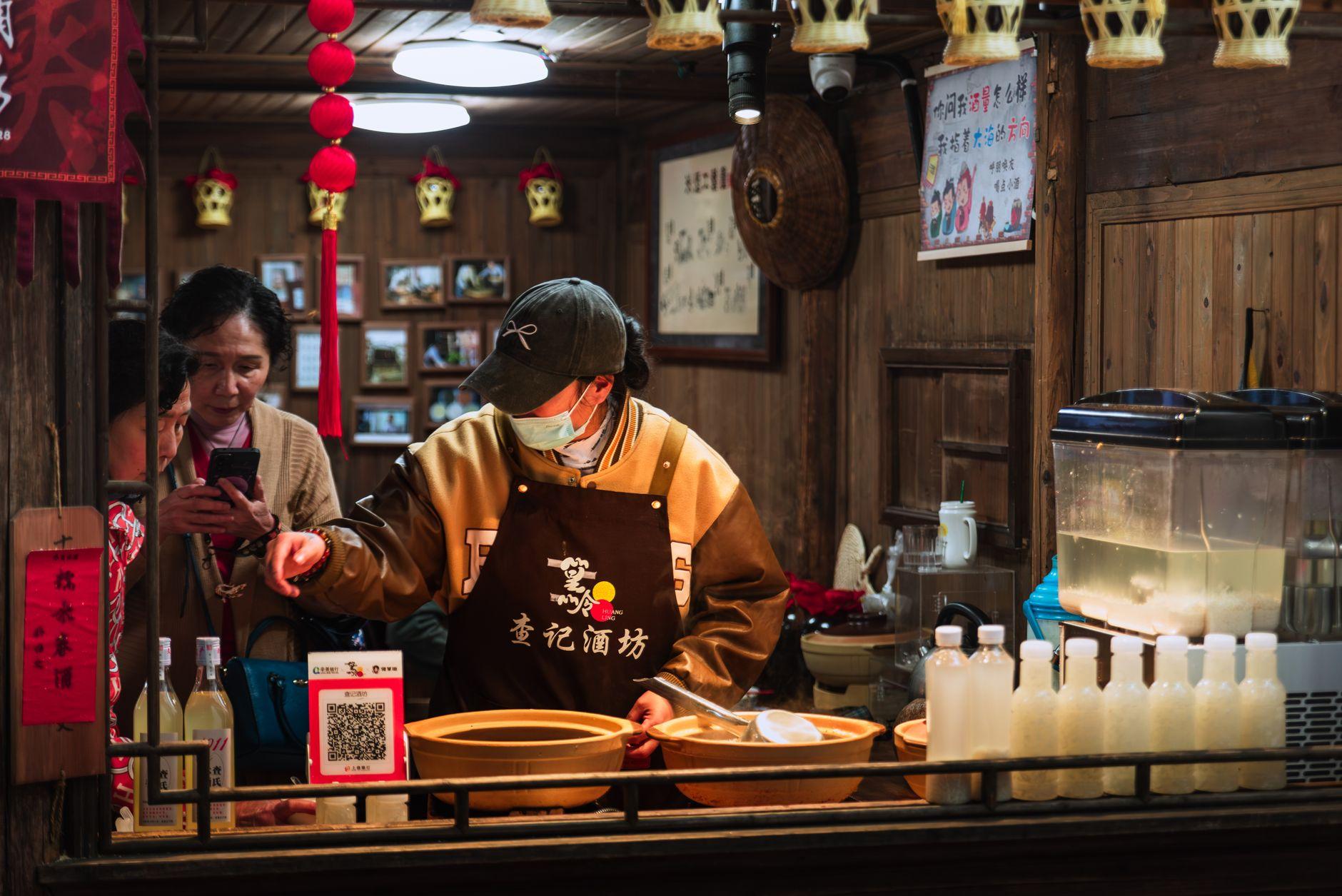

It's a Tuesday evening in Gwangjang Market and the bindaetteok lady has a line six people deep. The pancakes hit the oil, the crowd shuffles forward, and you watch the Korean woman ahead of you pay without touching her wallet. She holds her phone over a small laminated square taped to the edge of the counter, taps once, and walks off with her plate. You step up, hold out your foreign Visa, and get a polite shake of the head and a finger pointed at the same laminated square. The QR code. The one your phone can see but, as far as you can tell, can't do anything about.
This is the strange shape of money in South Korea for visitors. It's one of the most cashless societies on earth, your foreign card genuinely works in most of it, and then you hit these pockets where the only accepted payment is a local one you apparently can't have. Let's walk through what's actually going on and how to pay in South Korea without fighting it.
The most cashless country where your card mostly works
Here's the good news first, because Korea deserves it. Compared to a lot of Asia, foreign cards go far here. Convenience stores, department stores, chain cafes, the subway machines, most restaurants with a printed menu and a card terminal by the register: your home Visa or Mastercard will usually be fine. If your whole trip is Starbucks, Shinsegae, and hotel restaurants, you might never notice a problem.
But Korea didn't become nearly cashless on foreign cards. It became cashless on KakaoPay and Naver Pay, two apps so woven into daily life that many Koreans haven't carried paper money in years. Splitting a dinner bill, paying at a pojangmacha tent, buying socks at a subway station stall, settling up with a taxi driver who's already pulling away: it all happens inside those two apps. The QR codes and in-app payments they power are the real local rail, and that rail is where the gaps in your foreign card experience live.
Why you can't just download KakaoPay
You can download it. That's the cruel part. The app installs fine. Then it asks for identity verification through a Korean mobile number registered in your name, and your trip-length eSIM or airport tourist SIM typically doesn't qualify. Naver Pay runs into the same wall. These apps are built around Korea's phone-based identity verification system, which is great for locals and a locked door for a two-week visitor.
If this sounds familiar, it's the same story travelers hit in the Philippines, where GCash demands a local SIM before it lets you in. The pattern across Asia is consistent: the dominant domestic wallet assumes you're a resident, and no amount of app store determination changes that.
So stop trying to become a KakaoPay user. The actual solution is joining the QR side of the ecosystem from the outside, which is exactly what Moreta Pay exists for: you scan the merchant's local QR code with the Moreta Pay app, your wallet (topped up from your home bank or card, in your own currency) converts to Korean won, and the merchant gets paid instantly, same as if a local had tapped.
The places that quietly become local-payment-only
Knowing where your foreign card stops working is half the battle in Korea. The usual suspects:
- Traditional markets. Gwangjang, Mangwon, Tongin, the fish stalls at Jagalchi in Busan. Some vendors have card terminals, many prefer the QR or cash, and the best food stalls often have neither the time nor the patience for a foreign card that needs a signature.
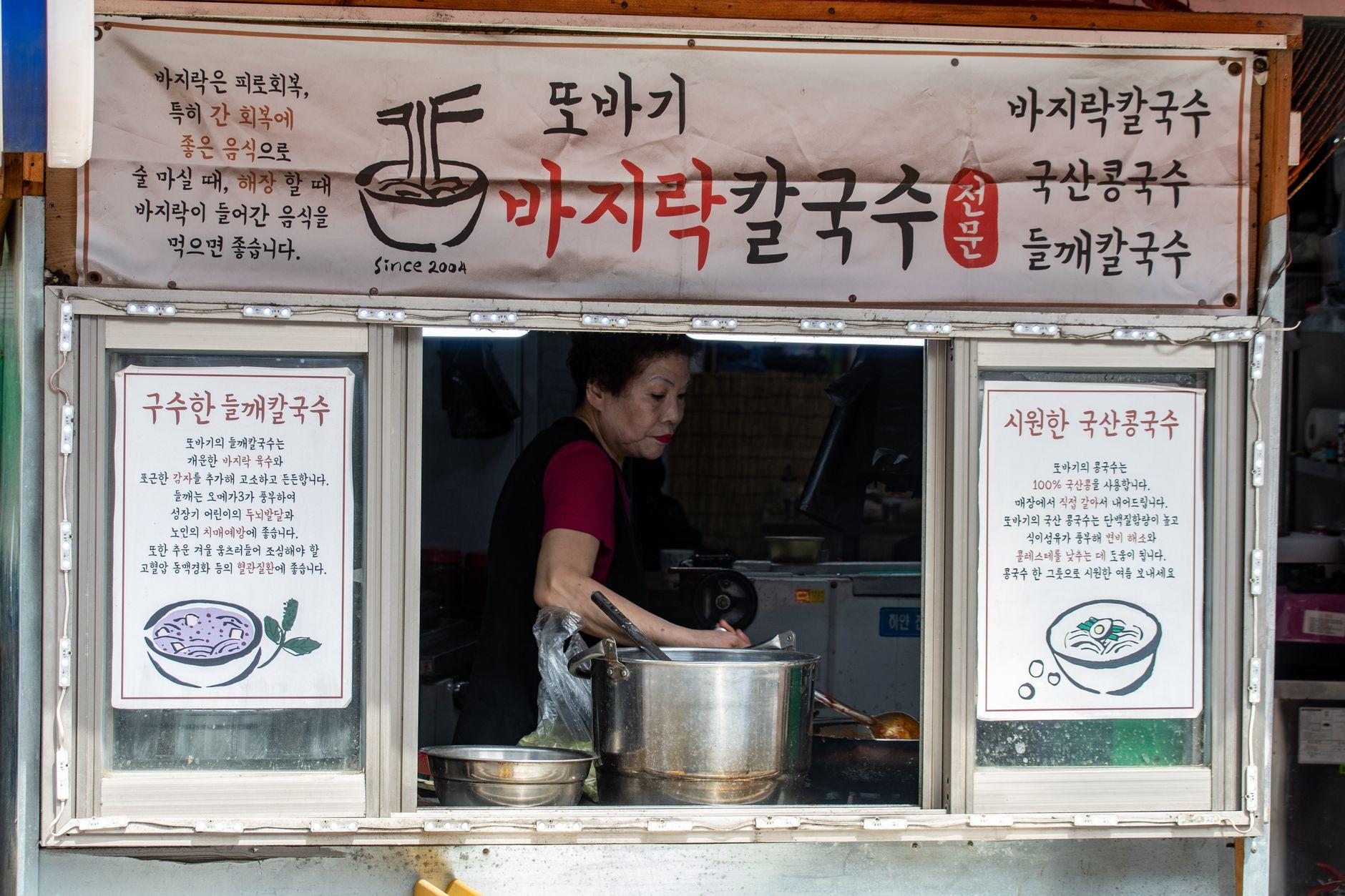
- Hole-in-the-wall eateries. The six-table kimbap place, the late-night tteokbokki window, the dessert cafe run by one person. The smaller the operation, the more likely it is QR-or-cash territory.
- Pojangmacha and street vendors. Tent bars and street food carts are cash-and-QR country almost by definition.
- Small-town and countryside spots. Outside Seoul and Busan, in places like Jeonju's hanok village side streets or a bus terminal snack shop in Gangwon, the card acceptance you took for granted thins out.
The frustrating version of this trip is carrying a wad of won from an airport ATM just in case, paying ATM withdrawal fees for the privilege, and still ending up with leftover bills at departure. The better version is treating the QR sticker as something you can use, not something you route around.
What paying actually looks like
At that bindaetteok stall, with Moreta Pay set up, the sequence is short. Open the app, scan the merchant's QR code, check the screen: the merchant name, the amount in won, and the exact exchange rate you're getting, all shown before you commit. Confirm, show the success screen, take your pancake. There's no guessing what the conversion cost you, no surprise foreign transaction fee showing up on a statement three days later, and no mental math about whether the ATM run was worth it.
Top-ups happen before or during the trip from your normal accounts: US banks via Plaid or ACH, SEPA in Europe, Faster Payments in the UK, e-Transfer in Canada, or an international card. You load the wallet in your home currency and it converts when you pay, with the rate in front of you each time.
One habit worth copying from locals: QR isn't just a street-level thing here. If you're booking a leg of your trip on Trip.com or Agoda, or ordering something to your guesthouse, QR-based online checkout is often an option, and Moreta Pay handles that the same way it handles the market stall.
Do you still need cash in Korea?
A little, honestly. A few situations still want it: the occasional elderly vendor whose relationship with technology ended at the flip phone, some temple donation boxes, small-town buses in a pinch. Keep a modest amount of won for those moments and don't stress about the rest. What you're avoiding is the old default, where cash was the fallback for everything and ATM fees quietly taxed your whole trip. Korea is not Mongolia, where a real cash plan is still part of the itinerary. Here, cash is a side pocket, not a strategy.
A quick pre-trip checklist
- Set up and top up your Moreta Pay wallet before you land, so your first payment isn't also your first setup screen.
- Bring a card as backup for the big-chain world, where it works beautifully.
- Withdraw one small batch of won for the true cash-only edge cases, and plan not to need a second batch.
- When in doubt at a counter, look for the QR sticker. In Korea, it's usually there before the card terminal is.
That laminated square at the market stall stops being a locked door the moment you have an app that can talk to it. Get Moreta Pay on your phone before you queue up for bindaetteok, and pay the way the person ahead of you just did.