
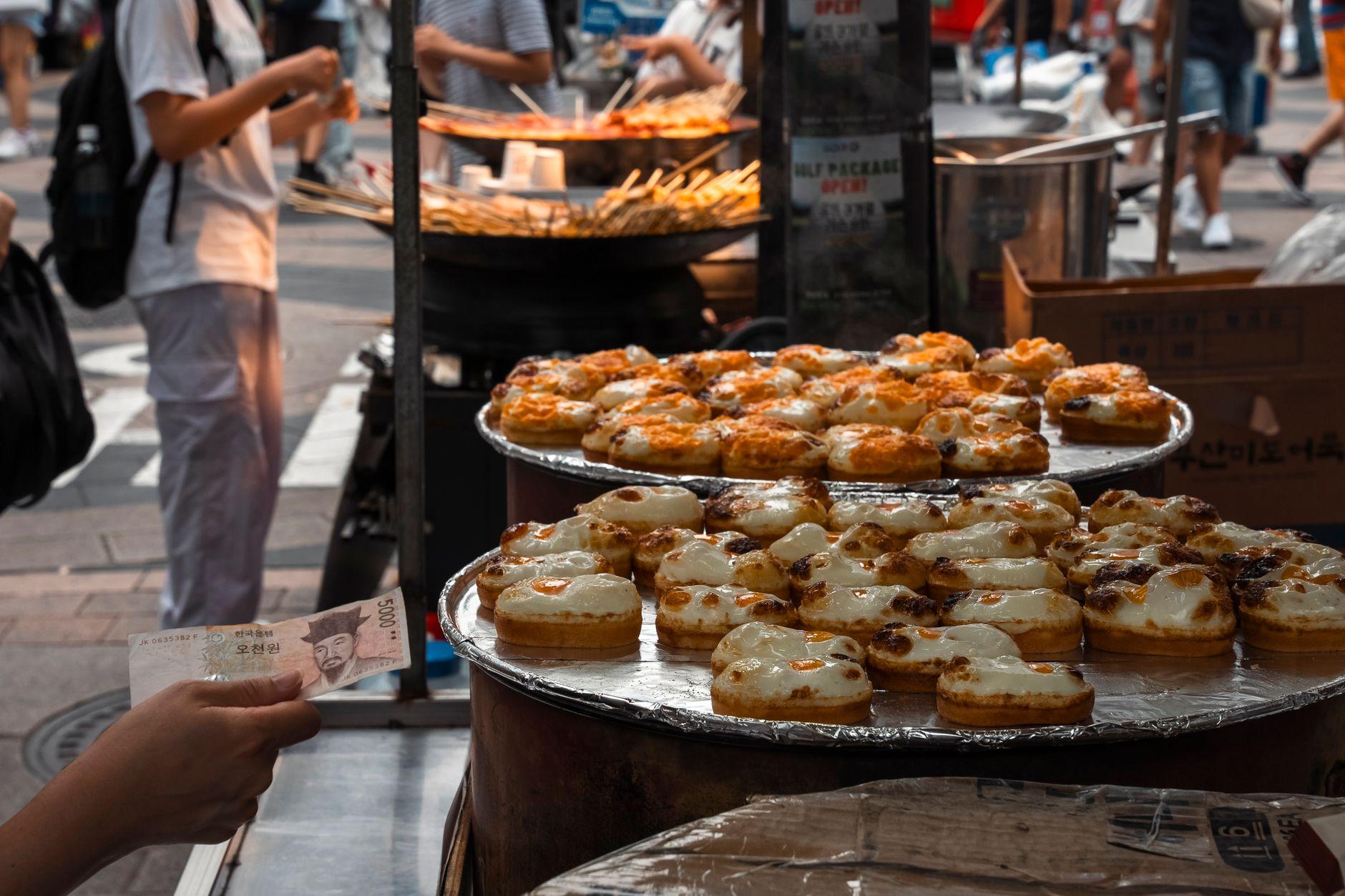
The bindaetteok at Gwangjang Market comes off the griddle crackling, and the woman flipping it has already moved on to the next order before yours hits the paper plate. You hold out your Visa. She points, without looking up, at two things taped to the metal counter: a QR code sticker and a handwritten sign with an account number on it. Behind you, a Korean student pays in about two seconds with a phone flash. You are standing in one of the most cashless countries on earth, holding a card that works almost everywhere in Seoul except, apparently, right here.
This is the strange split of eating cheaply in South Korea. The convenience stores, cafes, and department stores will happily swallow a foreign card. The tteokbokki cart, the hotteok stand in winter, the halmoni selling kimbap by the subway exit, that is a different economy, and it runs on local phones.
The counter tells you everything before you order
Learn to read a Korean street stall's counter and you will never be surprised at payment time. Roughly three things show up, in different combinations:
- A QR code sticker. Often Kakao Pay yellow, sometimes a Zero Pay code (a QR scheme pushed at traditional markets and small merchants). This is how most locals under fifty pay at stalls now.
- A bank account number on paper or laminated card. Locals fire off an instant bank transfer from their banking app. As a visitor without a Korean bank account, this route is closed to you.
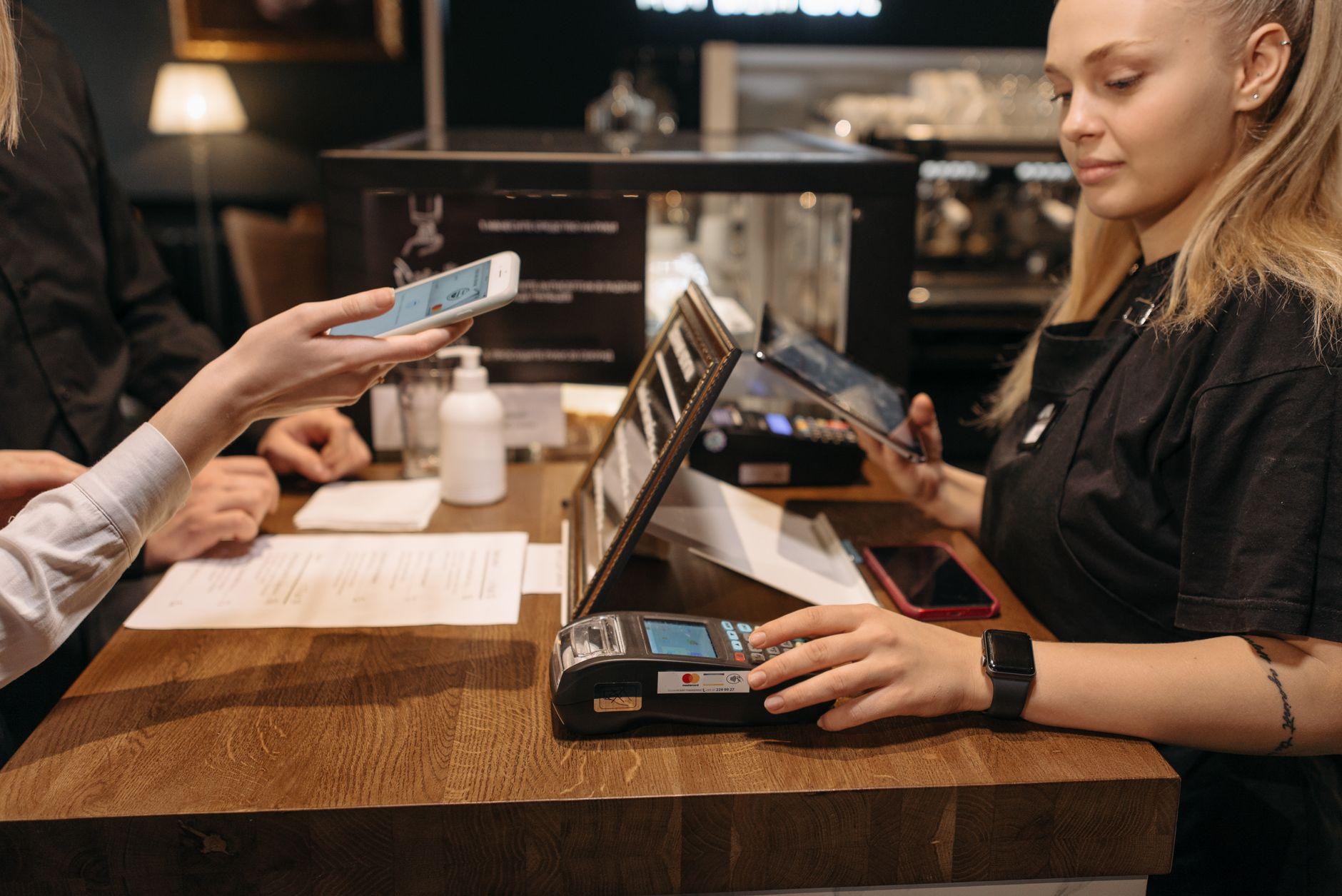
- A card terminal. More common than you would expect even at market stalls, because Korean tax rules have pushed card acceptance deep into small business. But at the smallest carts and pojangmacha tents, it is often missing, broken, or reserved in practice for larger orders.
If you see only a QR and an account number, you have found a local-payment-only stall. In Seoul's traditional markets (Gwangjang, Mangwon, Tongin) and at night markets and food streets in Busan or Jeonju, that combination is everywhere.
Why you can't just download Kakao Pay like everyone tells you to
The advice you will hear from well-meaning locals is "just use Kakao Pay" or "just use Naver Pay." They dominate daily life here, and locals genuinely forget that both are gated behind Korean phone number verification and, in practice, Korean identity and banking rails. A traveler on a foreign SIM or a tourist eSIM hits a wall at signup, not at payment. We went deeper into this gap in our piece on why cashless Korea isn't automatically foreigner-friendly, but the short version for street food is simple: the apps that pay for 90 percent of the food you're craving are apps you cannot open.
This is where Moreta Pay changes the math. It scans the same local QR codes the merchants already display, no Korean phone number, no Korean bank account. You top up the wallet from your own bank at home (US bank via Plaid or ACH, SEPA in Europe, UK Faster Payments, Canadian e-Transfer) or from an international card, then scan the sticker at the stall like everyone else in line. You see the amount in won, the FX rate, and the merchant name before you confirm, so a 4,000 won hotteok stays a 4,000 won hotteok.
The card reader lottery, played honestly
Should you skip cards entirely? No. Korea is unusual in Asia because card acceptance runs remarkably deep, and plenty of sit-down snack shops inside markets do take foreign Visa and Mastercard. But at the street level you are playing a lottery with a few recurring losing tickets:
- Minimum spend, unspoken. A vendor may take cards but visibly sigh at a 3,000 won card tap. Nobody wants to be the person who put one skewer on plastic.
- Foreign card rejections. Some small-merchant terminals are set up for domestic cards and decline international ones for reasons no one at the stall can explain, especially older terminals at market stalls.
- Hidden costs on your side. Even when the card works, your home bank's foreign transaction fees and opaque conversion can quietly tax every snack. A wallet that shows you the conversion before you confirm avoids that guessing game.
The practical stack for market days: a QR-capable wallet as your primary, a foreign card as backup for bigger sit-down meals, and a small fold of won for the true holdouts.
Yes, carry some cash. Here's the honest amount.
Korea's cash usage has fallen off a cliff, but the street food world keeps a few cash corners alive: the oldest vendors, some pojangmacha tents late at night, the occasional countryside market stall. You do not need a money belt. A modest amount in 1,000 and 5,000 won notes covers the exceptions for days. Break big notes at a convenience store early, because handing a 50,000 won note to a mandu vendor for a 3,000 won order gets you the same look a big note gets you at markets everywhere in Asia, as readers of our Malaysia pasar malam guide already know.
A market run, start to finish
Here is how a Gwangjang afternoon actually goes when you're set up right. You topped up your Moreta Pay wallet from your home bank the night before, in your own currency. First stop, mayak gimbap: the stall has a QR sticker, you scan it, the screen shows the vendor's name and the won amount with the exchange rate laid out, you confirm, she nods at her phone notification and hands over the plate. Bindaetteok stall, same routine. The sundae vendor at the end is cash-only and proud of it, so out comes a 5,000 won note. A sit-down bowl of kalguksu at a shop with a proper till, and your regular card is fine there. Three payment methods, zero drama, and at no point did you leave the line to hunt for an ATM.
Quick answers before you go
Do Korean street vendors expect tipping? No. Tipping is not part of Korean food culture at any level, stall or restaurant.
Can I use the same QR approach for online spending in Korea? QR-based online checkouts on supported platforms work with Moreta Pay too, which matters when you are booking the next leg of a trip on Trip.com or Agoda from a guesthouse in Busan.
What about T-money? Great for the subway and buses, and convenience stores take it, but it is not how you pay the bindaetteok lady. Think of it as transit money, not food money.
Is Busan or Jeonju different from Seoul? Same pattern, sometimes more pronounced. Tourist-heavy spots like BIFF Square handle foreign cards better; deeper market alleys lean harder on QR and transfers.
The best food in Korea costs the least and takes payment the local way. Show up able to scan what the locals scan, and the whole street opens up. Set up Moreta Pay before you land in Korea and let the only line you wait in be the one for the hotteok.