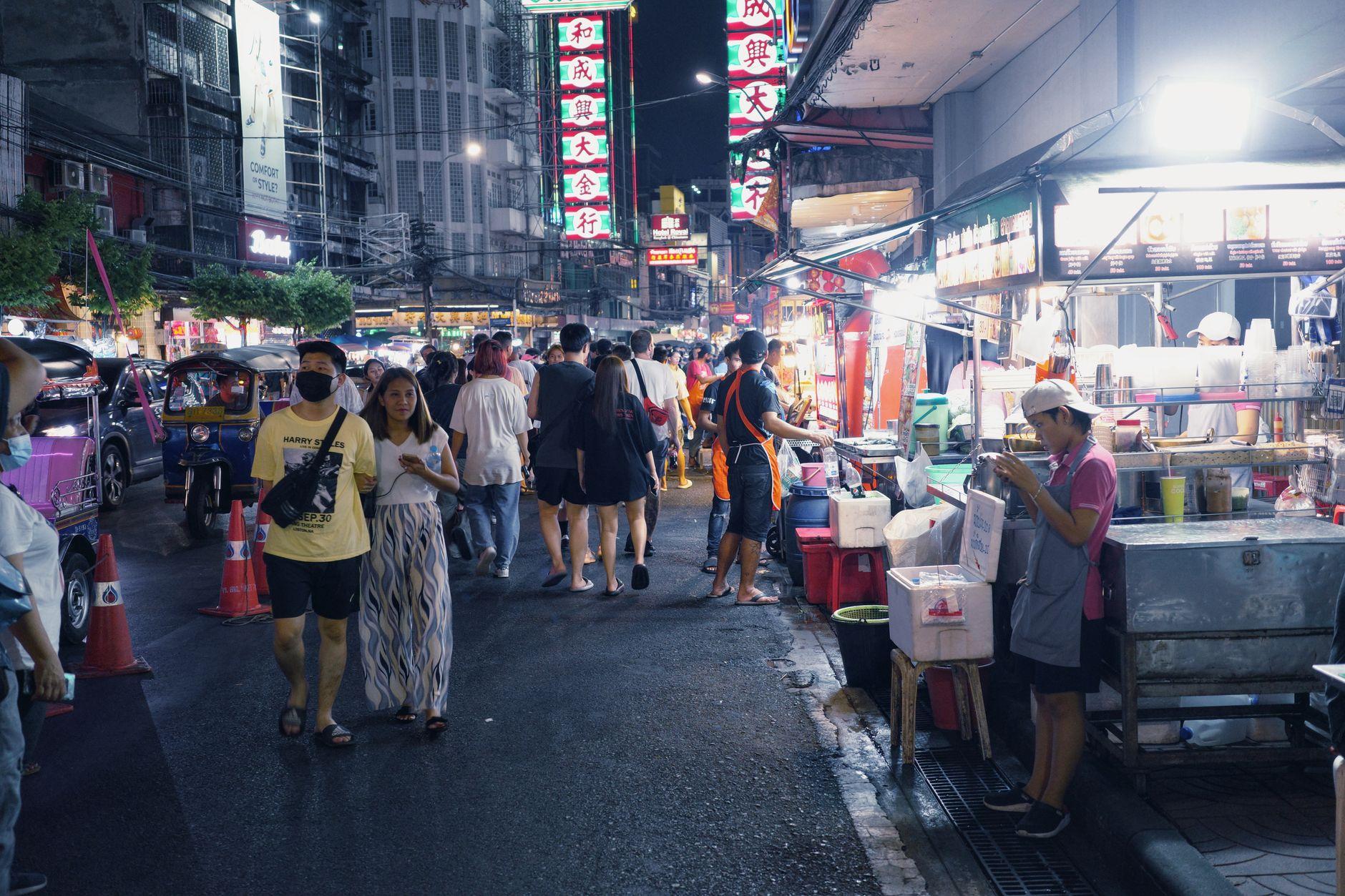

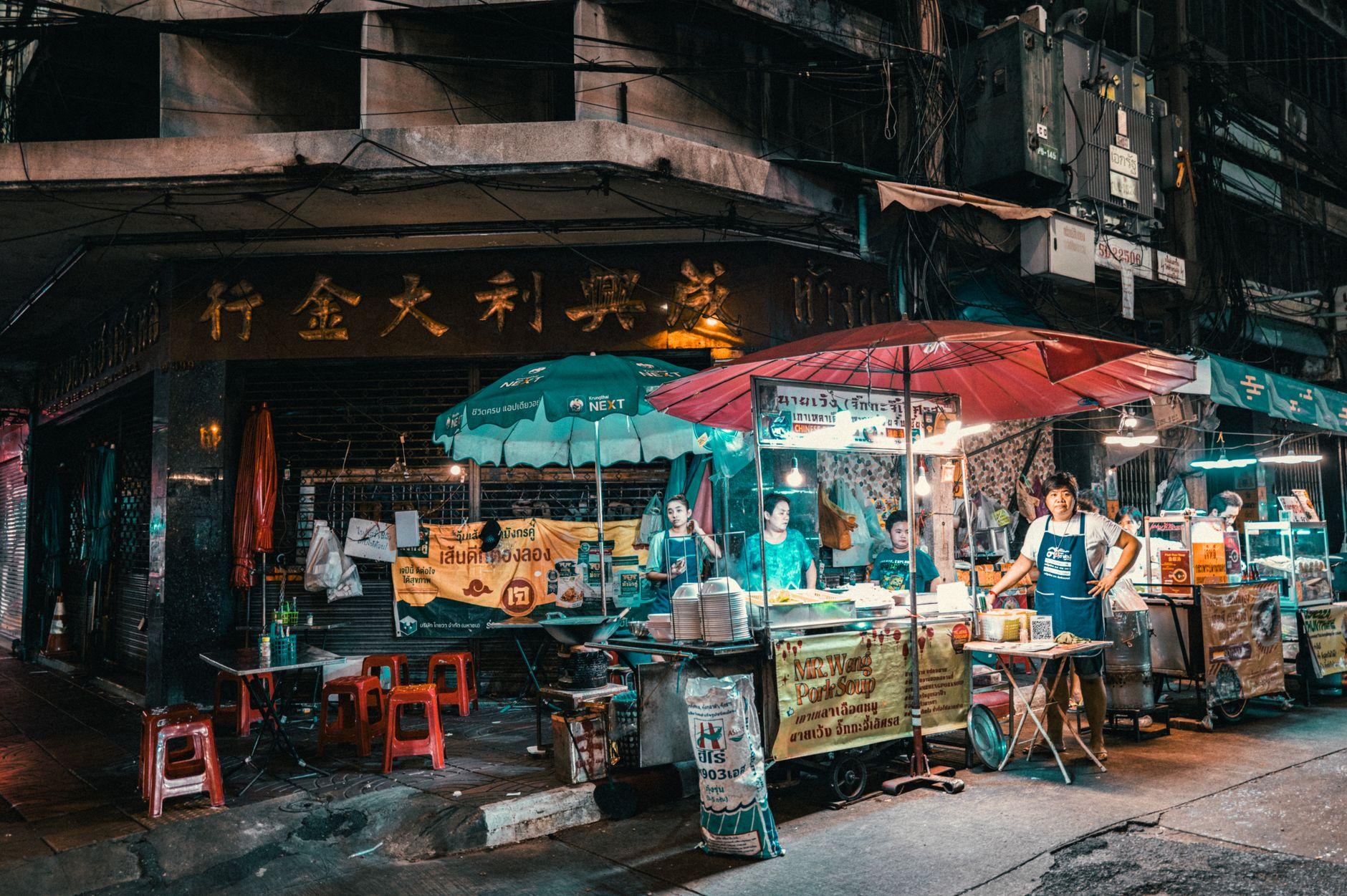
It's 9pm at a night market off Sukhumvit. The woman at the boat noodle stall ladles broth into a bowl, nods at the laminated blue square taped to her cart, and goes back to her pot. The Thai couple ahead of you scans it, their phones chirp, done in four seconds. You're standing there with a 1,000 baht note fresh from an ATM, and she's now digging through a biscuit tin for change while your noodles get cold and the queue behind you grows.
Nobody warned you that Thailand quietly became one of the most QR-native countries on earth. PromptPay stickers hang on street food carts, tuk-tuks, massage shops, temple donation boxes, and the counter at every 7-Eleven. Locals barely carry cash anymore. Tourists, meanwhile, keep making the same handful of money mistakes on repeat. Here they are, and here's how to sidestep each one.
Mistake one: treating the ATM as your main money source
The classic first-day move is landing at Suvarnabhumi, finding an ATM, and pulling out a fat stack of baht. The machine then charges a foreign card withdrawal fee, often 220 THB per pull, before your home bank adds its own cut. Do that every few days for a two-week trip and you've paid a real chunk of your food budget just for the privilege of holding paper.
The trap is that the fee is flat, so travelers respond by withdrawing huge amounts to "make it worth it." Now you're walking around Khao San Road or a Chiang Mai night bazaar with a wad of cash, which creates its own problems (see mistake four). The better fix is to need cash less in the first place. Almost everything a visitor pays for day to day in Thailand accepts PromptPay QR, and a wallet like Moreta Pay lets you scan those same codes and pay from a balance you topped up at home, no Thai bank account required. Keep a small cash reserve for the rare holdout, and let the ATM become an occasional errand instead of a routine.
Mistake two: assuming your foreign card works where locals shop
Your Visa or Mastercard works fine at the mall in Siam Paragon, at hotel front desks, and at chain restaurants. Step outside that bubble and the picture flips. The som tam vendor, the motorbike taxi, the laundry shop, the little pharmacy near your guesthouse, none of them have a card terminal, and plenty of small shops that technically could take cards simply refuse foreign ones. Taxis in Bangkok are famously cash-or-QR territory. Waving a card at the driver gets you a polite shake of the head at best.
Even where cards are accepted, they're not free money. Merchant terminals love to offer dynamic currency conversion, and "no foreign transaction fee" often hides costs in the rate itself, something we've broken down before in why your bank's no-FX-fee card still loses you money abroad. In Thailand the card question is often moot anyway, because the merchant just points at the QR sticker.
Mistake three: trying to sign up for a Thai wallet with a foreign passport
Some travelers figure it out and think, fine, I'll just download the local app. This is where the week gets frustrating. PromptPay is built around Thai bank accounts and Thai national IDs. Thai banking apps generally want a local account, a local phone number, and identity verification designed for Thai documents. Foreign passports get rejected at the selfie-and-ID step constantly, a pattern that repeats across the region and one we've written about in the passport-photo problem.
Unless you're a long-term expat with a work permit and a Thai bank account, don't burn a day of your trip fighting a signup flow that was never built for you. Use a wallet designed for visitors instead. Moreta Pay connects to your home bank (Plaid or ACH in the US, SEPA in Europe, Faster Payments in the UK, e-Transfer in Canada) or an international card, holds your money in your own currency, and converts to baht only at the moment you scan. You see the amount, the exchange rate, and the merchant's name on screen before you confirm, so there's no post-trip statement surprise.
Mistake four: carrying big bills where nobody can break them
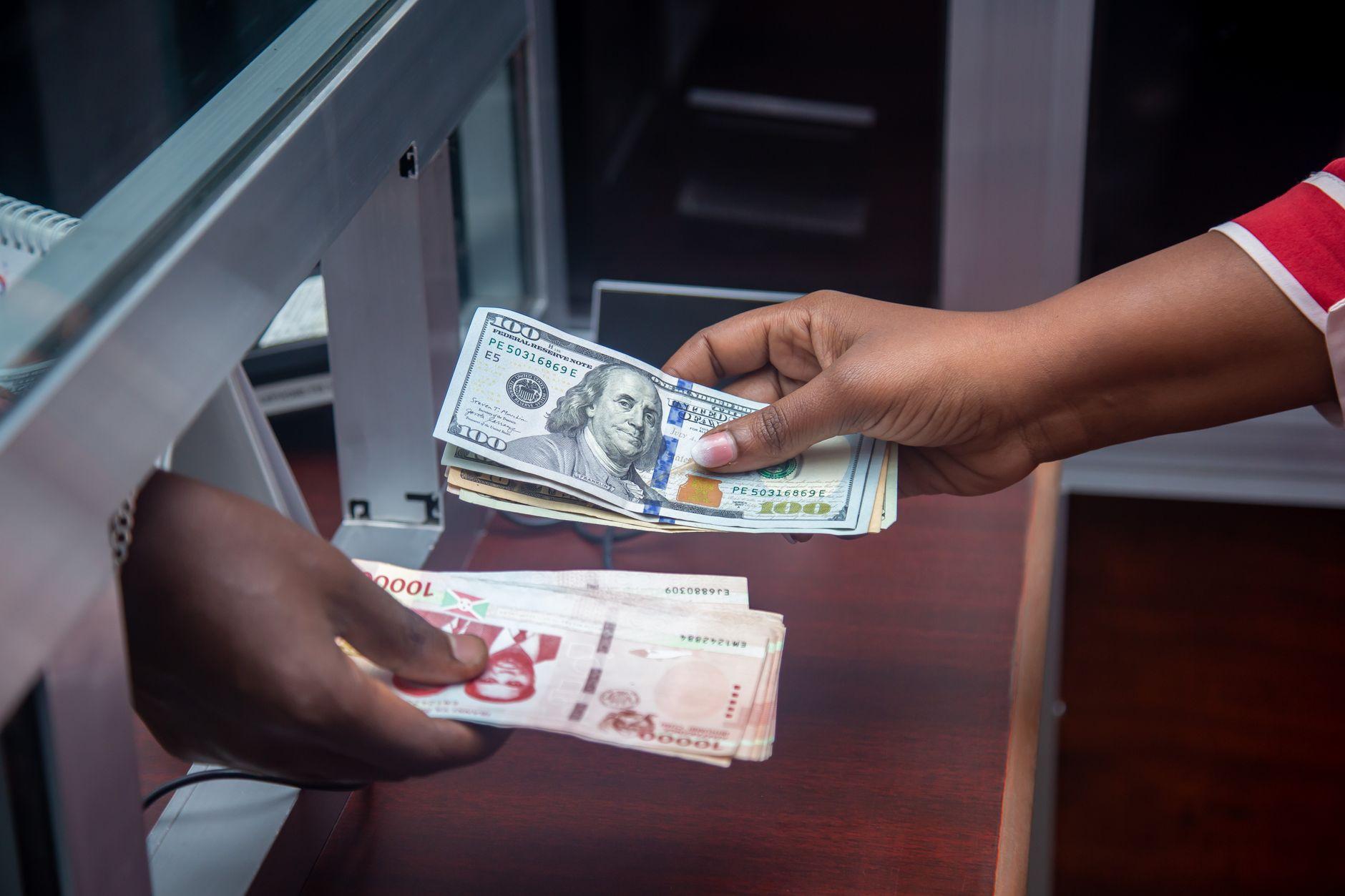
Thai ATMs love dispensing 1,000 baht notes. Street vendors hate receiving them. A bowl of noodles or a mango sticky rice runs a fraction of that, and asking a cart owner to break a big note first thing in the morning is a small social crime. You'll get sighs, a trip to the neighboring stall for change, or a flat "no small money."
If you do carry cash, break big notes at 7-Eleven (they can handle it, and there's one roughly every 200 meters). Better yet, pay exact amounts by QR and skip the change dance entirely. There's something genuinely pleasant about paying 65 baht for exactly 65 baht, at a street cart, with no rounding, no tip pressure, no biscuit tin.
Mistake five: forgetting that QR follows you online
The QR habit doesn't stop at the market. Booking a room on Agoda, ordering from Lazada or Shopee, paying for a train ticket, plenty of checkout pages in Thailand offer a QR payment option alongside cards. Tourists reflexively reach for their foreign card, hit a 3D Secure failure or a fraud block from their home bank, and lose the booking. Scanning the checkout QR with Moreta Pay works the same way it does at a noodle stall, which is handy at 11pm when you're trying to lock in tomorrow's hotel in Krabi and your bank's fraud department is asleep in another timezone.
A realistic setup for your first 24 hours
Here's the pattern that works. Before you fly, top up your wallet from your home bank so the money is ready when you land. At the airport, skip the exchange counter and make one modest ATM withdrawal for emergency cash, a few hundred baht in smaller notes if the machine cooperates. From there, default to scanning: the taxi's QR sticker, the 7-Eleven counter, the night market cart, the coffee shop, the massage place. Keep the cash for the one grandmother with a cart and no sticker (she exists, she's rare, and her khanom krok is worth it).
Do this and Thailand becomes one of the easiest countries in the world to pay your way through. The infrastructure is already there on every cart and counter. You just need a way in. Set up Moreta Pay before your flight and scan the same PromptPay codes the locals do, starting with your first bowl of boat noodles.