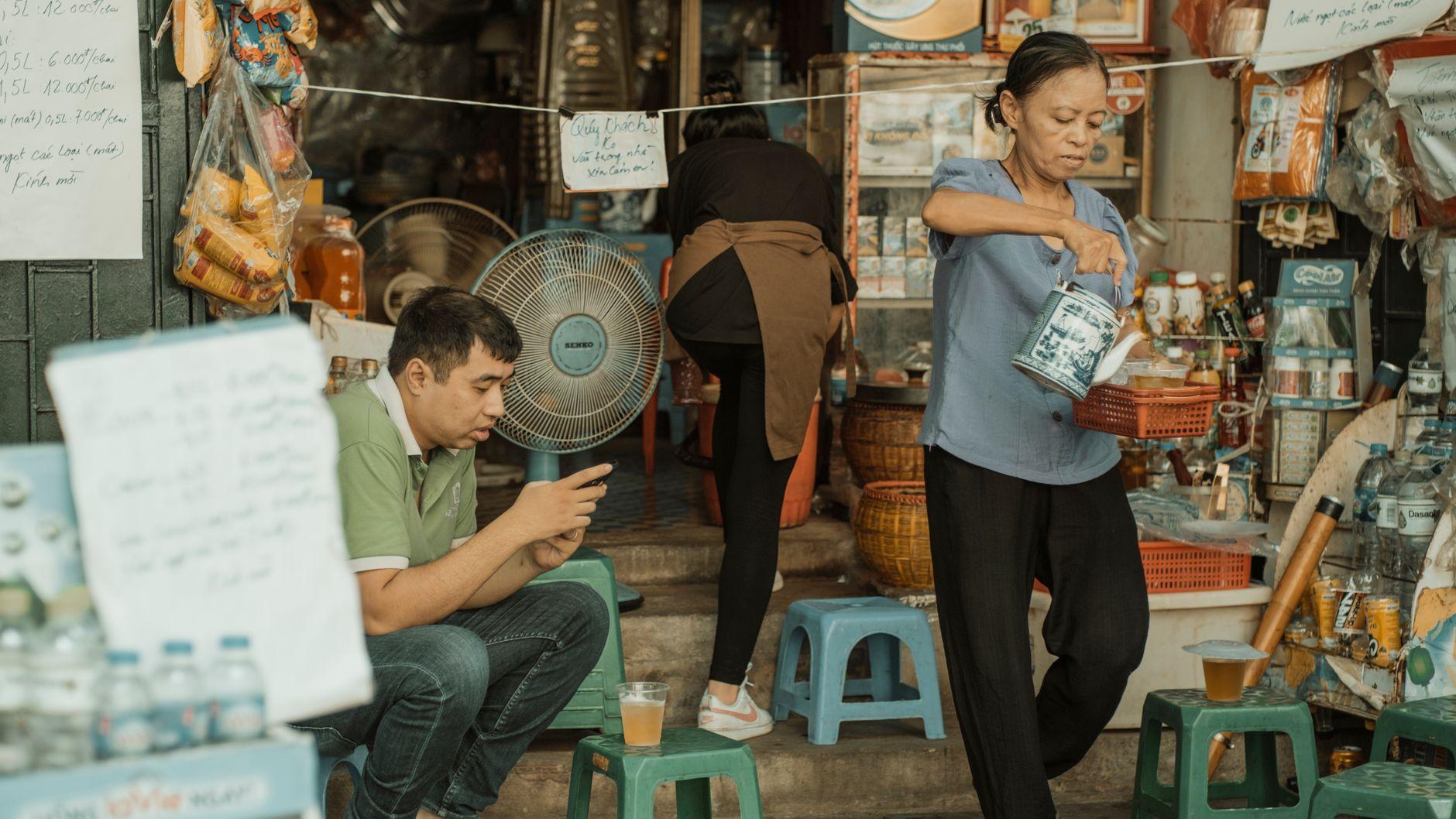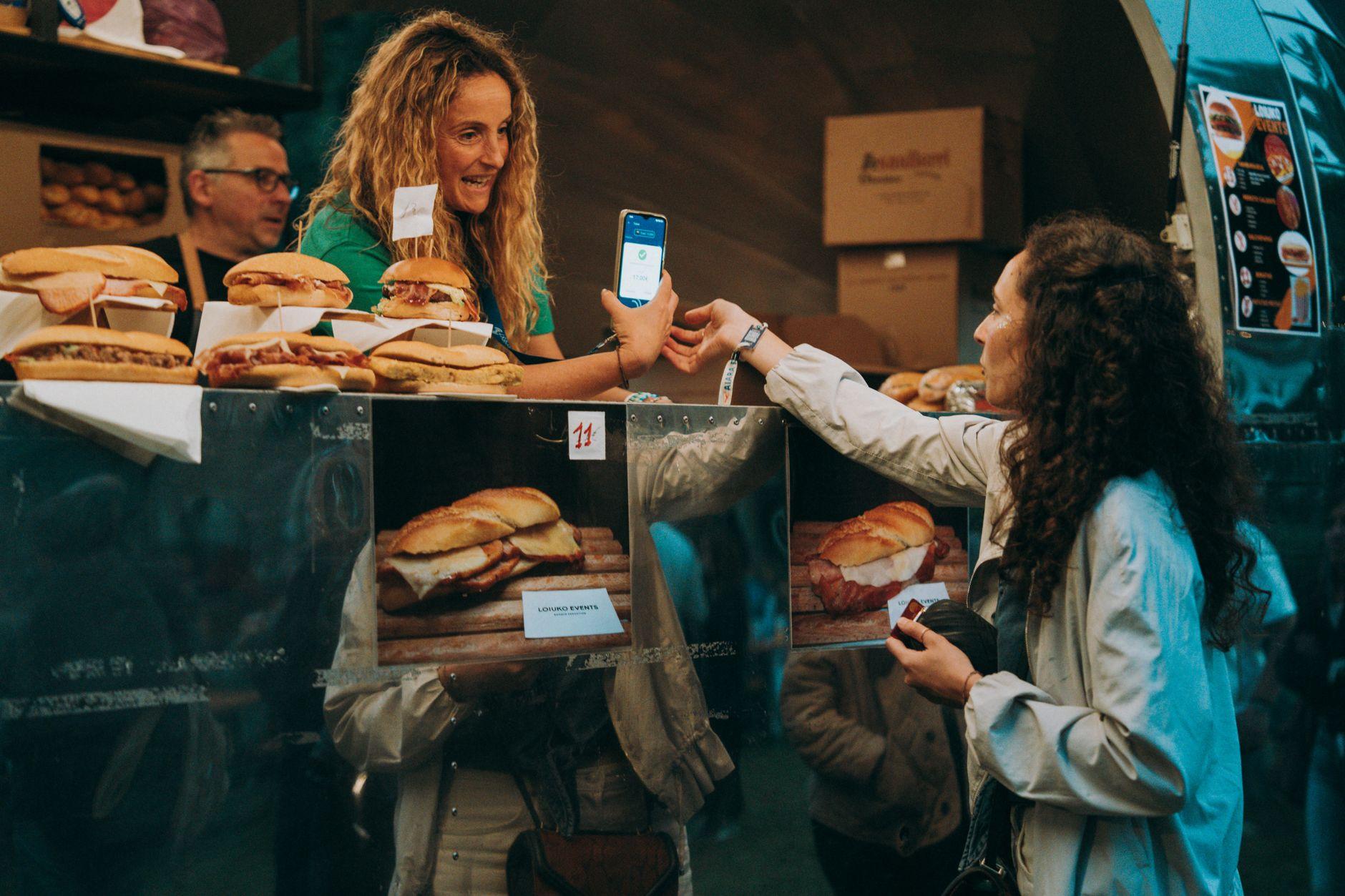

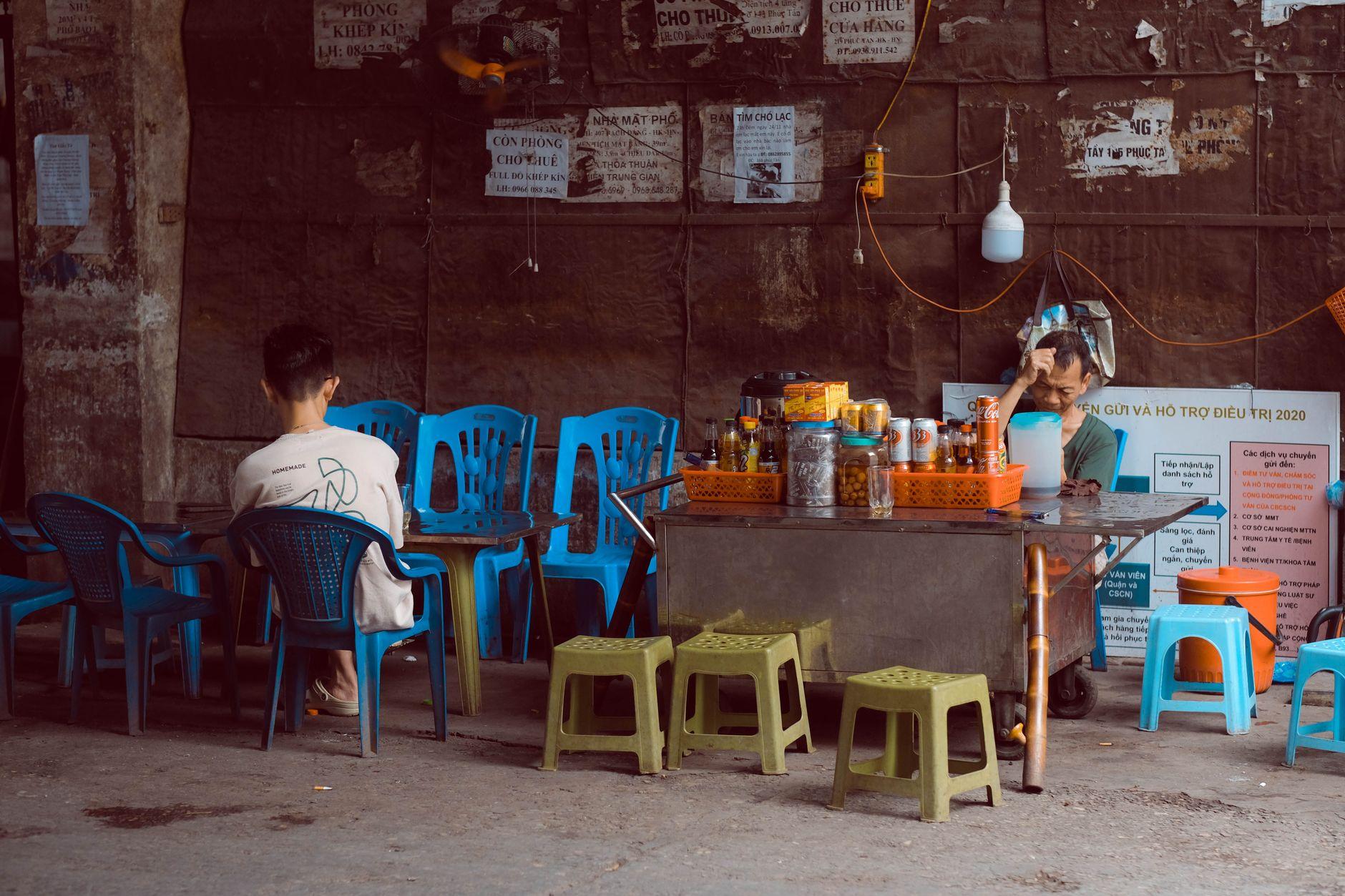
Watch the counter of any Hanoi cafe for ten minutes and you will see the same motion over and over: a customer lifts a phone, points it at a laminated card taped next to the register, taps twice, shows the screen, and walks off with their ca phe sua da. No wallet, no change, no counting zeros. Then a tourist steps up, pulls out a 500,000 dong note for a 30,000 dong coffee, and everyone waits while the owner digs for change.
That small scene contains most of what goes wrong with money in Vietnam. Cash still works everywhere, which lulls visitors into thinking it is the only system. Meanwhile the country has quietly moved a huge share of daily payments onto VietQR and bank-app QR codes, and travelers who never join that layer end up paying in small, constant ways: bad change math, dead cards, ATM runs, and airport exchange desks. Here are the mistakes worth avoiding, with an honest look at each option.
Mistake one: treating cash as the whole plan
Cash absolutely still matters in Vietnam. A banh mi cart in Da Nang, a motorbike parking attendant, a market grandmother selling herbs, all of them take dong notes and some take nothing else. Any sensible traveler carries some cash.
The problem is relying on it for everything. Vietnamese banknotes run into the hundreds of thousands, and two of the most common notes, the 20,000 and the 500,000, are both blue polymer and easy to confuse when you are jetlagged. Handing over 25 times what you meant to pay is a classic first-week story. Beyond the zeros, all-cash travel means repeated ATM trips, withdrawal limits, per-withdrawal fees, and a pocket of small notes you can never quite keep organized because so many prices end in odd thousands.
Cash verdict: essential as a backup and for the smallest vendors, expensive and error-prone as your only method.
Mistake two: assuming your foreign card works where you actually eat
Your Visa or Mastercard will be fine at your hotel, at Vincom malls, at upscale restaurants in District 1 or the Hanoi Old Quarter aimed at visitors. Step outside that bubble and acceptance drops off fast. The com tam place with plastic stools, the family-run cafe, the tailor in Hoi An, the fruit stall: many simply have no card terminal, because their local customers pay by QR or cash and a terminal costs money they do not need to spend.
Even where cards work, they are not free of traps. Hotels and larger shops sometimes offer to charge you in your home currency instead of dong, a convenience that quietly builds in a worse rate. And a card marketed as fee-free at home can still cost you abroad in ways that are not printed on the receipt, something we broke down in why your bank's no foreign transaction fee card still loses you money abroad. If a screen ever asks whether you want to pay in dong or your home currency, choose dong.
Card verdict: keep one for hotels, flights, and emergencies. Do not expect it to feed you.
Mistake three: trying to sign up for MoMo at the airport
Some travelers do notice the QR economy and take the logical next step: download MoMo or ZaloPay, the wallets locals use alongside their bank apps. The logic is sound. The execution usually is not. These apps are built for residents, typically around a Vietnamese phone number, local identification, and a Vietnamese bank account for top-ups. Foreign passports and overseas cards hit walls at various stages, a pattern that repeats across the region, as we covered in the passport-photo problem with QR wallet signups in Southeast Asia.
For a long-term expat with a residence card and a local bank account, opening the full local stack is worth the paperwork. For a two-week trip or a two-month nomad stint, you can burn an afternoon on verification screens and still end up back at the ATM.
Local wallet verdict: the right answer for settled residents, a frustrating detour for visitors.
Mistake four: ignoring the laminated card taped to every counter
Here is the thing about those QR codes: they are not a closed club, they are a standard. VietQR ties together Vietnamese banks so that one printed code can accept payment from many different apps. That is why a single laminated card serves a whole street's worth of customers, each paying from their own bank app.
This is where a travel wallet changes the math. Moreta Pay lets you scan those same merchant QR codes with your own phone, no Vietnamese bank account, phone number, or ID required. You top up the wallet from home (a US bank via Plaid or ACH, SEPA in Europe, UK Faster Payments, Canadian e-Transfer, or an international card) in your own currency. At the counter you scan, see the amount in dong, the exchange rate, and the merchant's name on screen, then confirm. The vendor gets paid instantly in dong, exactly as if a local had paid, and you never touched the change problem or the zeros.
It also removes the guessing. Because the rate is shown before you confirm, you know what that coffee cost you in your own currency before the vendor has even heard the payment chime. And since QR checkout extends online in Vietnam, the same wallet covers QR payments on platforms like Shopee, Trip.com, and Agoda when you are booking the next leg from your hostel bed.
Travel wallet verdict: it gives visitors the local QR layer without the local paperwork. Its only real limit is the same one locals face, the handful of vendors who remain cash-only.
Mistake five: exchanging money like it is 2015
Changing a large sum at the airport on arrival, or withdrawing your whole budget in one nervous ATM session, made sense when cash was the only tool. In 2026 Vietnam it mostly means paying spreads and fees on money you did not need to convert yet. A better pattern: change or withdraw a modest amount of dong for the genuinely cash-only moments, and let QR payments carry the daily load, converting only what you actually spend, at a rate you see each time.
What the sensible setup actually looks like
Lay the options side by side and the shape of a good Vietnam setup emerges on its own. Cash for street snacks, parking, and the vendors who have not printed a QR code yet. A foreign card held in reserve for hotels and big-ticket bookings, always charged in dong. Local wallets only if you live here and can clear the signup requirements. And for everything in between, which in Vietnamese cities is most of your daily spending, a way to scan the VietQR codes that are already taped to every counter you will stand at.
That last piece is the one most tourists are missing, and it is the easiest to fix before you land. Set up Moreta Pay, load it from your home bank in your own currency, and the laminated card at that first coffee cart becomes something you can use instead of something you watch locals use. Get your wallet ready before your flight to Vietnam and leave the zero-counting to someone else.